High-Capacity Transport for Growing Cities

Header description
Australia’s transport networks connect people, places and opportunities across our cities and regions, supporting access to jobs, housing and essential services.
train station

Australia’s growing population and economic activity are increasing pressure on urban and regional transport networks. Most daily travel continues to rely on private vehicles, despite the need for efficient and reliable public transport growing across metropolitan and regional areas. As populations in Australian cities continue to grow, mass transit must carry more of the transport task. As seen internationally, mass transit systems are the foundation for efficient transport in the world’s largest cities.

High Productivity Freight Networks

Header description
Australia’s freight networks are the backbone of domestic supply chains, enabling the efficient movement of goods across vast distances and supporting the nation’s economic growth and resilience.
Trains sky view

Australia’s domestic freight task (bulk and non-bulk) has grown substantially over the past 40 years and is projected to increase by up to 26% between 2020 and 2050 in a median growth scenario. This equates to approximately 964 billion tonne-kilometres of freight movement, highlighting the need for scalable, interoperable and resilient freight infrastructure.12

Secure, Sustainable Water for Growth

Header description
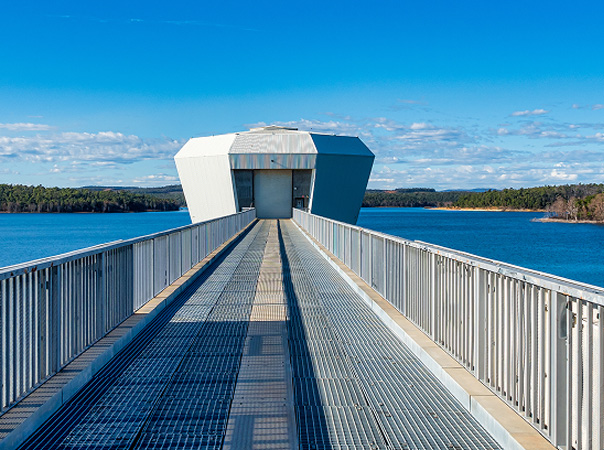
Australia’s growing population, expanding industries, shifting climate and ageing water assets are increasing pressure on urban, regional and remote water systems, requiring sustained investment in secure, reliable and climate resilient water infrastructure.
Water

Delivering Net Zero and a Clean Energy Economy

Header description
Australia’s transition to net zero will require a rapid scale-up of renewable energy generation, transmission and storage, supported by enabling infrastructure and the decarbonisation of construction and transport.
Wind power plants

By 2050, renewable energy is projected to supply 98% of electricity in the National Electricity Market (NEM).xv This renewable supply will be underpinned by a 422% increase in grid-scale wind and solar generation, around 6,000 km of new transmission lines and an 11-fold increase in battery storage.xvi,166

Overview

Header description
Targeted investment in new and upgraded nationally significant infrastructure is crucial to advancing Australian Government policies aimed at boosting national productivity.
construction

Global and domestic forces shaping Australian infrastructure 

Australia’s infrastructure systems are being reshaped by powerful global and domestic trends that are changing how we plan, deliver and maintain essential networks. International forces include climate change, geopolitical tensions, shifting trade dynamics, and competition for materials and skilled labour. Domestically, there is a need to lift productivity, support a growing urban population, improve housing and energy affordability, and strengthen resilience to climate hazards.

Overview

Header description
Targeted investment in new and upgraded nationally significant infrastructure is crucial to advancing Australian Government policies aimed at boosting national productivity.
construction
2025 Infrastructure Market Capacity Report

2025 Infrastructure Market Capacity Report


13 November 2025

Chief Commissioner’s foreword

Each year, Infrastructure Australia evaluates the demand to build across the nation, and calculates the resources required to deliver on that demand. Now in its fifth year, this research offers an evidence base to strengthen national coordination, ensuring that infrastructure investment is both achievable and sustainable.

The research helps governments better sequence their project pipelines by providing a clearer view of the workforce and materials needed. It offers a national perspective, enabling jurisdictions to focus beyond borders on construction market issues across the country.

We have ambitious goals ahead of us — lifting national productivity, transitioning to a clean energy future, and substantially boosting housing supply to meet the needs of Australians today and into the future. Infrastructure is a critical enabler of economic growth and social outcomes. A cross-jurisdictional, cross-sector view of the pipeline helps us make better decisions on what to build, when to build it, and how to meet the needs of communities.

The research has drawn international attention, with jurisdictions like Canada pursuing similar work to support their ambitious housing programs whilst facing workforce shortages and productivity challenges.

The strength of this research lies in the collaborative relationships Infrastructure Australia has formed across industry and government and with our international counterparts. We acknowledge and thank all participants for the part they played in developing this year’s report, through data sharing and close collaboration. 

Our Infrastructure Market Capacity research has grown into a trusted and reliable source of information that captures the $1.14 trillion of construction activity happening right across the country. The report also continues to detail and explore the plant, labour, equipment and materials needed to deliver on the nation’s five-year Major Public Infrastructure Pipeline —which has grown 14% over the last year and now stands at $242 billion.

The successful planning and delivery of infrastructure is critical in supporting our nation’s growing cities and regions, particularly as we navigate the growth in investment across renewable energy and social infrastructure projects, while continuing to deliver record levels of investment in major transport projects.

As governments navigate these decisions, Infrastructure Australia is committed to supporting the Australian Government with independent advice to drive a thriving, efficient and productive construction sector for the economic and social prosperity of all Australians.

Tim Reardon eSignature

Tim Reardon

Executive summary

Australia’s Major Public Infrastructure Pipeline is $242 billion across the five years from financial years 2024–25 to 2028–29 (‘five-year outlook’), up 14% compared with the projection of 12 months earlier for the corresponding outlook period 2023–24 to 2027–28. This outcome reflects governments’ ambitions to boost housing stock and transition our energy sources towards a net zero future, while holding steady the record levels of investment in productivity-enhancing transport infrastructure.

Demand for major public infrastructure projects has risen for the first time since 2022 as governments grow investments in buildings and utilities while transport investment continues to dominate pipelines

Infrastructure Australia has updated its Market Capacity database with relevant Major Public Infrastructure Pipeline information provided by state and territory governments. A comparative analysis of the national Major Public Infrastructure Pipeline outlook versus the previous outlook period from 12 months earlier reveals:

  • Demand has increased by 14% on the previous year’s outlook.
  • There is a significant increase in either public-funded housing investments or energy transmission projects across all of Australia’s states and territories.
  • Delivery challenges are slowing the rate of the energy transition, with delays to the start of construction for many private infrastructure energy projects.

Key changes in the Major Public Infrastructure Pipeline across the past 12 months include:

  • Transport infrastructure investment is projected at $129 billion and remains the largest expenditure category, accounting for 53% of the Major Public Infrastructure Pipeline. This is a $3 billion (2%) increase on the previous year’s outlook and quite steady.
  • Projected demand expected in the final year in the outlook period is much higher than observed in the first four editions of the Infrastructure Market Capacity reports. It indicates that government investment may be becoming more certain across a longer-term time horizon.
  • Buildings infrastructure investment is projected at $77 billion, which accounts for 32% of the Major Public Infrastructure Pipeline. This is up $6 billion on the previous year’s outlook (up $14 billion compared with the outlook from two years earlier). Buildings infrastructure is driven by social and affordable housing ($28 billion) and health projects ($22 billion).
  • Utilities infrastructure investment is projected at $36 billion, which now accounts for 15% of the Major Public Infrastructure Pipeline and is up $20 billion on the previous year’s outlook. This increase is predominantly explained by additional transmission line projects.

Materials cost escalations have stabilised, but more attention is needed to ensure sovereign capability in steel and increase uptake of low emissions materials 

Cost growth of key materials such as cement and timber has eased to around inflation levels indicating stabilisation of price volatility seen during the Covid-19 years. Steel prices however continue to fall, a downward trend since 2022. 
Domestic steel fabrication capability presents a potential sovereign supply chain risk to a key infrastructure input. The industry reports being under severe pressure from cheaper imports (offered at up to 50% cheaper than what local producers can viably offer) and with import volumes growing by 50%. 

The Australian Government has committed to supporting green metals fabrication under the Future Made in Australia agenda (Green Metals Package), and to supporting the administration and sale of the Whyalla Steelworks, which produces 75% of Australia’s structural steel and is the only domestic source of long steel products.

More could be done now to ensure the sustainability of fabricators further down the steel supply chain.

At the same time, lower emissions and recycled materials remain a largely untapped pathway to reduce emissions in infrastructure delivery. A range of state and territory policies encourage the use of low-emission and recycled materials in infrastructure construction. This creates a strategic opportunity for governments to lead a nationally-coordinated approach that strengthens market capacity and accelerates industry growth. 

Stronger procurement levers, harmonised standards, and pathways beyond research and pilots are needed to scale adoption and fully realise the decarbonisation potential on an industrial scale.

Peak workforce shortage could reach 300,000 as the sector faces both supply and skilling challenges    

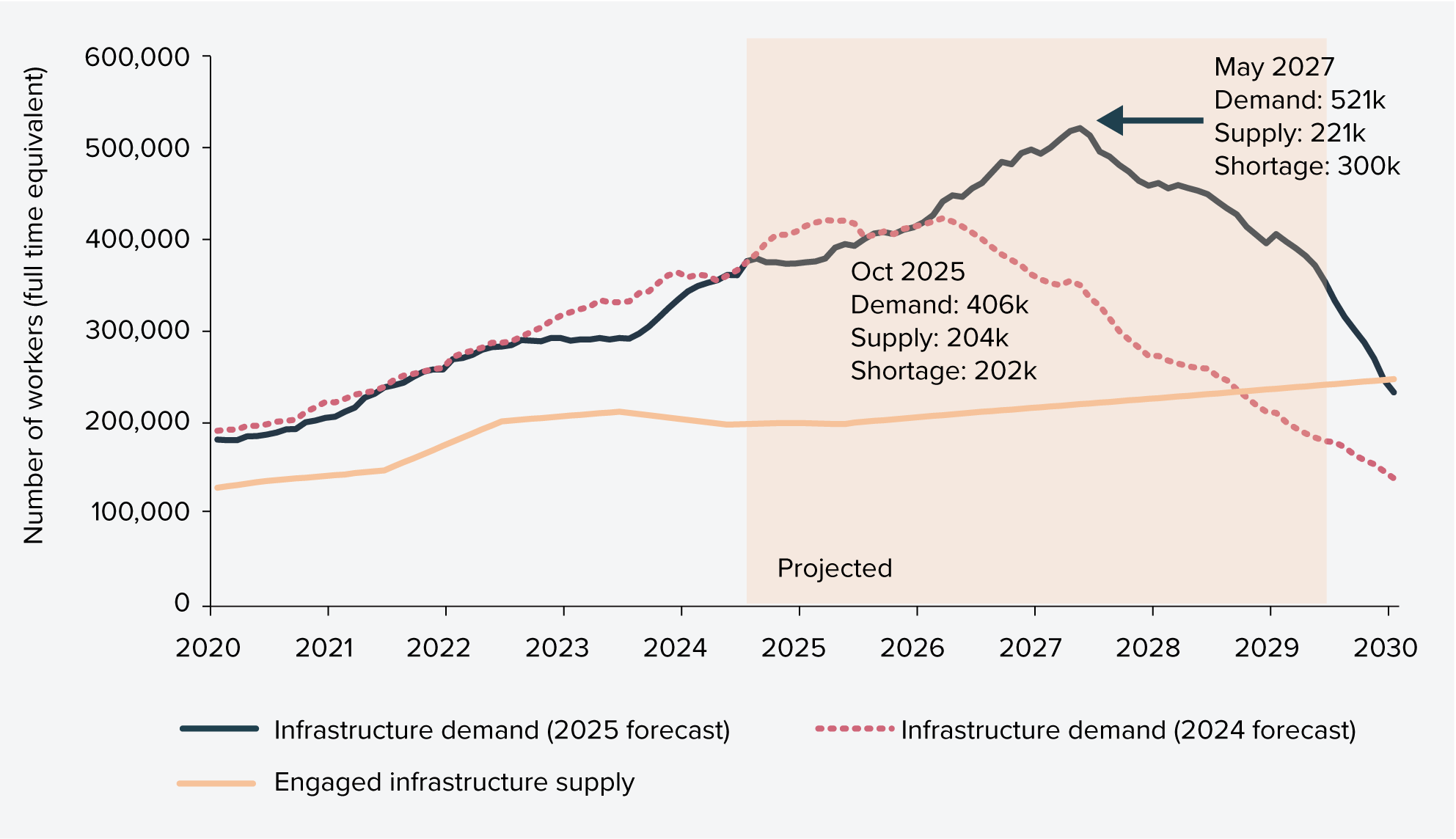
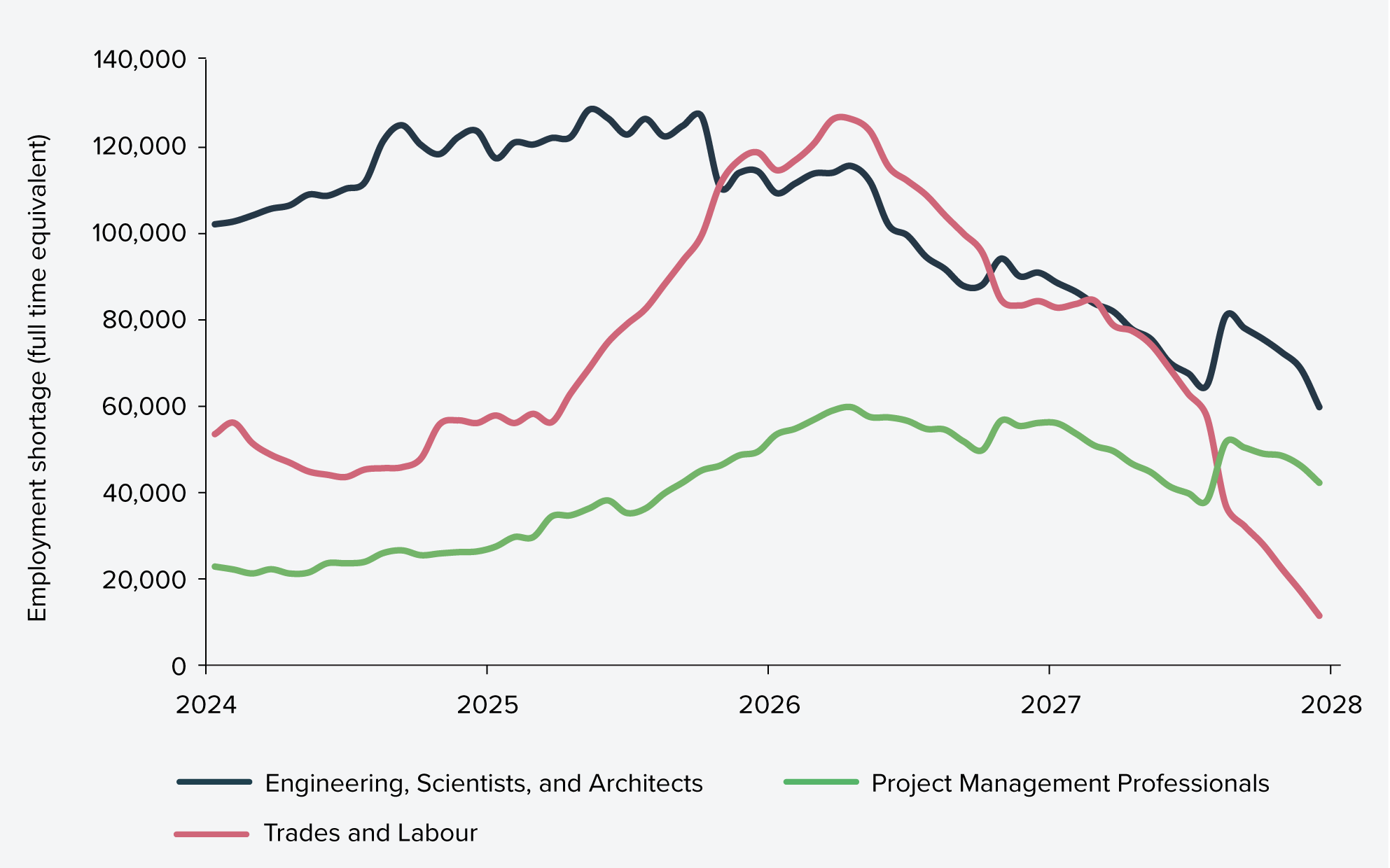
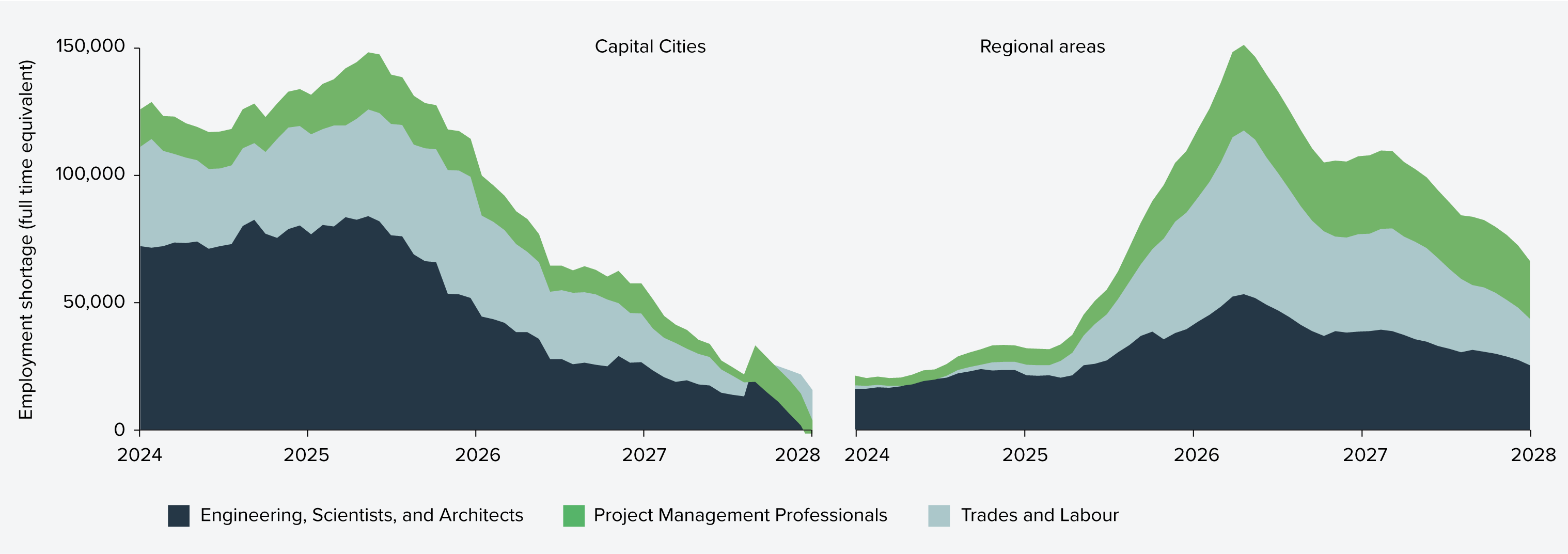
Labour remains the most critical delivery risk. After a brief easing in 2024, shortages are projected to surge and could reach 300,000 workers by 2027. Regional areas will be hardest hit, with shortages forecast to quadruple between 2025 and 2027.

The sector faces a dual challenge: filling critical roles in sustained short supply and upskilling the workforce for the digital and net zero transition. Industry soundings from in-depth interviews on the energy transition suggest that companies are adopting a cautious, ‘wait and see’ approach to workforce and skills investment, rather than committing to long-term training or efforts to boost baseline workforce supply. There is currently ambiguity around exactly how and the extent to which workers can transition across adjacent sectors to meet demand once materialised.   

Various pilots and initiatives by governments, industry and the training and education sectors are underway to address construction workforce challenges. National alignment and coordination across these initiatives, and boosting industry confidence in the energy pipeline, will help firms invest more in building future workforce and capabilities.

Initial steps have been made to unpack the productivity problem, with further scope to examine the subcontracting ecosystem and incentives to embed innovation  

Productivity in Australia’s construction sector remains stubbornly low despite a short-term rebound, with multifactor productivity rising 2.0% in 2023-2024 after a decline the year before. The long-term trend is flat and well below mid-1990s levels. 

Structural issues persist: a heavy reliance on subcontracting (41% of infrastructure construction) introduces interface risks and erodes Tier 1 self-performance, while workforce diversity remains poor — women make up just 13% of the workforce and 4% of trades. 

State, territory and federal governments are supporting the uptake of modern methods of construction, however prefabricated construction currently makes up less than 5% of the total market. Outside of dedicated modern methods of construction projects, prevailing procurement models focused on lowest cost discourage innovation that delivers long-term value. Regulatory and financing barriers may also impede modern methods of construction uptake, and the Australian Government is working to address these.

Two major national initiatives could drive change: the National Construction Strategy, due by end-2025, and the National Construction Industry Forum’s Blueprint for the Future, endorsed in September 2025. While these mark promising first steps to addressing systemic productivity challenges for construction, their real impact will depend on how they are implemented and the concrete actions that follow.

Progress made by governments over the last 12 months 

Infrastructure is a necessary and key enabler to achieving key government priorities such as boosting national productivity, net zero transition and boosting housing stock. Over the past 12 months, governments have progressed significant initiatives and reform agendas which will help to strengthen the market’s capacity to deliver.  

Key progress by the Australian Government across the four themes presented in previous iterations of the Infrastructure Market Capacity report:   

  • Active pipeline management to mitigate delivery constraints — implementation of the new Federation Funding Agreement Schedule (FFAS) on Land Transport Infrastructure (2024-2029), which includes for the first time the collection of bilaterial performance reports from states and territories on progress against agreed policy priorities to enable outcomes that would boost supply (such as lift recycled materials uptake, skills training, workforce diversity). By tracking performance and setting benchmarks against these priorities, governments could prioritise projects that deliver the greatest strategic value and boost market capacity and capacity to deliver.

    Separately, the Australian Government has committed to fast-track environmental approvals on clean energy projects and regional planning under Environment Protection and Biodiversity Conservation Act 1999 (EPBC Act) reforms and also commenced a new pilot of the Investor Front Door program (September 2025) to support delivery of transformational energy projects.  

  • Boosting materials supply — measures focused on supporting industry transition and boosting Australia’s competitiveness in the net zero economy, including major investments under the Future Made in Australia plan to expand domestic manufacturing, accelerate the adoption of low-emissions materials and maintain domestic steel manufacturing capacity at Whyalla Steelworks.  
  • Boosting labour supply — a raft of initiatives including expanding TAFE and apprentice incentives, national licensing reform of electrical trades and fast-tracking construction related assessments through the Skills Migration Framework.  
  • Lifting construction productivity — the Australian Government is driving transformative reforms aimed at lifting national productivity across all sectors of the economy. 

    The construction industry will benefit from initiatives to cut regulatory red tape and promote national harmonisation of licensing, standards and certifications delivered as part of the National Competition Policy reforms and supported by the $900 million National Productivity Fund. Additionally, the Australian Government is investing $4.7 million to develop a voluntary national certification scheme to support offsite construction, streamline approvals and ensure high quality standards are met, and $49.3 million supporting state and territory governments to expand prefabricated and modular home construction opportunities.

    A cornerstone initiative led by the Australian Government and targeted at the construction industry specifically — the National Construction Industry Forum’s Blueprint for the Future, developed by representatives across employers, workers and government — will drive nationally-coordinated actions to lift productivity across the sector. The blueprint outlines nine priority recommendations for reform, including cultural change, risk allocation and skills development, to tackle systemic inefficiencies and boost productivity across housing and infrastructure projects.  

Recommended future opportunities for the next 12 months  

Building on the progress made by governments over the last 12 months and updated insights on the Major Public Infrastructure Pipeline, this report identifies opportunities for Australia’s governments to further strengthen market delivery capacity through pipeline management, boosting supply and lifting construction productivity. Table 1 sets this out in detail.  

Table 1: Update on progress made over the last 12 months and future opportunities  
1. Active pipeline management
Progress over last 12 monthsCurrent state – key findings
  • Federation Funding Agreement Schedule (FFAS) on Land Transport Infrastructure (2024-2029) implementation:
    • Notes on Administration published in June 2025, which operationalises the FFAS, including key reporting requirements by states and territories.
    • For the first time this year, the Australian Government will collect bilateral performance reports from states and territories covering progress against agreed policy priorities.
  • Reform the Environment Protection and Biodiversity Conservation Act 1999 (EPBC Act) to strengthen environmental protection, streamline and fast-track approvals, particularly on clean energy projects and regional planning.
    • The Australian Government has committed to introducing EPBC Act reform legislation to Parliament in late 2025.
    • Regional pilots are currently underway in Queensland, South Australia, Victoria and New South Wales. These pilots are producing improved environmental data and guidance to help proponents minimise their impacts and streamline assessments and approvals.
  • Launch of the Investor Front Door program in September 2025, under the Future Made in Australia agenda to support investment and delivery of major transformational projects in Australia.
    • A concierge service to assist investors and companies coordinate and accelerate regulatory approval needed on nationally significant infrastructure projects.  
    • The pilot aims to test and refine service offerings, identify gaps in regulatory and financing systems, and inform development of a cross-government coordination framework.

National Renewable Energy Priority List established (March 2025), with listed projects receiving coordinated support from the Australian Government and state and territory regulators for approvals.

Rewiring the Nation program has committed over $20 billion to upgrade and expand the electricity grid, with major transmission projects like HumeLink underway, concessional finance delivered via the Clean Energy Finance Corporation, and state partnerships supporting renewable integration and grid reliability.

Major Public Infrastructure Pipeline demand 

  • The Major Public Infrastructure Pipeline (MPIP) has grown to $242 billion for 2024–25 to 2028–29, up 14% from last year’s outlook, reversing previous declines.
  • Key sectors competing but also enabling each other — transport, energy and water, and housing. Energy and water pipelines are growing.
  • Transport, under Infrastructure and Transport Ministers’ Meetings, is quite advanced in terms of coordination between jurisdictions and pipeline visibility. However, as the pipeline for energy, water and housing grows, oversight at a federal level is needed to reduce potential cross sector competition for resources, to manage the risk of driving up costs and project delays. 

Energy 

  • Industry reports approval delays and projects not materialising, which may be causing investors to move offshore, with firms holding off investing in workforce capabilities, and global supply chains for energy being less interested in supplying to Australia.
  • Environmental approvals are often addressed later in the project lifecycle— sometimes after the business case is developed, funding secured, timelines set, and designs scoped. This can create challenges, as firms and government project teams may not have a clear understanding of the regulatory and government approvals required at the outset, leading to a reactive approach where requirements are discovered progressively during delivery.
Future opportunities  

1.    Governments could further accelerate the energy transition by exploring options to: 

  • Enhance future updates of the National Renewable Energy Priority List with more detailed project level information — such as funding committed, planning milestones, and delivery stages. This could provide industry with greater certainty about the forward pipeline, supporting more effective planning, investment, and capacity building across the supply chain.
  • Establish an environmental approvals concierge, similar to the Investor Front Door function under the Future Made in Australia package, to provide early guidance and facilitation for significant infrastructure projects. This concierge could:
    • help state and territory government proponents identify whether EPBC Act approval is required during early project scoping,
    • clarify and promote the use of bilateral assessment pathways, and
    • connect proponents with relevant Australian Government agencies and resources to facilitate the approval process.
2. Boost materials supply
Progress over last 12 monthsCurrent state – key findings
  • The Future Made in Australia Innovation Fund will support innovation, commercialisation, pilot and demonstration projects and early-stage development in priority sectors. This includes:
    • $750 million for green metals
    • $500 million for clean energy technology manufacturing capabilities including electrolysers, batteries and wind towers
    • $250 million for low carbon liquid fuels
  • Whyalla Steelworks (February 2025): a joint investment with the South Australian Government to secure the future of Whyalla Steelworks, which produces approximately 75% of Australia’s structural steel and to modernise the plant, including enabling green steel production.
  • The Australian Government’s Transport Sector Plan and Industrial Sector Plan (published in September 2025) outline supply-side and demand-side measures to drive the production and uptake of lower-carbon construction materials. The Transport Sector Plan identifies that achieving net zero will require establishing markets in low carbon and recycled materials, prioritising low or zero emissions procurement, and working to fill knowledge and skills gaps. Through the net zero pathway for transport infrastructure, the Plan proposes a number of steps for governments and industry to achieve these outcomes. 
  • The prices of key construction materials grew slightly over the last 12 months, broadly tracking inflation, and signalling ongoing stabilisation after the sharp cost rises of the Covid-19 years (late 2021- early 2023).
  • Steel prices, however, have continued to fall since 2022. The volume of imported fabricated steel has increased, with 2024 volumes nearly 50% higher than the yearly average between 2016-2021 and is often priced at 15-50% below what local producers can viably offer (Australian Steel Institute, 2024).  
  • While imports help address demand and cost challenges, it is difficult to ascertain their compliance with Australian Standards and whether there are any associated quality risks.
  • Current adoption of lower emissions materials remains low. Industry reports various barriers to scaling up supply including inconsistent demand, unclear pathways from research to commercial adoption and standards and specifications that favour traditional materials over low-emissions alternatives.
Future opportunities

2. Governments could consider measures to ensure fabricated steel products used in infrastructure projects consistently meet Australian Standards by:

  • setting standards for imported fabricated steel that meet domestic quality and safety standards, and developing a traceability and certification system to track imports, and   
  • ensuring compliance with these standards on major infrastructure projects across the country.
3. Boost labour supply
Progress over last 12 months Current state – key findings
  • 20,000 Fee-Free TAFE and VET places, including approximately 5,000 pre-apprenticeship places, over two years from January 2025, to boost the supply of the construction industry (under the Fee-Free TAFE Skills Agreement as part of the 2024-25 Budget).
  • Apprentice incentives: Introduced on 1 July 2025, the new Key Apprenticeship Program provides up to $10,000 in direct payments to apprentices in housing construction and clean energy trades.
  • National licensing reform of electrical trades: designing a national electrical licensing scheme to allow electricians to work across states without extra fees, improving labour mobility for housing and energy projects.
  • Migrant skills recognition initiative: through the Skills Migration Framework, to fast-track recognition of overseas qualifications and prior learning. Construction-related skills are specifically prioritised, for example the fast-tracking of around 2,600 construction skills assessments over two years.3
  • Fast-tracking the qualifications of 6,000 trades people: $78 million to launch the Advanced Entry Trades Training Program, enabling experienced but unqualified workers in residential housing and civil construction trades to gain nationally recognised trade qualifications through recognition of prior learning and gap training.
  • Australia’s current infrastructure workforce stands at 204,000 workers.
  • The worker shortage is projected to reach a new high of in 300,000 workers in 2027.
  • Regional worker shortages will increase four-fold over the next two years, driven by energy projects.
  • Labour and skills remain a key delivery risk, with around 60% of firms surveyed this year identifying this as a significant threat to project delivery.
  • Australia’s experience broadly reflects global trends, which show a construction workforce struggling with persistent labour shortages while being reshaped by two key drivers: digitalisation and decarbonisation.
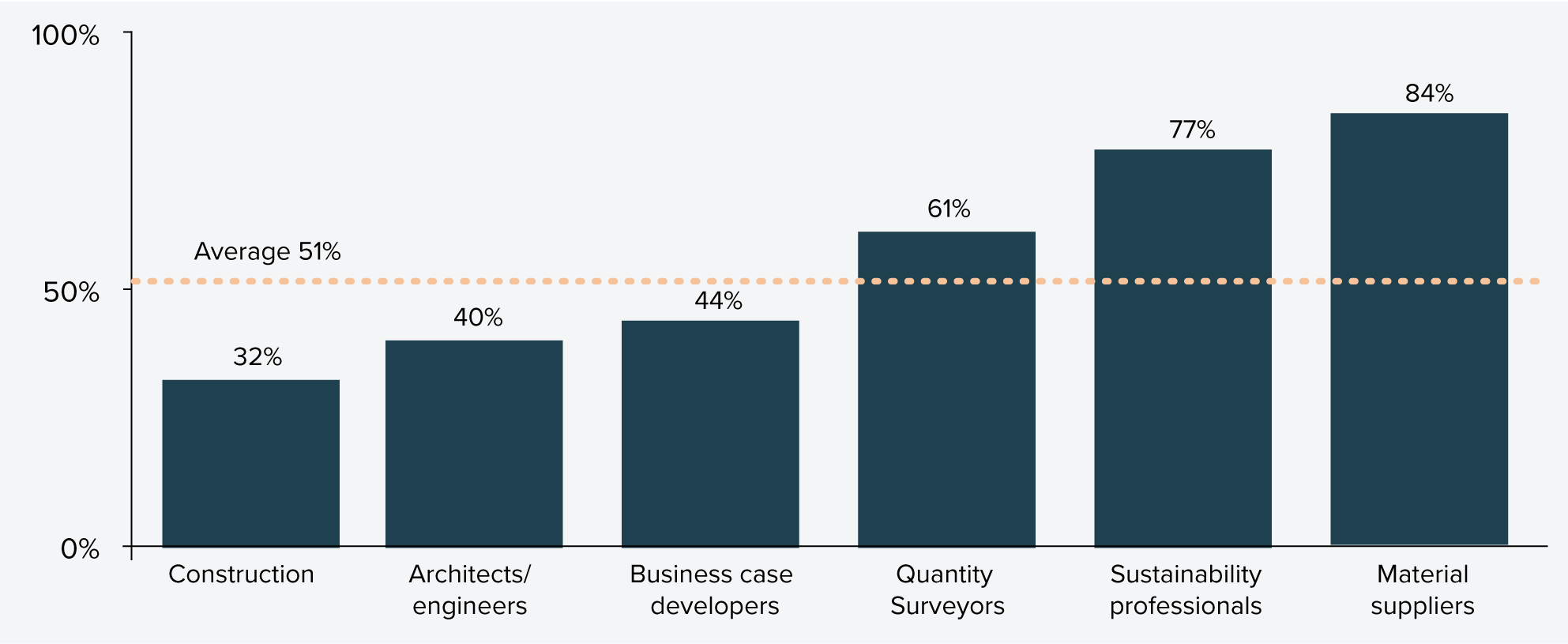
  • 66% of the sector surveyed this year invested in upskilling in the past 12 months, with engineers and designers investing the most in upskilling (85% invested) and subcontractors the least (33% made no investment in the past 12 months).
  • Engineers and designers are stretched across new growth sectors including energy, water, and commercial construction sectors, while demand for transport projects continues at a steady pace.
  • BuildSkills Australia’s Housing Capacity Study published in September 2025 finds there is limited evidence that infrastructure activity is materially drawing labour away from residential construction. Following this report, it is finalising a study to better understand actual and potential labour flows between residential and adjacent sectors (Residential Mobility Study).
  • Energy infrastructure pipeline uncertainty is prompting companies to adopt a cautious, ‘wait and see’ approach to workforce and skills investment. Rather than committing to long-term training or efforts to boost baseline workforce supply, many are relying on re-deploying workers from adjacent sectors to meet short-term demand.
  • Industry is aware of the net zero imperative but has low confidence in its capacity to deliver. This year’s Industry Confidence Survey finds that 40% of firms feel they lack access to emissions-reduction training.
  • The Australian Sustainable Built Environment Council’s Delivering Net Zero Infrastructure: Workforce report published in August 2025 by Infrastructure Australia finds there is a significant opportunity to extend awareness and responsibility of decarbonisation efforts in projects, recommending a pathway to upskilling sector participants via a coordinated approach to emissions-reduction training.
Future opportunities

3. Governments and industry could explore opportunities to coordinate and align emerging training programs across jurisdictions to accelerate the development of priority construction workforce skills in digital technologies, modern methods of construction, and decarbonisation.

This alignment could include sharing lessons learned, promoting standard approaches to course design delivery and facilitating cross-jurisdiction recognition of prior learning for unaccredited training to improve workforce mobility.

4. Lift construction productivity
Progress over last 12 months Current state – key findings
  • Progress made on a National Construction Strategy to uplift productivity on land transport infrastructure projects, across four pillars: procurement, workforce, data and benchmarking, and technology and innovation. The Strategy is expected to be developed by the end of 2025.
  • National Construction Industry Forum endorsed the Blueprint for the Future with nine priority reforms, including cultural change, risk allocation and skills development, to tackle systemic inefficiencies and boost productivity across housing and infrastructure projects.
  • Culture Standard pilots complete following two years of trials across five major infrastructure projects that began in late 2022. Findings show a reduced employee turnover, improved wellbeing, and increased female participation without cost or time blowouts — delivering a measurable productivity dividend for the sector.
  • National Economic Reform Roundtable: Launched a $900 million fund incentivising states to streamline planning and adopt modular and prefabricated construction, which can cut build times by up to 50% and reduce costs, directly addressing housing and infrastructure bottlenecks.
  • Building Women’s Careers Program: Rolled out $60.6 million in grants for 20+ partnership projects that create flexible, inclusive pathways for women into construction and clean energy trades, expanding the talent pipeline and improving workforce capacity for major builds.
  • Based on the latest data available, construction industry multifactor productivity (MFP) rose 2.0% in 2023-24, reversing the 2022-23 decline, but the long-term trend remains flat and below mid-1990s levels. 

Subcontracting 

  • Subcontracting has become a cornerstone of Australia’s construction industry, accounting for 41% of infrastructure construction. This means that over $100 billion worth of major public infrastructure projects over the five-year outlook (2024-2025 to 2028-2029) will be delivered by firms beyond the principal contractor — especially lower-tier and specialist providers.
  • The industry view in favour of subcontracting is that it aids in overcoming market constraints such as access to workforce and shortcomings in pipeline certainty where committed projects have been subject to review. However, industry acknowledges it also presents interface risks on large projects, as well as erosion of Tier 1 self-performance, higher supervision costs, and reduced training opportunities for workers.
  • The first step for governments to identify ways to support a healthy and sustainable subcontractor ecosystem is to collect data and determine performance benchmarks at the project level. The National Construction Strategy is looking at this under its data and benchmarking workstream.

Workforce diversity — women’s participation

  • Women represent 13% of construction workforce and only 4% of trades.4 Construction has highest gender pay gap (26.3%) compared to the all-industry average (8.9%).
  • Yet less than 50% of firms surveyed this year had invested in diversity programs in past 12 months.
  • The Culture Standard pilots, an initiative of the Construction Industry Culture Taskforce were completed this year. Key national initiatives underway such as the National Construction Strategy and National Construction Industry Forum’s Blueprint for the Future have noted national adoption of the Culture Standard as a potential pathway forward.

Uptake of technology & modern methods of construction

  • 64% of building and construction firms surveyed have invested in digitalisation in past year, with investments across Building Information Modelling (BIM), AI, robotics and automation; with engineers and designers leading digital adoption.
  • However more than a quarter (26%) of firms made no investment in digitalisation, with small business lagging behind in terms of both adoption and awareness of AI tools.
  • The National Cabinet commitment to building 1.2 million homes by mid-2029 is driving innovation in Australia’s residential supply chain, including encouraging state and territory governments to adopt modern methods of construction to support their housing goals.
  • National Competition Policy reforms will target increasing uptake of modern methods of construction by reducing regulatory barriers in efforts to unlock up to $5.7 billion GDP gains.  
  • Current procurement models — focused on lowest-cost, project-by-project tendering — discourage the adoption of scalable innovations like modern methods of construction, digital engineering, and low-emissions materials.
  • There is an opportunity to better incentivise innovation that carries upfront costs but delivers long-term value and transformative change for the sector. International examples, such as programs in the United Kingdom, Singapore, and United States show how governments can seed investment in innovation that can be scaled and lift wider industry adoption.
Future Opportunities

4. Governments could explore ways to embed innovation in infrastructure project delivery to unlock significant productivity gains across the construction sector.

This could include:

  • Exploring new incentives and investment models to cover the initial upfront cost of demonstrating new innovations on projects, which can then be scaled to wider national adoption and generate transformational productivity uplift across the sector.  
  • Leveraging government investments in large megaprojects or infrastructure programs with the scale, duration, and strategic importance is needed to effectively trial and embed productivity-enhancing innovations.

Introduction

The annual Infrastructure Market Capacity reports respond to a request made by the Prime Minister and First Ministers in 2020: that Infrastructure Australia work with jurisdictions and industry bodies to monitor the infrastructure sector.

“Leaders considered analysis on the market’s capacity to deliver Australia’s record pipeline of infrastructure investment to support the country’s growing population. This analysis highlighted the importance of monitoring infrastructure market conditions and capacity at regular intervals to inform government policies and project pipeline development. Leaders agreed that Infrastructure Australia will work with jurisdictions and relevant industry peak bodies to monitor this sector.”

Source: Council of Australian Government Communiqué, 
20 March 2020

The fifth publication on infrastructure demand and supply from Infrastructure Australia

Like the previous four editions of the Infrastructure Market Capacity report, this report examines public infrastructure demand and market supply capacity over five years — in this case, 2024-25 to 2028-29. It provides an updated health check and analysis of our national construction market’s capacity to deliver public infrastructure works. The report is structured as follows:

  • Understanding demand: a quantification of total infrastructure demand across five years by sector and project type, and detailed analysis of the Major Public Infrastructure Pipeline including year-on-year changes and escalation costs.
  • Non-labour supply: an appraisal of the main supply-side risks to market capacity today, including industry views gleaned from interviews and surveys conducted for this report. The focus is on materials supply, which is the largest non-labour supply category by cost shares.
  • Labour and skills supply: estimates of infrastructure construction labour supply and shortage by jurisdiction and occupation groups.
  • Industry productivity: analysis of the current state of the construction industry, including productivity trends, supplemented with industry perceptions obtained from our 2025 Industry Confidence Survey.

Continued emphasis on policy implications with acknowledgement of progress and looking ahead at future directions

The 2023 Infrastructure Market Capacity report introduced 14 recommendations across four areas to actively manage demand, boost materials supply, boost labour supply, and turn around construction productivity. The 2024 Infrastructure Market Capacity report provided an update of market capacity conditions and pointed to future directions for the Australian Government to maintain the momentum for work in progress. This 2025 edition does the same, using those same four recommendation areas to orient a summary of:

  • progress to mitigate market constraints over the past 12 months,
  • the current state of the market, and
  • future directions for the Australian Government to maintain the momentum for work in progress. 

A brief explanation of our Market Capacity Program

The Market Capacity Program is an assumptions-based methodology for identifying market capacity risks. It was developed in collaboration with state and territory governments, industry, advisory bodies and other subject matter experts. These partnerships are integral to the ongoing evolution of the Market Capacity Program.

The Market Capacity Program is underpinned by two system components:

The National Infrastructure Project Database

The National Infrastructure Project Database aggregates and organises infrastructure project data supplied by the Australian Government, state and territory governments (public investments), the Australian Bureau of Statistics (housing building activity) and GlobalData (private investments). The following infrastructure sectors are included in the Market Capacity Program:

  • Buildings: non-residential buildings for health, education, sport, justice, transport buildings (such as parking facilities and warehouses), other buildings (such as art facilities, civic/convention centres and offices), detached, semi-detached, apartments and renovation activities (using all residential building activities captured in the Australian Bureau of Statistics’ Building Approvals).
  • Transport: roads, railways, level crossings, and other transport projects such as airport runways.
  • Utilities: water and sewerage, energy and fuels, gas and water pipelines.
  • Resources: base metals, precious metals, critical minerals, hydrogen and ammonia, chemical and pharmaceutical plants, oil and gas, and ports.

Market Capacity Intelligence System

The Market Capacity Intelligence System is a set of analytical tools that interrogates and visualises project demand by sector, project type and resource inputs, for the following infrastructure pipelines:

  • Major Public Infrastructure Pipeline: Publicly-funded infrastructure projects valued over $100 million in New South Wales, Victoria, Queensland and Western Australia, and over $50 million in South Australia, the Australian Capital Territory, the Northern Territory and Tasmania.
  • Small Capital Public Infrastructure Pipeline: Publicly-funded infrastructure projects valued $100 million and under in New South Wales, Victoria, Queensland and Western Australia, and $50 million and under in South Australia, the Australian Capital Territory, the Northern Territory and Tasmania.
  • Private Infrastructure Pipeline: Privately-funded public infrastructure, such as a wind farms, that are funded, delivered and operated by the private sector.
  • Private Buildings: Residential and non-residential buildings projects.
  • Road Maintenance: Resource demands for road-maintenance projects.

Industry confidence research

Supporting the quantitative analysis research each year, Infrastructure Australia also undertakes industry research to gauge industry confidence levels and better understand their perspectives on current market conditions. Three surveys were undertaken of Australian businesses in the building and construction industry, supplemented with in-depth interviews:

  • The 2025 Industry Confidence Survey (n=200) captured views across the infrastructure life cycle, across identification/planning, design, construction, operations and management. The survey sample were actively delivering contracts that ranged in value from less than $10 million (64%), between 10m million and $100 million (23%), and more than $101 million (13%) over the last 12 months.
  • The Civil Contractors Federation Survey of its members conducted in 2025 (n=134) captured views of civil construction businesses, comprised of majority (63%) smaller Tier-3 and Tier-4 businesses with annual turnover of less than $100 million.
  • In-depth interviews (n=20) with randomly selected building and construction businesses, with each tier represented, to get a more detailed understanding of the key issues for the year.

All states and territories were represented in this year’s industry surveys, with responses broadly reflecting the geographic distribution of the construction industry — most in New South Wales and Victoria, followed by Queensland, Western Australia and South Australia, and the smaller jurisdictions Australian Capital Territory, Tasmania and the Northern Territory. 

Detailed methodologies in Appendices

See the Supporting Appendices for detailed explanations of the Market Capacity methodology:

  • Appendix A: Demand-side analysis methodology
  • Appendix B: Supply-side analysis methodology
  • Appendix C: Infrastructure typecasts
  • Appendix D: Resource classifications
  • Appendix E: Workforce and skills methodology
  • Appendix F: Industry confidence surveys
     

SECTION 1: Understanding demand

More than a trillion dollars in construction activity anticipated over five years is captured in Infrastructure Australia’s data

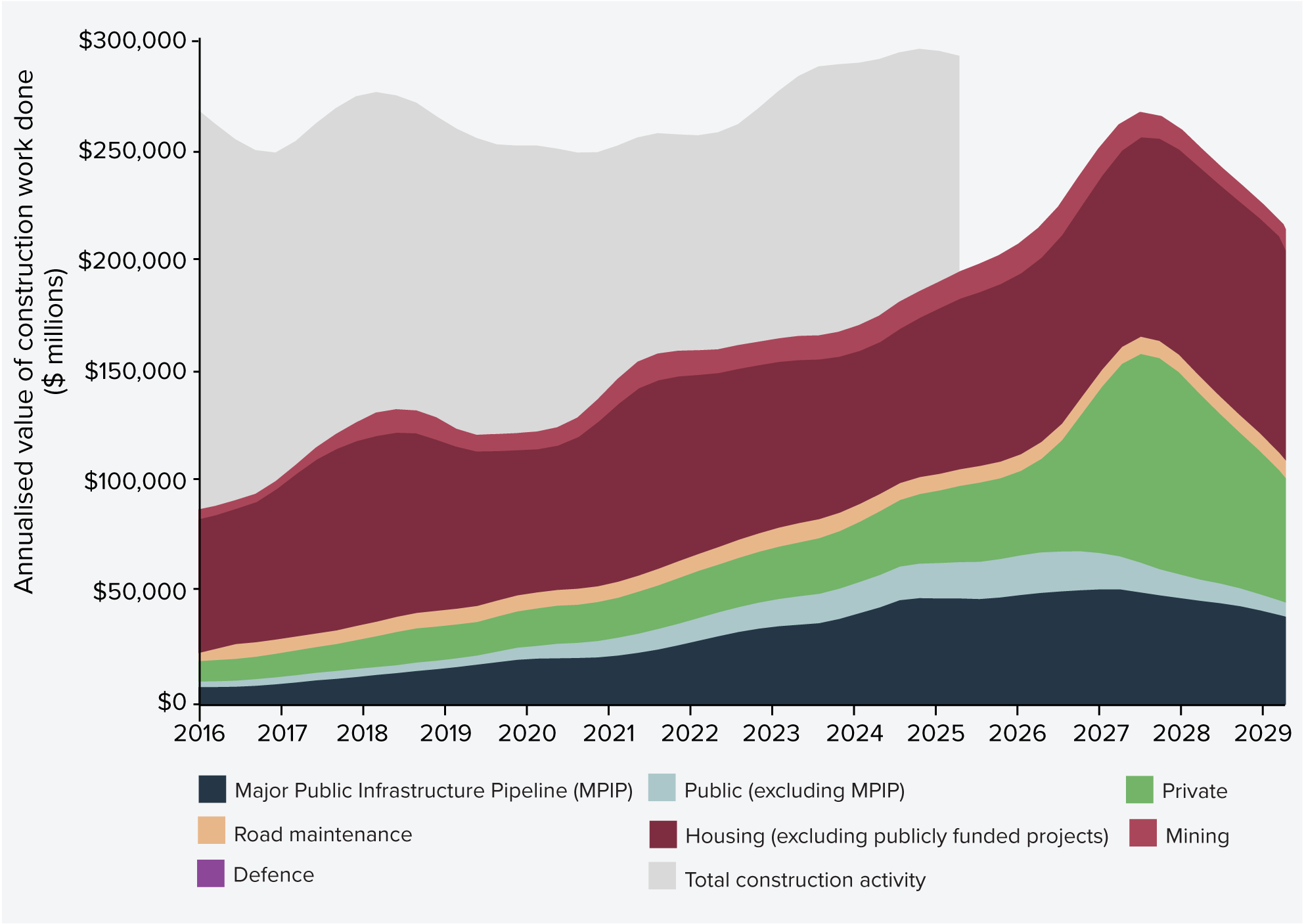
Figure 1 shows Australia’s forecast of construction activity based on project cost estimates, compared against total construction activity reported by the Australian Bureau of Statistics (ABS). The key distinction is that ABS data (shown as ‘Total construction activity’) reflects actual costs, including the impact of cost escalations, whereas Infrastructure Australia’s database (comprising the ‘MPIP, SCPIP, Road Maintenance, Mining, Private, and Housing pipelines) uses cost estimates with limited certainty about future escalations. This difference makes it challenging to determine the exact share of total activity captured by our forecast. However, this comparison does indicate our forecast construction volumes peaking in 2027 at levels comparable to current ABS-reported activity. 

While not all projects in our database are expected to proceed as announced, this provides valuable insight into market ambition over the coming years. 

Figure 1: Forecast construction spend, as captured in the Infrastructure Australia database, against a backdrop of historic total construction activity (2016 to 2029)

Figure 1: Forecast construction spend, as captured in the Infrastructure Australia database, against a backdrop of historic total construction activity (2016 to 2029)
Source: Australian Bureau of Statistics (for total construction activity)5

Total construction demand captured in our database covers $1.14 trillion in the five years from 2024–25 to 2028–29. This level of forecast activity is almost in line with current run rates where the total construction activity reported by the Australian Bureau of Statistics in the five years from 2020–21 to 2024–25 was $1.4 trillion. 

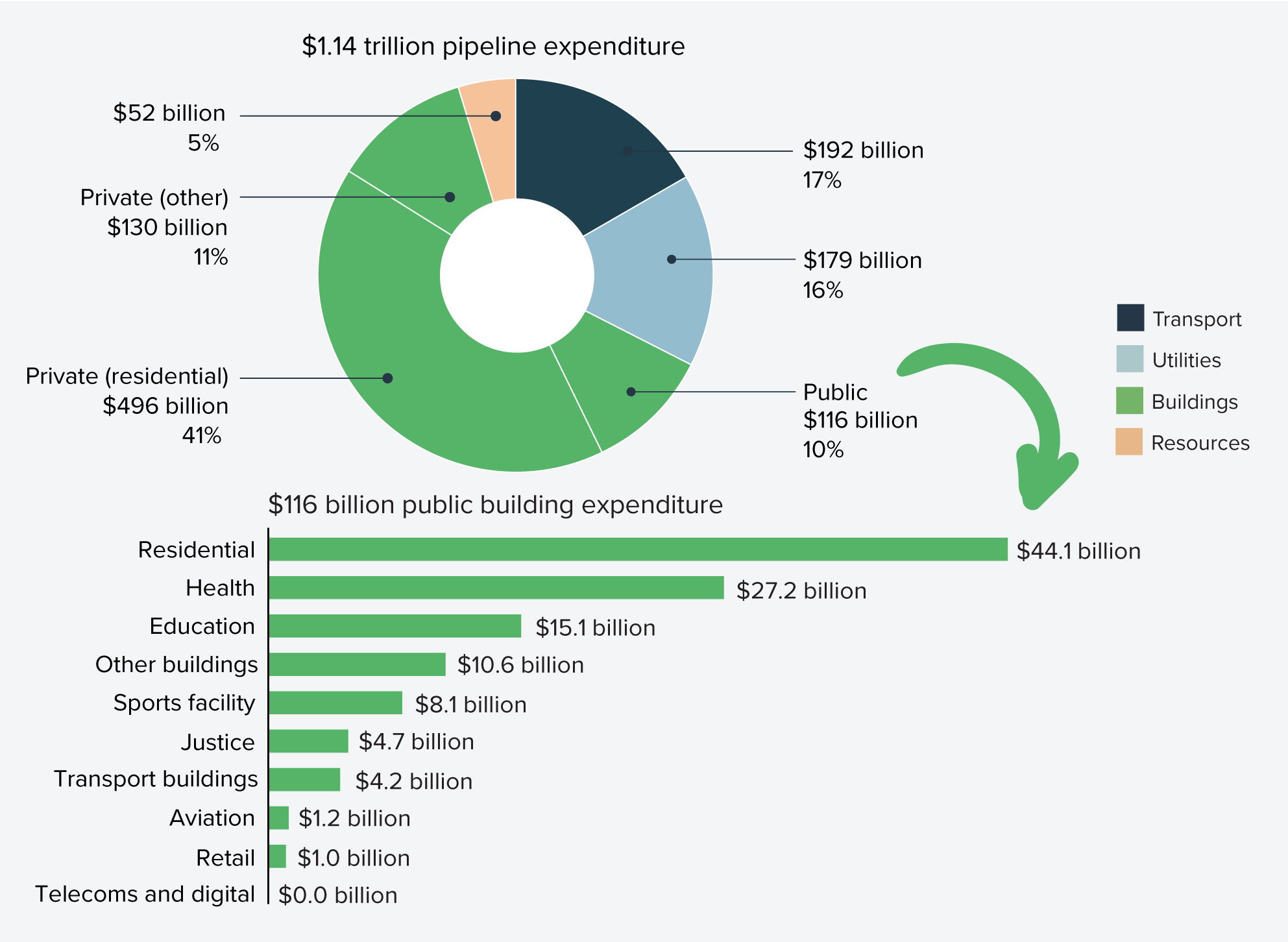
Figure 2 shows the total infrastructure pipeline, as captured in our database, broken down by sector. Buildings account for most of the expected expenditure (62%), followed by transport (17%), utilities (16%) and resources (5%).  

Of the $716 billion in buildings, $77 billion is from the Major Public Infrastructure Pipeline, with another $48 billion invested in smaller capital buildings projects by governments, totalling $116 billion of public investment. Figure 2 includes a breakdown of this public investment in buildings, which is dominated by residential and health projects.

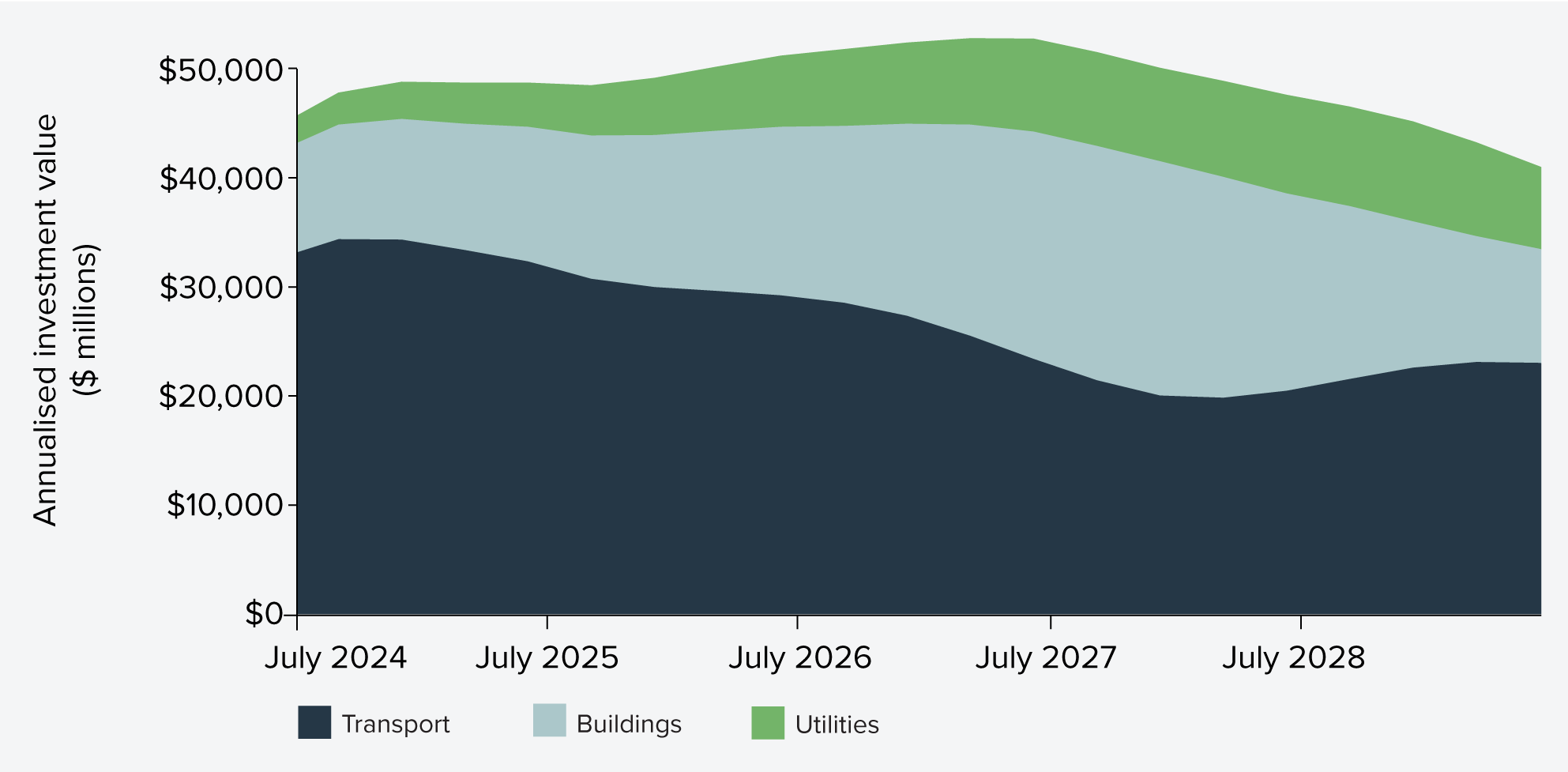
Figure 2: Combined construction pipeline, as captured in the Infrastructure Australia database, by sector (2024–25 to 2028–29)

Figure 2: Combined construction pipeline, as captured in the Infrastructure Australia database, by sector (2024–25 to 2028–29)

For the period 2024–25 to 2028–29, public spending accounts for 28% of the $1.14 trillion construction market, of which the Major Public Infrastructure Pipeline totals $242 billion (22%) and $66 billion (6%) is planned on Small Capital Projects. The rest of this chapter provides an analysis of the Major Public Infrastructure Pipeline.

The five-year Major Public Infrastructure Pipeline has increased by 14% to $242 billion, reflecting national priorities for housing supply and the energy transition

The five-year rolling Major Public Infrastructure Pipeline has increased from $213 billion projected last year (2023–24 to 2027–28) to $242 billion this year (2024–25 to 2028–29).   

This increase reverses the trend previously observed in 2023 and 2024 where year-on-year reductions in forecasted spending were reported:

  • 2023 Infrastructure Market Capacity reported $230 billion down from $237 billion in 2022.
  • 2024 Infrastructure Market Capacity reported $213 billion down from $230 billion in 2023.

The rise is reflective of national priorities to supply more housing and accelerate the energy transition. For publicly-funded projects we continue to see the transport portfolios across Australian states and territories hold steady, with governments continuing to grow investments in buildings, particularly for health and housing outcomes. Meanwhile, the growth in public-funded utilities infrastructure is predominantly explained by the addition of transmission projects in support of the energy transition.

Peak investment has moved one year out to 2027 compared to the projection last year. These changes are consistent with a continuing trend each year where the projected investment peak shifts into outer years. 

The profile of demand over the five years has flattened compared with the 2024 profile. In fact, for the first time, our reporting shows that the outer year, 2028-29, falls away to a level that is more than 75% of the peak. In prior years, this drop in outer years has been anywhere between 50% and 60% of the peak. While this does not translate to long-term project certainty, it is a strong indication of long-term investment certainty in public infrastructure projects.

Like-for-like analysis of how project estimates have changed in the past 12 months shows the growth in demand is primarily driven by projects recently added to the pipeline

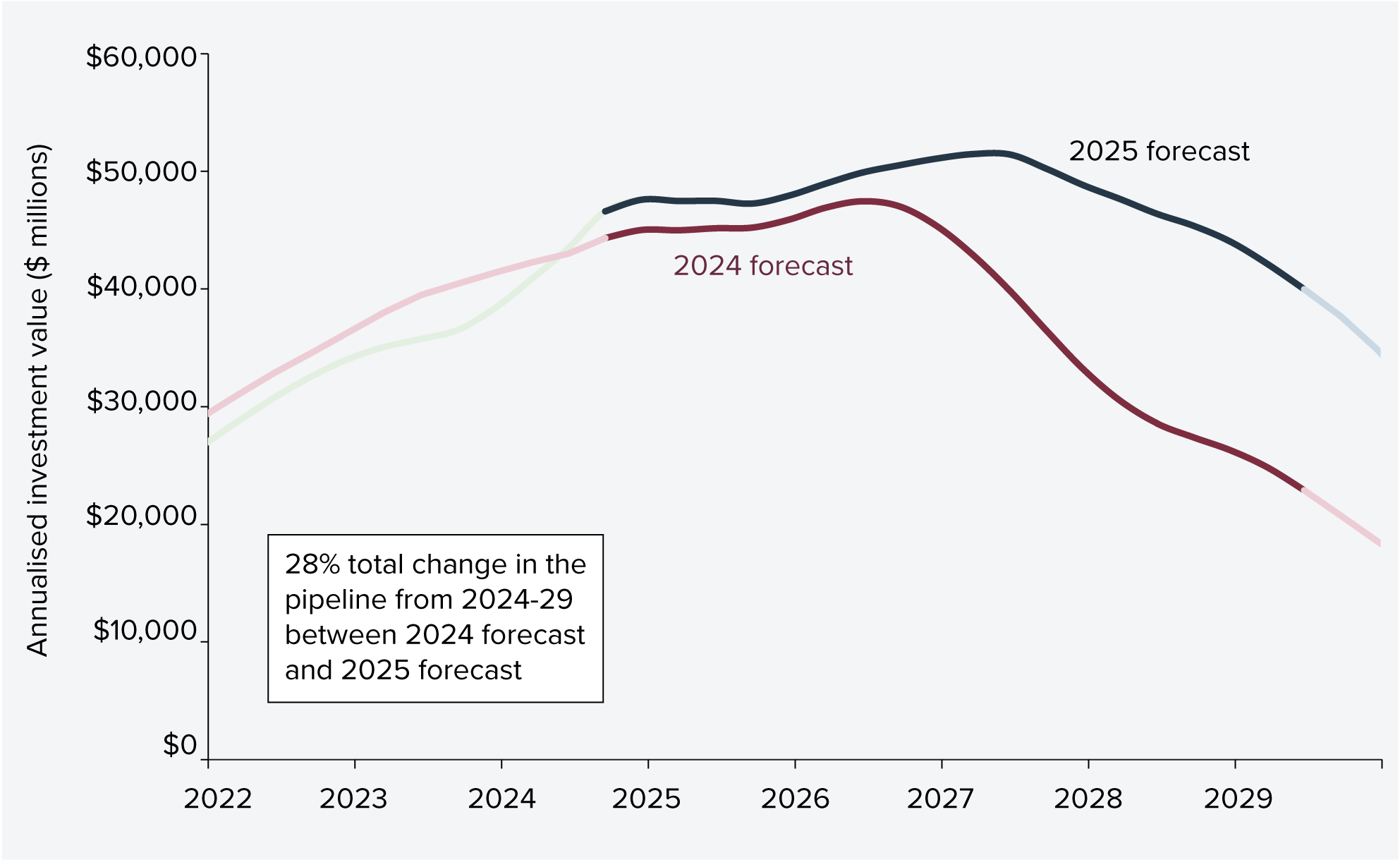
Infrastructure Australia conducted an in-depth year-on-year analysis, looking for differences in the investment schedule for projects in the Major Public Infrastructure Pipeline between 2024 estimates and 2025 estimates over the same five-year period (2024-25 to 2028-29 as shown in Figure 3).

Figure 3: Comparison of 2024 and 2025 forecasts of Major Public Infrastructure Pipeline activity (2024–25 to 2028–29)

Figure 3: Comparison of 2024 and 2025 forecasts of Major Public Infrastructure Pipeline activity (2024–25 to 2028–29)

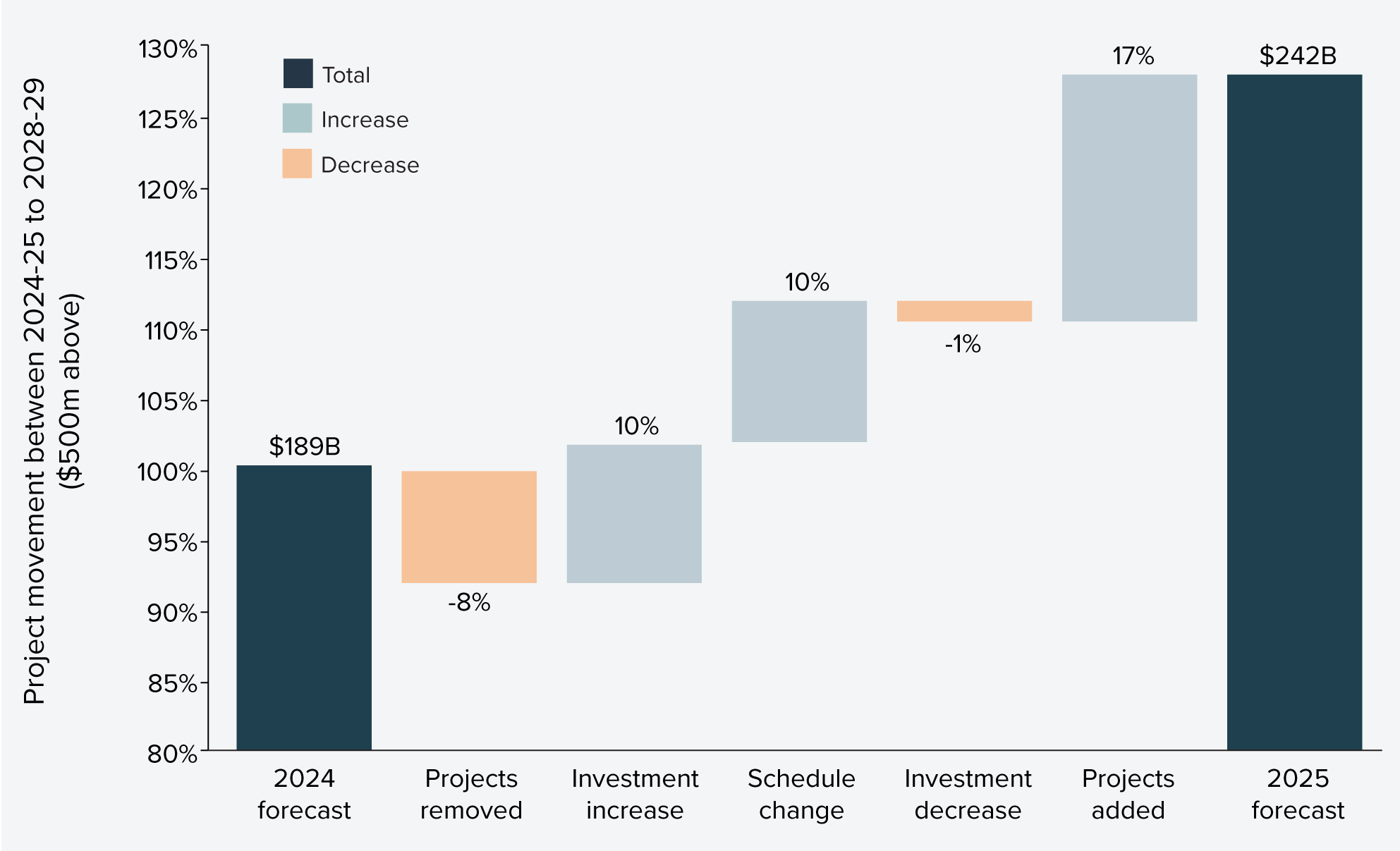
Whereas the change in the rolling Major Public Infrastructure Pipeline described earlier is a 14% increase in activity from $213 billion to $242 billion, this like-for-like analysis is different because it is undertaken on the same time horizon for both the 2024 and 2025 forecasts without rolling on by one year, so the proportion of the 2024 forecast analysed is $189 billion.

The analysis reveals the pipeline decreases by 8% due to projects being removed or recently completed, as shown in Figure 4. A further 1% drop was observed from investment cuts in continuing projects. At 9% down, this is significantly less than the 23% reductions observed 12 months earlier for both categories.

Increases to the pipeline were driven primarily by new projects coming into the pipeline (17%) which is well up on the previous year, while the increase explained by investment estimates (10%) was broadly in line with changes observed in prior years.

The remaining category that drives a change when comparing year on year, is explained by schedule changes to projects, where construction start and/or completion is delayed. This has the effect of lessening the investment in the time period that has already passed (2023-2024), and propping up the investment planned for the outer years of the time periods compared. It results in a 10% increase versus 2024 estimates.

Figure 4: Major Public Infrastructure Pipeline spend from 2024–25 to 2028–29, changes from 2024 forecast to 2025 forecast 

Whereas the change in the rolling Major Public Infrastructure Pipeline described earlier is a 14% increase in activity from $213 billion to $242 billion, this like-for-like analysis is different because it is undertaken on the same time horizon for both the 2024 and 2025 forecasts without rolling on by one year, so the proportion of the 2024 forecast analysed is $189 billion. The analysis reveals the pipeline decreases by 8% due to projects being removed or recently completed, as shown in Figure 4. A further 1% drop was observed from investment cuts in continuing projects. At 9% down, this is significantly less than the 23% reductions observed 12 months earlier for both categories. Increases to the pipeline were driven primarily by new projects coming into the pipeline (17%) which is well up on the previous year, while the increase explained by investment estimates (10%) was broadly in line with changes observed in prior years. The remaining category that drives a change when comparing year on year, is explained by schedule changes to projects, where construction start and/or completion is delayed. This has the effect of lessening the investment in the time period that has already passed (2023-2024), and propping up the investment planned for the outer years of the time periods compared. It results in a 10% increase versus 2024 estimates.  Figure 4: Major Public Infrastructure Pipeline spend from 2024–25 to 2028–29, changes from 2024 forecast to 2025 forecast

In summary, this year’s growth in the Major Public Infrastructure Pipeline is largely explained by many more new projects being added, compared to what has rolled off the pipeline from project completions and cancellations. Other categories are broadly in line with the findings from previous years, however it is noted that there was significantly less change attributable to decreases in a project’s investment, an indication that there was less focus on de-scoping within projects throughout the past 12 months than was observed in the year prior.

Analysis of demand by region sees further growth across northern Australia

Regional analysis is enabled by the development in 2023 of analytical tools built by Infrastructure Australia in partnership with governments across the country. These analytical tools are designed to help government decision makers diagnose labour supply bottlenecks, spot growth opportunities, and build strong evidence bases for investment decisions. 

In the five years from 2024-2025 to 2028-2029, there are significant increases in public investment across Queensland and Northern Territory for the second consecutive year with Major Public Infrastructure Pipelines growing by another $4 billion to $51 billion, after a $16 billion increase the year before.  

In Queensland the increases are driven by investments across the transport and utilities portfolios, predominantly explained by additional construction activity in the Sunshine Coast and Wide Bay regions. The upcoming demand for construction from 2025-26 to 2028-29 across these two neighbouring regions is more than four times that of the previous four years from 2021-22 to 2024-25.

In the Northern Territory the increase is driven by transport investment in the Greater Darwin area.

Growth across either housing or energy is evident in all states and territories

The jurisdictions driving an even higher proportion of the overall increase this year are New South Wales and South Australia with an additional $26 billion in the five-year outlook compared with the year before.

In South Australia the increase is driven by investments into housing across the Greater Adelaide area, while the transport portfolio increases as construction activity ramps up during the outlook period on its River Torrens to Darlington Project.

In New South Wales the increase is driven by the utilities portfolio with water and transmission projects added to the pipeline.

While most energy projects in the pipeline are privately-funded and therefore not counted in the Major Public Infrastructure Pipeline, governments across Australia are putting significantly more investment into transmission. Transmission projects now account for $15 billion across the five-year outlook, up from $4 billion the year before. The increases are observed across five of eight states and territories.

Similarly, investment into social and affordable housing as part of the Major Public Infrastructure Pipeline has increased and is now $28 billion up from $17 billion. When also considering smaller capital projects, there are six out of eight jurisdictions that have increased their investment into housing.

Figure 5: Major Public Infrastructure Pipeline spend by sector (2024–25 to 2028–29)
 

Figure 5: Major Public Infrastructure Pipeline spend by sector (2024–25 to 2028–29)

The projected increase in demand for many regional areas would intensify local supply chain constraints such as attracting workers and sourcing materials 

The Major Public Infrastructure Pipeline comprises $63 billion of activity outside of Australia’s eight capital cities, which at 27% of the pipeline is broadly in line with Australia’s population distribution. This is up from $58 billion last year which means the increase is in line with the size of the increase across capital cities.

Unlike most capital cities, 10 regions across Queensland, New South Wales and Tasmania face a significant challenge with the Major Public Infrastructure Pipeline in each expected to more than double between 2025-26 and 2028-29, compared with the previous four years (2021-22 to 2024-25). For this analysis, Infrastructure Australia uses Australian Bureau of Statistics’ Statistical Area 4 as the boundary between regions. Of all 41 regions outside of capital cities, 23 of them will see an increase in construction activity in the coming four years across, and these regions are located across all six states and the Northern Territory.

The challenges to be overcome with respect to the growing construction demand outside of capital cities are more pronounced when analysing the energy pipeline.

The Energy Pipeline 

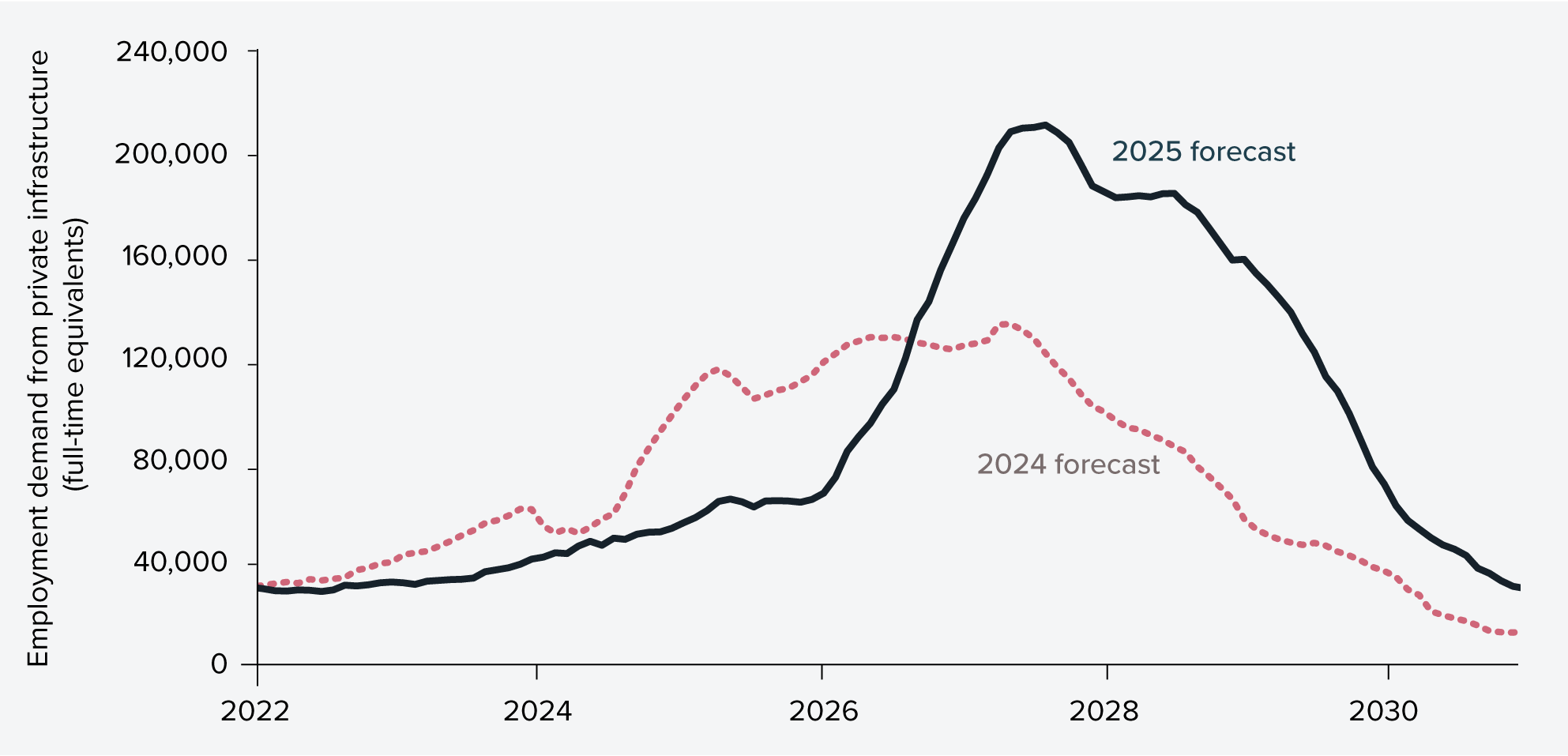
In terms of private investment (that is, not counted in the Major Public Infrastructure Pipeline) we again observed a jump in labour demand much like that observed in the previous edition of this report. This step-change in labour demand is driven by the renewable energy transition. However, this year’s demand profile shows workforce demand now projected to rise sharply from early 2026, around 18 months later than earlier forecasts, which had anticipated growth from mid-2024, as shown in Figure 6

Figure 6: Comparison of 2024 and 2025 forecasts of demand for labour from private infrastructure 

Figure 6: Comparison of 2024 and 2025 forecasts of demand for labour from private infrastructure
Notes: Chart represents forecast labour demand data based on private infrastructure, excluding resources

The scale and pace of ambition in the pipeline faces delivery challenges 

It is clear that energy infrastructure investment continues to shift to the right due to delays to the planned delivery timelines initially expected by project developers. 

This is reinforced by analysis from Infrastructure Partnerships Australia of the Australia and New Zealand Infrastructure Pipeline (ANZIP — see below). Infrastructure Partnerships Australia has assessed the likelihood of energy projects achieving planned delivery schedules based on a range of criteria including the status of project financing, planning approvals, final investment decisions and signing of contracts. The results of this analysis were clear, that publicly-procured road, rail and social projects are much more likely to stick to their plans than energy projects. The analysis characterises 58% of the 298 energy projects included on ANZIP as having a low to moderate likelihood of being delivered to the project schedule, relative to the other energy projects on ANZIP.6

About the Australia and New Zealand Infrastructure Pipeline (ANZIP)

The ANZIP is produced by Infrastructure Partnerships Australia as a continuously updated forward view of major infrastructure projects and contracts across Australia and New Zealand. It provides a transparent, detailed and independent snapshot of infrastructure project investment, construction, operation and privatisation opportunities that Infrastructure Partnerships Australia tracks from announcement to completion.

The key distinctions between Infrastructure Partnerships Australia’s ANZIP and IA’s National Infrastructure Project Database analysed for this report are best explained by these two factors:

  • ANZIP tracks projects from their early stages of planning, through to contract award, and into their operational phase, this means there is more breadth to project information retained in ANZIP.
  • ANZIP’s Australian projects cover projects and operations that are A$300 million and over, and Public Private Partnerships and investable projects and divestments that are A$100 million and over. This means there are less projects in ANZIP than analysed in IA’s database.

Notwithstanding delivery challenges, the ambition for investment in energy projects continues to grow, with a focus in regional areas

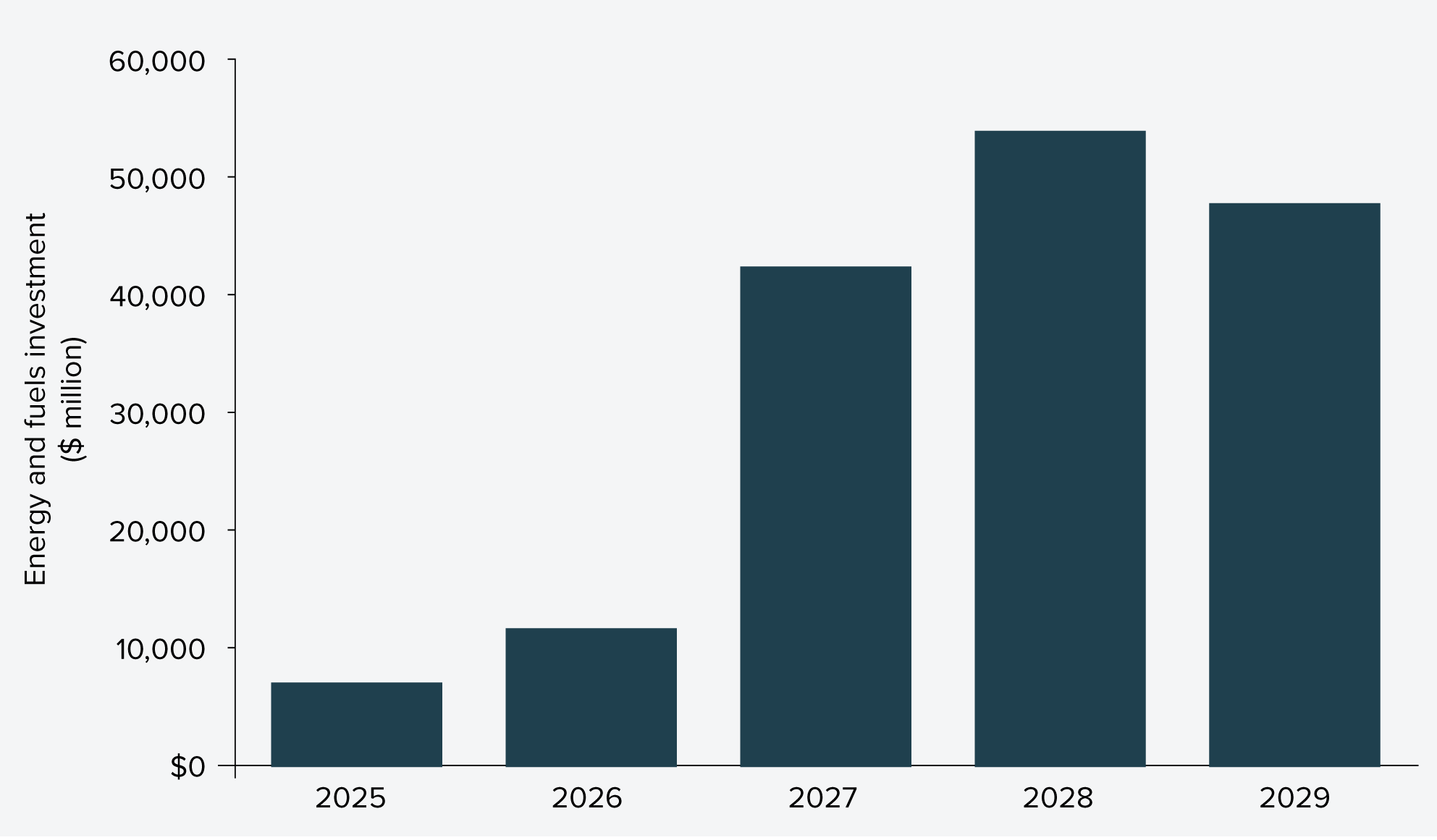
As the net zero transition accelerates, the scale of energy infrastructure investment continues to grow. Irrespective of how it is funded, the pipeline for projects to build transmission, solar, wind and pumped hydro is now $163 billion for the five years from 2024-25 to 2028-29, as shown in Figure 7. Demand is expected to be most acute for regional Australia.

Figure 7: Forward pipeline of energy infrastructure investment (2024-2025 to 2028-2029)

Figure 7: Forward pipeline of energy infrastructure investment (2024-2025 to 2028-2029)

Pipeline visibility, accelerating approvals and smoothing supply chains are all key to remove barriers to delivery of energy projects

State and territory governments have made significant strides to provide industry with better visibility of the forward pipeline for major public infrastructure such as transport.7 However, there is no equivalent for the energy sector, which is predominantly private industry-led and as such lacks coordination and is subject to greater commercial sensitivities. 

The Australian Government, working with States and Territories, released the inaugural National Renewable Energy Priority List in March 2025. The List identifies 56 priority renewable energy projects that will receive targeted support to streamline regulatory planning and environmental approval processes. However, the list does not include information on funding commitments nor on delivery timelines, limiting industry’s ability to plan, invest, and scale delivery capacity with confidence.

Industry also often cites long planning and regulatory approval times and ‘green tape’ as barriers to progressing energy projects as planned. Almost half all organisations surveyed by Infrastructure Australia this year viewed delays in obtaining planning and environmental approvals (47%) as being among the greatest risks to project delivery.

Industry soundings suggest that in the face of these delays and likelihood that projects will proceed as planned, investors are directing money to overseas renewable energy opportunities and the overseas suppliers may be less willing to service the Australian market when they receive orders for their projects. Local firms are also hesitant to build workforce capacity for work that is yet to fully materialise. 

Renewable energy supply chains also face enabling infrastructure and logistical challenges. The import and local transport of large components such as wind turbines can be constrained by existing port or road infrastructure. Some projects face difficulty getting off the ground due to a lack of capacity to connect to the grid. For example, for the South-West Renewable Energy Zone (REZ) in NSW, projects in the pipeline would theoretically deliver 16 gigawatts (GW) of generation capacity. However, the REZ has a maximum capacity cap of 3.98 GW that planned transmission can support.8 

INDUSTRY SOUNDINGS 

“Two years ago, we were doubling down on gearing up our energy teams ... [now] we are redeploying some of that capacity into parts of Asia and other locations where we are seeing the volume of work hitting the market much more quickly.”

(Constructor) 

“All these new entrants to the Australian market are used to developing a couple of hundred-megawatt wind farm somewhere where the legislation requirements, the environmental constraints and the grid connection restraints aren’t as harsh. It’s just harder to do business in Australia because of the regulatory process.”

(Constructor)

Governments are streamlining approvals for energy projects 

At the national level, the Australian Government has committed to reforming the Environment Protection and Biodiversity Conservation Act 1999 (EPBC Act) to strengthen environmental protection and streamline approvals. It has committed to introducing the reform package to Parliament in 2025, six months ahead of the original timelines. Regional planning pilots are also currently underway in Queensland, South Australia Victoria and New South Wales. These pilots are providing information and guidance to help streamline assessments and approvals. Some pilots may be developed further to make regulatory plans that allow renewable energy projects in pre-assessed zones to bypass lengthy case-by-case approvals.

State and territory governments have also introduced a range of measures to fast-track approvals for energy projects in response to growing renewable energy targets and infrastructure needs. 

For example:

  • Western Australia has established a Priority Approvals team to coordinate inter-agency processes, enable parallel assessments, and provide a single point of contact for proponents, reducing delays and improving transparency.
  • Similarly, Victoria’s Development Facilitation Program accelerates approvals for renewable energy and storage projects, guaranteeing decisions within about four months to help meet decarbonisation goals.
  • The Northern Territory introduced its Approvals Fast Track Taskforce and Tasmania has introduced the Renewable Energy Approvals Pathway (REAP) to accelerate large-scale renewable projects like wind farms and transmission lines.   
  • Other states, such as New South Wales and Queensland, have implemented planning acceleration programs and priority development areas to cut red tape for critical infrastructure, while still maintaining environmental standards.  

Under the EPBC Act, the Australian Government can enter into bilateral agreements with states and territories to streamline environmental assessments for projects that may impact matters of national environmental significance. These agreements allow a state or territory to conduct a single accredited assessment process that meets both state and federal level requirements, reducing duplication and improving efficiency. After the state or territory completes its assessment, it provides a report to the Australian Government, which then makes the final approval decision under the EPBC Act.9

This framework aims to balance high environmental standards while enabling timely project delivery by aligning assessment processes across jurisdiction. While bilateral agreements have been in place with all states and territories since 2015, their application remains low. More could be done to promote the use of the bilateral agreements to streamline approvals processes and remove duplication between state and federal level requirements.

Cross-sector demand management

State and territory governments have increasingly prioritised cross-sector coordination in infrastructure planning and delivery, recognising transport as a key enabler of housing, energy transition, and strategic economic precincts. Coordinator General roles in Western Australia and New South Wales exemplify this integrated approach, aligning transport investments with broader objectives in urban development, energy, and regional growth.

Western Australia

Infrastructure WA (IWA) has taken a proactive role in addressing market capacity challenges across Western Australia, with a particular focus on the Western Trade Coast (WTC) — a nationally significant industrial precinct.

In response to the WA Premier’s mandate, IWA has supported portfolio scheduling and initiated a market capacity pipeline to support coordination of infrastructure delivery across major project delivery agencies including Westport, Department of Transport and Major Infrastructure, Fremantle Port Authority and Water Corporation. This work has already identified a significant uplift in projected construction expenditure through 2028–2040 and the importance of information sharing between State and Commonwealth, including the Department of Defence, on infrastructure planning and delivery. 

Building on this momentum, IWA is advancing an analytics program, in close collaboration with Infrastructure Australia, to forecast demand and supply pressures, at both at an aggregate and project-level, for labour, materials, and plant—critical to ensuring on-time, on-budget delivery. 

This collaboration is already delivering tangible benefits through testing, calibration and validation of the data, and models, and demonstrates collective leadership and cooperation in infrastructure delivery coordination, data-driven planning, unlocking opportunities for innovation, workforce planning & development (including IA’s Net Zero workstream), and strategic investment across WA and the Nation.

Similarly, the New South Wales Government has strengthened cross-sector coordination for strategic infrastructure projects by expanding the Infrastructure Coordinator-General function within Infrastructure NSW (INSW).10

Since 2024, it has carried an expanded role that includes leading coordination across housing, energy, and employment-related infrastructure priorities, particularly in Western Sydney and the Aerotropolis. This includes aligning planning and delivery timeframes across agencies to reduce delays and duplication.

The Coordinator General also has powers to intervene and resolve roadblocks or disagreements between agencies, ensuring critical projects progress without unnecessary red tape.

Its immediate focus areas include:  

  • Infrastructure to support housing targets and reforms under the National Housing Accord.
  • Coordination of enabling works for the Electricity Infrastructure Roadmap, including transmission and renewable energy projects.
  • Freight and logistics infrastructure to unlock employment lands in Western Sydney.
  • Aerotropolis Sector Plan: INSW sequences and prioritises transport and water infrastructure to enable development across the Aerotropolis, ensuring integrated planning for roads, utilities, and airport-related growth.
     

INDUSTRY VIEW SECTION 1: Understanding demand

Current capacity remains similar to last year, but delivery confidence is higher

Similar to 2024, six in 10 organisations view the current market capacity as about the same as last year (60%), one in four (26%) think it is worse, and few (9%) describe it as less challenging.

Industry reports stronger confidence in ability to deliver in the short and longer term. A majority of organisations are confident in their ability to deliver infrastructure projects over the next 12 months (67%), the next two to four years (64%) and in more than five years’ time (56%).

Confidence is notably stronger than in 2024, with one in four organisations (26%) reporting high confidence (‘highly likely’) to successfully deliver infrastructure projects over the next 12 months, double from last year’s survey results.

Industry reports slight uptick in capital activity, with many expecting growth over the next 12 months

More organisations have seen an increase in capital project activity over the last 12 months (31%) than have seen a decrease (23%), however four in 10 (44%) think this has remained about the same. This is similar to last year’s survey results (where 28% reported an increase and 42% reported capital activity had remained about the same over the last 12 months).

When looking at the year ahead, twice as many organisations anticipate an increase in project activity (40%) than expect a decrease (18%). Expectations for the next 12 months largely align with perceptions of recent activity, with the majority of organisations that experienced increased activity over the last year anticipating further growth and those who experienced no change or decreased activity largely expect a continuation of these trends.

Inconsistent pipeline of work in each state and territory predicted to constrain capacity

Over the next 12 months most organisations are concerned by capacity challenges in New South Wales (30%) and Victoria (27%) followed by Western Australia (16%) and Queensland (15%), and the smaller states and territories.

In the longer term, industry anticipates capacity opening in New South Wales and Victoria, as large civil projects progress through the delivery phase and the forward pipeline weakens. However, market capacity is expected to become more constrained in Queensland and South Australia with pipelines firming around the 2032 Brisbane Olympics and key defence projects in those regions.

Industry noted the key issues impacting capacity in specific geographic regions include: 

  • uncertainty about state / territory government fiscal priorities and forward pipelines, despite continued high demand for infrastructure investment in growing cities.
  • delayed or ‘fluid’ start dates, longer approval waits and shorter delivery timeframes in some states, following extended procurement processes in which tenderers compete on both cost and delivery timeframes.
  • competition between states to fill labour and skills shortages on large resources and construction projects pushing up costs and compounding shortages in smaller states. 

Labour and material supply disruptions remain the leading causes of project disruption 

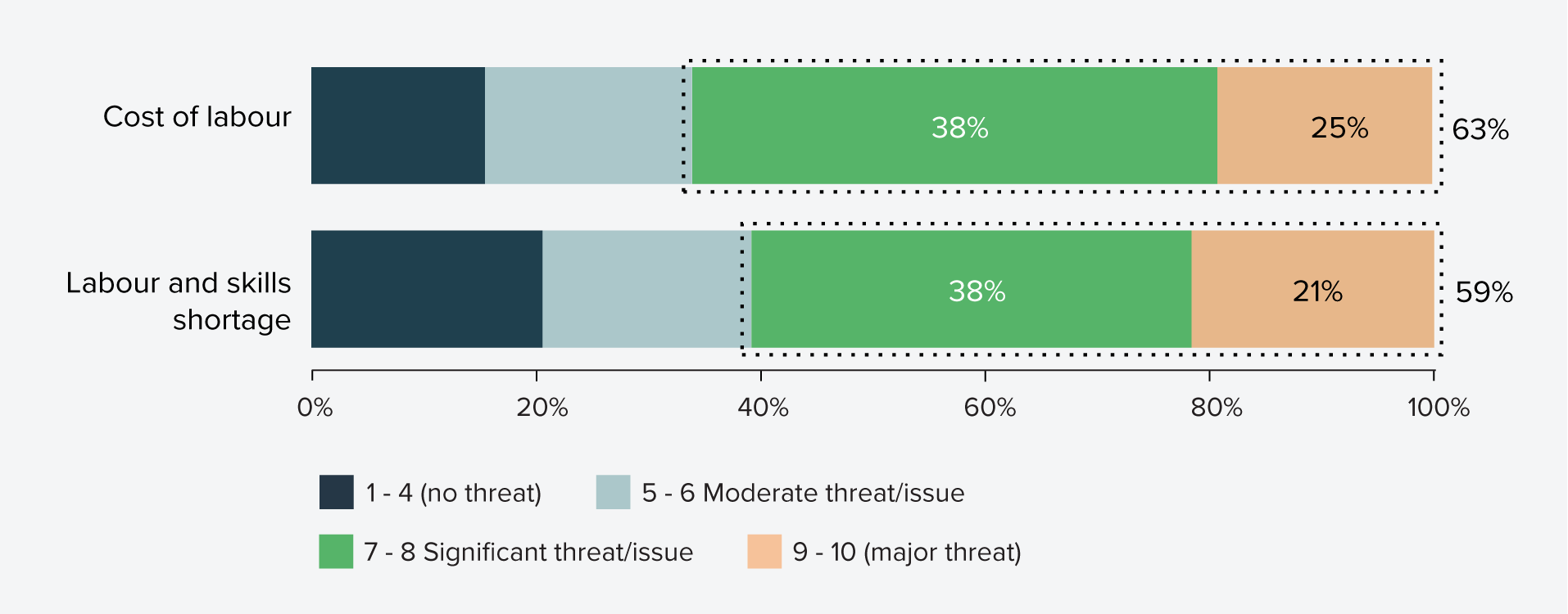
Organisations report that disruptions to project delivery are being driven primarily by cost of materials (64%), cost of labour (63%) and labour and skills shortages (59%), as shown in Figure 8

Figure 8: Severity of disruptions to project delivery as reported by industry (%)

SECTION 2: Non-labour supply

The price of key construction materials grew slightly and in line with inflation  

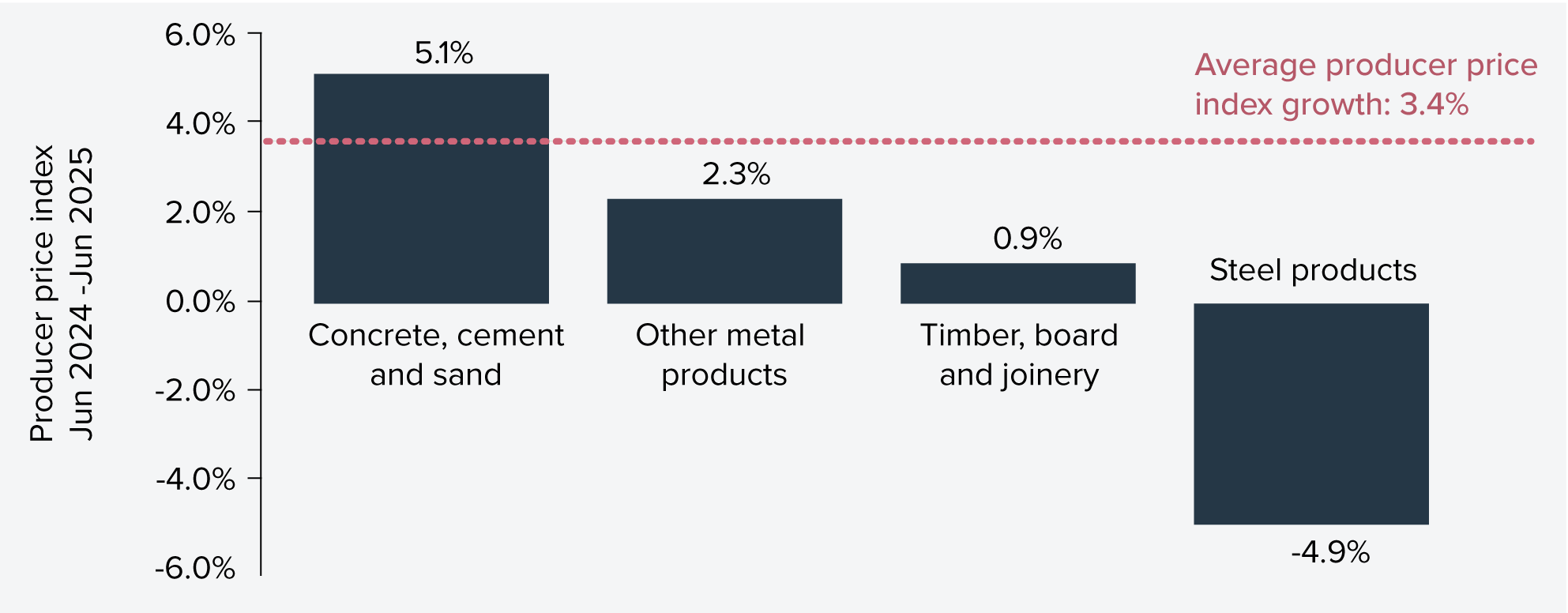
Figure 9 shows that over the 12 months to June 2025, the price of concrete, cement and sand products rose by 5.1%, the price of timber, board and joinery products rose by 0.9% and metals (such as copper and aluminum) grew by 2.3%. This broadly aligns with the Producer Price Index’s growth of 3.4% over the last 12 months to June 2025 and reinforces a post-COVID trend where materials prices have risen higher than wages, which increased 3.2% for the construction sector in the same 12 months.

The price of steel and steel products however continues to drop  

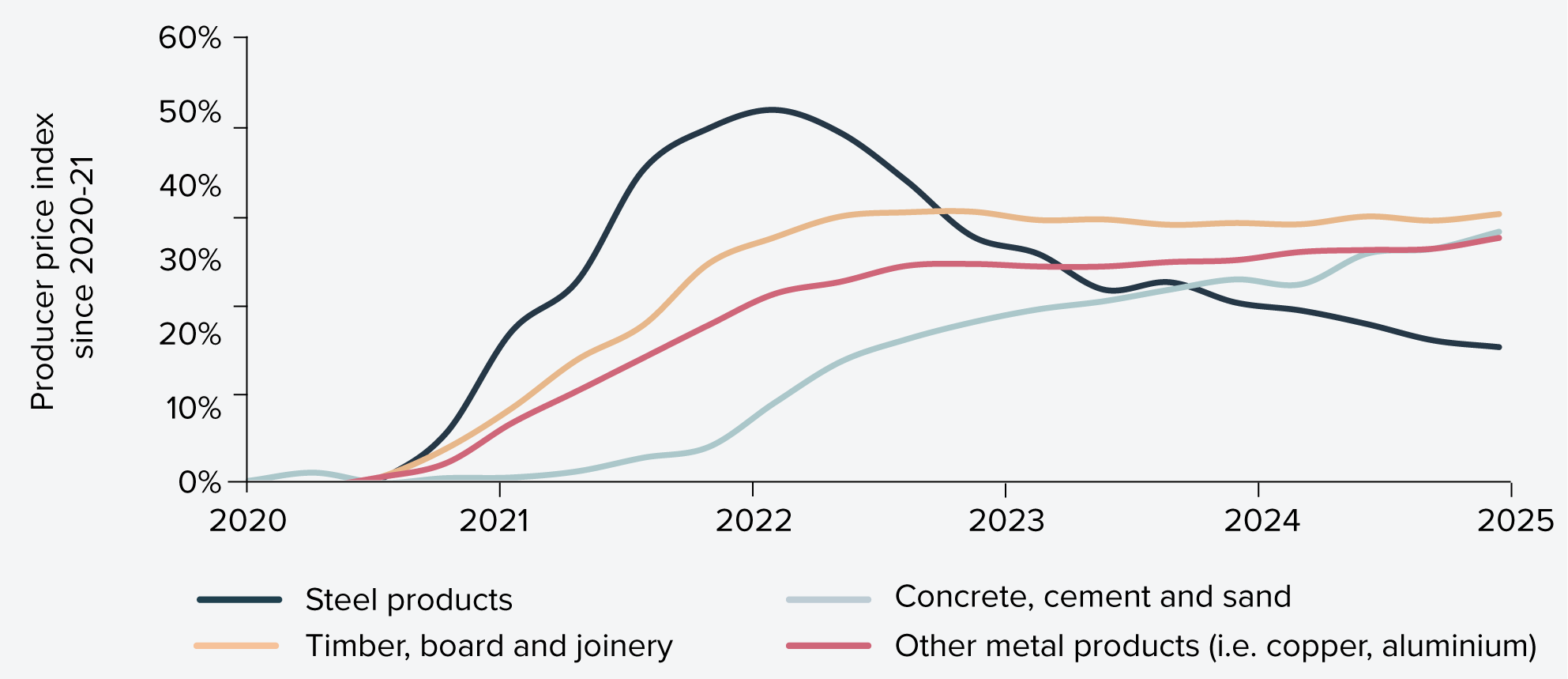
Unlike other key construction materials, the price growth of steel and steel products has dropped from a high in 2022 — a trend that has continued this year with a further 4.9% drop over the 12 months to June 2025. See Figure 9.  

Figure 9: Increase in price in selected materials – past 12 months and trend since 2020-21

Figure 9: Increase in price in selected materials – past 12 months and trend since 2020-21Figure 9: Increase in price in selected materials – past 12 months and trend since 2020-21
Source: Australian Bureau of Statistics (2025)11

Industry report steel and concrete supply as the top risks to delivery of transport and utilities projects

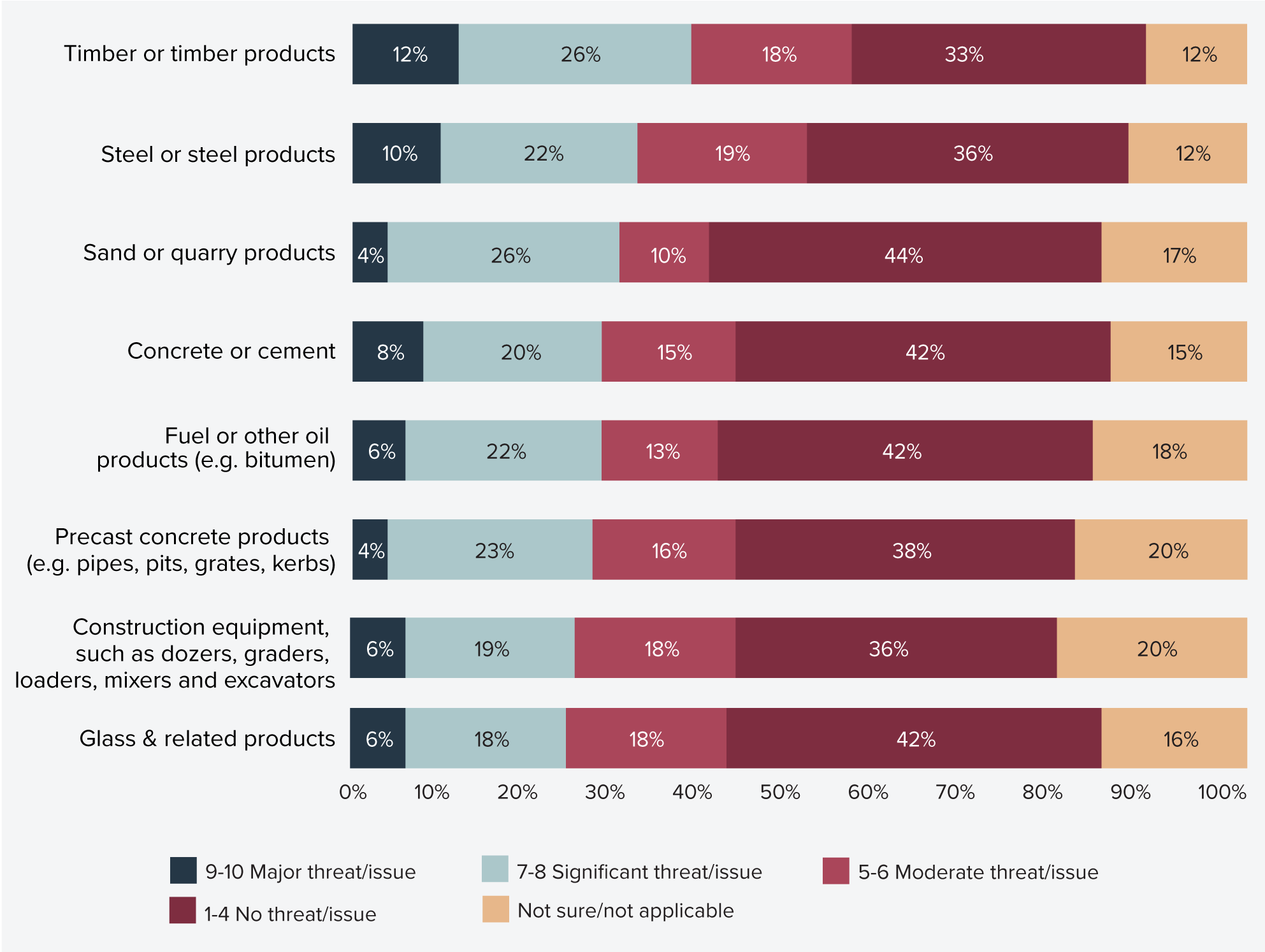
Response from Infrastructure Australia’s annual Industry Confidence Survey indicates that the supply of most key materials continues to impact project delivery. Figure 10 shows that approximately one in three organisations highlighted supply of timber and timber products (38%), steel or steel products (32%) and concrete or cement (28%) as a major or significant threat to successful delivery. This reflects findings from last year’s survey, highlighting the continued importance of these supplies for successful project delivery.

Figure 10: Supply chain risk factors to successful delivery of infrastructure projects in the last 12 months (%)

Figure 10: Supply chain risk factors to successful delivery of infrastructure projects in the last 12 months (%)
Source: Infrastructure Australia Industry Confidence Survey (2025)

Drilling further down into survey responses, indicative top materials risks by sector are as follows:

  • Transport projects: supply of steel or steel products pose the highest risk, followed by construction equipment and sand, then quarry products.  
  • Utilities projects: supply of construction equipment, followed by steel or steel products, then concrete or cement.
  • Residential housing projects: supply of steel or steel products, followed by timber or timber products, then concrete or cement.

Industry expects non-labour costs to continue increasing 

Six in 10 surveyed organisations observe non-labour input costs for infrastructure projects have increased over the last 12 months (68%, including 25% who have seen these ‘increase a lot’).

Almost half (48%) believe prices have been accelerating over 2025 and more than a third (36%) think prices have not yet peaked. These results are similar to last years’ findings, indicating the outlook on materials supply prices has remained steady over the last 12 months.

Supply chain risks are more subdued, and caused by both international and domestic issues

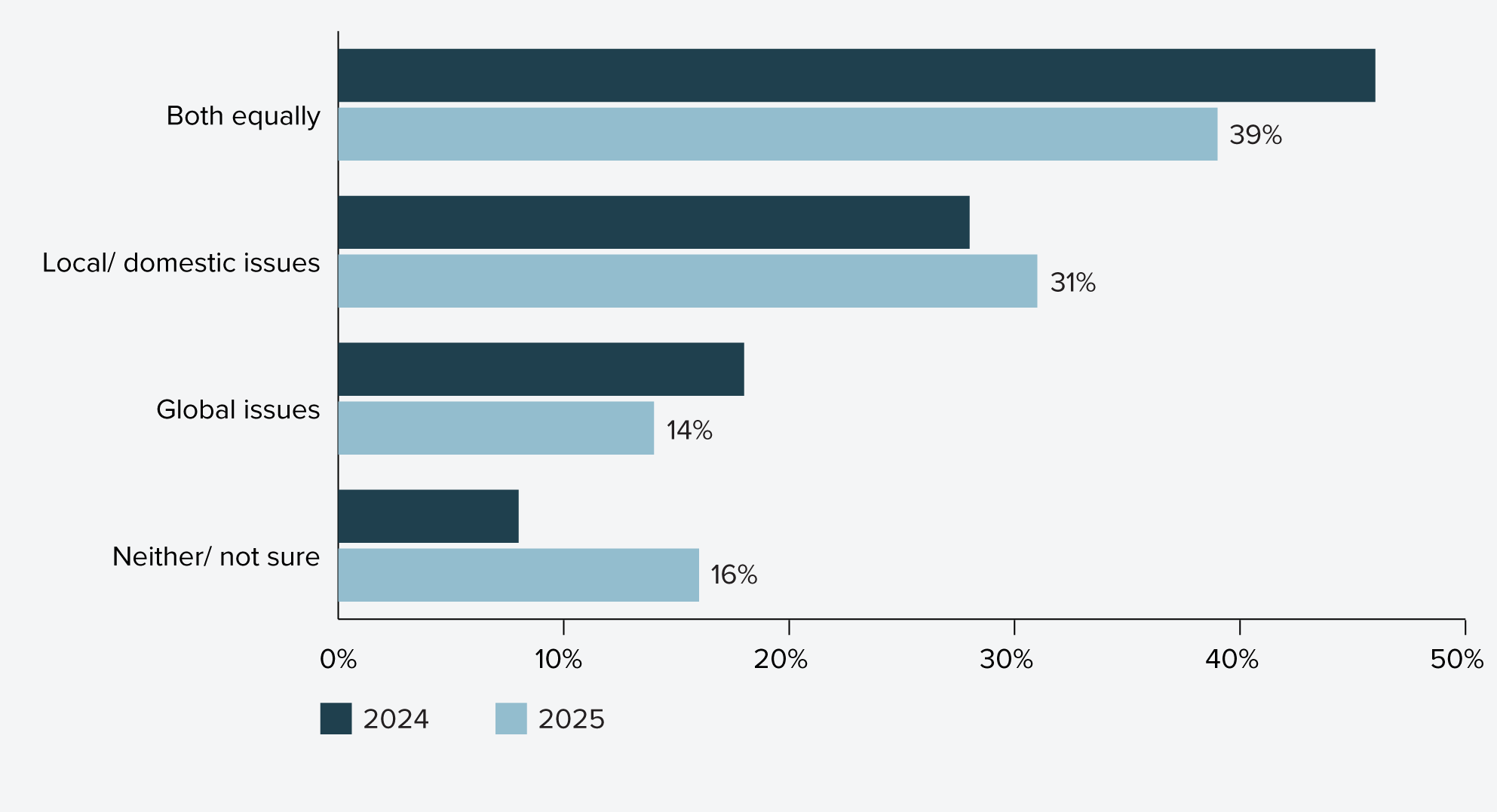
Figure 11 shows that businesses generally viewed both international and domestic supply issues as posing equal risks to project delivery, as voted by 39% of surveyed organisations. 31% of organisations believe local or domestic supply chain issues are most problematic while 14% believe global issues are more problematic. Compared to last year’s survey findings, domestic/local issues appear slightly more pronounced (31% vs 28%).

Overall, the market reports less international supply chain issues than last year. Of surveyed organisations, 14% believe international supply chain disruptions, shortages or delays are a major threat to successful project delivery, dropping from 16% in 2024. 

Figure 11: Comparison of the source of supply chain issues reported in 2024 and 2025

Figure 11: Comparison of the source of supply chain issues reported in 2024 and 2025
Source: Infrastructure Australia Industry Confidence Survey (2025)

SECTION 2 SPOTLIGHT: Domestic steel fabrication capacity

Fabricated steel products are crucial inputs in construction 

Steel is a critical input material needed to deliver Australia’s infrastructure pipeline. Steel fabrication is essential in construction products such as foundations, piling, columns, beams, and girders. Areas of specialisation include wind turbine towers, transmission towers, equipment for mining, armoured vehicles for Defence, naval and domestic ship building, and rolling stock.12

An estimated 26.6 million tonnes of structural steel elements is needed to deliver Australia’s construction pipeline over the five years 2024–25 to 2028–29, of which public projects on the Major Public Infrastructure Pipeline will need 3.6 million tonnes.  As the estimated national steel fabrication capacity is approximately 1.4 million tonnes per annum,13 meeting this demand will require a combination of locally produced and imported steel. 

The volume of imports has grown rapidly in recent years, in the face of demand and cost challenges, but quality is difficult to ascertain

Fabricated steel imports have risen sharply, with 2024 volumes nearly 50% higher than the yearly average between 2016-2021 (Australian Steel Institute, 2024). Australia’s steel fabricators claim these imports are often priced at 15-50% below domestically produced products.  

It is difficult however to ascertain whether imported steel products are fabricated to the same quality and safety standards as locally made products (AS/NZS 3678, AS/NZS 5131). Lack of traceability and certification makes it difficult to track material compositions, manufacturing processes and quality control procedures, which increases the risk of using substandard products.  

Within Australia, most government procurement specifications reference compliance to relevant Australian Standards (such as AS/NZS 5131 – Structural steel fabrication and erection, AS/NZS 3679 – Hot-rolled steel sections; and AS/NZS 1163 – Cold-formed structural hollow sections), however compliance is not mandated, and enforcement on infrastructure projects varies across the country.

At the federal level, Australian Government procurement rules require that for construction projects above $7.5 million, tender responses must demonstrate capability to meet Australian Standards. Agencies must make reasonable inquiries to confirm compliance.14

Ensuring equal quality requirements for both imported and locally produced steel is essential to maintain viability of local suppliers and safeguard infrastructure delivery

Australia’s structural steel fabrication sector comprises largely of small and medium size enterprises (SMEs), many of which are multi-generational family-owned businesses and employed over 42,000 people in 2022-23.15

Domestic fabricators claim they are under significant pressure from low-cost imports. A national survey by the Australian Steel Institute (2024) indicates that 80% of Australian fabricators are operating below the break-even capacity benchmark. The insolvency rate for fabricated metal product manufacturing has been growing since the winding back of Covid-19 temporary relief measures in early 2021, surpassing pre-Covid levels in 2023.16

While sourcing steel products offshore can help alleviate demand and cost pressures in construction, it is important to maintain an even playing field between imported and locally produced products. A strong local fabrication base ensures continuity for critical infrastructure projects, reduces dependency on international markets, and supports sovereign capability for sectors such as Defence and energy. It mitigates risk from potential geopolitical tensions, trade disruptions, and price volatility. 

With imports rising rapidly in recent years, governments could help safeguard infrastructure delivery by requiring that all imported fabricated steel products used on major projects meet Australian quality standards. This would ensure an even playing field for domestic producers to compete with overseas suppliers.

SECTION 2 SPOTLIGHT: Lower emissions materials

Building materials are a significant source of emissions. Infrastructure Australia’s Embodied Carbon Projections report estimates that in 2022-23, upfront embodied emissions from Australia’s buildings and infrastructure sector accounted for 7% of national emissions, with the majority arising from the manufacture of building materials.17

Promising low carbon alternatives already exist across the sector, such as concrete with lower carbon cementitious alternatives and steel products manufactured using electric arc furnace technology. Alongside these innovations, recycled materials present another pathway to emissions reduction by reducing demand for energy intensive primary processing of conventional materials, improving resource efficiency and reducing waste.

Reducing embodied emissions in transport infrastructure is an Australian Government priority, as outlined in the Transport and Infrastructure Net Zero Roadmap and Action Plan (Transport Sector Plan), released in September 2025. The Plan notes that shifting to lower emissions construction materials will not only be critical to achieving this priority but also presents a major opportunity to strengthen domestic capability and position Australian industry to compete in global markets in this space. It considers opportunities to reduce emissions through optimised design and procurement, including the use of recycled materials.

Governments have committed to using lower emissions materials  

Governments recognise the opportunity to incorporate lower emissions materials in infrastructure builds. In addition to whole-of-government sustainable procurement policies, several jurisdictions have introduced infrastructure-specific policies that embed environmental and circular economy objectives directly into project planning and delivery. Examples include Victoria’s Recycled First Policy, Western Australia’s Transport Portfolio Sustainable Infrastructure Policy and New South Wales’ Decarbonising Infrastructure Delivery Policy. These policies aim to decarbonise infrastructure, drive demand for recycled and low carbon materials, and embed sustainability considerations into procurement and investment decisions.

At the federal level, all governments have committed to optimise recycled content in transport infrastructure as part of their procurement practices under the Federation Funding Agreement Schedule (FFAS) on Land Transport Infrastructure Projects. Under the FFAS, jurisdictions are required in 2025, for the first time, to report on their uptake of recycled content in infrastructure projects or establish annual reporting against recycled content uptake.18

This marks a significant first step in collecting data and setting comparable, if not consistent, baselines on the uptake of recycled content across the country.  

The Australian Government has also invested in applied research initiatives such as the SmartCrete Cooperative Research Centre ($21 million over seven years from 2020) to co-fund and coordinate collaborative research to improve the durability, performance, and environmental footprint of concrete used in infrastructure.19,20

Other funding initiatives highlighted in the Australian Government’s Transport and Infrastructure Net Zero Roadmap and Action Plan include $59.1 million awarded via the Australian Renewable Energy Agency (ARENA) to support low emissions steel, iron and renewable hydrogen research and development, $750 million to support green metal projects through the Future Made in Australia Innovation Fund and low or no cost loans from the Clean Energy Finance Corporation for low carbon concrete initiatives in housing and industrial developments.21

Industry faces various barriers to scaling up supply of lower emissions materials for infrastructure construction 

Despite efforts by Australian, state and territory governments, the current uptake of low emissions and recycled materials remains low. Structural barriers and inconsistent demand signals continue to constrain the industry’s ability to scale production and investment.22

SmartCrete for example, has called out poor commercial adoption and uptake of research as a critical barrier to achieving its goals. It has noted that while technical solutions for low-carbon concrete exist, procurement and market practices remain the biggest impediment. The current procurement model — focused on lowest cost and short-term performance on project-to-project basis — discourages innovation and uptake of sustainable materials. This results in a “valley of death” where research outcomes fail to transition into large-scale commercial use.23

A key barrier is the persistence of prescriptive project requirements, which tend to specify material types and inputs rather than outcomes. This approach prioritises established methods and materials but often prevents the adoption of proven low-carbon alternatives. Shifting towards performance-based specifications would allow suppliers greater flexibility to innovate, while still meeting quality and safety outcomes.

Industry also reports uncertainty around the pathways from research to commercial application. Significant investment can go into development and testing new materials, only for them to be excluded by unclear or inconsistent specifications. Developing transparent and nationally consistent processes for testing, approval and commercialisation would provide certainty, reduce risk and encourage suppliers to invest more confidently in new materials.

Opportunity to upskill and change culture to embrace new materials 

The rapid development of various types of lower emission materials presents a challenge, but also an upskilling opportunity for industry and government proponents. On the government side, decision makers and advisors responsible for project design, procurement and market engagement might not have the most up-to-date knowledge to help them weigh up the benefits and risks of adopting low carbon materials, set the most appropriate technical specifications, or access supply availability for proposed projects. 

Building capability within project teams on both sides — through training, embedding carbon expertise and providing clearer guidance on the adoption of new and emerging new low emissions materials — can ensure that materials specifications are appropriately set and that projects optimise the use of innovative materials without compromising quality or safety. The Australian Government, under Priority Action 5 of the Transport Sector Plan, is supporting decarbonisation capability in the private and public sectors. Through the Infrastructure Transport Ministers’ Meeting, it is exploring an infrastructure capability building program and a central knowledge hub, which could provide carbon literacy training, showcase low-emissions innovations and share practical resources for low-carbon solutions.24

SECTION 3: Infrastructure workforce supply and shortage update

The infrastructure workforce stands at 204,000, with demand growth outstripping supply  

As of October 2025, there are 204,000 workers engaged in infrastructure across the nation. By occupation groups, this comprises approximately:

  • 62% Trades Workers and Labourers  
  • 26% Engineers, Architects and Scientists
  • 12% Project Management Professionals

Figure 12 shows the latest projection of demand versus supply over the five-year period. Compared to last year’s projections, peak workforce demand has increased - rising from 417,000 to 521,000 - and has shifted out one year from mid-2026 to mid-2027. This trend is consistent with observations made in previous years and is likely reflective of planned expenditure being pushed back as the market struggles to meet overly ambitious delivery targets.

Figure 12: Demand, supply and shortage of infrastructure workers (2024-25 to 2028-29)

Figure 12: Demand, supply and shortage of infrastructure workers (2024-25 to 2028-29)

Labour shortages could rise to 300,000 workers by 2027

We estimate a shortage of 141,000 workers on public infrastructure works as of October 2025. This is 56,000 less than was estimated in last year’s Infrastructure Market Capacity report, and reflects demand being pushed out to the later years. This reduced shortage delivers a temporary reprieve before a new shortage peak of more than 300,000 workers in mid-2027. This increased shortage of workers is going to be driven by the rise in demand for privately funded renewable energy projects, see Section 1 Understanding Demand for more information on the energy pipeline. 

Figure 13 shows that shortages for Engineers, Architects and Scientists roles will peak at 126,000 in late 2026 before gradually declining over the outer years to 2028-29. Meanwhile, shortages for Trades Workers and Labourers peaks at 126,000 by mid-2027. There will be a sustained demand for Project Management Professionals, which is also projected to peak in mid-2027 at around 59,000.

Figure 13: Workforce shortage by occupational groups (2024-25 to 2028-29)

Figure 13: Workforce shortage by occupational groups (2024-25 to 2028-29)

Regional shortages will increase four-fold over the next two years, driven by energy and utilities projects 

Figure 14 presents a national comparison of shortages across capital cities and in regional areas (outside the Greater Capital City Statistical Areas as defined by the Australian Bureau of Statistics).

Shortages in metro locations are projected to rise modestly from 131,700 in October 2025 and peak at 148,000 in 2026. Regional locations, however, will experience a much steeper increase, with the workforce shortage growing from 38,200 in October 2025 to a peak of 181,000 in 2027. 

Figure 14: Workforce shortage by occupation group, capital-city areas versus regional areas (2024-25 to 2028-29)

Figure 14: Workforce shortage by occupation group, capital-city areas versus regional areas (2024-25 to 2028-29)

Figure 15 shows 10 hotspot regions with forecast demand over the next four years (2025-2026 to 2028-29) doubling from the demand in the four years prior (2021-2022 to 2024-24) across:

  • New South Wales: New England and North West, Far West and Orana, Murray, Hunter Valley excluding Newcastle, Riverina
  • Queensland: Sunshine Coast, Wide Bay, Mackay-Isaac-Whitsunday,  Toowoomba
  • Tasmania: South East

Figure 15: Increase in public investment from previous 4-years (2021-2022 to 2024-25) to next four years (2025-2026 to 2028-29), by region

Figure 15: Increase in public investment from previous 4-years (2021-2022 to 2024-25) to next four years (2025-2026 to 2028-29), by region

Projected demand across the 10 regional hotspots is heavily dominated by the utilities sector, which represents approximately 60% of total demand - underscoring its significance as the driving force behind regional workforce need, as shown in Figure 16.

Figure 16: Projected demand breakdown by sector and region (2025-26 to 2028-29)

Figure 16: Projected demand breakdown by sector and region (2025-26 to 2028-29)

CASE STUDY

Filling in the knowledge gap on workforce mobility between construction sectors

BuildSkills Australia, the Jobs and Skills Council for the build environment is leading a study, supported by Jobs and Skills Australia and the Australian Bureau of Statistics, to understand and enhance worker mobility into and out of the residential construction sector. 

The study focuses on core residential construction occupations - those most critical to housing delivery and most vulnerable to capacity constraints during demand surges (e.g., under the National Housing Accord target of 1.2 million homes).

Scope of the study 

The study will map the actual and potential labour flows between residential, infrastructure, non-residential construction, and other sectors. It will identify:

  • Where additional workers can be sourced quickly during demand peaks.
  • What barriers prevent mobility (e.g., licensing, cultural differences, employment models).
  • What policy levers can reduce friction and enable faster, more efficient workforce redeployment.

Expected impacts 

Filling in critical knowledge gaps on actual and potential worker movements between construction an adjacency sectors, findings of the research will:

  • Unlock latent labour supply by making it easier for workers in infrastructure and non-residential sectors to move into housing projects when needed.
  • Boost workforce resilience by reducing dependency on new entrants and improving utilisation of existing skilled labour.
  • Support faster delivery of housing targets under the National Housing Accord by enabling short-to-medium-term workforce scaling without compromising quality or safety.

This research is expected to be released in 2026. 

As the first study of its kind examining worker mobility across construction subsectors, this approach could be extended to explore workforce movement within adjacent infrastructure sectors such as energy, transport, and water.

The workforce is being shaped by the digital and energy transition 

The World Economic Forum’s Future of Jobs report finds that 86% of firms expect AI and informationprocessing will transform their business by 2030, and that this will both create new roles and displace existing ones.25

The report projects a 15% reduction in tasks performed solely by humans by 2030, with 82% of that shift driven by automation and 19% by human–machine collaboration. For construction, this means routine, repetitive tasks (e.g., material handling, basic measurements) will increasingly be supported by machines, robotics, and digital tools, while humans focus on complex, adaptive, and safety-critical tasks.

The construction industry should expect to see increased “bifurcation” of its workforce, with tech-enabled harnessing digital tools such as BIM, digital twins, and AI, while still requiring large numbers of on-site workers. Building construction workers such as labourers and trades workers (along with other frontline workers) are projected to have the highest absolute job growth globally over the next five years, reinforcing their critical role in economic recovery and infrastructure delivery.

Global construction industry hiring activity in 2024 reinforces the drive towards digital transformation and renewables. Key global trends across new job postings in the construction industry in 2024 include:26

  • 7% of job postings are for tech roles—more than job postings in transport and logistics (3%), metals and mining (3%), and similar to automotive sectors (8%). See Figure 18.
  • 21% rise in job postings for AI skills, with a focus on GenAI and Agentic AI roles and boosted demand for expertise in ChatGPT and Copilot.
  • Demand growth for skills in key areas: 3D modelling, drone operation, and BIMs; big data and cybersecurity; asset management and modular construction.  
  • Leading built environment firms (such as AECOM and JLL) scaled recruitment tied to renewables, water, datacentre development, and digital transformation.

Figure 18: Percentage of technology (IT) job postings by selected industry sector (2024)

Figure 18: Percentage of technology (IT) job postings by selected industry sector (2024)

Source: GlobalData (2024)27

Figure 19: Overall strength of technology themes referenced in global construction job postings (2023-2024)

Figure 19: Overall strength of technology themes referenced in global construction job postings (2023-2024)

Source: GlobalData (2024)28

A majority of organisations have invested in workforce upskilling over the last 12 months, with engineers and designers leading the charge 

Infrastructure Australia’s Industry Confidence Survey finds that two thirds (66%) of the sector have invested in workforce upskilling over the last 12 months. Engineering and design firms are more likely to invest in upskilling with 85% having done so over the last year, reflecting awareness by these professionals of the key skills demand signals for their work – reducing project carbon emissions, energy infrastructure delivery and digitalisation. 

Subcontractors are least likely to invest in workforce upskilling, with 33% having not invested over the last 12 months compared to 22% of contractors and consultants. 

A quarter (25%) of organisations plan to increase investment in upskilling their workforce in the next 12 months. Those who have invested over the last 12 months are also more likely to increase investment.

Industry is aware of the net zero imperative, but progress is slow 

The infrastructure sector is acutely aware of the need to transition to net zero, driven by both the surge in renewable energy projects on the pipeline and government net zero commitments. 

At present, just one in five (21%) survey respondents have set their own organisational commitment to carbon reduction and net zero targets. Engineering and design firms (27%), and organisations delivering projects in New South Wales are more likely to set a commitment (33%) than the industry average.  Firms delivering public works are also more likely to have set an organisational commitment to carbon reduction than those exclusively delivering private sector work (26% versus 16% respectively).

Of those organisations delivering projects with carbon reduction targets, most felt only up to 10% of projects met targets or were unsure if they had met targets. Figure 20 shows that only 9% of organisations reported that over 75% of their projects met set targets. Companies that set their own carbon commitments are three times more likely to achieve set targets. 

While there will be variations in how these targets are defined and considered ‘met’, these results show a low current baseline on net zero targets set and met on construction projects. While the infrastructure sector recognises the urgency of transitioning to net zero, actual commitments and integration of carbon reduction targets into projects remains limited, with significant variation by organisational type. 

Figure 20: Percentage of projects in the past 12 months that included carbon reduction targets, and that met carbon reduction targets

Figure 20: Percentage of projects in the past 12 months that included carbon reduction targets, and that met carbon reduction targets
Source: Infrastructure Australia Industry Confidence Survey (2025)

Upskilling in net zero needed to lift workforce confidence and capability to decarbonise projects 

The Transport and Infrastructure Net Zero Roadmap and Action Plan, released in September 2025, noted that Australia’s workforce will need to be prepared to deliver the net zero transition. This includes improving Vocational Educational Training, improving age and gender diversity of the workforce and addressing training opportunities and digital literacy, especially in rural and remote areas.

There is a high level of upfront carbon awareness in the infrastructure sector. A survey by Infrastructure New South Wales in 2024 found that 90% of government and 95% of industry respondents are aware of upfront carbon and its implications in construction. Yet, as shown in Figure 21, approximately a third of government and a fifth of industry respondents have low confidence in their own capability to reduce upfront carbon.29

Figure 21: Level of confidence in personal capability to reduce upfront carbon

Figure 21: Level of confidence in personal capability to reduce upfront carbonFigure 21: Level of confidence in personal capability to reduce upfront carbon
Source: Infrastructure NSW (2025)30

The Delivering Net Zero Infrastructure: Workforce Report, which was led by Infrastructure Australia as part of the Infrastructure Net Zero initiative, found that about a little over half the workforce currently delivering Australia’s infrastructure pipeline are contributing to net zero outcomes.31

The report also found that certain groups of occupations have the highest impact on reducing project emissions across an asset lifecycle. These roles include scientists, engineers, project managers, environmental experts and trades workers, which all have distinct workforce and skilling challenges. The reports recommends an industry-wide training program to upskill these high impact roles and industry leaders on carbon fundamentals to accelerate the path to achieving net zero infrastructure. The Australian Sustainable Built Environment Council and Infrastructure Australia are currently engaging and coordinating across industry and government to scope and progress this recommendation.

Industry calls for more training to upskill workers on net zero

Low levels of organisational commitment and net zero project targets identified in this year’s Industry Survey may reflect limited access to training resources and a lack of perceived need for them. Among surveyed organisations:

  • 40% report no access to training for reducing project emissions.
  • 25% do not believe training resources are necessary – a view most common among subcontractors, where 39% hold this belief.
  • Only 23% have access to the required training resources, with higher access reported by organisations that have set carbon commitments or operate in New South Wales.

Construction workforce training initiatives established around the country 

There is an opportunity to create a nationally coordinated approach to emerging construction workforce training programs that address priority skills in digital technologies, modern methods of construction and net zero delivery. 

Several targeted initiatives around the country have been recently established to address the need to design and deliver new net zero skills and digital skills to the construction workforce. For example:

  • The Melbourne Polytechnic Future of Housing Construction Centre of Excellence (commenced in December 2024) will deliver industry-relevant and innovative training to uplift the technical and digital skills of traditional construction and engineering trades in modern methods of construction. It is co-funded by the Australian and Victorian Governments through the National Skills Agreement.32
  • Melbourne Polytechnic’s Clean Economy Skills Lab for Residential Building and Construction (announced August 2024), funded by the Victorian Government, aims to equip workers with expertise in emerging sustainable development and clean energy fields. It will work with industry and TAFE partners to co-design new approaches for clean economy skills development, aligned with industry directions and projected need.
  • In New South Wales, the Construction Institute of Applied Technology (opened in February 2024) is focused on future innovations and leadership in construction. Working in collaboration with TAFE NSW, Western Sydney University, and CPB Contractors, it aims to design and deliver market-leading training that rapidly adapts to industry needs. It currently offers a range of short courses on sustainability.

Most of these initiatives are currently at the initial stages of needs definition and testing market demand for new or updated training offerings, with the NSW Construction Institute of Applied Technology the most progressed after having completed its pilot.
 

CASE STUDY

TAFE NSW Institute of Applied Technology in Construction 

The TAFE NSW Institute of Applied Technology in Construction (IATC) pilot delivers innovative, industry-aligned microskills and microcredentials to help meet the state’s growing demand for skilled construction workers. 

Delivered in partnership with the NSW Department of Education, Western Sydney University (WSU) and leading industry partners, the TAFE NSW IATC offers short, sharp, online courses that provide learners with targeted, job-ready skills aligned to the sector’s emerging needs.

Its suite of courses covers foundational knowledge in project management, sustainability and digital tools to advanced capabilities in Building Information Modelling (BIM), modern methods of construction, automation and leadership. 

Designed to support upskilling and reskilling of the workforce, the courses respond to technological advancements, regulatory changes, and evolving industry best practices.  

Outcomes achieved

The TAFE NSW IATC pilot has achieved: 

  • Almost 50,000 enrolments across 44 microcredentials and 9 microskills.
  • A course completion rate of 77%, which is well above the National Centre for Vocational Education Research (NCVER) equivalent average of 42% for comparable courses.
  • National reach with students accessing the TAFE NSW IATC courses from every jurisdiction across Australia, including regional and remote locations.
  • Strong engagement with diverse cohorts, including women, students with disabilities, Aboriginal and Torres Strait Islanders, mature-age workers, and individuals from culturally and linguistically diverse backgrounds.

Next steps and opportunities  

The TAFE NSW IATC is well positioned to help address national workforce shortages by driving capability uplift in housing delivery, licensing reform, and sustainable construction practices through targeted courses that are co-designed with industry to meet emerging skill needs for the construction sector. 

Future opportunities include even greater alignment with national priority areas including the National Housing Accord, National Construction Industry Forum (NCIF) Blueprint for the Future, BuildSkills Australia Workforce Plan, and the National Construction Code (NCC). 

The TAFE NSW IATC is also heavily focused on meeting equity and net zero priorities, and progressing relevant skills development to support small and medium sized construction businesses to adopt sustainable practices including MCC.

SECTION 3 INDUSTRY VIEWS

Labour remains the top threat to project delivery 

Industry continues to rate labour as a key supply risk. Figure 17 shows when asked to rate the severity of a range of disruptions to project delivery, the majority of firms rated cost of labour and labour and skills shortages as a major or significant threat.

Figure 17: Key causes of disruptions to project delivery reported by industry (%)

Figure 17: Key causes of disruptions to project delivery reported by industry (%)
Source: Infrastructure Australia Industry Confidence Survey (2025) 

Shortage of critical workers such as engineers and designers will hinder the market’s capacity to service growing subsectors, with many adopting a ‘wait and see’ approach on energy projects

Shortages of critical professionals - especially engineers, designers, and experienced project directors - are constraining capacity in emerging sectors like energy, data centres, defence, and water. Firms are prioritising projects strategically, with many adopting a ‘wait and see’ approach on energy projects due to slow progress and delayed investment.

The Civil Contractors Federation 2025 Survey of its members found that growth in roads, drainage and land development subsectors occurred this year, likely driven by a stable focus on infrastructure and enabling activities to support urbanisation and growth in residential and commercial infrastructure. 

While utilities projects have experienced significant growth over the last two years (since 2023-24)—reflecting expansion in electricity, gas, and essential services infrastructure—there has been a small decline in renewable energy projects this year (down 2%). The same survey showed that 33% of contractors were delivering works associated with renewable energy projects, highlighting showing that this sector continues to be a key source of work. 

These survey results are consistent with the trends observed in the Major Public Infrastructure Project Pipeline this year showing modest investment growth in transport alongside a doubling of housing and energy projects. At the same time, the slow progress of energy projects through the pipeline, from planning through delivery, has caused firms to continue adopting a ‘wait and see’ stance in boosting workforce numbers and capacities in this emerging sector.

Investment shifts across key sectors also present capability and capacity challenges

Infrastructure Australia’s industry interviews indicate that shifting investment priorities between sectors can create challenges in retaining capability and capacity, particularly in: 

  • Transport, with major programs moving forward into delivery without the same volume of new projects entering the pipeline, impacting white-collar roles in early planning stages
  • Energy, where delays to project start times have stalled local skills investment and prompted some capacity to shift offshore.
  • Commercial building, which faces uncertainty amid expectations of increased pressure to deliver residential housing.  

Energy infrastructure pipeline uncertainty is prompting companies to adopt a cautious, ‘wait and see’ approach to workforce and skills investment. Rather than committing to long-term training or recruitment, many are relying on redeploying workers from adjacent sectors to meet short-term demand. While this approach offers flexibility, it risks undermining the development of a specialised, future-ready energy workforce. 

A more certain energy pipeline, further investment by governments and industry in the apprentice pipeline, and programs to attract a more diverse workforce, are seen as important to growing local labour supply. Improved clarity and confidence on the forward investment pipeline would also help companies make longer term plans to grow and upskill their workforce accordingly.

SECTION 4 SUMMARY: Productivity

Prioritise productivity– future opportunities  

4. Governments could explore ways to embed innovation in infrastructure project delivery to unlock significant productivity gains across the construction sector.

This could include:

  • Exploring new incentives and investment models to cover the initial upfront cost of demonstrating new innovations on projects, which can then be scaled to wider national adoption and generate transformational productivity uplift across the sector.
  • Leveraging government investments in large megaprojects or infrastructure programs with the scale, duration, and strategic importance needed to effectively trial and embed productivity-enhancing innovations.

Summary

Construction industry multifactor productivity (MFP) rose 2.0% in 2023-24, reversing the 2022-23 decline, but the long-term trend remains flat and below mid-1990s levels. 

The sector continues to lag broader economy-wide productivity growth.

Subcontracting 

  • Subcontracting is a cornerstone of Australia’s construction industry, accounting for 41% of infrastructure construction. This means that over $100 billion worth of major public infrastructure projects over the five-year outlook (2024-25 to 2028-29) will be delivered by firms beyond the principal contractor, especially lower-tier and specialist providers.
  • The industry view in favour of subcontracting is that it aids in overcoming market constraints such as access to workforce and shortcomings in pipeline certainty where committed projects have been subject to review.  However, industry acknowledges it also presents interface risks on large projects, as well as erosion of Tier 1 self-performance, higher supervision costs, and reduced training opportunities for workers.
  • The first step to identifying ways to support a healthy and sustainable subcontractor ecosystem is to collect data at the 
    project level.

Workforce diversity - women’s participation

  • Women represent 13% of the construction workforce and only 4% of trades. Construction has the highest gender pay gap (26.3%) compared to the all-industry average (8.9%).
  • Less than 50% of firms surveyed by Infrastructure Australia this year had invested in diversity programs in the past 12 months.
  • There continues to be progress by governments to increase women’s participation in construction, including completion of the Culture Standard pilots by the Construction Industry Culture Taskforce. Key national initiatives underway such as the National Construction Strategy and National Construction Industry Forum’s Blueprint for the Future have noted national adoption of the Culture Standard as a potential pathway forward. 

Uptake of technology & modern methods of construction

  • 64% of building and construction firms surveyed have invested in digitalisation in the past year, with investments across BIM, AI, robotics and automation; engineers and designers are leading digital adoption.
  • However, approximately a quarter (26%) of firms made no investment in digitalisation, with small business lagging in terms of both adoption and awareness of AI tools.
  • The National Cabinet commitment to build 1.2 million homes by mid-2029 is driving innovation in Australia’s residential supply chain, including encouraging state and territory governments to adopt modern methods of construction in pursuit of their housing goals.
  • National Competition Policy reforms will target increasing uptake of modern methods of construction by reducing regulatory and licensing barriers in efforts to unlock $45 billion in GDP gains.
  • Current procurement models tend to focus on lowest-cost, and project-by-project tendering. This discourages the adoption of scalable innovations like modern methods of construction, digital engineering, and low-emissions materials.
  • There is a missed opportunity to better incentivise innovation that carries upfront costs but delivers long-term value and transformative change for the sector. International examples, such as programs in the United Kingdom, Singapore, and United States, show how governments can seed investment in innovation that can be scaled and lift wider industry adoption.  

SECTION 4: Productivity

Construction industry productivity growth rose slightly this year, but the long-term trend remains flat

Construction industry multifactor productivity (MFP) rose by 2% in 2023-24, reversing the decline recorded in 2022-23.35 This short-term rebound, however, is not enough to signal a structural shift in industry productivity, as year-to-year MFP changes can be volatile and influenced by assumptions about capital utilisation. 

The long-term construction industry trend remains flat, remaining slightly below mid-1990s levels and well below the early 2010s peak. Over the past decade, the sector has consistently lagged productivity growth across the broader economy.

Figure 22: Gross value added multifactor productivity – comparison of construction and comparable industries (1994–95 to 2023–24)
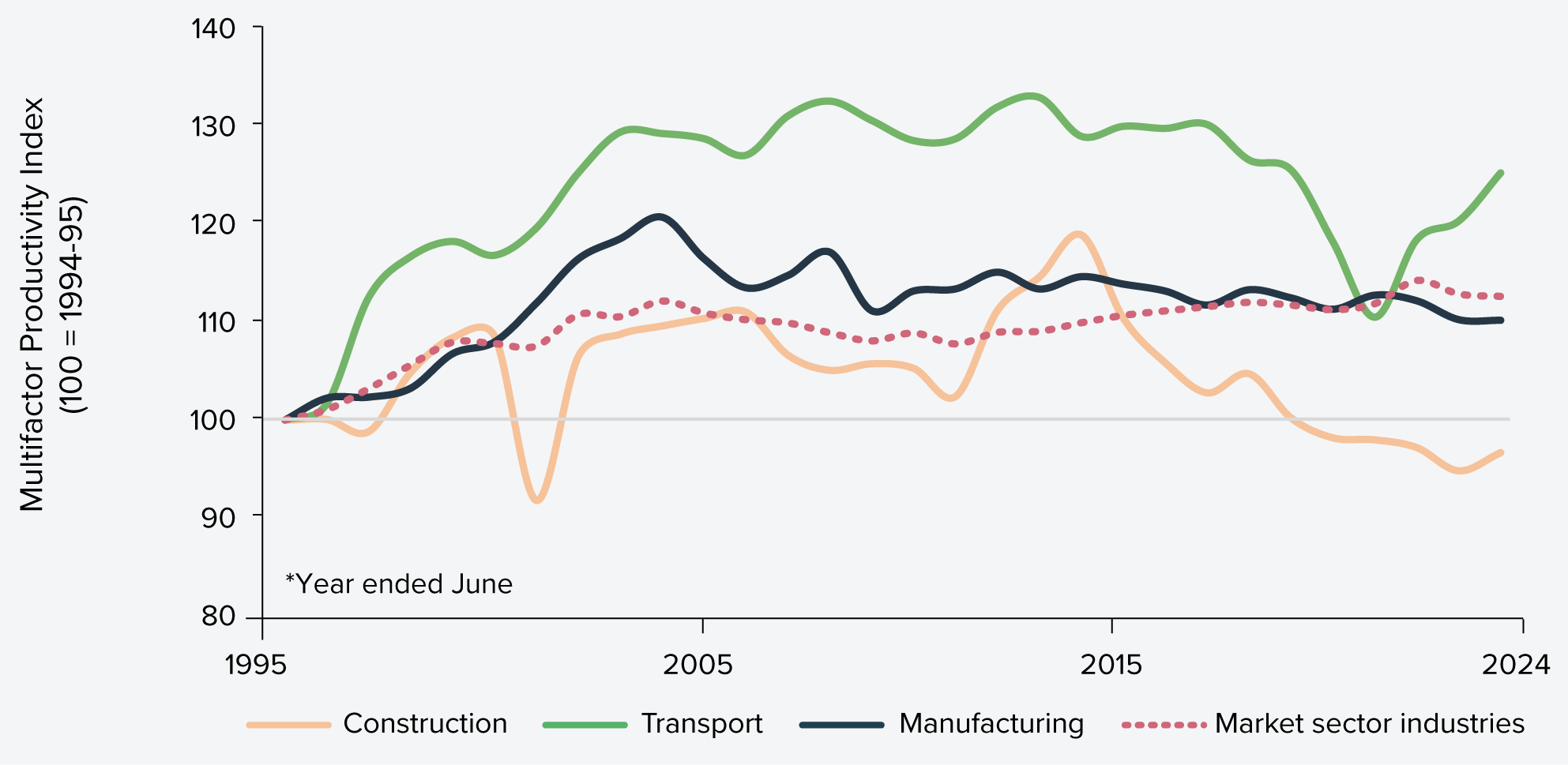
Figure 22: Gross value added multifactor productivity – comparison of construction and comparable industries (1994–95 to 2023–24)
Source: Australian Bureau of Statistics36

Approximately 41% of infrastructure construction is completed by subcontractors

Subcontracting now delivers 41% of infrastructure construction. This is calculated from a bespoke analysis of ABS data, which estimates that 11% of civil and engineering construction and non-residential buildings income comes from subcontracting. At the same time, 30% of costs flow to external construction services.37 As such, nearly half of all infrastructure work is handled by firms beyond the principal contractor, especially lower-tier and specialist providers. 

In the context of the current Major Public Infrastructure Pipeline, this means over $100 billion of public infrastructure works funded over the five-year outlook (2024-25 to 2028-29) will be delivered by firms beyond the principal contractor.

Industry stakeholders report a sharp rise in subcontracting over recent decades, driven by fluctuating workloads, risk management, specialist skill needs, regulatory pressures, and evolving project management styles. The growing scale and complexity of projects - often delivered via joint ventures - has further accelerated this shift.

Industry believes subcontracting can deliver productivity benefits, but highlight the need for a more balanced approach to self-performance to reduce integration risk

Infrastructure Australia’s Industry Confidence Survey this year found businesses see the top benefits from subcontracting are access to workers and specialist expertise (voted by over half of businesses surveyed), followed by reduced management and administrative workload (29%) and risk transfer (30%).

There is, however, a range of challenges when managing subcontractors. Figure 23 shows that respondents surveyed this year reported that cost overruns are the most common challenge encountered (reported by 45%), followed by quality inconsistencies (40%), and coordination difficulties (34%). Other challenges encountered include project delays and regulatory compliance (voted by 23% and 16% of surveyed firms).

Optimising subcontracting arrangements is therefore critical to reducing delivery risks and improving productivity. This means moving beyond transactional contracting to models that foster collaboration, transparency, and shared accountability. Better integration between head contractors and subcontractors can reduce costly rework, improve safety outcomes, and enhance workforce stability. 

Figure 23: Challenges experienced when managing subcontracting or labour hire relationships
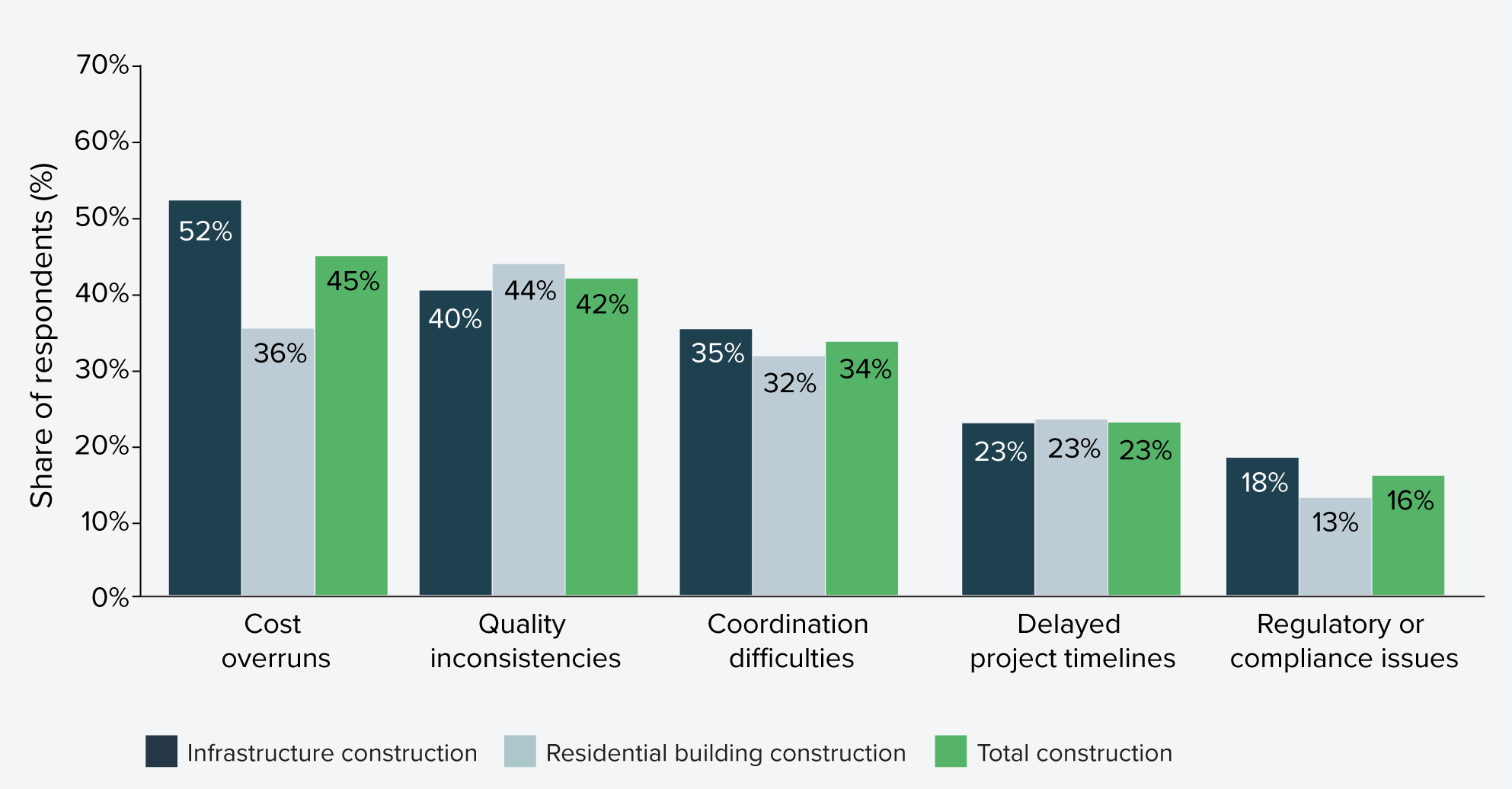
Figure 23: Challenges experienced when managing subcontracting or labour hire relationships
Source: Infrastructure Australia Industry Confidence Survey (2025)

At the same time, strengthening self-performance by Tier 1 contractors is equally important. Maintaining in-house delivery capability supports better sequencing, resource flexibility, and knowledge retention - factors that underpin productivity and resilience. Over-reliance on subcontracting can erode these capabilities, reduce training opportunities, and increase supervisory overheads for head contractors. 

However, in depth interviews with contactors revealed that while subcontracting can deliver flexibility and cost benefits, heavy reliance on it has raised concerns about declining self-performance, particularly among Tier 1 contractors that have shifted from delivery to project management roles. Self-performing key tasks supports better sequencing, resource flexibility, and knowledge transfer – factors critical for productivity.

Stakeholders have linked reduced self-performance to weaker outcomes. Extensive subcontracting can dilute training opportunities, strain smaller firms, and force Tier 1 contractors to add costly layers of supervision. Aggressive risk transfer down the supply chain further compounds these issues, creating inefficiencies and integration risks. 

Data collection and setting benchmarks are the first steps to unpack impact of subcontracting on productivity 

There is no consistent project-level data on subcontracting practices and self-performance. Current reporting does not capture the dynamics of subcontracting – such as the proportion of work subcontracted, the distribution of risk, or the indirect costs associated with layered contracting. Nor does it track the extent of self-performance and its correlation with project outcomes. Without this visibility, it is difficult to identify best practices or diagnose systemic inefficiencies. This aligns with last year’s industry findings, where only 8% of firms reported measuring rework as part of their productivity metrics – highlighting a persistent gap in performance tracking.

Capturing standardised data at the project level can help with developing benchmarks to track the health of the subcontracting ecosystem. This could include metrics on subcontractor engagement, indirect labour costs, and rework rates, alongside contextual project parameters, such as contract type, procurement model, and use of modern construction methods. Establishing these benchmarks will enable governments and industry to compare performance across projects, identify patterns, and target interventions where they will have the greatest impact.

By agreeing on a core set of economic and performance measures – such as budgeted vs actual cost, planned vs actual time, and indirect labour costs relative to total labour costs – the workstream will provide a foundation for evidence-based policy and procurement reform. Over time, these insights could inform strategies to optimise subcontracting arrangements, strengthen self-performance, reduce integration risk, and ultimately lift productivity across the sector.

Workforce diversity

Women make up approximately 13% of the construction industry workforce in Australia and only 4% of trades workers – a trend that has remained stubbornly consistent over the last 40 years since the ABS started collecting Labour Force Survey data.

Looking at a smaller subset of companies with more than 100 employees reporting to the Workplace Gender Equality Agency (WGEA), the construction industry has the highest gender pay gap across all other industries. Figure 24 shows that the median total remuneration gender pay gap for Construction is 26.3%, higher than comparable industries such as Electricity, Gas, Water and Waste Services at 20.4%, mining at 19.9%, and Transport Postal and Logistics at 11.9%, and significantly higher than the all-industry average at 8.9%.

Figure 24: Equal remuneration and gender pay gap for the construction industry (2023-24)
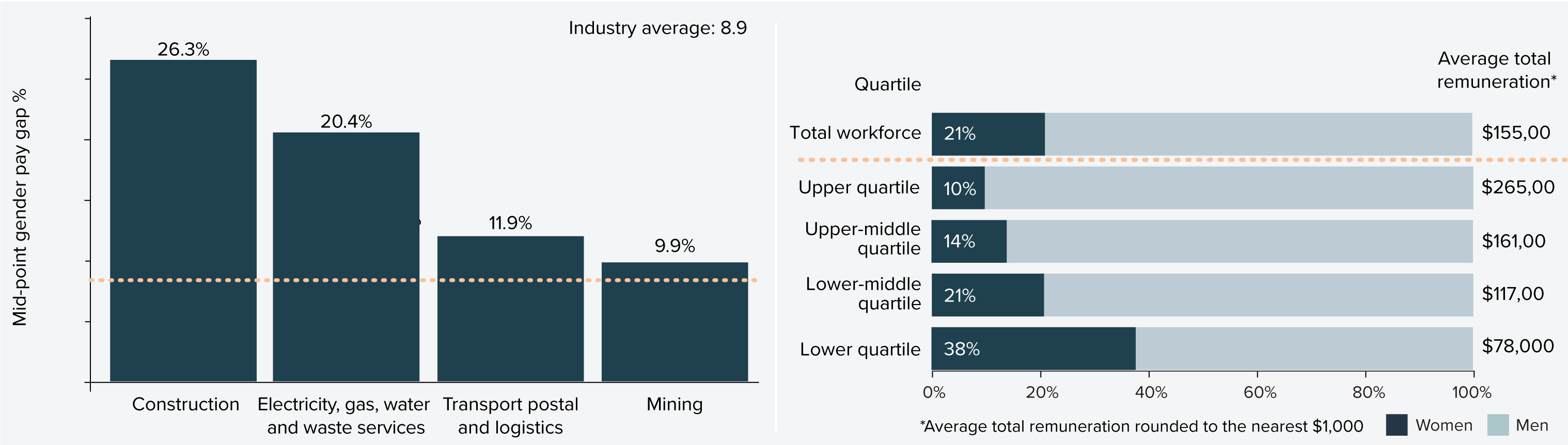
Figure 24: Equal remuneration and gender pay gap for the construction industry (2023-24)

Source: WGEA Industry Data Explorer (2025)40

Women in construction are overrepresented in the lower pay quartiles, part-time work and in lower paid roles. Based on WGEA data in Figure 24, one in five (21%) employees of construction companies are women, yet they make up:

  • 38% of workers in the lowest quartile of pay
  • 72% of the part-time staff; and
  • 6% of technicians and trades workers  

This suggests the pay gap is strongly driven by occupation and hierarchical segregation, with fewer women in high earning roles and in leadership positions. 

Less than half of industry have invested in diversity, retention or attraction programs in the last 12 months

Despite poor workforce diversity and sustained difficulty in attracting and retaining workers in the construction industry, Infrastructure Australia’s Industry Confidence Survey this year found less than half (46%) of organisations have invested in workforce diversity, retention or attraction programs over the last 12 months, as shown in Figure 25. This contrasts sharply with the same cohort’s stronger focus on other types of productivity-lifting initiatives. Around two-thirds invested in workforce upskilling (66%), and nearly as many invested in data and digitalisation (64%) during the same period.

Figure 25: Percentage of respondents who have invested in upskilling their workforce, data and digitalisation programs, or workforce diversity over the last 12 months 

Figure 25: Percentage of respondents who have invested in upskilling their workforce, data and digitalisation programs, or workforce diversity over the last 12 months
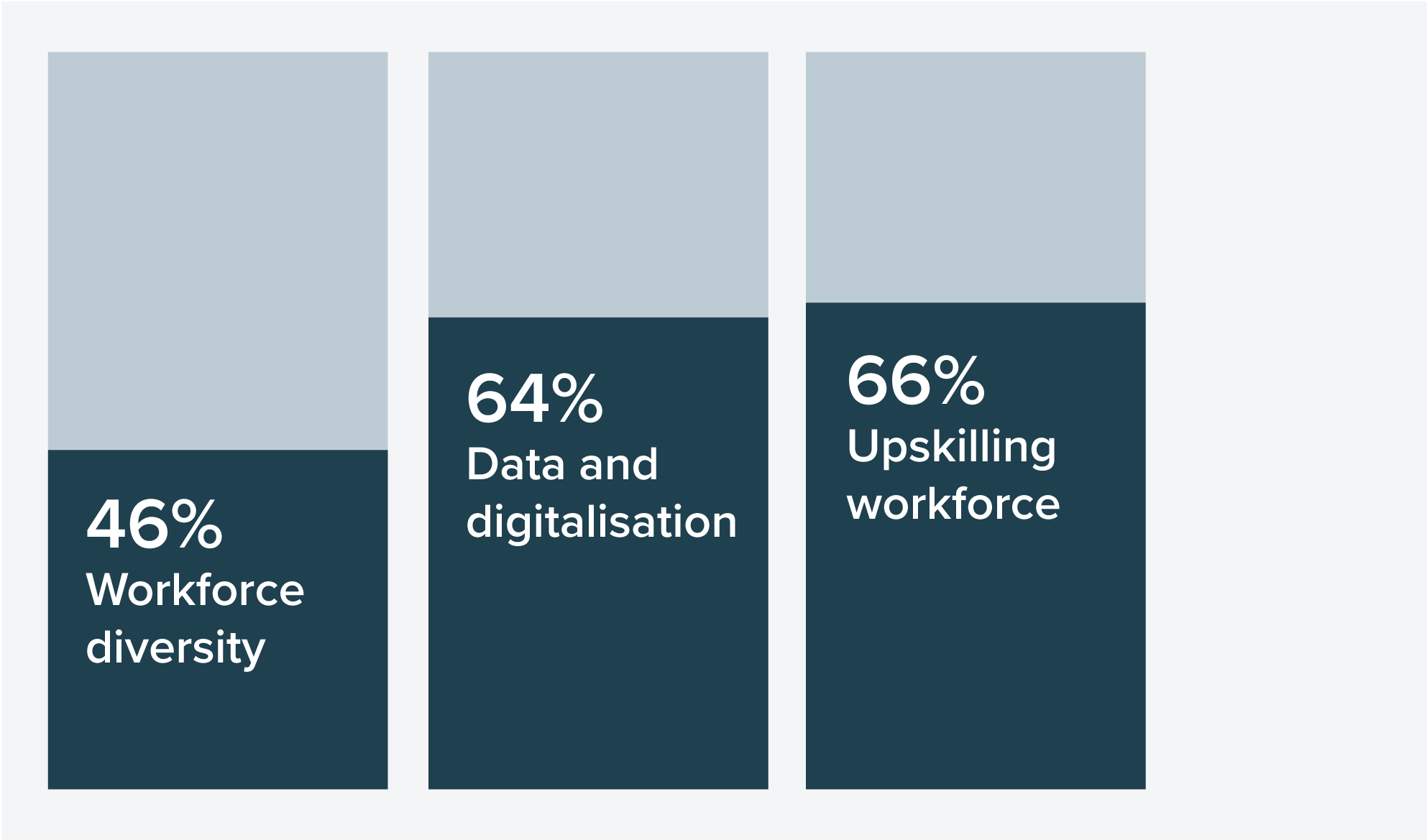
Source: Infrastructure Australia Industry Confidence Survey (2025) 

Engineers and designers are more likely to invest (67%) and invest more, with 17% of businesses surveyed investing 11-20% of revenue over the last year. Suppliers are also more proactive than the industry average with 66% having invested in workforce diversity, retention or attraction programs, and 30% investing between 5-10% of revenue. 

Meanwhile, 61% of subcontractors did not invest in workforce diversity, retention or attraction programs over the last year.

Of those organisations that have invested in those programs over the last 12 months, close to half (46%) intend to continue to increase investment, while 30% intend to maintain investment, and 12% intend to decrease investment over the next 12 months. Only about 10% of organisations that did not invest this year intend to invest over the next 12months.

Initiatives underway to drive better gender diversity in construction 

There is broad recognition of the need to increase women’s participation in construction, and a range of initiatives are in place across industry and governments to drive change.

Under the Federation Funding Agreement Schedule (FFAS) on Land Transport Infrastructure Projects, all governments have committed to optimise their procurement practices to enable an increase in women’s participation at all levels of the construction industry.

Governments are also working on the development of a National Construction Strategy, which includes a workforce workstream that will aim to develop a common set of principles, commitments, and actions to improve workplace culture, enable flexibility, and increase diversity.

It will consider options such as encouraging innovative ideas and best practice, sharing workforce data and lessons, and implementing specific measures such as adopting the Culture Standard (see case study below), enabling flexible work practices like five-day work weeks, and establishing national diversity targets. By embedding these actions into project delivery, the strategy aims to attract and retain a more diverse workforce, reduce turnover, and ultimately improve productivity and sustainability across the sector.

In addition to developing national procurement approaches to boost women’s participation, other entities are working to drive bottoms up cultural change from within, such as the Level the Site project (see case study below).

CASE STUDY

Level the Site – a mentoring program to drive cultural change from within

Level the Site is a joint initiative of the Civil Contractors Federation, Master Builders Australia, the Australian Workers’ Union, Bunnings, and Brickworks. Funded by the Australian Government, the initiative aims to address one of the most pressing challenges in construction retaining women in the workforce. 

Industry surveys show that retention is widely recognised as a problem across the sector, with workplace culture consistently identified as a contributing factor. Many in the industry acknowledge that behaviours on site can discourage participation, particularly for women, and that these issues are more likely to be observed by female workers than their male counterparts.

There is strong support across the workforce for practical help to change negative attitudes and drive cultural change that is led internally from within workplaces by employers, managers, and peers.

While regulation can play a role, lasting progress will not be achieved by compliance measures alone. Industry participants themselves say that the most important shifts are attitudinal: equal treatment, less harassment and disrespect, and stronger workplace cultures where women feel supported and valued.

Level the Site is designed to meet that need and aims to build momentum for cultural reform from the ground up. The program delivers: 

  • Targeted sessions and resources to help employers and supervisors build safe, respectful and inclusive workplaces.
  • Mobile trade stalls to showcase construction as a career and highlight opportunities for women.
  • Structured peer support and mentoring guidance that connects women with experienced industry role models.
  • Social and networking events for women to share experiences and strengthen connections.
  • Tool kit talks to give crews the language, awareness, and tools to address workplace culture issues directly.
  • An advertising campaign to the broader construction industry communicating the aims of the initiative

The program will be run for three years (2025 to 2028) and support 300 active mentoring partnerships.

CASE STUDY

Pilots of the Culture Standard of the construction industry complete42,43,44,45,46,47

The Construction Industry Culture Taskforce (CICT) developed the Culture Standard to address three major issues in construction: long working hours, poor mental health and wellbeing, and low gender diversity.

The Culture Standard was piloted on five major government infrastructure projects across NSW and Victoria between late 2022 and 2024. Pilots tested the impacts of measures such as capped working hours (≤50 hours/week); five-day work programs instead of six-day rosters; wellbeing initiatives (mental health first aid, flexible scheduling); and diversity actions to increase female participation.

Key findings from the pilots on the adoption of the Culture Standard include:

  • Most pilot projects successfully moved to a compressed five-day work week, with only a small reduction in average hours. Workers overwhelmingly preferred this arrangement, indicating improved work-life balance and quality of life.
  • There was no clear evidence that the Culture Standard increased project costs or extended timelines. Any minor productivity impacts were generally manageable through planning.
  • Adoption of the Culture Standard improved mental health and wellbeing for workers, alongside reduced travel costs due to fewer workdays.
  • Turnover on pilot projects was 4.4% lower than the wider workforce average. If scaled across NSW and Victoria, this could save $386–$771 million annually in avoided onboarding and training costs.
  • The Culture Standard is expected to help retain experienced workers, particularly women, and attract new entrants, addressing skills shortages.
  • Injury frequency rates were on average lower on pilot projects compared to industry benchmarks, though results varied.
  • Broader rollout could deliver significant social benefits, including improved wellbeing and reduced costs from turnover and absenteeism. Estimated aggregate travel cost savings alone could reach $52 million per year.

The final evaluation report was released in August 2025, marking the end of the pilot phase of the project. A suite of resources (guides, templates, compliance reporting frameworks) has been developed to support adoption by clients and contractors.

So far, the Australian Capital Territory Government has emedded the Culture Standards in its procurement frameworks for infrastructure projects, while New South Wales and Victoria are exploring options to do the same. While the Queensland Government (through the Department of Transport and Main Roads) and agencies in Western Australia (Department of Finance and Construction Training Fund) have been involved at various stages of the Taskforce as observers.

At the national level, the National Construction Industry Forum (NCIF) has recommended exploring opportunities to implement the Culture Standard nationally (Blueprint for the Future recommendation 4.5) signalling consensus between workers, employers and the Australian Government on broader national adoption of the Culture Standard.

Uptake of new technologies and modern methods of construction

Most organisations have invested in digital transformation and will continue to do so  

Results from Infrastructure Australia’s Industry Survey this year reveals almost two out of three organisations in the building and construction industry (64%) have invested in data and digitalisation over the last 12 months. Approximately 35% spent up to 5% of revenue and one in five (22%) invested between 5-10% of revenue. See Figure 26.

Insights from the in-depth interviews indicate that these digital investments supported a variety of productivity-enhancing technologies, such as:

  • Automation and robotics in manufacturing enhance efficiency and safety and reduce labour costs.
  • Data monitoring to track performance and enable predictive maintenance.
  • Digital tools for operations, such as apps for order tracking and logistics management.
  • Building Information Management (BIM), including 3D modelling and design, to improve project coordination and consistency of information, reduce errors and improve communication.
  • Artificial Intelligence (AI) and machine learning, such as apps for simple on-site queries, real-time quality checks in manufacturing, and investments in enterprise AI systems integrated with company data.

Figure 26: Percentage of revenue invested in data/digitalisation programs over the last 12 months (%)
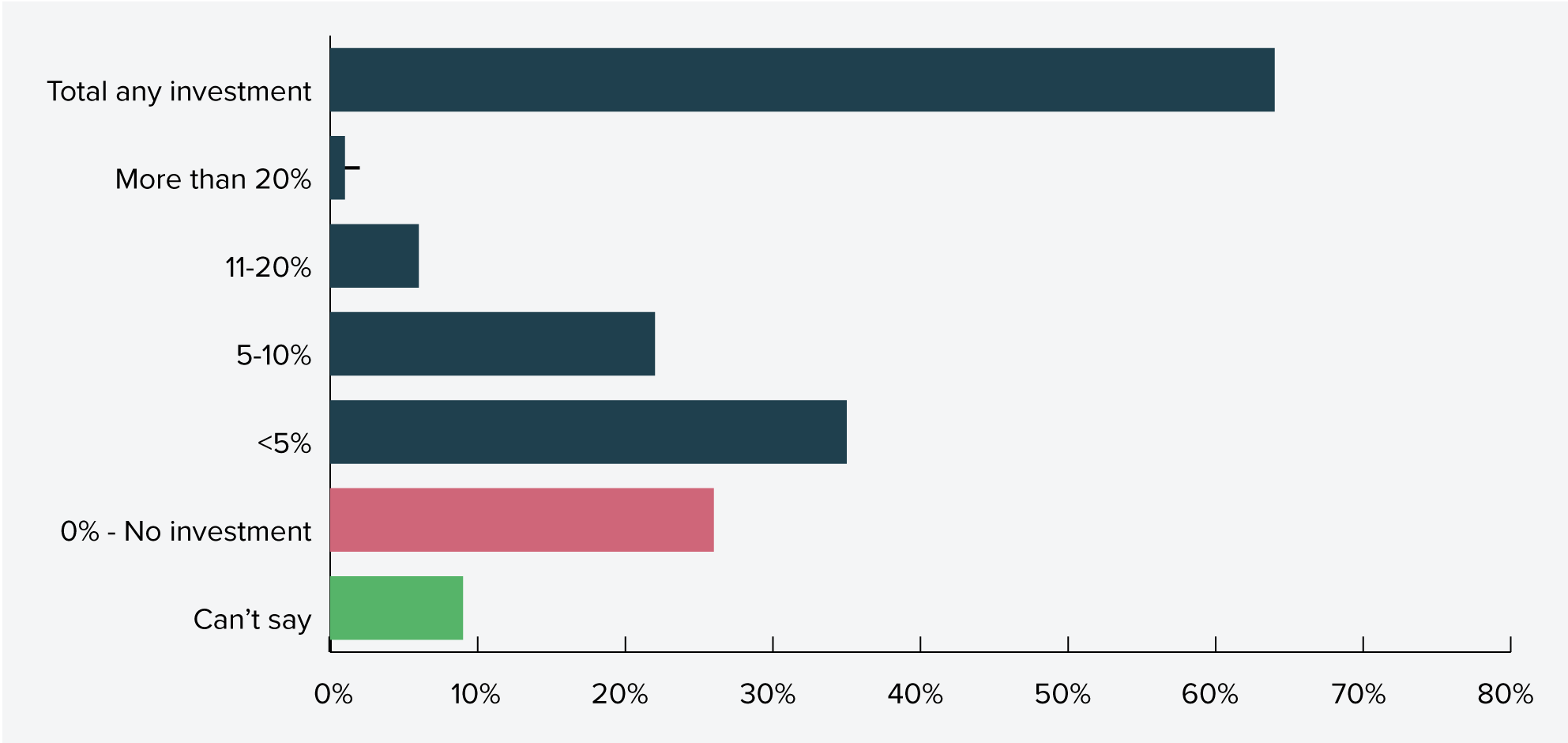
Figure 26: Percentage of revenue invested in data/digitalisation programs over the last 12 months (%)
Source: Infrastructure Australia Industry Confidence Survey (2025)

Digital maturity in the industry is growing, led by engineers and designers  

Global benchmarks indicate that firms in the growth stage typically allocate around 3–5% of revenue to innovation and R&D for initiatives like integrating data into decision making and automation. Leading innovators often invest 7–10% or more to maintain a competitive edge, particularly in areas such as advanced analytics, AI, and digital-first business models.

Applying these benchmarks to this year’s Industry Confidence Survey, approximately a third of building and construction firms (spending up to 5% of revenue on data and digitalisation) are entering the growth stage of adopting digital technologies and another 29% (spending over 5% of revenue on data and digitalisation) are progressing towards digital maturity. 

Encouragingly, of the organisations that have invested in data and digitalisation over the last 12 months, almost three quarters intend to either maintain (49%) or increase (25%) their investment over the next year. 

Organisations with engineering and design roles are leading the pack, with 85% investing over the last 12 months and 41% intending to increase investment in the coming year. These firms demonstrate a growing emphasis on data-driven decision-making and the integration of data scientists into traditionally engineering-focused teams. 

Soundings

Soundings from industry on investments in innovation and new tech in the last 12 months:

“Introduction of robotics … essentially an automatic tagging machine which replaces labour but improves accuracy, safety … also invested in data monitoring through the mills … traceability in terms of understanding mill performance.” (Supplier)

“The biggest cohort of new hires that they’ve had have been data scientists … looking at how they make decisions, seeing if they can make decisions faster, seeing if they can do more with the trends that are in front of them and challenging some of their assumptions” (Industry)

“They put forward an information model; it provides a 3D diagram of the infrastructure that’s being built … rather than thousands of documents that are needed …  and then through the life of the project, it also means that there’s a consistent source of information that has all that data.” (Supplier) 

“That’s reliant on businesses being profitable … it is very hard to justify investing in your business in automation. But automation is the key to productivity and there has been a lot of investment … of robotics installed.” (Industry)

A quarter of the industry are yet to invest, representing over a third of small and medium businesses

While most building and construction organisations have invested in data and digitalisation in the last 12 months, a quarter (26%) did not. Of the organisations that did not invest this year, only 9% plan to start investing in the next 12 months.  

Smaller organisations are far less likely to invest, as shown in Figure 27. Of organisations surveyed this year by Infrastructure Australia, smaller firms (whose largest current project had a capital value of less than $10 million) were most likely to have made no investment in data or digitalisation over the last 12 months (37%) with this cohort representing 89% of those that did not invest. By contrast, construction organisations with higher value projects were far more likely to invest. Only 11% of firms whose largest project was $10-100 million did not invest and this fell to just 4% for firms with projects valued at $101 million or more. 

Figure 27: Percentage of revenue invested in data/digitalisation programs by construction organisations over the last 12 months, by current largest value of project
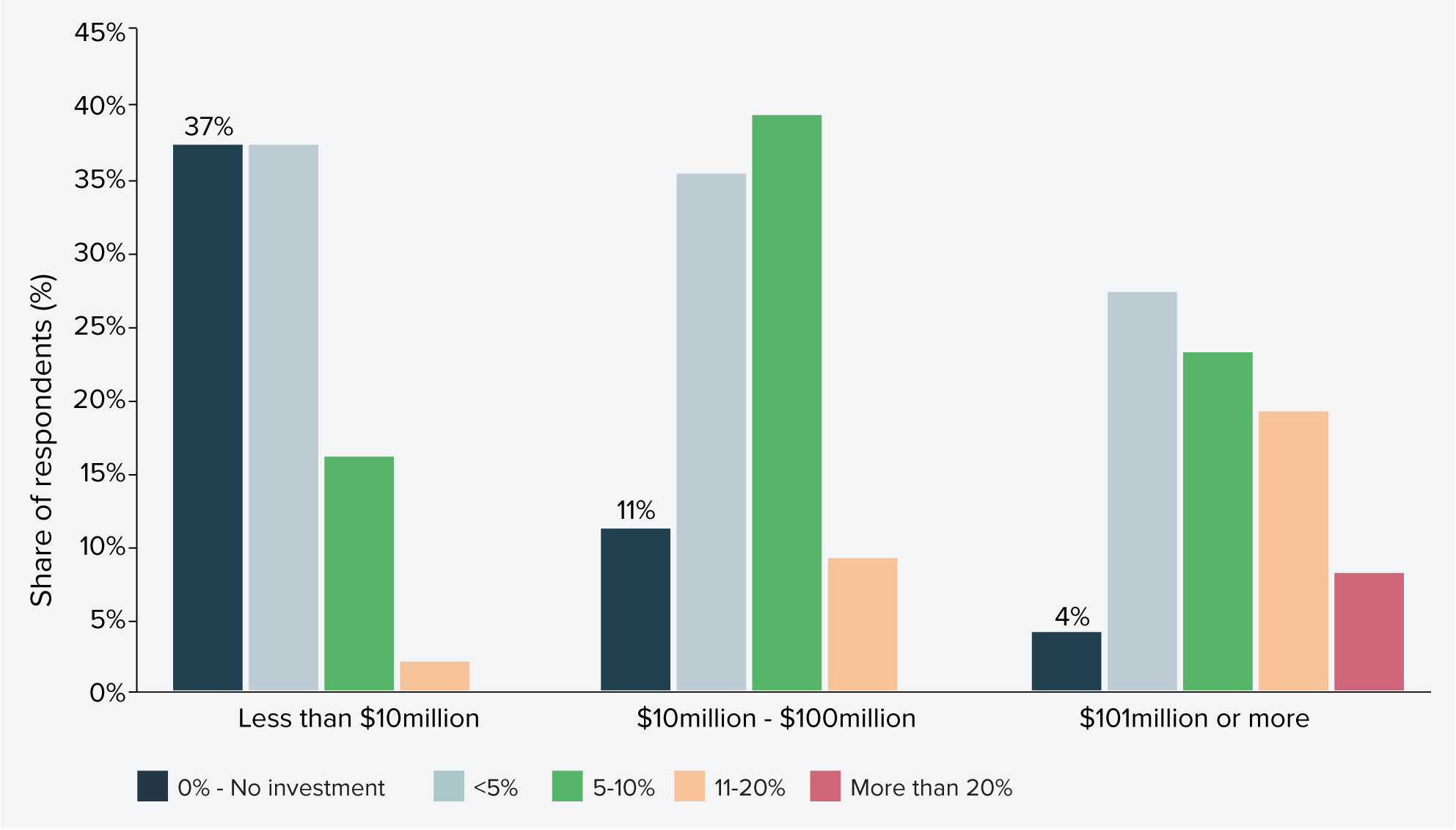
Figure 27: Percentage of revenue invested in data/digitalisation programs by construction organisations over the last 12 months, by current largest value of project
Source: Infrastructure Australia Industry Confidence Survey (2025)

These survey findings are consistent with the National Artificial Intelligence Centre data for small and medium sized businesses (SMEs), which shows 14.3% of construction SMEs use AI, compared to 19.8% across all sectors, as shown in Figure 28. Awareness is also lower – about a third (32.5%) of construction SMEs have no knowledge of AI, versus 22.3% across all sectors.49

Construction industry SMEs based in metropolitan areas (15%) were slightly more likely to be using AI than those in regional Australia (11%), although more significant differences exist between construction firms based on business size. 

Figure 28: AI adoption by small and medium enterprises, all sectors and construction sector
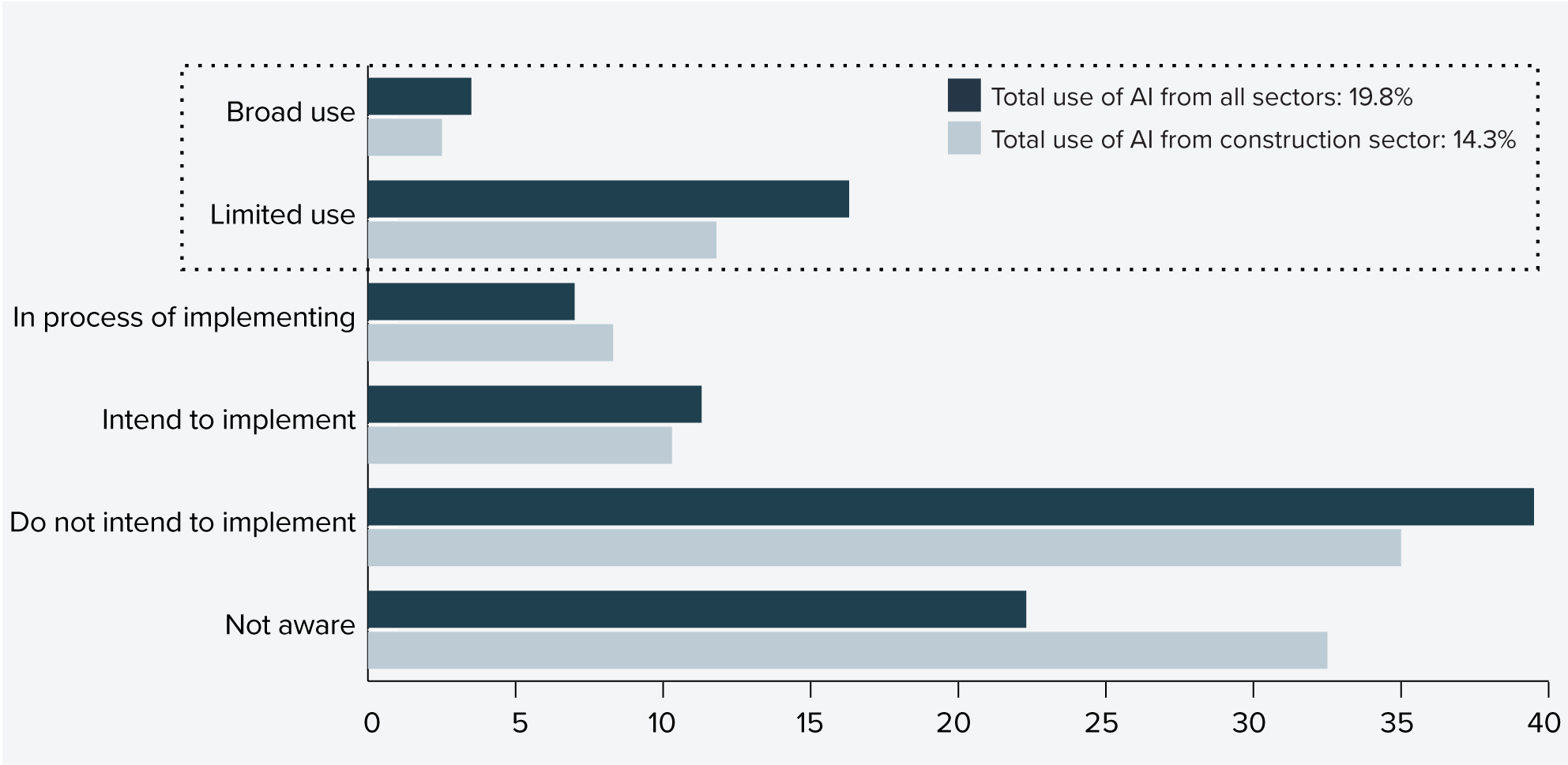
Figure 28: AI adoption by small and medium enterprises, all sectors and construction sector
Source: Infrastructure Australia analysis of National Artificial Intelligence Centre AI Adoption tracker data.50
Notes: Data represents average of monthly survey data across 2024 and 2025 year-to-date.

The same data shows about a third (32%) of medium-sized construction firms are not planning to implement or are not aware of AI. This rises to over half (59%) for small construction SMEs, with a quarter (25%) of these firms not aware of AI, as shown in Figure 29.

Figure 29: Artificial Intelligence adoption by construction sector small and medium sized businesses, by organisation size
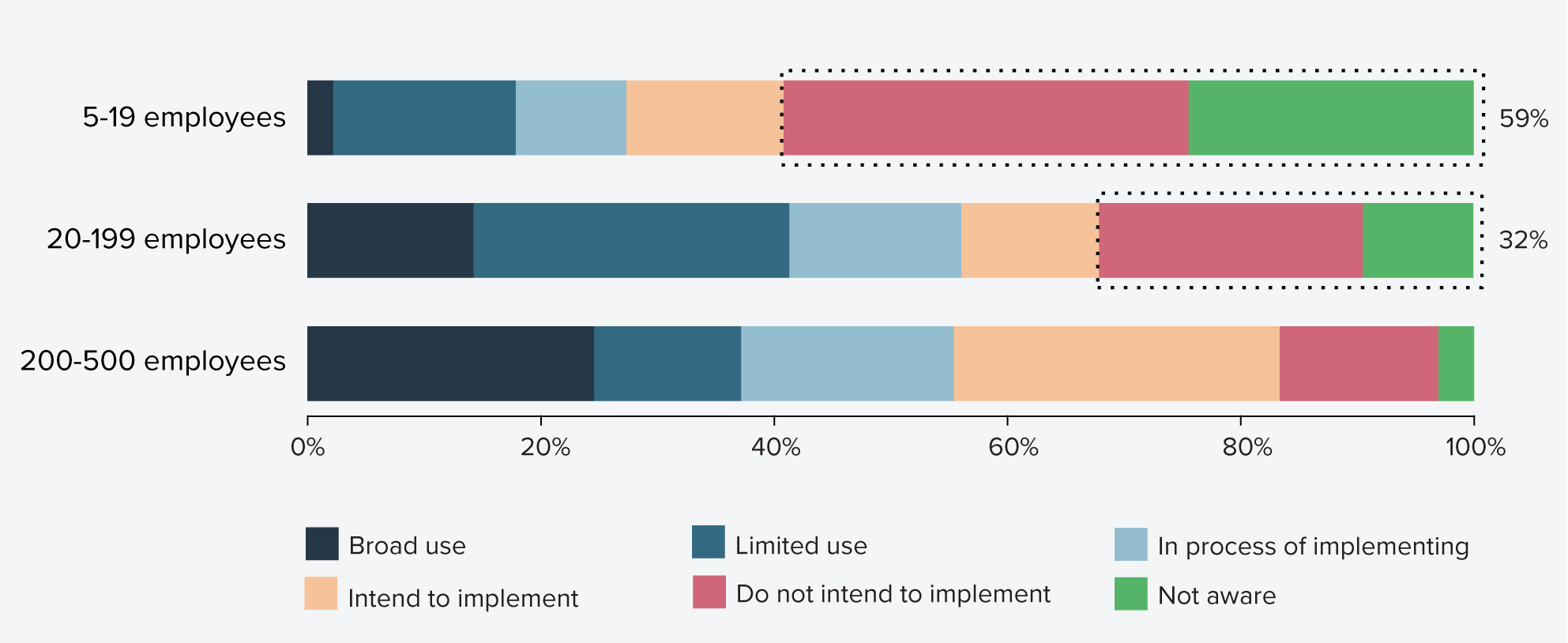
Figure 29: Artificial Intelligence adoption by construction sector small and medium sized businesses, by organisation size
Source: Infrastructure Australia analysis of National Artificial Intelligence Centre AI Adoption tracker data.51
Notes: Data represents average of monthly survey data across 2024 and 2025 year-to-date.

Industry stakeholders interviewed by Infrastructure Australia reported cost as a key barrier to investment in digitalisation, especially for smaller operators. Industry feedback also cited current economic conditions as a hindrance to investment in the last 12 months. Some noted digital transformation is also more challenging where clients continue to rely on paper-based designs and manual processes, or in manual trades where digital tools are seen as less relevant. 

Housing is a major motivator and opportunity to drive modern methods of construction adoption 

While there is a clear need to, scale-up the capacity and adoption for modern methods of construction, uptake rates of these construction techniques remain low in Australia. 

“There has been limited market uptake of modern construction methods, including prefabrication of dwellings or components, due to scale limits.”

National Housing Supply and Affordability Council, State of the Housing System 2025 report52

However, there are signs of increasing adoption and efforts to scale up. The housing supply and affordability crisis is emerging as a prominent driver for action and one of the most significant opportunities to employ modern methods of construction to increase productivity, reduce costs and speed up delivery. This is evidenced by recent progress being made by state governments, with two examples showcased below. 

State governments are increasingly looking for modern methods of construction to accelerate new housing

The Queensland Government’s Modern Methods of Construction program is paving the way for faster, smarter, and more sustainable building solutions in Queensland. Led by QBuild, the Queensland Government’s builder and the Office of the Queensland Government Architect, the program addresses the growing demand for housing across the state.

Key Achievements

Since launching in 2022, Queensland’s Modern Methods of Construction program has completed or commenced over 800 homes across the state, with an initial focus on single storey, volumetric modular construction solutions, largely manufactured off-site, transported to their final location and assembled with minimal disruption. 

One of the standout projects of the program is the recently completed Bundaberg social housing development. This project comprises six single-storey (class 1) homes built by QBuild in their Rapid Accommodation and Apprenticeship Centre in Zillmere, and six two-storey apartment style (class 2) homes designed, manufactured, and completed by Hutchinson Builders – a tier-1 contractor with Cox Architecture

The Bundaberg project, for instance, was completed in only seven months (post letter of award and including schematic design and construction documentation). It is a precursor of a broader pipeline of more than 200 two and three-storey ‘missing middle’ style dwellings currently under construction. 

Lessons learned 

The program has demonstrated significant benefits to speeding up delivery and avoiding delays common to traditional construction, such as design revisions or supply chain disruptions. 

By using standardised designs and engaging the principal contractor early, the program has reduced project delivery time to around twelve months, including pre-tender feasibility, due diligence, preliminary design and approval processes. 

The partnership with the same principal contractor and their design consultant throughout has also fostered innovation and collaboration while reducing the downtime often associated with single phase commissioning.

Next step to scaling wider modern methods of construction adoption  

As the program is integrated into the state’s capital delivery pipeline there is an opportunity to further develop agnostic design, contracting and procurement processes. These processes need to value the faster, smarter, and sustainability benefits of modern methods of construction while also allowing the market to determine the best construction methodology and value for money solution to address different housing needs. These needs include the delivery of higher density four to six-storey social and affordable housing projects across the state.

Lessons learnt from the program will also inform the development of a whole of Government modern methods of construction action plan to assist in the delivery of not only housing, but other key government sectors, such as education, health, corrections and the 2032 Olympics.

The NSW Government has made modern methods of construction a strategic priority to boost domestic manufacturing and productivity, enabling faster housing and infrastructure delivery. These commitments are reflected in the NSW Government’s Principles for Partnership with the Construction Sector and Industry Policy.

There are a range of barriers to increasing uptake of modern methods of construction including: pipeline uncertainty, preferences for bespoke design, insufficient industry incentives, unclear planning and regulatory requirements, and knowledge and skills gaps. 

Action is underway to overcome these barriers, such as the introduction of modern methods of construction pattern books, updating procurement processes, improving supply chain transparency, revising regulatory settings, providing targeted funding, and delivering capability and skills uplift programs. 

NSW Government agencies are already using modern methods of construction in project delivery:

  • Landcom is delivering nine two-storey terrace homes in Schofields as a test case for future modern methods of construction housing projects.
  • NSW Department of Education is using modern methods of construction to rebuild nine schools impacted by the 2022 floods.
  • Homes NSW aims to delivery approximately 13 secondary dwelling demonstration projects using modern methods of construction and volumetric construction in 2025/2026, and a further 80 dual occupancies using a range of modern methods of construction methods in 2026/2027.
  • Homes NSW, in partnership with Building 4.0 CRC, is developing a kit-of-parts 2-bedroom apartment prototype and leading program implementation, measurement and evaluation.

The NSW Construction Leadership Group (CLG) coordinates infrastructure planning, procurement, and delivery across the NSW Government. The CLG has established a Modern Methods of Construction Working Group to align NSW Government activities, share lessons, and address systemic barriers to modern methods of construction uptake.

National level initiatives will address regulatory barriers to widen modern methods of construction uptake 

Regulatory barriers create challenges for industry to scale up modern methods of construction capacity and propose alternative modern methods of construction delivery options that are equally competitive with conventional construction methods. These regulatory barriers include a lack of design standardisation, which may also create challenges integrating offsite-manufactured components and on-site assembly with traditional construction methods. There remains a need for consistent methods and tools for quality assessment and accreditation. Building codes and operator licensing regulations must also adapt to support standardisation, compliance and competitiveness and enable suppliers to operate across borders. 

The Australian Government, in partnership with state and territory governments, will address some of these regulatory barriers through the National Competition Policy reforms.

The National Competition Policy reforms will address barriers to adoption 

The National Competition Policy (NCP) reforms will play a pivotal role in increasing the national adoption of modern methods of construction by removing regulatory barriers and incentivising innovation across jurisdictions. Under a ten-year reform program signed in late 2024, the Commonwealth and state governments agreed to modernise competition principles and undertake productivity-enhancing reform, including amending regulatory frameworks that currently favour traditional, onsite construction.53

These initiatives will be complemented by other reforms being progressed through NCP including improved adoption of standards and the development of a national licensing scheme for electrical tradespeople.  

Backed by the $900 million National Productivity Fund, these reforms are expected to unlock significant economic benefits, with the Productivity Commission estimating up to $6 billion in GDP gains through faster, lower-cost housing delivery and improved construction productivity.54

In addition to the National Competition Policy reforms, other recent national initiatives announced supporting modern methods of construction include: the Australian Government working with states and territories and stakeholders to streamline the National Construction Code, including removing barriers to the uptake of modern methods of construction,55 additional funding ($49.3 million) to states and territories to boost adoption,56 and development of a voluntary certification scheme to streamline regulatory approvals.57

On the demand side - a clearer pipeline and upfront incentives can scale up innovations, including modern methods of construction, from market-ready to market-wide solutions

While states and territories are actively embedding more modern methods of construction approaches in their own jurisdictions, demand remains fragmented and often limited to individual projects or programs. Governments have collectively invested $44 billion in social and affordable housing, $27 billion in health buildings such as hospitals, and $15 billion in education buildings over the five-year outlook (2024-2025 to 2028-2029). These are all project types with high application potential for modern methods of construction. Further, modern methods of construction approaches have yielded at scale productivity improvements for the transport infrastructure sector such as bridge, rail and metro projects.  

While Infrastructure Australia’s Industry Confidence Survey signals growing momentum in investment in digitalisation – particularly among firms in engineering and design – uptake across the broader infrastructure sector remains uneven. Adoption of modern methods of construction and other transformative innovations continues to lag, constrained by entrenched delivery models, fragmented procurement practices, and limited incentives for risk-sharing.

High upfront investment costs and uncertainty around modern methods of construction pipelines can deter industry from scaling modern methods of construction capacity. A more coordinated approach –aggregating projects into strategic pipelines by type – could provide the certainty needed to unlock investment and build capability.  

Government clients and industry contractors can often be reluctant to look at innovative ideas and approaches on infrastructure projects, where the focus is often on minimising risks and sticking to standardised methods and technologies. For innovation to succeed, new solutions that can realise productivity gains need to be developed, proven and scaled. Doing so requires systematic approaches designed in a collaborative way by governments and industry.

‘Innovation hub’ models are an important piece of the puzzle for attracting co-investment in research, development and piloting of new technologies and overcoming the ‘valley of death’ between concept and commercialisation. Examples include Australia’s Cooperative Research Centres (CRCs) and the UK’s Catapult Centres. These are vital for taking novel ideas and nurturing them into market-ready products and services. However, they do not address the critical next step of driving uptake and integration of now proven, commercialised but still novel solutions into wider practice. 

Where doing so offers clear public benefits, government support can help stimulate markets for demand and build the capacity and scale required to create the supply for proven innovations. In the construction context, a key role for governments is to harness the enormous capital investments made in public infrastructure to drive adoption of innovations that can contribute long-term benefits to productivity across the sector. This means finding structured ways (through levers such as funding, procurement and collaboration) to leverage large-scale infrastructure projects and programs as platforms to support investment in and deployment of innovative solutions, which can simultaneously stimulate demand, help build capacity and skills in government and industry, and demonstrate tangible benefits. 

Overseas experience shows that alternative co-investment models between government and industry – at the individual project, infrastructure sector or industry-wide scale – can accelerate the uptake of proven but under-used technologies and scale industry capacity and adoption to deliver step changes in productivity and sustainability. Examples from the United Kingdom, Singapore, and the United States are provided below.

United Kingdom: Crossrail Project Innovation Strategy58,59,60,61,62,63,64,65,66,67

Crossrail was a transformational $30 billion rail project to construct the Elizabeth Line through central London from Reading and Heathrow in the west through to Shenfield and Abbey Wood in the east. The project aimed to increase London’s rail capacity by 10% to carry 200 million passengers a year, reduce journey times and improve access, including bringing 1.5 million more people to within a 45-minute journey of the city centre. At its peak, Crossrail involved 75 companies and 10,000 people directly supporting delivery. 

In early stages of the project, isolated pockets of innovation were taking place across different suppliers in response to specific challenges and opportunities arising in delivery. While positive, this activity lacked strategic direction, sponsorship, coordination and access to funds. Crossrail established an innovation strategy to provide a systematic way of mobilising and managing innovation during construction. This defined a set of specific challenges as a focus for innovation and – through leadership, governance and engagement – drove a cultural shift towards collaboration across different government department, industry supply chain and on-site delivery organisations. 

The strategy encouraged construction firms in the project supply chain to develop innovative products and processes, apply them to the project itself and ensure they were shared. Measures included establishing new key performance indicators in existing contractual incentives, streamlining change management processes and tracking innovation activity and conversion rate of ideas into implementation.

A dedicated innovation program fund (Innovate18) was also developed by inviting tier 1 suppliers to commit to small funding contributions matched by public funds, used to seed-fund new ideas to a stage of demonstrating value and ability to deploy at scale. This fund, supported by a collaborative executive-level steering group, innovation working group, and small program team, promoted a collective approach to investing in and developing innovative solutions. 

The fund invested over $665,000 in innovation projects. In the first 12 months, over 400 ideas were submitted with 180 developed into innovative solutions. Benefits were evaluated at between $5 million to $10 million as well as additional intangible benefits in areas such as health and safety and innovation culture. Overall, the adoption of innovations developed through the program demonstrated clear benefits to industry suppliers including increased efficiencies, accelerated delivery schedule, improved environmental performance and reduced health and safety hazards.

Over 100 shared innovations developed out of Crossrail were carried forward to future infrastructure projects, demonstrating how structured innovation strategies can drive systemic change across the construction sector. Examples include:

  • Advanced Building Information Modelling (BIM) for integrated design and asset management, which set the benchmark for the UK Government’s BIM Level 2 mandate.
  • The Innovate18 platform fostered collaborative idea-sharing and evolved into the industry-wide i3P network.
  • Technical innovations such as sprayed concrete lining (SCL) improved tunnelling efficiency and are now widely used in underground works.
  • The introduction of digital safety tools for real-time monitoring and compliance, and advanced offsite manufacturing and modularisation, reducing on-site risks and improving delivery speed. 

Singapore: Productivity Innovation Project Incentive Scheme68,69,70   

Singapore’s construction sector historically relied on low‑skilled foreign labour, resulting in low productivity, rising costs, and inefficiencies. With ambitious housing and infrastructure needs, the government recognised that without action to increase productivity, including accelerating adoption of modern methods of construction and digital tools, industry would struggle to modernise and meet demand sustainably.

Alongside a range of mechanisms to drive modern methods of construction adoption – including to establish Integrated Construction and Prefabrication Hubs and provide structured processes for government procuring entities to integrate modern methods of construction - the government’s Building and Construction Authority (BCA) also introduced the Construction Productivity and Capability Fund (CPCF) to build capability and kick start adoption of innovative solutions in construction that improve productivity. 

The CPCF includes several initiatives, including a Building Information Modelling (BIM) Fund and the Productivity Innovation Project (PIP) Incentive Scheme. Launched in 2018, the PIP scheme provides direct government financial assistance to construction firms for innovation projects to de‑risk investments in innovation and accelerate adoption. Grants cover up to 70% of the cost of projects (up to a maximum of $11 million) that develop new capabilities for technology adoption, site process re-engineering and innovation in construction projects and lead to significant site productivity improvement of at least 20%. It primarily supports investments in adoption of productive technologies – such as robotics and automation, integrated digital delivery systems and modern methods of construction.

By 2019, the PIP had helped improve site productivity by 17.6% compared to 2010 levels and meant Singapore was on track to achieve 70% modern methods of construction adoption by 2025 under the government’s Construction Industry Transformation Map. As of 2022, the PIP had funded 78 construction firms to adopt transformative technologies. Examples include a mechanical, electrical and plumbing subcontractor to automate pipe cutting and welding in their off-site factory, resulting in a 40% productivity gain compared to manual processes. Another funding recipient installed an on-site automated drilling and anchoring robot to replace manual processes, increasing productivity by at least 30% as well as improving worker safety. The program was extended to 2025 as part of a further $202 million investment in construction sector innovation programs and incentive schemes.

United States of America: Federal Highway Administration Center for Accelerating Innovation71,72,73,74

The US Federal Highway Administration (FHWA) identified that highway infrastructure projects across the US were often delayed as a result of outdated processes, fragmented coordination, and the slow pace of agencies to adopt proven new technologies, materials and practices, and integrate these into mainstream use. FHWA recognised the need for national mechanisms to accelerate deployment of innovative solutions that could improve productivity and safety and reduce costs.

The FHWA launched several initiatives designed to accelerate innovation in response to inefficiencies in highway project construction, including the Highways for LIFE (HfL) and the Every Day Counts (EDC) programs. Since these programs were created, the FHWA Center for Accelerating Innovation was established in 2012 to build on these programs and provide a focal point for strategic innovation deployment across the country.  

HfL was set up in 2005 to create a technology deployment process and offer funding incentives for state and local highway agencies to speed up the use of innovative approaches on highway and bridge construction projects, and more effectively move them into widespread adoption. 

Between 2006 and 2014 the program provided over $85 million in funding support for 60 innovation projects across 37 states, supporting the adoption of innovations including accelerated bridge construction techniques, high-performance materials, prefabricated bridge components, precast concrete pavement systems and new approaches to contracting.

One project in Massachusetts involved replacing 14 aging bridge superstructures on Interstate 93 using prefabricated bridge sections constructed off-site, and accelerated construction techniques. The project reduced construction time from 48 to 9 months, substantially reduced the traffic impacts of construction to 550 hours and resulted in a 2% cost saving compared to conventional construction. 

The EDC program provides a collaborative innovation management model that identifies proven but under-used innovations and engages state transport departments, local governments and industry to prioritise opportunities for accelerated deployment in each state. State Transportation Innovation Councils (STICs) then set performance goals for adoption of chosen innovations over a two-year cycle and lead implementation. The FHWA provides support to states through deployment teams that offer technical assistance, training and engagement to facilitate technology adoption and integration of solutions into standard practice, as well as financial assistance through STIC incentives (up to US$125,000 per year) and Accelerated Innovation Deployment grants of up to US$1 million to support the costs of deploying innovative solutions on highway projects. 

Since the EDC program was established, it has so far supported 57 innovative solutions across seven rounds between 2011/12 and 2023/24. Each state has applied at least 26 of these with some using more than 45, and many innovations now embedded in mainstream practice across the US. 

EDC has supported several projects to accelerate modern methods of construction deployment, such as the Prefabricated Bridge Elements and Systems project. This supported adoption of bridge components such as pier columns and caps, beams and decks that could be fabricated concurrently offsite and delivered as needed, rather than having to construct different components and build them sequentially on site – reducing build time, improving safety and reducing traffic impacts.

 

Endnotes

  1. Government of South Australia, 2025, State government puts Whyalla steelworks owner in administration, Department for Energy and Mining media release, 19 February 2025, accessed 3 October 2025, available via: https://www.energymining.sa.gov.au/home/news/latest/state-government-puts-whyalla-steelworks-owner-in-administration
  2. Productivity Commission 2025, Housing construction productivity: Can we fix it?, Australian Government, Canberra, p.30, available via: https://assets.pc.gov.au/research/completed/housing-construction/housing-construction.pdf
  3. Trades Recognition Australia, 2024, Prioritising and streamlining Skills Assessment for the Construction Industry, Australian Government, accessed 24 October 2025, available via https://www.tradesrecognitionaustralia.gov.au/news/prioritising-and-streamlining-skills-assessment-construction-industry-0
  4. Australian Bureau of Statistics, 2025, Labour Force Survey, Detailed (Reference period May 2025), four-quarter average data, accessed 24 October 2025, available via: https://www.abs.gov.au/statistics/labour/employment-and-unemployment/labour-force-australia-detailed/may-2025
  5. Australian Bureau of Statistics, 2024, Construction Work Done, Australia, Preliminary, ‘Table 01. Value of Construction Work Done, by Sector, Chain Volume Measures, Australia’, time series spreadsheet, cat 8755.0., accessed 24 October 2025, available via: https://www.abs.gov.au/statistics/industry/building-and-construction/construction-work-done-australia-preliminary/jun-2024
  6. Infrastructure Partnerships Australia 2025, accessed 24 October 2025, available via:  https://www.infrastructure.org.au/policy-research/energy-infrastructure-plausibility-matrix
  7. For example, see: Western Australian Department of Finance, 2024, Pipeline of Works, Government of Western Australia, accessed 24 Oct 2025, available via: https://www.wa.gov.au/service/government-financial-management/procurement/pipeline-of-work; Infrastructure NSW, 2025, NSW Infrastructure Pipeline, New South Wales Government, accessed 24 Oct 2025, available via: https://www.infrastructure.nsw.gov.au/industry/nsw-infrastructure-pipeline
  8. New South Wales EnergyCo, 2025, South West REZ Access Scheme, New South Wales Government, accessed 2 Oct 2025, available via: https://www.energyco.nsw.gov.au/industry/access-schemes/south-west-rez-access-scheme
  9. Department of Climate Change, Energy, the Environment and Water, 2025, Shared environmental assessments with states and territories, Australian Government, accessed 24 Oct 2025, available via: https://www.dcceew.gov.au/environment/epbc/approvals/state-assessments
  10. The Hon. Chris Minns, Premier, Infrastructure NSW set to tackle roadblocks in delivering critical infrastructure, media release, New South Wales Government, 12 June 2024, accessed 6 October, 2025, available via: https://www.nsw.gov.au/media-releases/infrastructure-nsw-set-to-tackle-roadblocks-delivering-critical-infrastructure
  11. Australian Bureau of Statistics, 2025, Producer Price Indexes, Australia, June 2025, cat no. 6427.0. accessed 24 October 2024, available via: https://www.abs.gov.au/statistics/economy/price-indexes-and-inflation/producer-price-indexes-australia/latest-release
  12. Australian Steel Institute, 2024, Imported fabricated steel briefing paper, Australian Steel Institute, unpublished data
  13. Australian Steel Institute, 2024, Imported fabricated steel briefing paper, Australian Steel Institute, unpublished data
  14. Department of Finance, 2022, Commonwealth Procurement Rules- 1 July 2022, Australian Government, Canberra, available via: https://www.finance.gov.au/sites/default/files/2022-03/Commonwealth%20Procurement%20Rules%20-%201%20July%202022%20-%20advanced%20copy.pdf
  15. Australian Steel Institute, 2024, Imported fabricated steel briefing paper, Australian Steel Institute, unpublished data
  16. Australian Steel Institute, 2025, Business Risk Index February 2025 results, unpublished data
  17. Infrastructure Australia 2024, Embodied Carbon Projections for Australian Infrastructure and Buildings, Infrastructure Australia, Sydney, p.20, available via: https://www.infrastructureaustralia.gov.au/embodied-carbon-projections
  18. The Council on Federal Financial Relations 2024, Federation Funding Agreement – Infrastructure: Land Transport Infrastructure Projects, Schedule, The Treasury, accessed 24 October 2025, available via: https://federalfinancialrelations.gov.au/agreements/land-transport-infrastructure-projects-2024-2029
  19. Cooperative Research Australia, 2025, Cooperative Research Centres Program, Cooperative Research Austrlaia, accessed 3 October 2025, available via: https://www.cooperativeresearch.org.au/resources/about-the-crc-program-/
  20. SmartCrete CRC, 2025, About SmartCrete CRC, SmartCrete CRC, accessed 3 October 2025, available via: https://smartcretecrc.com.au/about/
  21. Department of Infrastructure, Transport, Regional Development, Communications, Sport and the Arts, 2025, Transport and Infrastructure Net Zero Roadmap and Action Plan: Transport Sector Plan, September 2025, Australian Government, Canberra, available via: https://www.infrastructure.gov.au/sites/default/files/documents/transport-and-infrastructure-net-zero-roadmap-and-action-plan.pdf
  22. Clean Energy Finance Corporation, 2021, Australian buildings and infrastructure: Opportunities for cutting embodied carbon, CEFC, p.68, available via: https://www.cefc.com.au/document?file=/media/ovrkk5l3/australian-buildings-and-infrastructure-opportunities-for-cutting-embodied-carbon.pdf
  23. SmartCrete CRC, 2025, Insight Paper - Net Zero is under Construction: How sustainability-led procurement can decarbonise concrete, SmartCrete CRC, available via: https://smartcretecrc.com.au/wp-content/uploads/2025/08/INSIGH_1.pdf
  24. Department of Infrastructure, Transport, Regional Development, Communications, Sport and the Arts, 2025, Transport and Infrastructure Net Zero Roadmap and Action Plan: Transport Sector Plan, September 2025, Australian Government, Canberra, available via: https://www.infrastructure.gov.au/sites/default/files/documents/transport-and-infrastructure-net-zero-roadmap-and-action-plan.pdf
  25. World Economic Forum, 2025, The Future of Jobs Report 2025, World Economic Forum, Geneva, p.62, available at: https://www.weforum.org/reports/the-future-of-jobs-report-2025/    
  26. GlobalData, 2025, Construction Hiring Activity: Trends & Signals 2024. Report Code: DT0731TR. GlobalData Plc. (supplied)
  27. GlobalData, 2024, Construction Hiring Activity: Trends & Signals 2024, Tech hiring by Industry. Report Code: DT0731TR. GlobalData Plc. (supplied)
  28. GlobalData ,2024, Construction Hiring Activity: Trends & Signals 2024, Tech hiring by Industry. Report Code: DT0731TR. GlobalData Plc. (supplied)
  29. Infrastructure NSW, 2025, Decarbonising Infrastructure Delivery: Capability Survey Results Summary, NSW Government, Sydney, available via: https://www.infrastructure.nsw.gov.au/media/tr1bjfuu/insw-decarb-cap-survey-results-summary.pdf
  30. Infrastructure NSW 2025, Decarbonising Infrastructure Delivery: Capability Survey Results Summary, NSW Government, Sydney, available via: https://www.infrastructure.nsw.gov.au/media/tr1bjfuu/insw-decarb-cap-survey-results-summary.pdf
  31. Infrastructure Australia 2025, Delivering Net Zero Infrastructure: Workforce Report, Infrastructure Australia and the Australian Sustainable Built Environment Council, Sydney, available via:  https://www.infrastructureaustralia.gov.au/delivering-net-zero-infrastructure-workforce-report
  32. Melbourne Polytechnic, 2015, Future of Housing Construction Centre of Excellence, Melbourne Polytechnic, accessed 24 October 2025, available via https://www.melbournepolytechnic.edu.au/about-us/future-of-housing-construction-centre-of-excellence/
  33. Melbourne Polytechnic 2024, Melbourne Polytechnic to lead new Skills Labs supporting Victoria’s clean economy transition, Melbourne Polytechnic, accessed 3 October 2025, available via: https://www.melbournepolytechnic.edu.au/about-us/news-and-events/news/melbourne-polytechnic-to-lead-new-skills-labs/
  34. The Hon Steve Whan, Minister for Skills, TAFE and Tertiary Education, 2024, $80 million Institute of Applied Technology for Construction Opened in Western Sydney, media release, 20 February 2024, accessed 3 October 2025, available via: https://www.nsw.gov.au/media-releases/80-million-institute-of-applied-technology-for-construction-opened-western-sydney
  35. Australian Bureau of Statistics 2025, Estimates of Industry Multifactor Productivity 2023-24 financial year, MFP growth in 2023-24, hours worked basis, viewed 24 October 2025, available via: https://www.abs.gov.au/statistics/industry/industry-overview/estimates-industry-multifactor-productivity/latest-release#estimates-of-industry-productivity-2023-24
  36. Australian Bureau of Statistics 2025, Estimates of Industry Multifactor Productivity, viewed 24 October 2025, available via: https://www.abs.gov.au/statistics/industry/industry-overview/estimates-industry-multifactor-productivity/latest-release
  37. Australian Bureau of Statistics 2025, Australian National Accounts: Input-Output Tables, 2022-2023, ‘Input by industry and final use category and imports by product group’, data cube: Excel spreadsheet, cat. no. 5209.0.55.001, viewed 6 October 2025, https://www.abs.gov.au/statistics/economy/national-accounts/australian-national-accounts-input-output-tables/latest-release#introduction
  38. Australian Bureau of Statistics 2025, Labour Force Survey, Detailed, viewed 24 October 2025, available via: https://www.abs.gov.au/statistics/labour/employment-and-unemployment/labour-force-australia-detailed/may-2025
  39. Workplace Gender Equality Agency (WGEA) 2025, Data Explorer – Industry; private sector reporting 2023-24, WGEA, available via: https://www.wgea.gov.au/Data-Explorer/Industry
  40. Workplace Gender Equality Agency (WGEA) 2025, Data Explorer – Industry; private sector reporting 2023-24, WGEA, available via: https://www.wgea.gov.au/Data-Explorer/Industry
  41. Master Builders Australia 2025, Level the Site, Master Builders Australia, accessed 3 October 2025, available via: https://levelthesite.com.au/
  42. Lingard, H., Turner, M., Pirzadeh, P., Clarke, J., Chan, K., Sun, C., Strazdins, L., LaBond, C., Galea, N., & Wilson, A. 2025, Culture in Construction: Final Report. RMIT University, Melbourne, available via available via: https://www.constructionindustryculturetaskforce.com.au/publication/cict-final-report
  43. RMIT University, 2025, Work Hour Cultures for Health, Wellbeing and Gender Equality, RMIT, viewed 24 October 2025, available via: https://www.rmit.edu.au/about/schools-colleges/property-construction-and-project-management/research/research-centres-and-groups/construction-work-health-safety-research/projects/work-hour-cultures-gender-equality
  44. Construction Industry Culture Taskforce 2025, Guide for Embedding the Culture Standard in Construction Procurement, Construction Industry Culture Taskforce, viewed 24 October 2025, available via: https://cict.mymedia.delivery/wp-content/uploads/2025/06/Guide-for-embedding-the-Culture-Standard-in-construction-w.pdf
  45. Victorian Government, 2023, Procurement Policies – Buying for Victoria, Government of Victoria, viewed 24 October 2025, available via: https://www.buyingfor.vic.gov.au/policies
  46. New South Wales Government, 2025, Procurement Policy Framework, New South Wales Government, viewed 24 October 2025, available via: https://www.info.buy.nsw.gov.au/policy-library/policies/procurement-policy-framework
  47. Transport for NSW, 2025, Culture Standard Trial – Mulgoa Road Stage 1, New South Wales Government, viewed 24 October 2025, available via: https://industry.transport.nsw.gov.au/tfnsw/tiip/culture-standard-trial
  48. World Intellectual Property Organization (WIPO),2025, Global Innovation Index 2025: Tracking global innovation trends and performance, WIPO, Geneva, available via: https://www.wipo.int/web-publications/global-innovation-index-2025/en/index.html
  49. Department of Industry, Science and Resources, 2025, AI Adoption Tracker,  National Artificial Intelligence Centre, Canberra, viewed 24 October 2025, available via: https://www.industry.gov.au/publications/ai-adoption-tracker
  50. Department of Industry, Science and Resources, 2025, AI Adoption Tracker,  National Artificial Intelligence Centre, Canberra, viewed 24 October 2025, available via: https://www.industry.gov.au/publications/ai-adoption-tracker
  51. Department of Industry, Science and Resources, 2025, AI Adoption Tracker,  National Artificial Intelligence Centre, Canberra, viewed 24 October 2025, available via: https://www.industry.gov.au/publications/ai-adoption-tracker
  52. National Housing Supply and Affordability Council, 2025, State of the Housing System 2025, 21 May 2025, National Housing Supply and Affordability Council, Canberra, available via: https://nhsac.gov.au/reports-and-submissions/state-housing-system-2025
  53. Department of the Prime Minister and Cabinet, 2025, Intergovernmental Agreement on National Competition Policy, Department of Prime Minister and Cabinet, accessed 24 October 2025, available via: https://federation.gov.au/about/agreements/intergovernmental-agreement-national-competition-policy
  54. Productivity Commission 2024, National Competition Policy: modelling proposed reforms, Productivity Commission, Canberra, available via: https://www.pc.gov.au/inquiries-and-research/competition-analysis/report/   
  55. Australian Government 2025, Action on Red Tape and Approvals to Build More Homes More Quickly, Treasury Ministers, Canberra, available via: https://ministers.treasury.gov.au/ministers/clare-oneil-2025/media-releases/action-red-tape-and-approvals-build-more-homes-more
  56. The Hon Clare O’Neil MP, Minister for Housing, Minister for Homelessness, Minister for Cities, Albanese Labor Government Building More Homes More Quickly and Making Them Easier to Buy, media release, The Treasury, Canberra, 24 August 2025, available via: https://ministers.treasury.gov.au/ministers/clare-oneil-2025/media-releases/action-red-tape-and-approvals-build-more-homes-more
  57. 64 The Hon Clare O’Neil MP, Minister for Housing, Minister for Homelessness, Minister for Cities, Albanese Labor Government Building More Homes More Quickly and Making Them Easier to Buy, media release, The Treasury, Canberra, 24 August 2025, available via: https://ministers.treasury.gov.au/ministers/clare-oneil-2025/media-releases/action-red-tape-and-approvals-build-more-homes-more
  58. Greater London Authority 2021, Crossrail: The project at a glance, Greater London Authority, London, available via: https://www.london.gov.uk/sites/default/files/crossrail_-_project_at_a_glance.pdf
  59. Department for Transport and Infrastructure and Projects Authority (UK), 2024, Sponsoring a Major Project: The Crossrail Experience, Department for Transport, London, available via: https://assets.publishing.service.gov.uk/media/664b0afebd01f5ed32793e3e/crossrail-lessons-learned-report.pdf
  60. Crossrail Learning Legacy, 2015, Innovation Programme Overview, Crossrail Learning Legacy, accessed 24 October 2025, available via: https://learninglegacy.crossrail.co.uk/wp-content/uploads/2016/04/11A_021_Innovation-Programme-OverviewProspectus.pdf
  61. DeBarro T, MacAulay S, Davies A, Wolstenholme A, Gann D, Pelton J, 2015, “Mantra to method: lessons from managing innovation on Crossrail, UK”. Proceedings of the Institution of Civil Engineers - Civil Engineering, Vol. 168 No. 4 pp. 171–178, available via: http://dx.doi.org/10.1680/cien.15.00008
  62. Coughlan, D., Diez, R., Comins, J., & Stärk, A, 2017, “Crossrail project: use of sprayed concrete tunnel linings on London’s Elizabeth line”. Civil Engineering, Vol 170 Issue CES, available via: https://learninglegacy.crossrail.co.uk/wp-content/uploads/2017/04/Use-of-sprayed-concrete-tunnel-linings-on-Londons-Elizabeth-line.pdf
  63. Vernet, A. 2016, Crossrail Innovation Programme: Innovation Evaluation Report, Imperial College Business School, London, available via: https://learninglegacy.crossrail.co.uk/wp-content/uploads/2016/05/11A-003_Crossrail-Innovation-Programme-Evaluation-Report-Final.pdf
  64. Esri UK 2016, Crossrail - Resource Centre, Esri UK, accessed 24 October 2025, available via: https://resource.esriuk.com/esri-resources/crossrail/
  65. McKinsey & Company, 2016, Breaking the mold: How Crossrail’s Innovate18 program works, McKinsey & Company, accessed 24 October 2025, available via: https://www.mckinsey.com/capabilities/operations/our-insights/breaking-the-mold-how-crossrails-innovate-18-program-works
  66. Scholl Sternberg, A. 2020, Crossrail Integration Facility and Test Automation – How an off-site fully automated testing facility increases resilience of complex signalling projects, Crossrail Learning Legacy, accessed 24 October 2025, available via: https://learninglegacy.crossrail.co.uk/wp-content/uploads/2020/10/7G-017-IRSE-News-Crossrail-Integration-Facility-and-Test-Automation-20200915.pdf
  67. Taylor, M. 2018, Crossrail Project: Application of BIM (Building Information Modelling) and Lessons Learned, Crossrail Learning Legacy, accessed 24 October 2025, available via: https://learninglegacy.crossrail.co.uk/documents/crossrail-project-application-of-bim-building-information-modelling-and-lessons-learned/
  68. Building and Construction Authority (Singapore) 2018, Guidelines on Productivity Innovation Project (PIP) Scheme - Part of the Construction Productivity and Capability Fund (CPCF), Building and Construction Authority, Singapore, available via: https://www.bca.gov.sg/pip/others/pip_guidelines.pdf
  69. Building and Construction Authority (Singapore) 2024, Media Factsheets on Initiatives to Support Transformation in the Built Environment Sector, Building and Construction Authority, Singapore, available via: https://www.mnd.gov.sg/docs/default-source/mnd-documents/cos-2024/bca-media-factsheet.pdf?sfvrsn=4682779e_0
  70. Ministry of National Development (Singapore) 2021, Written Answer to Parliament by Ministry of National Development on outcomes of the Construction Productivity and Capability Fund, accessed 24 October 2025, available via: https://www.mnd.gov.sg/newsroom/parliament-matters/q-as/view/written-answer-by-ministry-of-national-development-on-outcomes-of-the-construction-productivity-and-capability-fund
  71. Federal Highway Administration (USA), Center for Accelerating Innovation: Every Day Counts (EDC), accessed 1 October 2025, U.S. Department of Transportation, available via: https://www.fhwa.dot.gov/innovation/everydaycounts/
  72. US Federal Highway Administration (USA) 2019, Every Day Counts Fact Sheet, U.S. Department of Transportation, available via: https://www.fhwa.dot.gov/innovation/everydaycounts/everydaycounts_overview.pdf
  73. US Federal Highway Administration (USA) 2014, Harnessing the Power of Innovation to improve America’s Driving Experience: Report on the Highways for LIFE Program, U.S. Department of Transportation, available via: https://www.fhwa.dot.gov/hfl/resources/final_report.pdf
  74. Federal Highway Administration (USA) 2014, Massachusetts Demonstration Project: Reconstruction of Fourteen Bridges on I-93 in Medford Using Accelerated Bridge Construction Techniques - Final Report, U.S. Department of Transportation, available via: https://www.fhwa.dot.gov/hfl/projects/ma_abc_i93_medford.pdf 
Delivering Net Zero Infrastructure: Workforce Report

Delivering Net Zero Infrastructure: Workforce Report


27 August 2025

Executive Summary

The infrastructure workforce of today needs to be capable of delivering impactful decarbonisation activities to achieve net zero ambitions

Australia has committed to reaching net zero by 2050.  Infrastructure will be a critical enabler of the energy transition, with investment in energy infrastructure projected to increase six-fold over the next five years.1 The sector is also a significant emitter in its own right —currently, infrastructure and buildings are directly responsible for almost one third of Australia’s total carbon emissions, and indirectly responsible for over half of all emissions.2

As Jobs and Skills Australia (JSA) pointed out in its seminal Clean Energy Generation report, ambitious workforce and skills policies are needed to achieve our net zero targets. JSA’s report provided the first definition of Australia’s clean energy workforce, with infrastructure acknowledged as an enabling sector supporting the national energy transition. It also identified a range of broad policy settings and structural changes needed to reach net zero by 2050. 

Building on the scene set by JSA, it is important to consider the role of the infrastructure sector and what it means to achieve net zero in infrastructure (referred as Net Zero Infrastructure hereafter).  This subject has been explored in the March 2025 report by the Australian Sustainable Built Environment Council (ASBEC), A solid foundation: A common definition for net zero infrastructure and how to get there.

However, there is currently no consistent and agreed definition of the workforce and skills needed to decarbonise infrastructure projects. To address this gap, the Infrastructure Net Zero initiative with ASBEC commissioned this report to: 

  • Identify and quantify the ‘Net Zero Infrastructure workforce’ – that is, the workers who currently have responsibilities that contribute to reducing infrastructure project emissions.
  • Assess emissions reduction potential across the infrastructure asset lifecycle by project stages (design, plan, construct, and operations and maintenance).
  • Prioritise occupations based on their impact on reducing project emissions and identify related skilling challenges. 

This report identifies the subset of roles, occupations and skills that currently contribute to reducing emissions across the asset lifecycle (across planning, design, construction, operations and maintenance) within the broader infrastructure workforce. It provides a picture of the current status quo, marking a starting point from which governments and industry will need to accelerate workforce supply and capability efforts in pursuit of Net Zero Infrastructure by 2050.

It is this current workforce, adequately upskilled, that will be actioning current and future Net Zero Infrastructure targets. The policy and technology landscape will continue to evolve over the next three decades as we progress along our decarbonisation maturity curve, and today’s workforce will need to be upskilled accordingly. Industry, government and training and education sectors will need to work closely to ensure respective net zero actions are coordinated and complementary to boost the pool of workers and uplift their capability. 

Work is already underway, for example, infrastructure and transport ministers across the country have created the Infrastructure Decarbonisation Working Group (under the auspices of the Infrastructure and Transport Ministers’ Meeting) to progress the decarbonisation of infrastructure and transport.  Further to this, the Australian Government is developing net zero plans that cut across other sectors with an infrastructure component (such as the built environment, energy and resources). 

While over half of the current infrastructure workforce contribute to decarbonisation efforts, more can be done to engage the rest 

130,000 infrastructure workers are currently engaged in activities that contribute to reducing infrastructure project emissions (‘Net Zero Infrastructure workforce’).  

This cohort comprises 105,000 workers already engaged in the infrastructure sector as defined by Infrastructure Australia across a wide range of roles – as engineers, scientists, architects, project managers, technicians, trades workers and labourers.3 Together, they represent 53% of the current infrastructure workforce.

An additional 25,000 workers not captured in the above group also contribute to decarbonising project delivery, such as Economists, Financial/Cost Controllers and Policy Professionals. 

With only half of the current infrastructure workforce contributing to net zero outcomes, there is significant opportunity to extend awareness and responsibility of decarbonisation efforts across the rest of the workforce.

White collar roles have a higher impact on reducing emissions, and carry varying workforce challenges 

The Net Zero Infrastructure workforce can be split into five occupational groups based on their impact on reducing overall project emissions and distinct workforce challenges, of which three groups are identified as having the highest impact:

  • Concentrated Points of Vulnerability: Environmental Experts and Engineering Managers— influence emissions reduction outcomes during the upfront project planning stage as well as other stages of the lifecycle.  Compared to the other occupations analysed, net zero skill requirements for these roles are relatively established. The key workforce challenges are to ensure sufficient supply and monitor evolving industry needs and technical changes that may require workforce upskilling.
  • High Impact Potential: Economists, Financial/Cost Controllers, Policy and Procurement Specialists — are ‘non-typical infrastructure’ roles that support key decarbonisation efforts.4 A low percentage of job advertisements for these roles specify net zero skills, however demand is growing. The key challenge for this group is to upskill workers with specific construction knowledge needed to maximise net zero outcomes in the sector.
  • High Demand and Many to Upskill: Construction Managers, Architects, Engineers and Technicians — are ‘typical infrastructure’ roles with a high impact on reducing emissions across various project stages. This is a large and diverse group of workers representing almost 40% of the workforce with high demand growth for net zero skills. The key workforce challenge is to upskill a broad range of occupations in net zero skills from a low base.

Collectively, the high impact occupations account for almost two thirds of the Net Zero Infrastructure workforce and comprise exclusively of white-collar professionals. 

The remaining two occupational groups, although necessary to broader infrastructure delivery, are assessed as having moderate to low impact on net zero outcomes. They comprise predominantly technical experts, trades workers and labourers with a heavy focus on construction stage activities.  While there is high competition and unmet demand for these roles, there is relatively low demand for net zero specific skills compared to the high impact occupations.  

Stakeholders across governments, industry and education and training sectors will need to work together to address workforce challenges 

Given the diverse range of occupations and skills contributing to reducing emissions in infrastructure delivery, stakeholders will need to work together, at both national and state and territory levels, to address workforce challenges identified in this report.

Four recommendations are proposed to build workforce capacity. These recommendations leverage initiatives and mechanisms currently underway to achieve Net Zero Infrastructure and can be commenced immediately. See Table 1.

Other factors outside the scope of this work will have significant impact on the speed and success of decarbonisation efforts 

This report is identifying the workers and skills that currently contribute to reducing infrastructure project emissions. Findings are based on the assessment of the workforce and skills demand as it currently stands, and provides a baseline for the growing industry capacity needed to reach 2050 net zero targets.

Stakeholders note that other factors outside the scope of this work will also have significant impact on decarbonisation outcomes for the sector. These include impact on the regional communities pivotal to the energy transition, supply chain readiness particularly of low carbon construction materials, and emerging and future skills as industry, policies and technologies evolve over the next three decades. Future workforce initiatives should also seek to address these considerations identified as having significant impact on the speed and success of net zero efforts.

OpportunityRecommendation 
Infrastructure, with workers distributed across the transport, buildings, utilities and resources sectors, is an enabling industry that will support decarbonisation efforts across key sectors of the economy. 
Work is underway at a national level to articulate the pathways to decarbonise sectors across infrastructure.   
While there is currently high awareness of the need to decarbonise infrastructure projects, industry reports low confidence on capacity to deliver on this vision and, for certain occupations, poor understanding of the specific skills that might be called upon. 
There is an opportunity to specify and uplift workforce capability to deliver Net Zero Infrastructure across key sectors of the economy.  This would provide confidence in the market and workers on what they should invest in, and the benefits of doing so. 
Further, industry capability should be tracked to monitor progress, emerging needs and identify future opportunities to boost supply and uplift capability.

The Australian Government, working with states and territories, should - 

1. Coordinate actions to boost infrastructure workforce supply and skills uplift across key sectors (transport, energy and the built environment) and jurisdictions.  

This should include:

  • Specifying the Net Zero Infrastructure workforce and skills needed across the economy within Australian Government decarbonisation plans, identifying any skills complementarities and overlaps across the key sectors.
  • Coordinating efforts on overlapping workforce issues to reduce potential cross-sector competition and strengthen the impact of interventions to boost supply, upskill current capability, and attract and retain talent. 

Options for further exploration include:

  • Working with industry to develop an initiative targeted at designing and delivering training to the Net Zero Infrastructure workforce.
  • Building on existing knowledge such as the analysis provided in this report and work underway across jurisdictions and by the relevant Jobs and Skills Councils. This could include:
    • Developing and promoting a ‘national catalogue’ of education and training offerings to build awareness of Net Zero Infrastructure pathways, attract new entrants and encourage upskilling of current workers in the sector.  
    • A national stocktake of accredited and unaccredited training currently on offer and promotion of nationally consistent approaches to net zero skills training development and recognition. This could inform Jobs and Skills Councils on their review of relevant training packages, as well as industry development of Continuing Professional Development modules.

2. Track capability of the infrastructure workforce to achieve net zero over time and monitor the progress, identifying emerging needs and future opportunities to boost supply and uplift capability.

  • This should build on established work.  Potential options could include regular modelling to predict demand and supply gaps, building on Jobs and Skills Australia’s Clean Energy Generation report, or annual updates on workforce supply and industry sentiment via Infrastructure Australia’s annual Market Capacity reporting.

As these actions cut across multiple sectors, jurisdictions and portfolios, they would need to be supported by the Department of Employment and Workplace Relations, the Department of Climate Change, Energy, the Environment and Water, Jobs and Skills Australia and relevant Jobs and Skills Councils, where appropriate. For the transport sector, these actions could be progressed immediately by the Infrastructure Decarbonisation Working Group under the Infrastructure and Transport Ministers’ Meetings.

Given the high demand for infrastructure workers across key sectors, evidence of the skills transferability and actual worker mobility between these sectors could inform workforce strategies and identify opportunities to enhance worker mobility across adjacent infrastructure sectors.

BuildSkills Australia, supported by Jobs and Skills Australia and Infrastructure Australia, should - 

3. Undertake research on pathways and worker mobility across adjacent infrastructure sectors and jurisdictions into high impact net zero roles.

  • This research should include analysis of skills transferability, actual worker mobility in practice, and pathways from education and training from adjacent sectors
  • Findings of this research should be published to improve transparency of career pathways and mobility opportunities; encourage workers and businesses to invest in training and upskilling; and the education and training sector to address any gaps identified.
90% of professional roles in infrastructure (Engineers, Architects and Scientists) are already engaged in activities that contribute to reducing emissions across an infrastructure asset’s lifecycle.  
Professional roles have the potential to make the greatest contribution to reducing the overall emissions footprint of an infrastructure project, owing to their focus on front end design and planning stages of the asset lifecycle.
Yet professions core to the development and delivery of infrastructure (such as Construction Managers, Architects and Engineers, and Business Case Developers) have the lowest confidence in their ability to reduce upfront carbon.
There is an opportunity to develop industry-wide training on carbon fundamentals. This would improve consistency of approach and definitions across the supply chain. 

The Australian Sustainable Built Environment Council, working with relevant professional associations and government, should –

4. Explore options to develop an industry wide approach for a Carbon Management Fundamentals program for infrastructure professionals and leaders. 

  • In the first instance, the program should cover the high-level fundamentals to carbon management in infrastructure, such as collaboration needed across professions and the key principles from PAS2080: governance & leadership, roles & responsibilities, carbon in decision-making, measurement & reporting
  • In the longer term, the program could explore developing more in-depth training modules targeted at specific carbon measurement, low carbon solutions, and the role and actions required from key professions in infrastructure decarbonisation, i.e. targeted training modules for: Business Case Advisors & Economists, Procurement Professionals, Designers, and Construction Managers.

Introduction

All governments across Australia have now committed to a net zero future. At the national level, the Net Zero Plan will guide our transition towards the legislated target of net zero greenhouse gas emissions by 2050. 

It will be supported by six decarbonisation sectoral plans, currently underway, to capture emission reductions across the full breadth of the economy.  Similar polices and plans now exist in every state and territory to reach net zero by 2050, if not earlier.

As JSA pointed out in its seminal Clean Energy Generation report, ambitious workforce and skills policies are needed to achieve our net zero targets. JSA’s report provided the first definition of Australia’s clean energy workforce, with infrastructure acknowledged as an enabling sector supporting the national energy transition. It also identified a range of broad policy settings and structural changes needed to reach net zero by 2050. 

Building on the scene set by JSA, this report takes a more granular look at the workforce needed to decarbonise infrastructure as a key emitting sector. It identifies the roles, occupations and skills that currently contributes to reducing emissions across the asset lifecycle (across planning, design, construction, operations and maintenance).  This report provides a picture of the current status quo, marking a starting point from which governments and industry will need to accelerate workforce supply and capability efforts in pursuit of Net Zero Infrastructure targets.

Decarbonising infrastructure delivery supports economy wide net zero ambitions

Currently, infrastructure and buildings are directly responsible for almost one third of Australia’s total carbon emissions, and indirectly responsible for over half of all emissions. Decarbonising the infrastructure sector will make a meaningful contribution to meeting national emissions reductions targets and play an important role in our nation’s net zero transition, both as a high emitting sector in itself and as an enabling sector critical to decarbonising other parts of the economy. 

On transport infrastructure for example, the Australian Government has committed to reducing emissions by investing in projects that promote integrated and sustainable land use, supporting industry changes to advance decarbonisation and working with state and territory governments to promote the use of lower emissions construction materials and transport technologies. It is also developing the Transport and Net Zero Infrastructure Roadmap— one of six sectoral emissions reductions plans setting out the pathway to reach Australia’s net zero target by 2050.  

All governments are actively working together to progress the decarbonisation agenda across infrastructure, which is now a key priority for infrastructure and transport ministers across the country.  This includes commitments to reduce embodied emissions through the delivery of land transport infrastructure (via the Federation Funding Agreement Schedule on Land Transport Infrastructure) and progressing nationally consistent policies under the auspices of Infrastructure and Transport Ministers’ Meetings to quantify the economic impacts of carbon emissions and measure whole-of-life carbon in transport infrastructure project proposals.  

Work is also currently in train to set out the pathway to net zero across other key infrastructure related sectors including housing, energy and resources.

The emerging need for a skilled infrastructure workforce to support the net zero transition

The infrastructure sector will need a workforce with the skills to reshape how it plans, designs, builds and operates assets to deliver on the net zero agenda. 

In recognition of the skills challenges ahead, governments have started turning attention to preparing the workforce needed to maximise opportunities from the net zero transition. For example, the Australian Government is developing a National Energy Workforce Strategy to create a skilled workforce across clean energy supply and demand and enabling occupations. The recently established Net Zero Economy Authority is working to smooth transitions and create new opportunities for affected workers and communities in emissions-intensive industries, particularly in regional areas where these sectors are often concentrated, via initiatives such as the Net Zero Jobs Plan, the Energy Jobs Plan, and the Regional Workforce Transition Plans. 

However, these net zero related workforce initiatives are primarily targeted at the energy transition with infrastructure captured as an enabling sector, rather than a high emitting sector that will need to fundamentally change the way it does its business.

New training initiatives have been recently established with aims to deliver a workforce that meets emerging industry skills needs 

The education and training sector has recognised the need to uplift net zero skills and related competencies by the construction workforce. Several targeted initiatives around the country have been recently established to address this need, for example:  

  • The Western Australian Clean Energy Skills National Centre for Excellence (commenced in December 2024) will design and deliver training in clean energy science, engineering, construction, and operation in support of Western Australia’s clean energy transformation. It is co-funded by the Australian and Western Australian governments through the National Skills Agreement and Turbocharging TAFE Centres of Excellence measure.
  • Melbourne Polytechnic’s Clean Economy Skills Lab for Residential Building and Construction (announced August 2024), funded by the Victorian Government, aims to equip workers with expertise in emerging sustainable development and clean energy fields.  It will work with industry and TAFE partners to co-design new approaches for skills development, aligned with industry directions and projected need.
  • In New South Wales, the Institute of Applied Technology Construction (opened in February 2024) is focused on future innovations and leadership in Construction. Working in collaboration with TAFE NSW, Western Sydney University, and CPB Contractors, it aims to design and deliver market-leading training rapidly adapts to industry needs. It currently offers a range of short courses on sustainability.

Most of these initiatives are currently at the initial stages of needs definition and testing market demand for new or updated training offerings.

Laying the groundwork for infrastructure workforce decarbonisation

This report, produced as part of the Infrastructure Net Zero initiative, marks the first steps towards better understanding the workforce required to decarbonise infrastructure projects. Given the lack of robust demand data and the emerging nature of this field, the analysis focuses on identifying the current workforce and activities that support net zero outcomes across the infrastructure lifecycle, as well as industry demand for the skills needed to reduce project emissions.

Wider efforts to decarbonise the industry across the supply chain and in particular, construction materials, which will also have significant impacts on reducing total infrastructure emissions, are outside the scope of this study.

Defining the Net Zero Infrastructure workforce

This report defines and quantifies the current ‘Net Zero Infrastructure workforce’– that is, the workers currently with responsibilities that contribute to reducing project emissions.

First, a list of activities that contribute to reducing emissions was identified across the asset lifecycle (planning, design, construction and operations and maintenance). These activities fall into four broad categories: carbon economics and government, procurement and material sourcing, material and waste usage, and energy demand. 

The identified activities were then mapped to 36 occupations (based on the Australian and New Zealand Standard Classification of Occupations classification) and a wide range of roles that form the Net Zero Infrastructure workforce.

Finally, online job advertisements for the identified roles were analysed to assess the demand for skills that contribute to decarbonising (over the five-year period 2018-19 to 2023-24).

Net zero activities are identified 

Based on literature reviews and consultations with stakeholders, 23 net zero activities were identified across four broad categories: Carbon Economics and Governance, Procurement and Materials Sourcing, Material and Waste Usage, and Energy Demand. These activities were also mapped to infrastructure lifecycle stages: planning, design, construction and operations and maintenance. Figure 1 outlines Net Zero Infrastructure activities identified in this study.

Figure 1: Identified activities that contribute directly to Net Zero Infrastructure outcomes


Planning

Design

Construction

Operations & Maintenance

Carbon ​Economics & Governance

Carbon Management & Assessment: management strategy that defines project goals and environmental policies.​

Carbon Measurement & Reporting: applying standard methods for measuring and reporting whole-of-life carbon impact. E.g. monetising carbon reduction impact.

Carbon Modelling: forecast emissions associated with various design options and assess against carbon emission requirement.​

Low-Carbon Design Approach: put governance structures in place to identify, promote and implement whole-life carbon reduction opportunities.

Carbon Modelling: forecast emissions associated with various construction sequencing and procurement decisions.​

Carbon Tracking: regularly monitor and report on the infrastructure’s carbon performance. 

Carbon Tracking: regularly track and report on the infrastructure’s carbon performance. ​

Carbon Audits: set guidelines for assessing operational efficiency and accuracy of carbon tracking. 

Procurement & Material ​SourcingProcurement Criteria: set clear procurement criteria that supports the selection of suppliers who can avoid carbon-intensive products/services.Material Selection: use alternative low-carbon materials (e.g., wood, composites, green steel).​
Material Specifications: specify materials and resources available locally.

Procurement Incentives: set procurement incentives promote suppliers and subcontractors to avoid carbon-intensive products/services.​

Material Sourcing: procure materials and resources locally.​

Green Logistics: use just-in-time delivery and low-emission transport methods.

 
Material & Waste Usage

Optimise Land Use: supporting/providing for green spaces within infrastructure site and minimisation of disturbances.​

Waste Management Plan: minimise waste through up-front planning with consideration to circular economy guidelines.

Material Optimisation: to use less material while still meeting specifications e.g., modular design.​

Waste Reduction: minimise design requiring temporary infrastructure construction.

Construction Optimisation: choose lower-resource construction methods (e.g., prefabrication).​

Waste Reduction: reduce wastage of temporary construction material e.g., concrete waste, and where possible, choose reuseable materials and recycle. 

Asset Management: prolong material/equipment life, replacing only when necessary.​

Waste Management Plan: implement waste management plan and continually improve sustainable practices.

Energy DemandSpecifications: set required for energy efficiency within infrastructure buildings and facilities.Electrification: designed to only be powered through electrical means – no natural gas.​
Energy Efficiency: energy-efficient building/infrastructure design e.g., passive design strategies, zoning.
On-site Generation: Consider sourcing power from renewables on site e.g., solar on site.Energy Monitoring: install energy management systems.

Net zero activities are mapped to roles and occupations

The identified net zero activities were mapped to occupations based on the Australian and New Zealand Standard Classification of Occupation (ANZSCO) definitions. A total of 36 occupations were identified as undertaking activities that contribute to reducing infrastructure emissions. Of the occupations identified, 28 are identified as part of the infrastructure workforce and eight are ‘net zero specific’ occupations which would otherwise not be engaged by the infrastructure sector.8

Specific roles undertaken by each occupation were then identified across project lifecycle stages, which enabled assessment of the extent of their potential impact to reduce emissions. For example, engineering managers are engaged across the project planning, design and construction stages and thus have three roles. Electricians are engaged in the construction and operations and maintenance stages and have only two roles in the project lifecycle. 

Table 2: List of Net Zero Infrastructure workforce occupations and roles
GroupOccupation (ANSZCO)Roles
Engineers, Architects, ScientistsArchitects and Landscape ArchitectsArchitect, Design Manager, Landscape Architect, Landscape Designer, Managing or Lead Architect, Principal Landscape Architect
Chemical and Materials EngineersMaterials Engineer
Civil Engineering ProfessionalsBuilding or Façade Engineer, Civil Engineer, Civil Lead and Principal Engineer, Civil Managers and Supervisors, Fire Engineer, Geotech Engineer, Geotechnical Lead or Principal Engineer, Lead or Quantity Survey Manager, Quantity Surveyor, Site Manager, Structural Engineer, Structural Designer, Structural Lead
Electrical EngineersControl Engineer, Electrical Engineer, Electrical Lead, Energy Efficiency Specialist, Energy Engineer, Engineering and Design Manager
Electronics EngineersElectronic Engineer, Electronic Lead
Engineering ManagersEngineering Manager, Head of Engineering
Environmental ScientistsConservation Officer, Environmental Compliance Specialist, Environmental Consultant, Environmental Scientist
Industrial, Mechanical and Production EngineersMechanical Engineer, Mechanical Lead, Operations Engineer, Production Engineer, Production Engineering Manager, Production Lead
Other Engineering Professionals (for the purpose of this report, referenced as Environmental Engineers)Engineer, Environmental Engineer, Lead or Managing Engineers and Professions, Various Specialist Engineers
Other Specialist Managers (for the purpose of this report, referenced as Environmental Managers)Environmental Manager, Environmental Planner/Scientist, Environmental Studies Professor, Metallurgical or Materials Technicians, Quality Manager
Surveyors and Spatial ScientistsBuilding Surveyor, Land Surveyor, Lead or Survey Manager, Surveyor
Project Managers  Construction ManagersConservation Scientist, Construction Manager, Energy Efficiency Specialist
Occupational and Environmental Health ProfessionalsHSE Advisor, HSE Manager, Safety Manager, Quality Manager
Purchasing and Supply Logistics ClerksProcurement Manager, Purchasing Leads, Purchasing Officer
Contract, Program and Project AdministratorsProject Administrator/Coordinator, Project Controls, Project Director, Project Manager, Project Officer, Project Sponsor
Net Zero Specific9 Accountants (for the purpose of this report, referenced as Financial/Cost Controllers)Carbon Accountant/Auditor, Energy Analyst, Energy Analyst/Auditor
EconomistsEconomists
Intelligence and Policy AnalystsIntelligence and Policy Analysts
Management and Organisation AnalystsManagement and Organisation Analysts
Policy and Planning ManagersGovernment Policy Officer, Intelligence and Policy Analysts
Production ManagersAlternative Energy Manager
Urban and Regional Planners (for the purpose of this report, referenced as Environmental Planner)Environmental Planner
Science TechniciansEnvironmental Technician
Technicians and Trades WorkersArchitectural, Building and Surveying TechniciansArchitectural Draftsperson, Building Certifier, Building Inspector, Civil Inspector, Construction Estimator, Environmental Technician, Planning Enforcement Officer
Civil Engineering Draftspersons and TechniciansCivil Draftsperson, Civil Engineering Technician, Environmental Technician
Electrical Engineering Draftspersons and TechniciansCivil Designer, Electrical Engineering Draftsperson, Electrical Engineering Technician, Environmental Technician
Electronic Engineering Draftspersons and TechniciansElectronic Technician
Mechanical Engineering Draftspersons and TechniciansElectronic Technician, Mechanical Draftsperson, Mechanical Engineering Technician
Other Building and Engineering TechniciansMaintenance Coordinator, Maintenance Manager, Supervisor, Superintendent, Maintenance Officer, Maintenance Planner, Maintenance Technician
Building and Plumbing LabourersGeneral Construction Labourer
ConcretersGeneral Construction Labourer
Paving and Surfacing LabourersGeneral Construction Labourer
Structural Steel Construction WorkersGeneral Construction Labourer
Finishing Trades and LabourElectrical Distribution Trades WorkersField Service Engineer
ElectriciansElectrician
Safety InspectorsSafety Inspector

Net zero skills demand was analysed based on job advertisements

Analysis of job advertisements for Net Zero Infrastructure roles highlighted a range of ‘net zero specific’ skills that contribute directly to decarbonisation outcomes and more general ‘net zero enabling’ skills in demand. While the specific skills challenge varies depending on the occupation, ‘environmental science’ and ‘renewable energy’ skills are most in demand, requested in 18% and 17% all Net Zero Infrastructure job advertisements respectively (between 2018-19 to 2023-24).  See Table 3

In addition to net zero skills, stakeholders note there continues to be demand for general skills such as digital skills and, leadership and communication skills. Further analysis of general skills demand however is not within the scope of this study. 

Table 3: Top 25 most requested net zero specific and net zero enabling skills
Top 25 INZ Specific Skills

% INZ Jobs Requesting Skill

Top 25 INZ Enabling Skills

% INZ Jobs Requesting Skill

Environmental Science

18.17%

Renewable Energy

17.63%

Environmental Engineering

7.38%

Biodiversity

5.84%

Natural Resource Management

7.12%

Environmental Protection

5.33%

Land Management

6.67%

Water Treatment

4.88%

Environmental Planning

5.35%

Water Quality

3.96%

Environmental Compliance

5.18%

Hydrology

1.96%

Environmental Consulting

3.67%

Wind Power

1.71%

Environmental Management Systems

3.01%

Hazard Analysis

1.53%

Environmental Risk Assessment

1.82%

Solar Energy

1.24%

Environmental Policy

1.25%

Greenhouse Gas

1.00%

Sustainable Design

1.12%

Wind Turbines

0.71%​

Environmental Studies

0.93%

Agronomy

0.67%

Retrofitting

0.68%

Hydropower

0.66%

Environmental Remediation

0.67%

Plant Identification

0.56%

Environmental Stewardship

0.63%

Aquatic Ecology

0.53%

Waste Removal

0.59%

Solar Panels

0.47%

Energy Conservation

0.56%

Ecological Restoration

0.47%

Sustainability Improvement

0.49%

Soil Science

0.46%

Sustainable Agriculture

0.44%

Water Conservation

0.45%

Carbon Accounting

0.35%

Renewable Energy Systems

0.45%

Environmental Education

0.32%

Wildlife Management

0.42%

Solar Systems

0.32%

Soil Sampling

0.40%

Environmental Impact Statements

0.31%

Renewable Energy Markets

0.36%

Green Building

0.31%

PV Systems

0.36%

Energy Analysis

0.23%

Hazardous Material Handling

0.33%

Current workforce supply

130,000 workers are estimated to be engaged in the Net Zero Infrastructure workforce

Infrastructure workforce outlined in Section 2, there is an estimated 130,000 workers in occupations currently engaged in activities that contribute to the decarbonisation of infrastructure delivery, comprising of:

  • 105,000 workers in the infrastructure sector that contribute to net zero outcomes -these workers represent approximately half (53%) of the total 198,000 infrastructure workforce.
  • 25,000 ‘net zero specific workers’ that contribute to net zero outcomes and that would otherwise not be involved in infrastructure.10
    These roles include policy managers and financial/cost controllers who are not typically captured under the Australian and New Zealand Standard Industrial Classification (ANZSIC) construction industry classification.
Figure 2: Estimated engaged workforce supply for Net Zero Infrastructure workforce, as at August 2024
Workers contributing to net zero outcomes who would otherwise not be involved in infrastructure. These roles include for example, policy managers and accountants who are not typically captured under the ANZSIC construction industry classification.

Half of the current infrastructure workforce contributes to net zero,  more can be done to engage the rest  

While approximately half of the current 198,000 infrastructure workforce are engaged in activities that contribute to net zero outcomes, the level of involvement varies by occupations. 

Engineering, Scientists, and Architects and Labourers are already heavily involved in net zero related activities (90% and 87% respectively), while 64% of Project Management Professionals and 32% of Technicians and Trades Workers currently working in infrastructure engage in net zero activities. It should be noted that while only approximately a third of Technicians and Trades Workers engage in net zero related activities, this translates to 36,700 workers due to the sheer size of this cohort. See Figure 3.

With only half of the current infrastructure workforce contributing to net zero outcomes, there is a significant opportunity to extend awareness and responsibility of decarbonisation efforts across the rest of the workforce.

Figure 3: Percentage of infrastructure workers engaged in net zero activities by occupational groups

Engineers, Scientists and Architects have higher representation in the Net Zero Infrastructure workforce 

Infrastructure sector professionals (Engineers, Scientists and Architects) represent almost a third of the Net Zero Infrastructure workforce, compared to only 23% of the wider infrastructure workforce.

By occupational groups, the current 130,000 Net Zero Infrastructure workforce comprises:  

  • 30% infrastructure sector Engineers, Scientists and Architects
  • 20% Net Zero Specific professionals (e.g. Financial/Cost Controllers, Economists, Policy Professionals)
  • 29% Finishing Trades and Labour
  • 10% Project Managers
  • 11% Structures and Civil Trades, Technicians and Labour

It should be noted that this section assesses only the volume of net zero related activities each occupation is engaged in, while the sections below analyse the potential impact of those occupations in getting infrastructure assets to net zero.

Supply of workers is expected to increase steadily, however demand remains unquantified

The Net Zero Infrastructure workforce is expected to grow to 200,000 by 2030, following a period of slight decline between 2023-2024. This short-term contraction likely reflects a normalisation of workforce dynamics after a temporary surge in supply from 2020 to 2023 due to COVID-19 impacts, which included delayed retirements and workforce re-entry.  

Figure 4: Estimated engaged INZ workforce projected to 2030
Historical Estimates from ABS Labour Force Survey and Census. We triangulate these datasets to segment labour supply into more granular regional and occupational splits.
Projections are based on workforce entrants from training and migration and exits from retirement modelling. We then apply a population growth factor to estimate supply to 2030.


Achieving net zero across the asset lifecycle

On its path to net zero, the infrastructure workforce will need to reassess and potentially redesign many activities across the asset lifecycle. To inform and guide future decisions for workforce development, this section identifies the most impactful occupations needed to decarbonise infrastructure delivery. It focuses on early stages of an asset’s lifecycle where there is greatest potential for impact, including the planning, design, construction, and operational stages of infrastructure projects.

For each stage of the project lifecycle, key activities which drive decarbonisation outcomes are defined and then mapped against occupations, and the associated skills in demand outlined. Only activities that impact operational and embodied emissions are captured.

Findings in this section are informed by desktop research validated through consultation with industry experts. See Appendix for a detailed methodology. 

Planning stage: setting carbon management expectations

Decisions made during the planning stage of a project are crucial for shaping its overall carbon management strategy. During this stage, high-impact decisions are made, such as monetising and evaluating the emissions of different infrastructure options with the potential to optimise existing infrastructure or invest in building new assets. When new infrastructure is needed, the planning stage provides an opportunity to understand the social cost of emissions and set clear objectives for carbon management, after which decisions can be made to lower emissions output at each stage of the project. 

Figure 4: Estimated engaged INZ workforce projected to 2030
Figure 5: Emissions reduction potential across the value chain

During consultation, stakeholders stressed the importance of embedding net zero considerations during this stage of project delivery. Government representatives highlighted the need to account for the cost of carbon emissions in the project business case to enable informed and sustainable decision-making. Meanwhile, industry stakeholders highlighted the value of setting clear low-carbon procurement criteria to incentivise low-carbon solutions and more broadly, provide certainty for investment in these solutions.

Policy, planning, accounting and economics experts should adapt to meet technical challenges

Effective decision making during the planning stage relies on a blend of technical and analytical expertise. For example, while decarbonisation is a key project goal, achieving it can be hindered by factors such as budget constraints, limited access to low-carbon materials or technologies, or stakeholder resistance. Balancing these pressures requires flexible planning and strong governance. Feedback from consultations emphasised the need to incorporate these skills into traditionally non-technical roles to strengthen governance and support informed decisions. Professionals in areas such as policy, planning, accounting, and economics were encouraged to adapt their expertise to better address technical challenges.

Examples of the different occupations involved during the planning stage include: 

  • Policy and Planning Managers are involved in most activities, working with technical advisors in setting the carbon management direction.
  • Economists prepare economic analysis including monetising the social impact of emissions to support decision making.
  • Environmental Engineers and Scientists inform procurement criteria and carbon management and assessment activities.
  • Architects and Engineers inform energy efficiency specifications and designs for effective material selection and waste minimisation.
  • Contract, Program and Project Administrators work across carbon emissions and energy efficiency related activities.
  • Construction Managers inform carbon management and assessment criteria, ensuring specifications can be feasibly delivered.

A complete list of occupations can be found below:

 Decarbonisation opportunitiesOccupations
Carbon emission and governance activities

Setting the carbon management and assessment strategy that defines project goals and environmental policies.

Articulating the set of standard methods for measuring and reporting whole-of-life carbon impact.

Architectural, Building and Surveying Technicians; Civil Engineering Professionals; Construction Managers; Contract, Program and Project Administrators; Economists; Engineer; Engineering Managers; Environmental Engineer; Environmental Manager; Environmental Scientists; Financial/Cost Controllers; Intelligence and Policy Analyst; Lead or Managing Engineers and Professionals; Management and Organisation Analyst; Occupational and Environmental Health Professionals; Policy and Planning Managers; Quantity Surveyors; Surveyors and Spatial Scientists; Quality Manager; Various Specialist Engineers
Procurement and material sourcing activitiesSetting clear procurement criteria to support the selection of suppliers and contractors who can avoid carbon intensive products and services.Civil Engineering Professionals; Engineer; Engineering Managers; Environmental Engineer; Environmental Manager; Policy and Planning Managers; Waste/Recycling Coordinator
Materials and waste usage activities

Considering land use optimisation upfront, such as efficient precinct planning, waste mitigation strategies.

Minimising waste through upfront planning with consideration to circular economy guidelines.

Architects and Landscape Architects; Architectural, Building and Surveying Technicians; Chemical and Materials Engineers; Civil Engineering Draftspersons and Technicians; Civil Engineering Professionals; Electrical Engineering Draftspersons and Technicians; Environmental Scientists; Intelligence and Policy Analysts; Environmental Planner/Scientist; Policy and Planning Managers; Purchasing and Supply Logistics Clerks; Surveyors and Spatial Scientists; Urban and Regional Planners
Energy demand activitiesDefining energy efficiency standards and specifications for new and/or existing infrastructure.Financial/Cost Controllers; Architects and Landscape Architects; Architectural, Building and Surveying Technicians; Contract, Program and Project Administrators; Electrical Engineering Draftpersons and Technicians; Electrical Engineers; Policy and Planning Managers

Design stage: defining whole-of-life carbon 

Decisions made during the design stage specify the extent of infrastructure built, materials used, and how a facility operates throughout its life. These decisions have far-reaching implications for whole-of-life emissions—influencing emission outputs during construction, operation, and decommissioning phases. Adopting low-carbon design strategies, such as low-build solutions, smart design practices and the use of sustainable materials, offers significant potential for reducing emissions. To maximise impact, benchmarks and standards, including rating tools and relevant policies, should be consistently applied throughout all design activities.

Engineers, Scientists and Architects must deepen expertise in low carbon solutions to maximise impact on project delivery 

Engineers, Scientists, and Architects play a critical role, with many high-carbon impact decisions placed on these professionals in this stage.

Stakeholder feedback highlighted the importance of Engineers and Architects developing a deeper understanding of low carbon solutions and integrating these systematically into decision-making, alongside traditional considerations such as safety, accessibility, and cost. It was also highlighted through consultation that data and digital specialists may be involved during this stage, for reporting, data management, and opportunities leveraging digital engineering for carbon estimation and management.

Examples of the different occupations involved during the design stage include:

  • Architects, Electrical, and Civil Engineering Professionals are involved in all decarbonisation activities with the ability to make design decisions that prioritise low-carbon approaches across all elements of an infrastructure project.
  • Financial/Cost Controllers and Economists support Architects and Engineers to quantify the carbon emissions output of design options.
  • Environmental Engineers support activities such as carbon modelling and materials selection.
  • Construction Managers support Architects and Engineers in understanding the down-stream implications of design options and ensure designs can be feasibly delivered. 

A complete list of occupations can be found below:

 Decarbonisation opportunitiesOccupations
Carbon emission and governance activities

Carbon modelling to forecast emissions associated with design options and assessing against emission requirements.

Low carbon design which identifies, promotes and implements whole-life carbon reduction opportunities.

Architects and Landscape Architects; Architectural, Building and Surveying Technicians; Civil Engineering Professionals; Construction Managers; Data and Digital Specialists; Electrical Engineers; Engineering Managers; Environmental Engineer; Financial/Cost Controllers; Lead or Manager Engineer and Professionals; Various Specialist Engineers
Procurement and material sourcing activitiesSelecting and specifying alternative low-carbon materials and/or materials available locally.Architects and Landscape Architects; Chemical and Material Engineers; Civil Engineering Professionals; Electrical Engineers; Environmental Engineers; Purchasing and Supply Logistics Clerks
Materials and waste usage activitiesMaterial optimisation and waste reduction through designs which use less materials and minimise waste whilst still meeting design specificationsArchitects and Landscape Architects; Architectural, Building and Surveying Technicians; Chemical and Materials Engineers; Civil Engineering Draftspersons and Technicians; Civil Engineering Professionals; Environmental Scientists; Surveyors and Spatial Scientists
Energy demand activitiesDesigning for energy efficient and low carbon outcomes including electrification and passive design strategies.Architects and Landscape Architects; Electrical Engineering Draftspersons and Technicians; Electrical Engineers; Electronics Engineers; Engineering Managers; Industrial, Mechanical and Production Engineers; Mechanical Engineering; Draftspersons and Technicians; Production Managers

Construction stage: delivering on low-carbon solutions

The extent that a project achieves its decarbonisation targets is dependent on whether it is built in accordance with what is specified in the design. During the construction stage, the greatest opportunities for reducing emissions come from procurement, including the sourcing of materials and decisions regarding waste. Setting expectations upfront ensures that desired outcomes are achieved.

Stakeholders highlighted two key priorities during this stage:

  • Aligning procurement criteria with decarbonisation targets and moving beyond simply selecting delivery partners based on the lowest cost.
  • Setting realistic specifications for low-carbon materials. 

Many stakeholders noted that while low-carbon materials are available, they often lack the scale needed for large infrastructure projects. This challenge underscores the need for more comprehensive upfront planning and strategic direction across industry to ensure these materials can be scaled effectively.

Environmental advisory roles shifting from compliance to education and stewardship in decarbonisation

During this stage, project management professionals play a key role by implementing design and procurement specifications, supported by environmental engineers and sustainability advisors. Industry feedback noted potential challenges arising from ambiguity and a lack of standardisation in low-carbon expectations.

Stakeholders also noted a shift in environmental advisory roles, such as Environmental Engineers and Sustainability Advisors moving from a compliance focus to playing a greater role in education and stewardship—pushing organisations to better incorporate net zero considerations in all business decisions.

Examples of the different occupations involved during the construction stage include:

  • Construction Managers and Purchasing Clerks make critical procurement, materials and waste decisions across all construction activities.
  • Engineering Professionals support design of temporary infrastructure requirements and potential redesign based on low carbon initiatives.
  • Financial/Cost Controllers support construction activities through modelling and tracking carbon emissions.
  • Electricians and Safety Inspectors support the onsite implementation of energy efficiency solutions and inform optimisation methods with safety implications.
  • Building and Plumbing Labourers and Concreters have direct input into making waste reduction decisions.

A complete list of occupations can be found below:

 Decarbonisation OpportunitiesOccupations
Carbon emission and governance activities

Carbon modelling to forecast emissions associated with various construction sequencing and procurement decisions.

Carbon tracking to monitor and report on the infrastructure asset’s carbon performance.

Construction Managers; Environmental Engineer; Financial/Cost Controllers
Procurement and material sourcing activities

Setting procurement incentives to encourage suppliers and subcontractors to avoid carbon-intensive products and services.

Sourcing materials locally.

Using just in time delivery and low-emissions transport methods.

Chemical and Materials Engineers; Civil Engineering Professionals; Construction Managers; Contract, Program and Project Administrators; Occupational and Environmental Health Professionals; Metallurgical or Materials Technician; Purchasing and Supply Logistics Clerks; Quality Manager
Materials and waste usage activities

Construction optimisation by choosing lower-resource construction methods of construction.

Reducing waste of temporary construction materials and where possible, selecting reusable materials.

Architectural, Building and Surveying Technicians; Building and Plumbing Labourers; Civil Engineering Draftspersons and Technicians; Civil Engineering Professionals; Concreters; Construction Managers; Contract, Program and Project Administrators; Environmental Engineer; Environmental Manager, Engineer; Engineering Managers; Industrial, Mechanical and Production Engineers; Occupational and Environmental Health Professionals; Environmental Professionals; Paving and Surfacing Labourers; Safety Inspectors; Structural Steel Construction Workers; Various Specialist Engineers
Energy demand activitiesLow carbon energy sourcing decisions, such as sourcing power from renewables on site.Construction Managers; Electrical Engineering Draftspersons and Technicians; Engineer; Electrical Engineers; Electricians; Electronic Engineering Draftspersons and Technicians; Electronics Engineers; Industrial, Mechanical and Production Engineers; Mechanical Engineering Draftspersons and Technicians; Scientists; Science Technicians

Operations and maintenance stage: focusing on long-term carbon emissions

The operations and maintenance phase is often the longest phase in an infrastructure asset’s lifecycle, affecting the long-term carbon emissions of infrastructure assets. The ability for continued carbon emissions reduction relies on the ongoing application of low-carbon practices, including opportunities to reduce operating emissions, and enhance asset management. 

Key considerations include continually updating operations and maintenance plans as time progresses and as infrastructure or carbon emission policies and targets are updated. Regular reviews and updates on infrastructure carbon emission performance goals are essential.

Mastering digital skills and emerging technologies is key to optimising energy performance

During this phase, Industrial, Mechanical and Production Engineers and Maintenance Managers and Technicians make crucial decisions regarding the asset’s energy efficiency and management. Financial/Cost Controllers, Economists, and Environmental Engineers can play a greater role in supporting sustainable operations. Stakeholders noted the need for these professionals to deepen their understanding of emerging technologies and strengthening their digital skills, particularly to reduce an asset’s ongoing energy consumption.

Stakeholders noted that digitalisation is opening up new opportunities for critical decarbonisation efforts, with many organisations implementing digital systems to monitor and track emissions.

Examples of the different occupations involved during the operations and maintenance stage include:

  • Industrial, Mechanical and Production Engineers and Maintenance Managers and Technicians make critical asset management decisions which can prolong material and equipment life, replacing only when necessary.
  • Electricians and Electrical Distribution Trades Workers support the implementation of energy efficiency retrofitting solutions within existing infrastructure facilities.
  • Financial/Cost Controllers and Economists support operational activities through modelling and tracking carbon emissions.
  • Environmental Managers support energy monitoring and waste management plans.
  • Occupational and Environmental Health Professionals support carbon audits and reviews of operations against compliance requirements.

A complete list of occupations can be found below:

 Decarbonisation OpportunitiesOccupations
Carbon emission and governance activities

Carbon tracking to regularly monitor and quantify an asset’s carbon performance.

Carbon audits which set guidelines for assessing operational efficiency in carbon tracking and promotes ongoing improvement.

Architectural, Building and Surveying Technicians; Environmental Scientists; Financial/Cost Controllers; Industrial, Mechanical and Productional Engineers; Occupational and Environmental Health Professionals; Quality Manager
Procurement and material sourcing activitiesAsset management in prolonging material and equipment life.Chemical and Materials Engineers; Industrial, Mechanical and Production Engineers; Maintenance Planner; Maintenance Coordinator; Maintenance Manager, Supervisor, Superintendent; Maintenance Officer; Maintenance Technician
Materials and waste usage activitiesEnergy monitoring, such as installing energy management systems.Contract, Program and Project Administrators; Industrial, Mechanical and Production Engineers; Environmental Engineer; Environmental Manager; Waste/Recycling Coordinator
Energy demand activitiesImplementing waste management plans to continually improve sustainable practices.Electrical Distribution Trades Workers; Electrical Engineering Draftspersons and Technicians; Electrical Engineers; Electricians; Financial/Cost Controllers; Industrial, Mechanical and Production Engineers; Occupational and Environmental Health Professionals; Safety Inspectors

A note on the limitations of this analysis 

Net zero outcomes rely on adjacent and enabling sectors 

Efforts to reduce - and ultimately eliminate - carbon emissions from infrastructure delivery depend heavily on enabling inputs such as low carbon materials, advanced technologies and clean energy. Achieving this requires coordinated cross-sector efforts to ensure the timely and effective supply of these critical resources. While beyond the scope of this report, it should be acknowledged that these adjacent and enabling sectors themselves will also require substantial workforce upskilling as they transition toward net zero.

Tackling whole-of-life carbon requires a systemic approach to project delivery

This research presents net-zero activities as they attach to specific stages of project delivery. In practice, decarbonisation efforts are interconnected across the entire project lifecycle. For example, decisions made during the planning and design stages of an infrastructure project will define the specific activities required in the later construction and operations stages. Failure to subsequently secure the workers with the skills needed to carry out key construction stage activities might limit the carbon reduction potential as planned or designed. 

In practice, industry practitioners are encouraged to adopt a more holistic approach to workforce planning – one that considers the full range of decarbonisation opportunities across all stages of project delivery, in order to maximise impact and minimise potential skills mis-match. 

Most Net Zero Infrastructure roles will span multiple stages of the infrastructure life cycle, rather than being limited to a single project stage. The extent and breadth of net zero activities that a worker undertakes across the lifecycle can indicate their potential impact on reducing overall emissions. The next section explores Net Zero Infrastructure occupations in more detail, focusing on their relative potential to drive emissions reduction across infrastructure projects.

Occupations by net zero impact

Net Zero Infrastructure occupations are analysed with reference to their potential impact on reducing overall carbon emissions on infrastructure projects and specific workforce challenges. Three groups of occupations are identified as having potential impact on reducing carbon emissions: 

  • Concentrated Points of Vulnerability: Environmental Experts and Engineering Managers
  • High Impact Potential: Economists, Financial Controllers, Policy and Procurement Specialists  
  • High Demand and Many to Upskill: Construction Managers, Architects, Engineers and Technicians 

The remaining occupations were further split into:

  • Moderate Impact: technical experts critical to one project stage  
  • Low Impact: various roles across the supply chain 

Collectively, the high impact occupations account for almost two thirds of the Net Zero Infrastructure workforce and comprise exclusively of white-collar professionals. The key workforce challenges for these roles are to ensure adequate supply of workers with the net zero skills to meet growing demand. 

In comparison, the moderate and low impact groups of occupations are predominantly trades, labourer or technician roles.  While there is high competition and unmet demand for these roles, as indicated by above average numbers of repeat job advertisements within a 6 month period, there is relatively low demand for net zero specific skills compared to the high impact occupations.  

Analysis of each occupational grouping is detailed below.

Concentrated Points of Vulnerability: Environmental Professionals and Engineering Managers

Concentrated Points of Vulnerability encompass six occupations covering mainly Environmental and Engineer Manager roles that have a high impact on influencing emissions reduction outcomes during the upfront project planning stage as well as other stages of the lifecycle. These roles account for over 10% of the current Net Zero Infrastructure workforce and engage in almost a quarter (24%) of all net zero activities across the project lifecycle.

Figure 6: Concentrated Points of Vulnerability occupations and activities across the infrastructure lifecycle
Occupation

Planning

Design

Construction

Operations and Maintenance

Engineering Managers

X

X

X


Environmental Scientist

X

X


X

Occupational and Environmental 
Health Professionals

X


X

X

Environmental Engineers 

X

X

X

X

Environmental Managers

X


X

X

Environmental Planner 

X


Net zero specific skills accounted for an average 17% of roles advertised, much higher than the 5% average for all roles across the Net Zero Infrastructure workforce. However, demand for net zero specific skill grew at only 5%, lower than the average for all roles at 13%.  This suggests that collectively, job designs for these roles are relatively established compared to other roles across the Net Zero Infrastructure workforce.

The fastest growing net zero skills in job advertisements for Concentrated Points of Vulnerability roles include Environmental Data Analysis, Environmental Monitoring, Environmental Stewardship and Carbon Management, which broadly aligns with their expertise as environmental specialists.

Industry and government stakeholders observe that job designs for environmental roles appear to be expanding beyond just monitoring and compliance, towards leading and guiding organisations to incorporate environmental considerations into decision making. This supports the analysis of job advertisements demonstrating growing demand for general skills for these roles.   

The key workforce challenges for this group of occupations are to ensure sufficient supply and monitor evolving industry needs or technical changes that may require workforce upskilling, for example in strategic decision-making and technical environmental analysis, monitoring and management skills.

High Impact Potential: Economists, Financial Controllers, Policy and Procurement Specialists 

High Impact Potential describe five occupations that are involved in few, but critical, activities that inform emission reduction outcomes. Most of these workers, such as Economists, Financial and Cost Controllers, and Policy Specialists play key roles that shape the design and planning of infrastructure delivery.        

These high impact roles account for approximately 13% of the Net Zero Infrastructure workforce and are engaged in almost a third of all net zero activities across the project lifecycle. 

Figure 7: High Impact Potential occupations and activities across the infrastructure lifecycle
Occupation

Planning

Design

Construction

Operations and Maintenance

Purchasing and Supply Logistics Clerks

X

X

X

X

Economists

X


Financial/Cost Controllers

X

X

X

X

Intelligence and Policy Analysts

X


Policy and Planning Managers

X


Job advertisements for this group of occupations specify the lowest percentage of net zero skills (2%) compared to the workforce average (5%). However, demand for these are growing at a slightly faster rate than the workforce average (14% compared to 13%).

The fastest growing Net Zero Infrastructure skills specified in job advertisements for this group of occupations are: Energy Analysis, Environmental Studies, Carbon Accounting and Environmental Policy. 

Stakeholders noted these roles will need to prioritise upskilling in two key areas: acquiring the technical skills required to assess and make effective Net Zero Infrastructure decisions and gaining knowledge about the infrastructure construction context. For example, under the Transport and Infrastructure Ministers Meeting, governments across country have committed to valuing emissions, with many revising their business case guidelines accordingly. As such, economists will increasingly need the capability to monetise the social impact of emissions to support decision making. Further, less is known about the specific skills gaps and future demand for newer roles such as financial controllers within the context of decarbonising infrastructure delivery. 

As the momentum to decarbonise infrastructure delivery builds, roles with specialist net zero expertise continue to be called upon to advise on and guide carbon reduction strategies. The key challenge for this group of occupations is to identify the construction specific knowledge and net zero skills needed to upskill workers accordingly. 

High Demand and Many to Upskill: Construction Managers, Architects, Engineers and Technicians

High Demand and Many to Upskill describe seven occupations that resemble typical infrastructure workers — Construction Managers, Architects, Engineers and Technicians which have high impact on reducing emissions across various stages of the infrastructure lifecycle.11

This is the largest group of occupations in terms of workers represented, accounting for almost 40% of the total Net Zero Infrastructure workforce, and are engaged in approximately a fifth of net zero activities across infrastructure projects. 

Figure 8: High Demand and Many to Upskill occupations and activities across the infrastructure lifecycle
Occupation

Planning

Design

Construction

Operations and Maintenance

Construction Managers

X

X

X


Architects and Landscape Architects

X

X


Chemical and Materials Engineers

X

X

X

X

Civil Engineering Professionals

X

X

X


Electrical Engineers

X

X

X

X

Industrial, Mechanical and 
Production Engineers


X

X

X

Architectural, Building and Surveying Technicians

X

X

X

X

Job advertisements for these roles specify a slightly lower percentage of net zero specific skills (4% compared to the workforce average of 5%) but high demand growth for these skills (17% compared to Net Zero Infrastructure workforce average of 13%).

The fastest growing Net Zero Infrastructure specific skills specified in job advertisements include: Energy Conservation, Environmental Compliance, Environmental Risk Assessment, and Retrofitting. 

Given the breadth of the occupations this group covers, stakeholders have highlighted that the nature of the skills mismatch and any associated barriers to upskilling workers in these roles would vary depending on the specific occupation. For example, in addition to the need to design and offer new Net Zero Infrastructure electives in training pathways (tertiary qualifications and training packages), certain regulatory, licencing procurement rules might hinder the uptake or development of new Net Zero Infrastructure skills. 

The key workforce challenge for this group would be to build net zero capability across a large cohort of infrastructure workers from a low baseline. 

Moderate Impact – Mostly Technical Experts Critical to One Project Stage  

Mostly technical experts, critical to one project stage describe include occupations that are responsible for Net Zero Infrastructure activities that are critical to one particular project stage (although total activities may span several stages). While their impact on overall total emissions reduction is moderate (not high), their criticality rests on the nature of the specific or technical skills they possess. 

This group consists of eight occupations representing many technical roles currently in shortage. Collectively, roles in this group had the highest growth in repeat job advertisements (60% compared to workforce average of 35%). They account for approximately one fifth of the total Net Zero Infrastructure workforce and are engaged in only 8% of net zero activities across the project lifecycle. 

Figure 9: Mostly Technical Experts occupations and activities across the infrastructure lifecycle
Occupation

Planning

Design

Construction

Operations and Maintenance

Other Building and Engineering Technicians

X


X

Production Managers


X


Civil Engineering Draftspersons and Technicians

X

X

X


Mechanical Engineering Draftspersons 
and Technicians


X

X


Electronics Engineers


X

X


Electrical Engineering Draftspersons 
and Technicians

X

X

X

X

Electricians


X

X

General skills first, net zero skills on the rise 

There is at present low demand for net zero skills in these roles, which account for only 1% of job advertisements for these roles (compared to the workforce average of 5%). However, demand for net zero specific skills is growing at the fastest rate of all occupational groups analysed, at 23% compared to the workforce average of 13%. Jobs advertisements for these roles suggest more demand for general skills than net zero skills. 

The immediate workforce challenge for this group of occupations does not appear to be net zero specific, but rather on upskilling of general skills.  However, future demand should be monitored, due to the high demand growth for net zero skills observed over the analysed period.

Low Impact - Various Contributors, Mainly Construction Stage Workers 

The Various Contributors group of ten occupations are engaged in a few activities across the infrastructure lifecycle, with a more specific focus on the construction project stage than other groups.

This group represents 16% of the Net Zero Infrastructure workforce and are engaged in a fifth (20%) of net zero activities across projects. They have a relatively low impact on overall total emissions reduction of a project.

Figure 10: Various Contributors occupations and activities across the infrastructure lifecycle
Occupation

Planning

Design

Construction

Operations and Maintenance

Management and Organisation Analysts

X


Surveyors and Spatial Scientists

X

X


Science Technicians


X


Electronic Engineering Draftspersons and Technicians


X


Safety Inspectors


X

X

Contract, Program and Project Administrators

X


X

X

Building and Plumbing Labourers


X


Concreters


X


Paving and Surfacing Labourers


X


Structural Steel Construction Workers


X


There is low demand for net zero skills (3% compared to 5% workforce average) and low growth for these skills (4% compared to 13%).  

Due to their low impact on decarbonising outcomes, these occupations could be de-prioritised for direct workforce interventions to upskill on net zero and monitored for supply only.

Endnotes

  1. Infrastructure Australia 2024, 2024 Infrastructure Market Capacity Report, Infrastructure Australia, available at https://www.infrastructureaustralia.gov.au/2024-infrastructure-market-capacity-report
  2. Infrastructure Australia 2024, Embodied Carbon Projections for Australian Infrastructure and Buildings, Infrastructure Australia, available at https://www.infrastructureaustralia.gov.au/embodied-carbon-projections. As of FY 2023, operating and embodied emissions from infrastructure and buildings (comprising transport, utilities and buildings) are almost one third of Australia’s total carbon emissions, and with enabled emissions, they would be responsible for over half of all the country’s emissions.
  3. Infrastructure Australia 2024, 2024 Infrastructure Market Capacity Report, Infrastructure Australia, available at https://www.infrastructureaustralia.gov.au/2024-infrastructure-market-capacity-report
  4. Roles not counted as part of the infrastructure workforce by Infrastructure Australia, see 2024 Infrastructure Market Capacity Report, Infrastructure Australia, available at https://www.infrastructureaustralia.gov.au/2024-infrastructure-market-capacity-report
  5. Infrastructure NSW 2024, Decarbonising Infrastructure Delivery | Capability Survey Results Summary Infrastructure NSW, available at https://www.infrastructure.nsw.gov.au/media/tr1bjfuu/insw-decarb-cap-survey-results-summary.pdf
  6. Infrastructure Australia 2024, Embodied Carbon Projections for Australian Infrastructure and Buildings, Infrastructure Australia, available at https://www.infrastructureaustralia.gov.au/embodied-carbon-projections As of FY 2023, operating and embodied emissions from infrastructure and buildings (comprising transport, utilities and buildings) are almost one third of Australia’s total carbon emissions, and with enabled emissions, they would be responsible for over half of all the country’s emissions.
  7. Australian Government 2023, Infrastructure Policy Statement, Australian Government, viewed 17 April 2025, available at https://www.infrastructure.gov.au/sites/default/files/documents/infrastructure-policy-statement-20231114.pdf
  8. Applying Infrastructure’s Australia’s definition of the infrastructure workforce, see Infrastructure Australia 2024, 2024 Infrastructure Market Capacity Report, Infrastructure Australia, available at https://www.infrastructureaustralia.gov.au/2024-infrastructure-market-capacity-report
  9. Roles not counted as part of the infrastructure workforce by Infrastructure Australia, see 2024 Infrastructure Market Capacity Report, Infrastructure Australia, available at https://www.infrastructureaustralia.gov.au/2024-infrastructure-market-capacity-report
  10. Roles not counted as part of the infrastructure workforce by Infrastructure Australia, see 2024 Infrastructure Market Capacity Report, Infrastructure Australia, available at https://www.infrastructureaustralia.gov.au/2024-infrastructure-market-capacity-report
  11. Based on Infrastructure Australia’s definition of the infrastructure workforce, see 2024 Infrastructure Market Capacity Report, Infrastructure Australia, available at https://www.infrastructureaustralia.gov.au/2024-infrastructure-market-capacity-report
  12. Infrastructure NSW 2024, Decarbonising Infrastructure Delivery | Capability Survey Results Summary, Infrastructure NSW, available at https://www.infrastructure.nsw.gov.au/media/tr1bjfuu/insw-decarb-cap-survey-results-summary.pdf
  13. Infrastructure NSW 2024, Decarbonising Infrastructure Delivery | Capability Survey Results Summary, Infrastructure NSW, available at https://www.infrastructure.nsw.gov.au/media/tr1bjfuu/insw-decarb-cap-survey-results-summary.pdf
2024 Infrastructure Market Capacity Report

2024 Infrastructure Market Capacity Report


23 December 2024

Chief Commissioner’s Foreword

With Australia’s infrastructure boom far from over, our Infrastructure Market Capacity research will be more important than ever in supporting governments and the infrastructure industry to navigate supply and demand as they deliver our nation’s pipeline.  

For years, demand has been far outweighing supply leading to cost increases and project timelines being delayed.  

While this year we find demand to be easing, it’s clear there is more work to do, with skills shortages and cost escalations persisting. 

These challenges are not unique to Australia. You only need to look at the skills shortages Europe is grappling with in delivering its renewable energy transition, or the challenges Canada is facing to deliver more housing as proof points that we are not alone.

Now in its fourth year, our Infrastructure Market Capacity research has grown into a trusted and reliable source of information that captures the $1.08 trillion of construction activity happening right across the country. The report also continues to detail and explore the plant, labour, equipment and materials needed to deliver on the nation’s five-year Major Public Infrastructure Pipeline, which now stands at $213 billion.  

The strength of this research lies in the collaborative relationships Infrastructure Australia has formed across industry and government. We acknowledge and thank all participants for the part they played in developing this year’s report, through data sharing and close collaboration. 

Infrastructure underpins the growth of our economy – it supports the productivity and liveability of our nation. 

The successful planning and delivery of infrastructure is critical in supporting our nation’s growing cities and regions, particularly as we navigate the growth in investment across renewable energy and social infrastructure projects, while continuing to deliver record levels of investment in major transport projects. 

As governments grapple with these critical decisions, Infrastructure Australia is committed to supporting the Australian Government with the independent advice it needs to drive a thriving, efficient and productive construction sector for the economic and social prosperity of all Australians. 

Tim Reardon  

Tim Reardon Signature

Infrastructure Australia  
Chief Commissioner 

Executive summary

Australia’s Major Public Infrastructure Pipeline is $213 billion across the 5 years from financial years 2023–24 to 2027–28 (‘five-year outlook’), down 8% compared with the projection of 12 months earlier for the corresponding outlook period 2022–23 to 2026–27. This outcome represents a significant management of demand by governments across Australia to reduce the gap between supply and demand, however demand continues to outstrip supply overall.

Transport continues to dominate demand with growth in buildings and utilities, while investment gradually shifts north across all three sectors

Infrastructure Australia has updated its Market Capacity database with relevant major public infrastructure project pipeline information provided by state and territory governments. A comparative analysis of the national Major Public Infrastructure Pipeline outlook versus the previous outlook period from 12 months earlier reveals:

  • There is a significant geographical shift in investment to the north, with Queensland and Northern Territory major public infrastructure pipelines growing by $16 billion, while New South Wales and Victoria have reduced by $39 billion versus the previous outlook period.
  • The projected increase in demand for these northern areas would intensify local supply constraints, especially in regional areas where attracting skilled workers is challenging. It is also difficult to source construction materials, plant and equipment due to their geographical distance, adding risk to on-time, on-budget project delivery.
  • A jump in labour demand from the private infrastructure sector is observed over the next five years. This is driven by the renewable energy transition. Workforce preparedness is needed to deliver private-funded infrastructure demand.

Key changes in the Major Public Infrastructure Pipeline across the past 12 months include:

  • Transport infrastructure investment is projected at $126 billion and remains the largest expenditure category, accounting for 59% of the Major Public Infrastructure Pipeline. This is a $32 billion reduction on the previous year’s outlook, driven by:
    • Completions of megaprojects in 2023–24.
    • Fewer new projects to commence in coming years versus the previous outlook period.
    • Cost and schedule changes in the total investment estimates for some megaprojects due to commence construction in the outlook period.
  • Buildings infrastructure investment is projected at $71 billion, which accounts for 34% of the Major Public Infrastructure Pipeline and is expected to peak in late 2026. This is up $8 billion on the previous year’s outlook. Buildings infrastructure is driven by health ($24 billion) and residential buildings ($17 billion), followed by other building types ($12 billion), such as convention centres, offices, art facilities and laboratories.
  • Utilities infrastructure investment is projected at $16 billion, which accounts for 7% of the Major Public Infrastructure Pipeline and is made up predominantly of renewable energy and transmission line projects. This is up $6 billion on the previous year’s outlook. 

Growth of the building and utilities sectors reflect governments’ ambitions to boost housing stock and transition our energy sources towards a net zero future.  

The workforce shortfall has reduced, however shortages persist 

Projected shortages for infrastructure workers have decreased (-32,000 compared to the 2023 forecast) as demand softens and supply grows, reflecting the impact of governments actively managing ambitious pipelines to align demand more closely with market capacity. Accounting for the impact of cost escalations, and coupled with the softening of demand, the volume of workers required on the Major Public Infrastructure Pipeline alone has reduced by 20% across 2023–24 to 2027–28 compared to the previous five-year outlook period, helping to close the gap between supply and demand.

However, shortages continue across each of the three occupational groupings (Engineers, Scientists and Architects; Trades and Labour; and Project Management Professionals). 

This year, demand has shifted across certain occupation groups compared with the previous year’s forecasts, due to the natural progression of projects and adjustment of forward pipelines. For example, peak demand for engineers has now passed, as more projects move out of planning and design and into the construction phase. Notwithstanding, engineers remain in shortage. 

Nationally, shortages appear to have peaked in capital cities but are expected to rise in regional areas, due to significant new renewable energy projects announced in the regions alongside modest projected increases in supply.

The majority (64%) of new entrant workers will come from Vocational Education and Training, with a quarter from higher education and the rest from migration (10%).   

Changes to the size of the infrastructure workforce appear to be largely attributable to workers moving in and out of the construction industry, rather than shifting within construction sectors (examples include movements from infrastructure to housing, housing to infrastructure, or commercial/industrial construction to infrastructure). 

Project cost escalations have largely been driven by rising materials cost pressures

We have seen extraordinary escalation in costs trends over the past three years since the establishment of the Market Capacity Intelligence System in 2021, especially in non-labour resources. Recent data has indicated that the volatility of the past three years has, however, reached a point of relative stability, with average price growth for construction materials easing from 11% in 2021–22 and 12% in 2022–23 to 4.3% in 2023–24 (see Section 2: Non-labour Supply for details). It, therefore, was the right time for Infrastructure Australia to revisit the cost assumptions that underpin the Market Capacity database. This involved an analysis of cost escalations in the past three years compared with trends over the previous decade.

Key findings from Infrastructure Australia’s analysis include: 

  • Cost increases: the costs of land transport infrastructure construction have increased by 51–53% since 2010–11, with as much growth in the past 3 years as there was in the preceding 10 years. Heavy civil-engineering construction costs, including road and rail, have seen significant increases, particularly in 2020–21.
  • Labour sensitivity: labour accounts for roughly two-thirds of costs in land-transport infrastructure construction, making this sector more sensitive to labour cost changes than others, such as housing, where labour costs constitute less than 40% of the average house construction expenses.
  • Materials cost pressures: the extraordinary rise in output costs over the past three years has been driven by pressures on material costs.

The cost of construction materials continues to remain high, with most materials experiencing year-on-year growth for three straight years. However, the rate of growth appears to have eased over the past twelve months, driven largely by drops in the price for some steel products. Industry sentiment suggests a reported price escalation of non-labour inputs over the last 12 months of about 10–20%, and that prices are yet to peak.

Concrete and steel, the construction materials most in demand, are vulnerable to cross-sector competition in the event of supply shortages. An analysis of Australia’s steel fabrication capacity shows that over two-thirds of domestic capacity is located across New South Wales, Queensland and Victoria. The Northern Territory has least access to local supply despite having the largest demand growth rate of the jurisdictions for steel fabrication products within the Major Public Infrastructure Pipeline.

Construction industry productivity growth remains elusive, more detailed investigation on the supply chain is needed

Construction industry insolvencies are disproportionately high compared to other sectors, accounting for almost 27% of total insolvencies in 2023–24. Small business insolvencies account for 82% of total insolvencies in construction and their profits are in decline. Within the sector, residential construction businesses account for a significant share of total construction insolvencies (24%), compared to non-residential construction businesses (5%) and heavy and civil engineering businesses (3%). 

Tier-1 construction companies (that have delivered projects or been awarded contracts valued at over $1 billion) are taking a greater share of public infrastructure contracts, with the top 5 companies estimated to be holding over 40% of the infrastructure market’s current contract value in 2024. 

While construction productivity growth remains stagnant, economic and financial indicators for the industry are up, with earnings up by 11.6% and contribution to national gross domestic product (Industry Value Added) up by 14.8% in 2022–23.

At an industry level, construction productivity is driven by sustainable construction output growth supported by growth in labour and capital productivity. Almost 47 cents in every dollar spent by a construction company goes to outsourcing services, such as labour hire for skilled trades workers, design and engineering consultants, and capital rentals such as hiring a crane (defined by the Australian Bureau of Statistics as ‘intermediate services inputs’). This has gradually grown from 40 cents in every dollar in 1995–96.

The high reliance on outsourced services reflects a structural characteristic of the construction industry, where work is delivered by larger businesses subcontracting further down the chain to smaller or specialist businesses. Further work to understand the impact of contracting arrangements between stakeholders (client, constructor, subcontractor, supplier) and outsourced services on construction supply-chain resilience would enable governments and industry to better identify project performance drivers that could drive sectoral productivity growth.

Despite stagnant levels of industry multifactor productivity growth, individual companies surveyed as part of Infrastructure Australia’s 2024 Industry Confidence Survey rate their current productivity levels as ‘good’. However, industry continues to call for a more balanced approach to risk allocation in contracts, citing issues such as overly complex and litigious contract models, governments’ low tolerance for risk and the threat of extreme weather events on project delivery. Parties need to continue working together to find the best balance of risk to minimise unnecessary costs and deliver best value for money.

Progress to mitigate market capacity constraints over the past 12 months  

59% of the Major Public Infrastructure Pipeline is made up of land transport infrastructure projects, and since the previous Infrastructure Market Capacity Report, there have been significant enhancements to the Australian Government’s approach to priority setting, risk management, and the planning and delivery of land transport projects. This includes enhancements achieved through the new Federation Funding Agreement Schedule on Land Transport Infrastructure Projects (2024–2029), developed in partnership with the states and territories. The new Federation Funding Agreement Schedule replaces the preceding 5-year National Partnership on the Land Transport Infrastructure Projects (2019–2024).

Active demand management

Impactful reforms include:

  • Articulation of the Australian Government’s key policy objectives, its role, and expectations for its investment via the Infrastructure Policy Statement (the ‘Statement’), which includes the preference to fund nationally significant land transport infrastructure projects on a 50:50 basis with state and territory delivery partners (with the possibility of a greater contribution in jurisdictions on a case-by-case basis).
  • Changes to the investment profile for several projects as a result of the 2023 Independent Strategic Review of the Infrastructure Investment Program.
  • Negotiation of the new Federation Funding Agreement Schedule, which defines the partnership between the Australian Government and state and territory governments through which land transport infrastructure will be delivered. It sets out investment objectives, outcomes and outputs; the roles and responsibilities of each of the parties; performance monitoring and reporting obligations; as well as financial and governance arrangements.
  • Through the Federation Funding Agreement Schedule, the Australian Government and state and territory governments have committed to achieving their shared objectives, including:
    • Introduction of a 2-pass process for investment, enabling more rigorous planning processes and alignment between governments.
    • Introduction of a risk framework that is linked to the development of adequate due diligence for a project, using a confidence index throughout the project lifecycle that is central to the risk framework, and positive obligation reporting.
    • Provision of Annual Infrastructure Plans by states and territories, which will inform the Australian Government’s investment funding decisions and ensure their alignment with a more strategic, long-term view (10 years).
    • A commitment by governments to optimise their procurement practices to enable a range of agreed socio-economic outcomes that correspond with key recommendations provided in the 2023 Infrastructure Market Capacity Report, including:
      • a reduction in embodied carbon in transport infrastructure in line with Australia’s Net Zero commitments
      • an increase in women’s participation at all levels of the construction industry
      • optimising recycled content in transport infrastructure to support Australia’s transition to a circular economy by 2030
      • supporting opportunities for Australian and local businesses and industry
      • optimising opportunities for trainees and apprentices, including Australian Skills Guarantee targets, to ensure a pipeline of skilled workers
      • optimising opportunities to enhance construction sector culture and participation, including flexibility, wellbeing and diversity.
  • Establishment of performance indicators and reporting arrangements to measure performance.

These reforms demonstrate governments’ intentions to actively manage their transport infrastructure pipelines and reduce the gap between the supply and demand for resources in infrastructure delivery. We are starting to see the impacts this year, with a more manageable public infrastructure pipeline coming off the exponential growth trajectory of the past few years. However, demand still significantly outweighs supply, and construction productivity growth remains stagnant compared to other industries (such as transport or telecommunications).

Adherence to the renegotiated Federation Funding Agreement Schedule processes will support active demand management of the transport infrastructure pipeline. Governments will need to remain vigilant and discerning in their infrastructure spend, including closely managing cross-sector demand in the face of budget and inflationary pressures over the short-to-medium term. 

Long-term approaches to boosting supply 

The Australian Government 2024–25 Budget aimed at helping built environment organisations acquire a larger share of the available workforce and boost workforce productivity. Under the Australian Universities Accord (released February 2024) and the National Skills Agreement (commenced January 2024), funding was committed in the 2024–25 Budget that would boost construction workforce supply. BuildSkills Australia, the Jobs and Skills Council for the building, construction, property and water sectors (launched in February 2024), has also released its 2024 Workforce Plan that aims to identify the most important strategic challenges facing the construction, property and water industries, and provides a framework for tackling these challenges in collaboration with industry, unions and government.1 Key challenges identified in the Workforce Plan include attracting and retaining highly skilled workers and improving productivity in the construction sectors.

The Australian Government 2024–25 Budget invests $22.7 billion over the next decade to secure Australia’s place in the net-zero global economy, through the Future Made in Australia plan. A key component of the Future Made in Australia plan is the National Interest Framework, designed to guide the Australian Government’s decision-making process for identifying and supporting priority industries.2 The Framework identifies green metals as a priority industry under the net-zero transformation stream, along with renewable hydrogen and low carbon liquid fuels. Two other priority industries, critical metals processing and clean energy manufacturing, are also included under a second economic resilience and security stream.

Steel is a key material used in construction and conventional means of steel production are carbon intensive. Australia can develop a long-term comparative advantage in green metals by drawing on our abundant metal and renewable energy resources. The Future Made in Australia plan may relieve pressure on supply chains and boost local workforce capability.

Create measures and take actions to enable an uplift in construction industry productivity 

Another key area of progress is the development of a National Construction Strategy to improve construction productivity. Through the Infrastructure and Transport Senior Officials’ Committee (ITSOC), governments are working with industry on national approaches across four areas: 

  • Data collection and benchmarking: to establish measures to assess and track productivity performance.
  • Workforce: to increase retention and attraction of diverse workers (including women’s participation).
  • Procurement and contracting: for the use of procurement methods to deliver project outcomes.
  • New technology and modern methods of construction: to explore ways to increase uptake of digital methods and modern methods of construction.

Looking ahead 

In keeping with the recommendations made in the 2023 Infrastructure Market Capacity Report, this year’s edition refreshes existing demand and supply insights, while adding new evidence, all of which is oriented towards demonstrating progress against the recommendations.  

For each recommendation area — managing demand, boosting labour supply, boosting non-labour supply and increasing productivity — we propose the future directions for the Australian Government to continue the momentum gained this year. Collectively, these recommendations present national priorities for monitoring and mitigating infrastructure market capacity constraints, across all infrastructure sectors. Table 1 sets this out in detail.

Table 1: Update on progress made against 2023 recommendations and future directions

Active demand management

2023 recommendationProgress over last 12 monthsCurrent state
1Active pipeline management
  • Federation Funding Agreement Schedule on Land Transport Infrastructure Projects (2024–2029) (August 2024):
    • Requirement for state and territories to submit Annual Infrastructure Plans to inform longer term (10 years) and continued strategic decision making by the Australian Government.
    • Two-pass process for investment decision making, ensuring necessary due diligence to be taken before funding approval and announcement.
  • Infrastructure Australia has partnered with the Department of Social Services to undertake research to quantify the housing workforce, leveraging the methodology used in this report for quantifying the infrastructure workforce.


  • Transport infrastructure demand has reduced in accordance with implementation of the 2023 Independent Strategic Review of the Infrastructure Investment Program. The balance between supply and demand for major public infrastructure has improved to be in the best position since reporting commenced in 2021.
  • A more realistic and achievable pipeline provides greater certainty and increases industry confidence to deliver, however, in the short term, industry is adjusting to change.
  • The ambition for more renewable energy and more housing is clear, however, delivery is yet to pick up in line with the ambition.
2Consider cross-sector whole-of-market capacity
   Future directions 
   
  • Adoption and adherence to the new Federation Funding Agreement Schedule Land Transport Infrastructure Projects (2024–2029) processes to support active pipeline management.
  • Building on the analysis from this 2024 Infrastructure Market Capacity Report, quantify the construction workforce engaged in sectors outside infrastructure, such as housing and energy, to identify adjacencies and potential worker mobility between sectors to fill labour gaps.

Boost materials supply    

2023 recommendationProgress over last 12 monthsCurrent state
3Quarry supply 
  • Federation Funding Agreement Schedule on Land Transport Infrastructure Projects (2024–2029) (August 2024):
    • Optimising recycled content in transport infrastructure as part of investment decision making.
  • Domestic steel fabrication capacity analysis, through Infrastructure Australia collaboration with the Australian Steel Institute.
  • Future Made in Australia plan announced, identifying green metals as one of five priority industries.
  • Import prices and materials and prices more stable than last year.
  • Steel and timber supply reported by industry as most critical to project delivery.
  • Domestic capacity to produce specialist components needed for energy projects unknown. Road infrastructure, project planning and coordination will be needed to transport large products (for example, wind turbine blades) from source to site.
4Steel supply
5Local materials production data
6Recycled materials
   Future directions
   
  • Improve monitoring local production capacity of key construction materials. This could include industry collaborations, such as the work done with Australian Steel Institute for this report.
  • Explore opportunities to coordinate national demands for specific materials or equipment that face strong global competition and long lead times in light of the energy transition and the enabling infrastructure needed to deliver it.

Boost workforce supply

2023 recommendationsProgress over last 12 monthsCurrent state
7Develop a National Infrastructure Workforce Strategy 
  • National Skills Agreement (commenced January 2024) provides states and territories with access to additional Commonwealth funds of up to $3.7 billion over 5 years. This takes total Commonwealth investment in state and territory training systems to up to $12.6 billion over 5 years.
  • Funding committed in Australian Government 2024–25 Budget for:
    • 20,000 additional Fee-Free TAFE training places (including 5,000 pre-apprenticeship places) in construction-related training
    • streamlining around 1,900 migrant skills assessments streamlined to boost supply of the construction industry
    • the Australian Apprenticeship Incentive System, to support apprenticeship training in priority qualifications which include many construction occupations in shortage (such as civil engineering and the trades).
  • Australian Universities Accord (released February 2024) funding committed in Australian Government 2024–25 Budget to achieve a tertiary-education attainment target of at least 80%, improving pathways between higher education and Vocational Education and Training and developing standard approaches to credibility recognition to make it cheaper and more efficient for students to become qualified.
  • BuildSkills Australia Jobs and Skills Council published its workforce plan for the built environment, which aims to address construction-sector workforce challenges in collaboration with industry, unions and government.
  • Federation Funding Agreement Schedule on Land Transport Infrastructure Projects (2024–2029) (August 2024) providing opportunities for apprentices and trainees to be a consideration as part of funding decisions.
  • There is a shortfall of 197,000 public infrastructure workers, dropping from the projected shortage of 229,000 workers last year.
  • All occupational groups remain in shortage. Engineer and scientist shortages have peaked this year while trades shortages will continue to grow.
  • The Northern Territory will experience the most acute workforce shortage as a ratio to its current supply, driven by a 40% rise in demand compared to last year’s forecast.
  • Shortages are set to increase in regional areas, driven by new renewable energy projects announced in the regions with only modest increase in supply projected.
8Boost the higher education pipeline
9Place more qualified onshore migrant engineers in engineering jobs Future directions
10Boost the supply of apprentices and trainees
  • Continue to strengthen the long-term pipeline of new graduate entrants from the tertiary sector (Vocational Education and Training and higher education), supplemented by skilled migrants intakes to fill immediate skills and worker shortages.   
  • Progress actions under the BuildSkills Australia 2024 Workforce Plan.
Improve construction productivity
2023 recommendationsProgress over last 12 monthsCurrent state
11A productivity study and national baseline 
  • National Construction Strategy – four workstreams: data collection and benchmarking, workforce, new technologies and modern methods of manufacturing, procurement and contracting.
  • Federation Funding Agreement Schedule on Land Transport Infrastructure Projects (2024-2029) (August 2024): women’s participation uptake to be a consideration as part of funding decisions.
  • Culture in Construction Pilot: Interim Report released (May 2024) on findings from five pilot infrastructure projects trialing a draft Culture Standard.
  • National Productivity Fund: an Australian Government $900 million productivity fund to support state-level reforms aimed at reducing regulatory barriers and boosting competition. Streamlining commercial planning and zoning and removing barriers to the uptake of modern methods of construction are some of the fund’s focus areas.3
  • Construction industry productivity continues to decline, dropping from 0.3 to -0.8 over the last 12 months.
  • Construction industry accounts for 27% of total insolvencies across the market.
  • Large tier-1 construction companies are taking up an increasingly greater share of public infrastructure contracts.  
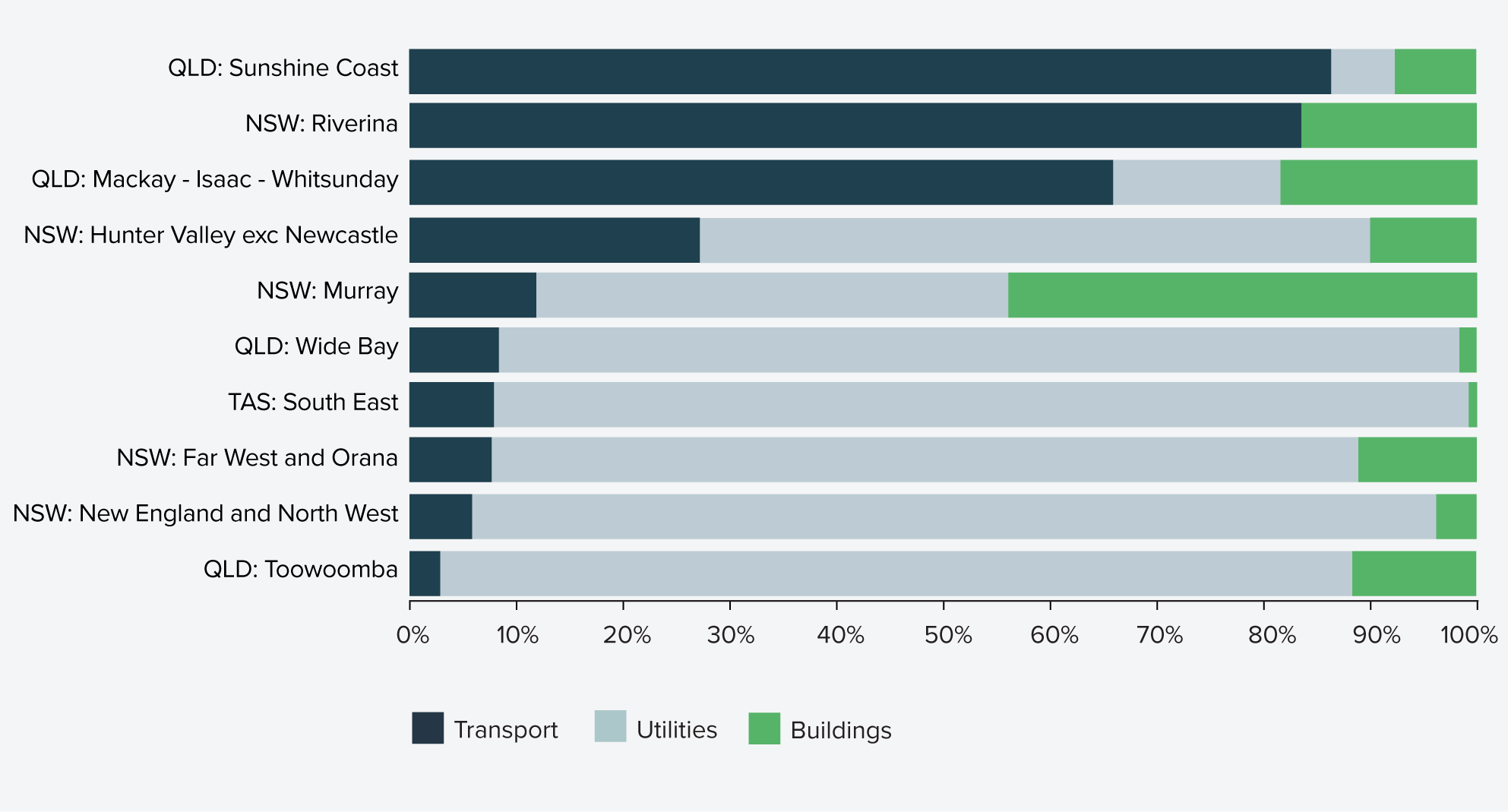
  • Small-sized construction business profits are in decline, with their insolvencies accounting for 82% of the industry total in 2023.
  • Outsourced service costs account for almost 47% of all input costs and has grown steadily over the last 10 years.
  • Industry continues to voice the need for a better balance of risk allocation in contracts.
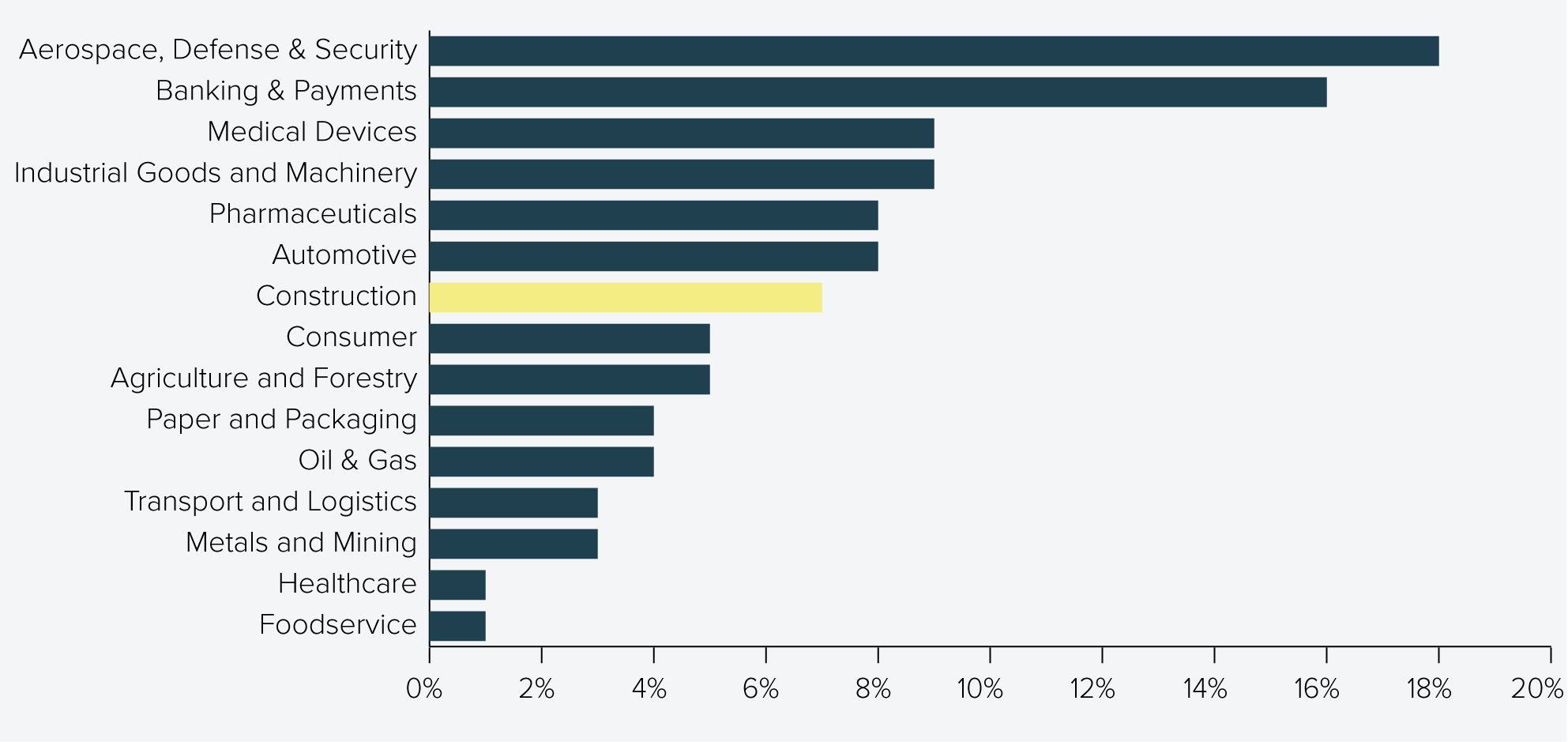
12Participation and workplace culture
13New technologies and modern methods of manufacturing  
14Risk allocation between parties
   Future directions
   
  • Completion of the National Construction Strategy and commencement of associated actions.
  • Investigate the impact of contractual arrangements and outsourced services (including labour hire and capital rental) to construction supply-chain resilience, thereby identifying drivers to lift performance and productivity. 

Introduction

The annual Infrastructure Market Capacity reports respond to a request made by the Prime Minister and First Ministers in 2020: that Infrastructure Australia work with jurisdictions and industry bodies to monitor the infrastructure sector. 

“Leaders considered analysis on the market’s capacity to deliver Australia’s record pipeline of infrastructure investment to support the country’s growing population. This analysis highlighted the importance of monitoring infrastructure market conditions and capacity at regular intervals to inform government policies and project pipeline development. Leaders agreed that Infrastructure Australia will work with jurisdictions and relevant industry peak bodies to monitor this sector.”
Source: Council of Australian Government Communiqué, 20 March 2020

The fourth publication on infrastructure demand and supply from Infrastructure Australia

Like the previous three editions of the Infrastructure Market Capacity Report, this report examines public infrastructure demand and market supply capacity over five years - in this case, 2023—24 to 2027—28. It provides an updated health check and analysis of our national construction market’s capacity to deliver public infrastructure works. 

The report is structured as follows:  

  • Understanding demand: a quantification of total infrastructure demand across five years by sector, by project type, and detailed analysis of the Major Public Infrastructure Pipeline including year-on-year changes and escalation costs.
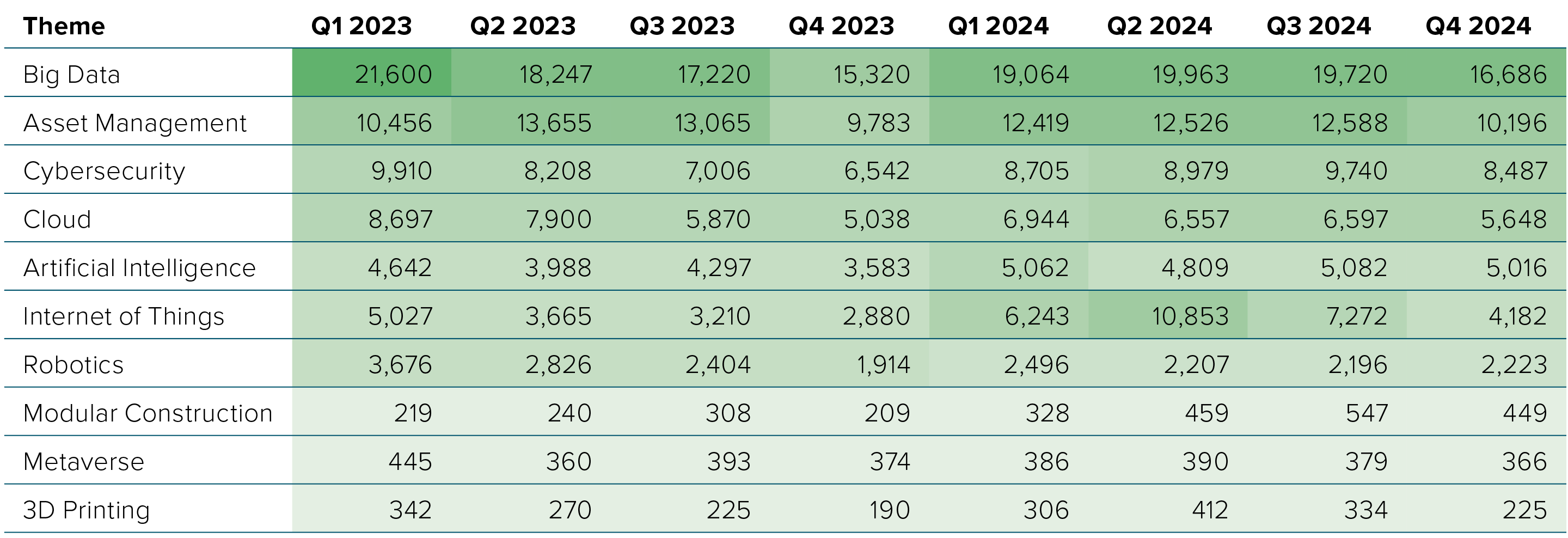
  • Non-labour supply: an appraisal of the main supply-side risks to market capacity today, including industry views gleaned from interviews and surveys conducted for this report. The focus is on materials supply, which is the largest non-labour supply category by cost shares.
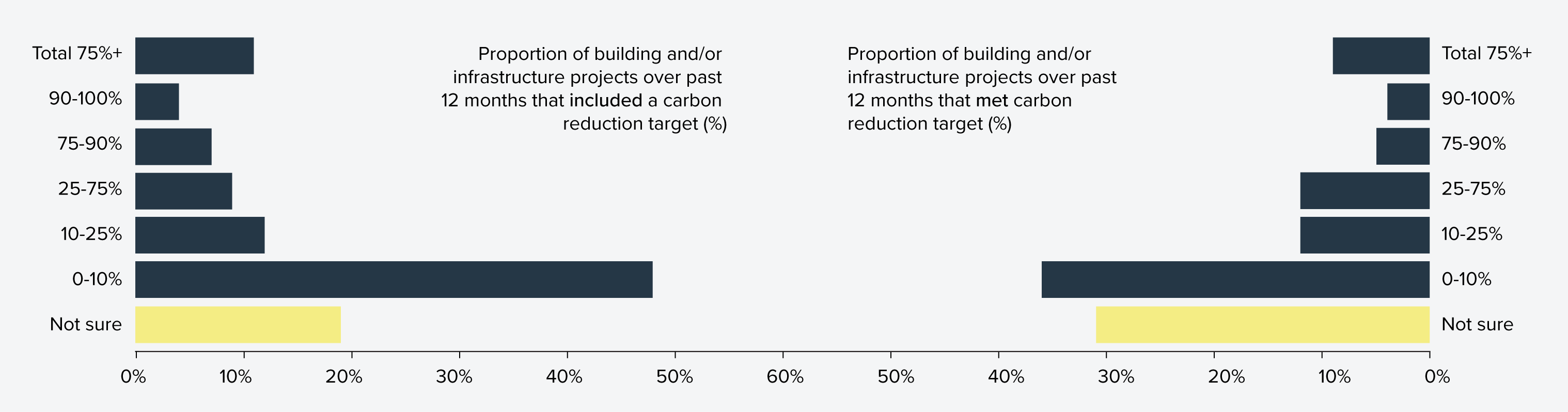
  • Labour and skills supply: projections of infrastructure construction labour supply and shortage by jurisdiction and occupation groups. Plus, summary of emerging skills and an assessment of boarder construction workforce trends.   
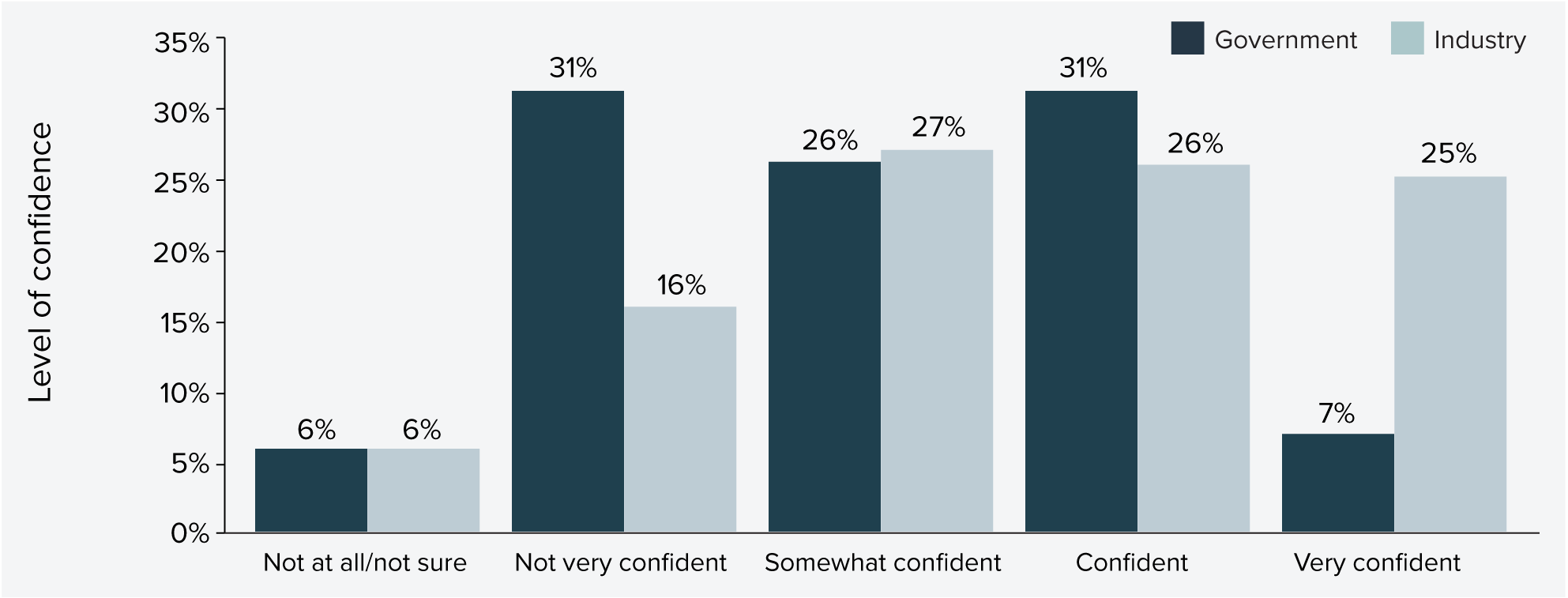
  • Industry productivity: analysis of the current state of the construction industry, including productivity and insolvency trends, supplemented with industry perception obtained from our 2024 Industry Confidence Survey.

New for 2024: Expansion of demand-side coverage, updated demand-side resource cost assumptions, and steel fabrication capacity analysis  

This edition of the Infrastructure Market Capacity Report advances the analysis on current and emerging influences on market capacity from previous reports, including:

Demand-side coverage: we have expanded our demand-side database by capturing investment in defence infrastructure works, private investment in mining and resources, and smaller scale residential buildings which have not previously been captured in earlier editions.  

Demand-side resource costs: recent data has indicated that the cost-escalation volatility of the past three years has reached a point of relative stability, while analysis of the project cost estimates in our database verifies that cost pressures have been incorporated in estimates. To maintain accuracy of our modelled resource requirements, Infrastructure Australia updated its cost assumptions for resources demanded by applying appropriate increases (based on the Australian Bureau of Statistics Producer Price Index and Wage Price Index) to cost rates per resource.

Steel fabrication capacity analysis: The Australian Steel Institute initiated a collaboration with Infrastructure Australia to compare steel fabrication supply-side capacity by geography with nearby project-level demand. Similar supply-and-demand analysis on other materials could be included in future editions of this report if useful supply-side data is willingly shared following the positive example set by the Australian Steel Institute.

Continued emphasis on policy implications with acknowledgement of progress and looking ahead at future directions 

Significant work has been undertaken against all four categories of recommendations from the 2023 Infrastructure Market Capacity Report to actively manage demand, boost materials supply, boost labour supply, and turn around construction productivity. This edition provides an update of market capacity conditions with respect to demand and points to future directions for the Australian Government to maintain the momentum for work in progress against each of the existing recommendation areas.

A brief explanation of our Market Capacity Program

The Market Capacity Program is an assumptions-based methodology for identifying market capacity risks. It was developed in collaboration with state and territory governments, industry, advisory bodies and other subject matter experts. These partnerships are integral to the ongoing evolution of the Market Capacity Program. 

The Market Capacity Program is underpinned by two system components: 

The National Infrastructure Project Database

The National Infrastructure Project Database aggregates and organises infrastructure project data supplied by the Australian Government (including defence), state and territory governments (public investments), the Australian Bureau of Statistics (housing building activity) and GlobalData (private investments).

The following infrastructure sectors are included in the Market Capacity Program: 

  • Buildings: non-residential buildings for health, education, sport, justice, transport buildings (such as parking facility and warehouse), other buildings (such as art facilities, civic/convention centres and offices), detached, semi-detached and multi-detached residential, apartments and renovation activities (using all residential building activities captured in the Australian Bureau of Statistics Building Approvals).
  • Transport: roads, railways, level crossings, and other transport projects such as airport runways.
  • Utilities: water and sewerage, energy and fuels, gas and water pipelines, and telecommunications.
  • Resources: base metals, precious metals, critical minerals, hydrogen and ammonia, chemical & pharmaceutical plants, oil and gas, and ports.

Market Capacity Intelligence System

The Market Capacity Intelligence System is a set of analytical tools that interrogates and visualises project demand sector, project type and resource inputs, for the following infrastructure pipelines: 

  • Major Public Infrastructure Pipeline: Publicly funded infrastructure projects valued over $100 million in New South Wales, Victoria, Queensland and Western Australia, and over $50 million in South Australia, the Australian Capital Territory, the Northern Territory and Tasmania.
  • Small Capital Public Infrastructure Pipeline: Publicly funded infrastructure projects valued $100 million and under in New South Wales, Victoria, Queensland and Western Australia, and $50 million and under in South Australia, the Australian Capital Territory, the Northern Territory and Tasmania.
  • Private Infrastructure Pipeline: Privately funded public infrastructure, such as a wind farms, that is funded, delivered and operated by the private sector.
  • Private Buildings: Residential and non-residential buildings projects.
  • Road Maintenance: Resource demands for road-maintenance projects.

Enhancements to the Market Capacity Program in 2024: accounting for cost escalations

We have comprehensively reviewed and updated our Market Capacity Program assumptions this year to ensure our cost estimates and assumptions reflect current economic conditions.

Step 1 involved a comparative analysis of 2024 data collection from jurisdictions to compare the average investment by infrastructure asset class across all jurisdictions, compared with 2022 project estimates before inflation accelerated. We found that those estimates had increased in line with cost pressures. Because this revision to estimates occurred across the pipelines of states and territories, it meant Infrastructure Australia’s modelling assumptions needed to be updated to reflect inflation, such that we are forecasting the right number of workers needed or material tonnages needed.

Step 2 involved work to integrate relevant price indices, including the Australian Bureau of Statistics’s Producer Price Index and Wage Price Index, to ensure differential escalation rates of construction inputs are factored into our cost estimates and assumptions.

Step 3 involved the application of resource-specific escalation rates. Different resource categories were found to have unique escalation rates. For example, the cost of materials like steel or concrete have increased at a different rate compared to labour costs or equipment rental fees. This variation is due to factors such as supply-chain dynamics, market demand, and industry-specific constraints. By incorporating differential escalation rates, the updated assumptions provide a more accurate and realistic representation of the current cost environment, ensuring that the project estimates are aligned with the latest economic conditions.

Industry confidence research   

Supporting the quantitative analysis research each year, Infrastructure Australia also undertakes industry research to gauge industry confidence levels and better understand their perspectives on current market conditions. 

This year, three surveys were undertaken of Australian businesses in the building and construction industry, supplemented with in-depth interviews:

  • The 2024 Industry Confidence Survey (n=200) captured views across the infrastructure life cycle, across identification/planning, design, construction, operations and management. The survey sample were actively delivering contracts that ranged in value from less than $10 million to more than $1 billion over the last 12 months.
  • The 2024 Civil Contractors Federation Survey of its members (n=122) captured views of civil-construction businesses, comprised of majority (63%) smaller Tier-3 and Tier-4 businesses with annual turnover of less than $100 million.   
  • The 2024 Infrastructure Australia Labour Shortage Survey (n=40), as one of various inputs into the workforce analysis, supplements quantitative data and provides additional nuanced insights into projected shortages. Surveyed businesses had operations covering all jurisdictions and all construction sectors (transport, residential, commercial and social infrastructure).
  • In-depth interviews (n=20) with randomly selected building and construction businesses, with each tier represented, to get a more detailed understanding of the key issues for the year. 

All state and territories were represented in this year’s industry surveys and were roughly representative of construction industry geographical spread across the country – most in New South Wales and Victoria, followed by Queensland, Western Australia and South Australia, and the smaller jurisdictions Australian Capital Territory, Tasmania and the Northern Territory.

For more details on the survey methodology, see Appendix F: Industry Confidence surveys.

Detailed methodologies in Appendices      

See the Supporting Appendices for detailed explanations of the Market Capacity methodology: 

  • Appendix A: Demand-side analysis methodology
  • Appendix B: Supply-side analysis methodology
  • Appendix C: Infrastructure typecasts
  • Appendix D: Resource classifications
  • Appendix E: Workforce and skills methodology
  • Appendix F: Industry confidence surveys
  • Appendix G: Revision of cost escalation assumptions.

Section 1: Understanding demand

Active demand management – future directions 

The Australian Government, in partnership with state and territory governments, should continue to actively manage public infrastructure demand through: 

  • adoption and adherence to the new Federation Funding Agreement Schedule on Land Transport Infrastructure Projects (2024-2029) processes to support active pipeline management.
  • building on the analysis from this 2024 Infrastructure Market Capacity Report, quantifying the construction workforce engaged in sectors outside infrastructure (such as housing and energy) to identify adjacencies and potential worker mobility between sectors to fill labour gaps.

The market capacity analysis now captures more construction activity than ever before

Figure 1 shows the Infrastructure Australia pipeline of forecast construction activity based on cost estimates against the backdrop of total construction activity as reported by the Australian Bureau of Statistics. The main difference between the two measures is that the Australian Bureau of Statistics incorporates the impact of cost escalations, while the Infrastructure Australia database shows cost estimates with far less certainty about the value of future escalations. This key difference makes it difficult to assert how much of total construction activity is captured in our database. However, by expanding our database this year to include more residential activity, mining projects and defence capital projects, our database now forecasts a volume of construction activity that peaks in 2026 almost in line with current levels of construction work done as reported by the Australian Bureau of Statistics.

Even though we do not expect all projects to proceed as announced, this approach provides valuable insight into market ambition in the coming years. It also provides the added benefit of enabling a more comprehensive analysis of market demand than was possible in previous editions. 

Figure 1: Forecast construction spend, as captured in the Infrastructure Australia database, in the context of historic total construction activity (2016 to 2028)

 Figure 1: Forecast construction spend, as captured in the Infrastructure Australia database, in the context of istoric total construction activity (2016 to 2028)

Note: Infrastructure Australia no longer displays a projection for future total construction activity as exists in previous editions of the Infrastructure Market Capacity Report.
Source (for total construction activity): Australian Bureau of Statistics (2024)4

Total construction demand captured in our database covers $1.08 trillion in the five years from 2023–24 to 2027–28. This level of forecast activity is almost in line with current run rates where the total construction activity reported by Australian Bureau of Statistics in the five years from to 2019–20 to 2023–24 was $1.2 trillion. 

Figure 2 shows the total infrastructure pipeline, as captured in our database, broken down by sector. Buildings account for most of the expected expenditure (62%), followed by transport (17%), utilities (11%) and resources (10%). 

Of the $671 billion in buildings, $71 billion is from the Major Public Infrastructure Pipeline, with another $43 billion invested in buildings by governments, totalling $114 billion of public investment. Figure 2 includes a breakdown of this public investment in buildings, which is dominated by residential and health projects.

For the period 2023–24 to 2027–28, public spending accounts for 25% of the $1.08 trillion construction market, of which the Major Public Infrastructure Pipeline totals $213 billion and $58 billion is planned on Small Capital Projects. The rest of this section provides an analysis of the Major Public Infrastructure Pipeline.

Figure 2: Combined construction pipeline, as captured in the Infrastructure Australia database, by sector (2023–24 to 2027–28)


Figure 2: Combined construction pipeline, as captured in the Infrastructure Australia database, by sector (2023–24 to 2027–28)

The 5-year Major Public Infrastructure Pipeline has dropped by 8% to $213 billion, with a flatter peak demand moving out one year to mid-2026

As shown in Figure 3, the 5-year rolling Major Public Infrastructure Pipeline has dropped from $230 billion projected last year (2022–23 to 2026–27) to $213 billion this year (2023–24 to 2027–28).

Peak investment has moved one year out to 2026 compared to the projection last year. These changes are consistent with a continuing trend each year observed by Infrastructure Australia of projected investment peak shifting into outer years, suggesting that the market struggled to deliver on an overly ambitious pipeline. 

The peak demand is also flatter compared to previous years projections (2022, 2023) when demand rose exponentially to a high peak before dropping over outer years. The shape of the demand curve this year suggests a more realistic and achievable pipeline for a constrained market to deliver.

Figure 3: Comparison of 2023 and 2024 rolling forecasts of Major Public Infrastructure Pipeline activity (2022–23 to 2026–27 versus 2023–24 to 2027–28)

Like-for-like analysis of how project estimates have changed in the past 12 months reveals the drop in demand is primarily driven by projects recently completed or removed from the pipeline

Infrastructure Australia conducted an in-depth year-on-year analysis, comparing estimates of the Major Public Infrastructure Pipeline from 2023 and from 2024 for the same 5-year period (2023–24 to 2027–28, as shown in Figure 4). Unlike last year when we reported that the pipeline had increased by 13% for this exercise, this year the 2024 forecast is the same as the 2023 forecast for the specified time period.

Figure 4: Comparison of 2023 and 2024 forecasts of Major Public Infrastructure Pipeline activity (2023–24 to 2027–28)
 

Figure 4: Comparison of 2023 and 2024 forecasts of Major Public Infrastructure Pipeline activity (2023–24 to 2027–28)

By studying a sample of over 600 on-going major public infrastructure projects in the 2023–24 to 2027–28 pipeline using data from both the 2023 and 2024 pipeline estimates, we identified changes in the pipeline, as visualised in Figure 5.

The pipeline decreased by 12% due to projects being removed or recently completed, with a further 11% drop from investment cuts in continuing projects. 

The magnitude of 23% in reductions has not quite been netted out by new projects coming into the pipeline (10%, predominantly in the buildings sector) and increases to investment estimates (6%), leaving another 7% in increases still to be explained.

The remaining 7% increase year on year is explained by delays to project schedules. Schedule changes to several projects where construction has been delayed versus the estimates of one year earlier, had the effect of shifting project investment from 2022–23 out to later years. Where this shift occurred, we quantified the 2024 estimate as being 7% higher than the 2023 estimate for 2023–24 to 2027–28.

Figure 5: Major Public Infrastructure Pipeline spend from 2023–24 to 2027–28, changes from 2023 forecast to 2024 forecast

Transport remains the largest public infrastructure expenditure category but has declined this year, while building and energy investment continue to grow

Figure 6 shows investment in the Major Public Infrastructure Pipeline over the 2023–24 to 2027–28 outlook period, as broken down by sector.

Transport infrastructure investment is projected at $126 billion and remains the largest expenditure category, accounting for 59% of the Major Public Infrastructure Pipeline. This is a $32 billion reduction on the previous year’s outlook, driven by:

  • Completions of megaprojects in 2023–24.
  • Fewer new projects to commence in coming years versus the previous outlook period.
  • Cost and schedule changes in the total investment estimates, for some megaprojects due to commence construction in the outlook period.

Buildings infrastructure investment is projected at $71 billion, which accounts for 34% of the Major Public Infrastructure Pipeline. This is up $8 billion on the previous year’s outlook. Buildings infrastructure is driven by health ($24 billion) and residential buildings ($17 billion), followed by other building types such as convention centres, offices, art facilities and laboratories ($12 billion). 

Utilities infrastructure investment is projected at $16 billion, which accounts for 7% of the Major Public Infrastructure Pipeline.  This is up $6 billion on the previous year’s outlook. While investment in energy projects is mainly driven by the private sector, significant public investment can be seen in large transmission projects.

Analysis of projected demand peaks by sector over the five-year outlook shows that while transport investment is expected to continue to decline, buildings infrastructure is expected to peak in 2026, while energy investment is expected grow steadily. The staggered demand peaks by sectors have an effect of maintaining a steadier level of overall investment across infrastructure. 

When interpreting these projections, it should be noted that the Major Public Infrastructure Pipeline accounts for only a quarter of the total construction market and there is significant private investment in buildings and particularly in energy infrastructure. 

Figure 6: Major Public Infrastructure Pipeline spend by sector (2023–24 to 2027–28)
 

Figure 6: Major Public Infrastructure Pipeline spend by sector (2023–24 to 2027–28)

Analysis of regional demand sees growth across northern Australia

Regional analysis of the pipeline has been made possible for the first time this year, through the development of analytical tools created in 2023 by Infrastructure Australia in collaboration with state and territory governments. These tools are designed to help government decision makers diagnose labour-supply bottlenecks, spot growth opportunities and build strong evidence bases for investment decisions. 

Two analytical tools are fundamental to this regional analysis: a national heat map of construction demand and supply, and a demand pipeline simulator – both of which analyse investment demand, material demand, and labour demand and supply.

In the five years from 2023–24 to 2027–28, when compared with the corresponding period in the 2023 forecast, there is a significant geographical shift in public investment to the north, with the Major Public Infrastructure Pipeline in Queensland and Northern Territory growing by $16 billion, while New South Wales and Victoria have reduced by $39 billion.

Deep dive: contribution of cost pressures by resource type

In 2024, Infrastructure Australia undertook a deep dive of the contributions to cost escalation on the Major Public Infrastructure Pipeline by PLEM (Plant, Labour, Equipment, Materials) resource types. This analysis breaks down the total project cost escalation into its constituent parts, allowing us to identify the contribution of each resource type to the overall escalation.

We have comprehensively reviewed and updated our Market Capacity Program cost assumptions this year (based on the Australian Bureau of Statistics Producer Price Index and Wage Price Index) to ensure our cost estimates and assumptions reflect current economic conditions.  

As shown in Figure 7, applying the updated cost assumptions to the Major Public Infrastructure Pipeline this year, average labour demand dropped by 20% in full-time equivalents per month compared to last year’s projection.

Figure 7: Comparison of 2023 and 2024 forecasts of demand for labour from the Major Public Infrastructure Pipeline (2020–21 to 2027–28)
 Figure 7: Comparison of 2023 and 2024 forecasts of demand for labour from the Major Public Infrastructure Pipeline (2020–21 to 2027–28)

Preparedness is needed for the workforce to deliver private-funded infrastructure demand

In terms of private investment (that is, separate to the Major Public Infrastructure Pipeline), we observed a jump in labour demand from the private infrastructure sector in the near future. This is driven by the renewable energy transition. As shown in Figure 8, from early 2027, labour demand from private infrastructure will almost double when compared with the forecast from 2023.

The top 5 occupations needed to deliver energy projects over the five-year outlook are Other Professional Engineers (those not classified as civil, electrical, industrial, mechanical or production engineers), General Construction Labourers, Electricians, Plant Operators and Project Managers.

Figure 8: Comparison of 2023 and 2024 forecasts of demand for labour from private infrastructure (2020–21 to 2027–28)

Demand for concrete and steel cuts across all construction sectors, while demand for other materials varies by sector

By cost shares, materials accounts for the largest proportion (73%) of total non-labour spend on the Major Public Infrastructure Pipeline, followed by plant (15%) and equipment (11%).

As shown in Table 2, concrete is the top construction material needed by volume to complete major infrastructure works over the five-year outlook (137 million tonnes), followed by rock/bluestone (31 million tonnes), asphalt (18 million tonnes) and steel (8 million tonnes).

Table 2: Demand for materials from the Major Public Infrastructure Pipeline (2023–24 to 2027–28)
MaterialDemand (million tonnes)
Concrete 136.8
Aggregate80.0 
Cement22.4 
Sand34.4 
Rock/Bluestone 30.6
Asphalt 18.0
Steel 8.1
Steel – Structural Elements3.8 
Steel Reinforcement3.6 
Girders0.6 
Rail Track0.1 
Bitumen Binders 1.5
Walls 0.7
Timber0.3 
Plasterboard0.3 
Bricks0.1 
Electrical Bulk 0.2
Aluminium0.1 
Copper0.04 
Plastics and Polymeric Materials0.03 
Electric Bulk0.01 
Fibreglass0.01 
PV Panels 0.003

As shown in Figure 9, across major public infrastructure works, materials demand is mostly driven by transport, due to its dominant position on the Major Public Infrastructure Pipeline, followed by buildings and utilities. As all sectors will be consuming concrete (aggregate/sand/cement) in bulk, it may be subject to cross-sector competition in the event of supply shortages. 

To remove the impact of pipeline size, we analysed materials required per $ million to normalise data and understand material requirement per sector. In doing so, we observe that steel is another material that is critical to delivery shared cross all sectors.

To deliver $100 million of investment, we need:

  • 64 tonnes of steel for other buildings
  • 44 tonnes for utilities
  • 28 tonnes for transport
  • 23 tonnes for residential buildings.

Asphalt and rock/bluestone are materials heavily needed for transport projects and non-residential building types. Wall materials (bricks, plasterboard, timber) on the other hand are unique to residential buildings.

Figure 9: Demand for materials from the Major Public Infrastructure Pipeline by sector (2023–24 to 2027–28)

Industry view

Most businesses report capacity as being the same or worse than last year, and a third expect work will increase in the next two years

When it comes to industry’s assessment of current market capacity compared to the previous year, 64% of surveyed building and construction businesses felt it was the same, 26% believed it was worse and 6% felt it is ‘not as challenging’ as last year. There were no significant variations in responses across industry subsectors or size of contracts delivered.

When looking two years ahead, approximately 40% of surveyed businesses expect capital project activity to stay about the same as current levels, with almost a third (32%) believing it will increase and a fifth (22%) believing it will decrease. 

By sector, more businesses in the utilities and transport sectors (over 40%) anticipate an increase in activity levels over the next two years than other sectors (housing, mining and commercial). A smaller proportion (32%) of residential-construction businesses expect activity levels to increase compared to 42% expecting activity to stay the same. These responses are slightly at odds with the pipeline-demand data that shows growth in residential buildings investment and a decrease in transport investment over the forward estimates compared to the previous years’ projections. 

The market observes a ‘two speed’ economy with demand driven by Queensland and falling in the New South Wales and Victoria

Industry notes diverging pipeline pressures in different states, observing many active or large infrastructure projects planned in some states such as Queensland, while in New South Wales and Victoria, government spending has reduced, and pipelines are lengthening. 

These views align with Infrastructure Australia’s analysis of the Major Public Infrastructure Pipeline over the forward estimates, with more subdued overall demand compared to previous projections characterised by weaker investment in east-coast states and growth up north.

Industry is confident to scale up operations moderately, with residential sector least confident to scale up 

As shown in Figure 10, when asked to rate their confidence to scale up in response to increased investment in public infrastructure across a few growth scenarios (scale up by 5%, 10%, 25%, 50%, 100% or over 100%), most businesses believe they have the capacity to scale up to meet increased activity to a degree. Over half (53%) were very or somewhat confident in their ability to scale up their activity by 25%. However, confidence to push beyond this then starts to drop with 40% of businesses confident to scale up their activity by 50%, and 37% confident to scale up by 100%. 

Figure 10: Confidence of building and construction businesses in their ability to increase activity to meet increased public infrastructure investment

Figure 10: Confidence of building and construction businesses in their ability to increase activity to meet increased public infrastructure investment

Source: Infrastructure Australia Industry Confidence Survey (2024)

Consistently, businesses in the mining sector reported highest confidence to scale up, followed in order by the utilities, transport and commercial sectors. Businesses in the residential construction sector reported the lowest confidence levels to scale up. This suggests the residential construction sector is experiencing more significant capacity constraints of all construction sub-sectors.

Businesses delivering larger contracts have greater confidence to scale up. Across all growth scenarios, companies delivering contracts over $100 million are more confident to scale that those delivering contracts between $10 million and $100 million. Companies delivering contracts less than $10 million in value have consistently less confidence to scale up than the two prior-mentioned groups. 

Of those surveyed among the Civil Contractors Federation’s member base, representing a majority smaller Tier-3 businesses, nearly a third (31%) reported that if there was an increase in the number of projects tendered in their respective state, they could take on between 10–25% extra work. This is compared with a little over a fifth (21%) who said they could take on between 25–50% more work. Where these members suggest they have extra capacity to take on additional projects, nearly 80% said they could take on the most work in rural and regional areas, compared to 64% who reported capacity to take this extra work within metropolitan areas.

During interviews, businesses also noted the current economic environment, including inflation, rising costs and interest rates, as a challenge affecting project viability and profitability, which in turn is impacting on overall capacity

Section 2: Non-labour supply

Boost non labour supply – future directions 

The Australian Government, in partnership with state and territory governments, should continue to expand construction non-labour supply through: 

  • improving monitoring local production capacity of key construction materials. This could include industry collaborations such as the work done with the Australian Steel Institute for this report.
  • exploring opportunities to coordinate national demands for specific materials or equipment facing strong global competition and long lead times in light of the energy transition and the enabling infrastructure needed to deliver it. 

Supply of steel and timber cited by industry as being a critical delivery risk this year

Businesses surveyed as part of the 2024 Industry Confidence Survey regarded most materials as posing some level of supply-chain risk. As shown in Figure 11, steel and timber supply were most often cited (rated as 9-out-of-10 or 10-out-of-10 risk by 14% and 12% of surveyed businesses, respectively), followed by concrete/cement and construction equipment as posting a threat to project delivery.

Figure 11: Views of building and construction businesses on materials supply threats to infrastructure projects delivery
Figure 11: Views of building and construction businesses on materials supply threats to infrastructure  projects delivery

Source: Infrastructure Australia Industry Confidence Survey (2024)

Table 3 provides a snapshot of key construction material, plant and equipment supplies in 2024.

Table 3: Key construction non-labour supply – 2024 insights 

Construction material/plant and equipment2024 insights and implications   
Steel and steel fabrication

Steel product prices have dropped this year, driven by a combination of factors, including weakening global demand, increased production capacity, and fluctuations in raw material costs (such as for iron ore).5

Imports of steel products, particularly specialised ones like stainless steel and tool steel, remain significant (see Figure 16). 

A majority of surveyed local steel fabricators and manufacturers (86%) report reduced profit margins due to cheap imported fabricated steel, which is priced between 15% and 50% lower than locally produced steel (as reported by the Australian Steel Institute survey conducted in in July 2024).

Reliance on imported steel exposes construction projects to risks related to fluctuating prices, transport costs, and potential supply disruptions. 

Quarry products

Some governments have taken measures to address quarry supply risks. The Victorian Government has ramped up approvals for new quarries to meet growing infrastructure demands and aims to stabilise supply and reduce costs, with 300 million tonnes of new quarry resources approved for development.6

Queensland quarry demand and supply risks report indicates that demand for hard rock and sand can be met by reserves in existing quarries.7

Concrete

Concrete production depends heavily on quarry product availability. 

Stricter sustainability standards and environmental regulations could lead to higher concrete production costs and potential supply delays​.8 Precast concrete continues to experience long lead times due to high demand, particularly in infrastructure projects.9 These factors are putting pressure on the availability of concrete for large-scale projects. 

Plant and equipment

The construction industry continues to experience delays in securing plant and equipment, driven by high global demand and geopolitical issues. Ongoing supply-chain bottlenecks are expected to extend lead times for essential equipment, affecting project timelines​. 

The Australia construction machinery market size is expected to reach USD 3.29 billion by 2029, growing at a compound annual growth rate of 3.35% during 2024–2029, indicating supply responses to demand pressures driven by increased infrastructure investment.10

Timber

Australia’s timber supply is facing significant challenges due to the combined effects of regulatory changes and environmental risks. 
Logging in native forests is set to be banned in Victoria and Western Australia in 2024, and a court action to halt logging is currently underway in Tasmania and New South Wales.11 This is further reducing the availability of hardwood timber, pushing Australia to rely more on imports.12 Hardwood from Australia’s native forests is typically made into flooring, decking, window frames, beams and joists.13

Hardwood can be replaced with more expensive composite wood alternatives.14

Cement

Cement production remains under pressure due to rising energy costs and stricter environmental regulations, which have forced some local cement plants to scale back operations or shut down.15

This has led to an increased dependence on imported clinker and other materials necessary for cement production. The global cement market is also experiencing disruptions due to geopolitical tensions and trade restrictions, which are affecting the availability and cost of imports. Price of cement products increased 2.4%, driven by fibrous cement products (3.3%), linked to increase in costs in labour, energy and freight inputs.16

PlasterboardThe plasterboard industry faces rising energy costs, which are increasing production costs. No significant supply issues are currently reported, but higher energy expenses are expected to impact the price of plasterboard.17 The industry is also beginning to face increased demand for sustainable products, which may require additional investment in innovative technologies and processes. 
BitumenThe global bitumen market is expected to grow from $53.66 billion in 2023 to $56.23 billion in 2024 at a compound annual growth rate of 4.8%.18 Australia’s reliance on imported bitumen continues to pose risks, especially as global oil markets face volatility due to geopolitical tensions and environmental regulations. 

Cost of materials still increasing but at lower rate

The cost of construction materials continues to remain high, with the majority of materials experiencing year-on-year growth for three straight years. However, the rate in which these materials have grown has largely eased over the past twelve months, with average annual price growth for all materials being 8% lower than in 2023 (average growth of 4.3% in 2024 versus 12% in 2023). 

As shown in Figure 12, while this slow down in price escalation was felt across the board, it was largely driven by large drops in the price for steel beams and sections, and reinforcing steel, which decreased over the year by 16% and 8%, respectively. For these materials, this is a notable shift in the annual changes in the prices Infrastructure Australia observed in 2022, when the prices for these materials had increased beyond 30%. There were, however, some outliers to the broader trend for this year, with clay bricks, coating, and electrical products experiencing significant increases.

Some of these material cost escalations are being driven by conflicts in Ukraine and the Middle East, which are disrupting international supply chains. The conflict in the Middle East, for example, has seen disruptions to shipping routes, which are adding substantial costs to the transportation of materials. However, overall the increases in costs are stabilising and becoming more predictable, especially as Australia continues to move past the post-COVID-19 period.

Figure 12: Annual % input price changes for house construction materials (2021–22 to 2023–24)

Figure 12: Annual % input price changes for house construction materials (2021–22 to 2023–24)

Source: Australian Bureau of Statistics (2024)19

Prices of imported materials have been stable over the last 12 months

Over the past 12 months, the prices of oil, coal and iron ore have continued to fluctuate. While these prices are expected and not unusual, these fluctuations were not as extensive as they were in previous years. 

When compared with the nature of the price fluctuations in 2021, 2022 and 2023, the prices for these materials throughout 2024 can be described as being much more stable. That is, they did not experience such wild swings in price points, which were caused by the COVID-19 pandemic, the start of the conflict in Ukraine, and renewed   geopolitical tensions and conflicts within the Middle East. These events saw significant disruptions to supply chains and demand. For instance, conflict in the Middle East, especially disruptions to shipping routes in the Red Sea, has driven up shipping costs as companies are forced to reroute, resulting in longer and more expensive journeys.

Additionally, there is strong demand for materials such as iron ore from China, driven by the country’s significant infrastructure boom. As conflicts in Ukraine and the Middle East persist, along with global demand for materials, these factors will continue to influence material prices. However, this impact is likely to be more predictable than what has been experienced in the past. Figure 13 shows minimal change in the price of imported oil, iron ore and coal over last 12 months, following periods of greater variability. 

Figure 13: Changes in oil, coal and iron ore prices (2016 to 2024)

Figure 13: Changes in oil, coal and iron ore prices (2016 to 2024)

Source: Department of Industry, Science and Resources (2024)20

Freight schedules and costs were impacted by global supply chain disruptions

Events such as conflicts in Ukraine and the Middle East continued to disrupt global supply chains earlier in 2024. Figure 14 shows their impact on the Federal Reserve Bank of New York’s Global Supply Chain Pressure Index. 

Figure 14: Global Supply Chain Pressure Index including key events (1998 to 2024)

Figure 14: Global Supply Chain Pressure Index including key events (1998 to 2024)

Source: Federal Reserve Bank of New York (2024)21

In January and February, conflict in the Red Sea had a major impact on key global trade routes. As shown in Figure 15, trade volumes through the Suez Canal – the crux of Europe and Australasia’s shortest maritime route – were 50% lower than in 2023. As a result, trade levels surged around South Africa’s Cape of Good Hope due to re-routed freight.

Cost impact: The Australian Bureau of Statistics links a 1.2% rise in water freight (shipping) prices to the Red Sea conflict, while noting the increase followed six consecutive quarters of price drops.22

Schedule impact: The average journey time of rerouted freight was 26 days, which is 19 days (55%) longer than average equivalent freight trips through the Suez Canal.23

Figure 15: Daily transit trade volumes for Suez Canal and Cape of Good Hope (January 2023 to October 2024)
 

Figure 15: Daily transit trade volumes for Suez Canal and Cape of Good Hope (January 2023 to October 2024)

Source: International Monetary Fund Port Watch (2024)24

Imported steel is fulfilling local demand for products that are not manufactured anywhere in Australia 

In Infrastructure Australia’s 2023 Infrastructure Market Capacity Report, we noted a 20% increase in steel imports over the previous two years compared with the past two decades. It is evident that this reliance on imports has continued with specialised products such as stainless steel and tool steel,25 and Figure 16 shows an increase in overall steel imports in 2023–24. Over the same period, steel prices have decreased due to a combination of factors such as lower global demand, greater global production capacity and changing raw material costs, such as for iron ore.26

Figure 16: Steel imports by type compared to price of steel (2013–14 to 2023–24)
 

Figure 16: Steel imports by type compared to price of steel (2013–14 to 2023–24)

Source: Australian Bureau of Statistics (2024)27

Industry view

Industry is cognisant of both global and domestic risks to supply

Infrastructure Australia has been tracking industry’s sentiments, through the Industry Confidence Survey, for four years. As shown in Figure 17, there have been shifts in how industry assesses domestic versus global supply risks over that time.

In 2022, just over half (53%) of building and construction businesses surveyed thought global issues alone were responsible for supply-side risks, while 37% thought it was domestic issues and 11% thought it was due to both. In 2023, industry’s opinion switched to viewing domestic factors being the predominant source. This year, half of respondents regarded both global and domestic supply chain issues being equally problematic, compared to 30% who viewed domestic and 20% who viewed global supply-chain risks as being more problematic. 

The Russian invasion of Ukraine and the impacts of the COVID-19 pandemic on global supply chains in the preceding years may have elevated industry’s assessment of global risks in 2022. This year, industry is aware of the impacts of both global and domestic supply risks to their business. This aligns with our observations on the need to balance reliance on imports with domestic production capability to mitigate supply risks of key construction materials. 

Figure 17: Views of building and construction businesses on whether global or domestic supply chain issues are more problematic, changes over 2022 to 2024

Figure 17: Views of building and construction businesses on whether global or domestic supply chain issues are more problematic, changes over 2022 to 2024

Note: These figures exclude ‘not sure’ responses.
Source: Infrastructure Australia Industry Confidence Survey (2022, 2023, 2024)

Figure 18 presents industry views on the main risks in sourcing global supplies for infrastructure project delivery. Industry regarded international supply-chain disruptions, delays and shortages as the highest threat (60% ranked as a threat, including 16% as a major threat). 

Competing domestic demand from adjacent sectors (such as building and mining) and competing global demand were both regarded by industry as relatively similar levels of threat to the global supply chain (50–51% ranked both as a threat, including 10% as a major threat). 

Figure 18: Views of building and construction businesses on the threat level of global supply-chain risk factors to successful delivery of infrastructure projects in Australia

Figure 18: Views of building and construction businesses on the threat level of global supply-chain risk factors to successful delivery of infrastructure projects in Australia

Source: Infrastructure Australia Industry Confidence Survey (2024)

Businesses have noticed a 10–20% price escalation of non-labour costs over the last 12 months and believe prices are yet to peak

62% of surveyed businesses noted an increase in price escalation in terms of non-labour costs over the last 12 months. The vast majority (62%) of industry surveyed noted the increase in price for non-labour resources this year. Of those that noticed this increase in costs, 64% reported a 10–20% increase.

Many believe a peak in non-labour costs is still yet to come. In fact, 43% say that prices are increasing at an accelerating rate, whereas 36% believe they have been doing so at a steady rate. 

Looking specifically to those surveyed within the Civil Contractors Federation membership, the largest group (45%) said they had noticed an increase of between 10–25% in the cost of project inputs. Only 18% noted an increase of more than 25%. However, these figures reflect respondents’ views of both labour and non-labour inputs combined, not solely materials. 

These industry perceptions on cost increases are largely consistent with Infrastructure Australia’s analysis of the Australian Bureau of Statistic’s price index data,28 which shows that non-labour inputs are 80% higher now than in 2010–11. 

Spotlight

Spotlight: Steel and steel products

Australia needs 8 million tonnes of steel to deliver the pipeline of public and private sector construction projects over the next five years.

Steel is a critical input of transport, energy and other infrastructure projects, and a critical construction input overall. As shown in Figure 19, over half the world’s annual steel output (52%) was used within buildings and infrastructure.

Figure 19: Global steel use by sector

Figure 19: Global steel use by sector

Source: World Steel Association (2024)29

Imported steel and global supplies

The global steel industry, producing over 1.8 billion metric tonnes of steel annually, is dominated by a few major producers: China (the largest), India, Japan, the United States and Russia.30 Australia plays an important role in the global steel supply chain, by mining and exporting iron ore and coking coal for steel production.

Local Australian steel output is supplemented by imported steel, some of which is critical for project success, particularly finished-steel products that are not manufactured in Australia, such as stainless steel and tool steel. Over 2013–14 to 2023–24, Australia imported approximately 2.5 million tonnes of steel a year.  

Using imported steel in local construction can expose projects to risks inherent to global resourcing, such as price fluctuations, greater competition, supply-chain disruptions, product quality variances and local compliance modifications. 

Additionally, embodied carbon emissions of imported steel can create uncertainty, add complexity and compromise Australia’s measures and efforts in decarbonising the infrastructure sector.

Domestic steel production  

With an estimated output of 5.3 million tonnes annually, Australia’s steel industry is substantial. There are four major manufacturers of steel in Australia, supported by over 300 distribution outlets and numerous manufacturing, fabrication and engineering companies.31

The capabilities of the Australian steel industry include: steel manufacturing, roll-forming, distribution, fabrication, construction modelling, hot dip galvanizing, protective coatings and grating and handrails.

Steel fabrication 

Analysis undertaken with the Australian Steel Institute reveals Australia has an estimated steel fabrication capacity of 1.4 million tonnes per year. The domestic steel-fabrication sector is comprised of majority small and medium-size enterprises, many of which are multi-generational family-owned businesses.
Whilst some businesses continue to operate as traditional ‘jobbing’ shops, many have developed specific areas of specialisation and associated capabilities. These include: bridge work, architectural steelwork, refurbishment and maintenance of mining equipment, sheet metal fabrication, chemical-industry infrastructure, civil construction, wind tower fabrication, and portal-frame structures. 

Green steel

The Australian Government has identified green metals (including green steel) as a priority industry under its Future Made in Australia National Interest Framework. While Australia is in the early stages of developing facilities with the capacity to produce green steel, it has the potential to reduce carbon emissions from the steel-production process and maximise the economic and industrial benefits of our move to net zero.

The Australian Government 2024–25 Budget commits funding for Green Metals Foundational Initiatives that will explore ways government can stimulate demand, including industry participation frameworks at federal and state levels, which will help define opportunities for the inclusion of green metals in energy, defence, infrastructure and housing projects.32

Domestic steel fabrication supply capacity analysis

Australia needs 3.8 million tonnes of fabricated steel structure elements over 2023–24 to 2027–28.. By sector, buildings will require 55% of total demand for fabricated steel, transport 29% and utilities 16%. 

Based on data provided by the Australian Steel Institute, we analysed the capacity and location of 296 domestic steel fabricators, representing an estimated 70% of total domestic capacity. As shown in Table 4, we estimate these producers have a capacity to produce approximately 939,500 tonnes annually, with over two-thirds (69%) capacity located across New South Wales, Queensland and Victoria. 

We note that based on the Australian Steel Institute dataset, there is currently very little capacity in the Northern Territory, at less than 1% of total domestic capacity. However, the Territory will require 7% of national demand.

Table 4: Steel fabrication capacity versus demand, by state and territories

State/territory  

Estimated annual capacity (tonnes)

% of total capacity

% of demand

New South Wales

255,000

27%

34%

Queensland

199,000

21%

17%

Victoria

195,000

21%

20%

Western Australia

152,000

16%

9%

South Australia

114,500

11%

6%

Tasmania

14,500

2%

2%

Australian Capital Territory

7,000

1%

2%

Northern Territory

2,000

0%

7%

Australia

939,500

100%

100%

Note: Percentages do not add to 100% due to rounding.
Source: Infrastructure Australia analysis of Australian Steel Institute data (2024)

Delivery of fabricated steel to project sites will be critical for our energy transition

Energy projects will drive the nation’s energy and economic transition. As our demand analysis indicates, industry is gearing up to deliver a wave of energy projects over the next five years. Through the Rewiring the Nation program, the Australian Government has committed $20 billion to build and upgrade transmission infrastructure needed to transform the generated energy from renewable sources into electricity and move it across the network to end users.   

However, there is a lack of data about Australia’s fabrication capacity for specialist components needed in energy projects. Energy projects often need specialist steel components that are imported. For example, components such as lines, transformers and cables are manufactured near bigger markets in Europe and the United States, while transmission towers are imported from overseas and assembled in Australia.33

The majority (89%) of planned government-funded solar and wind farms will be built in regional areas. Transportation of supply from source, whether from a local producer or overseas via a port, to the project site will require adequate road infrastructure, co-ordination and careful project staging, especially as equipment such as wind turbine blades can measure up to 70 meters in length and 7 meters in diameter.34

Opportunities for industry to work together with Government  

One of the 14 recommendations put forward in Infrastructure Australia’s 2023 Infrastructure Market Capacity Report was for an analysis of domestic steel production and fabrication capacity. From a supply-chain-resilience perspective, this could inform broader Australian Government directions to strengthen sovereign capability and identify opportunities to grow future industries where warranted, including green steel.

More information on domestic production capacity of key construction materials could help strengthen the early stages of project planning and design. That is, projects could be planned with local businesses in mind. It could also help foster earlier engagement with the industry, providing more visibility of future demand and encourage businesses to increase capacity accordingly.

Improved visibility of demand against local supply gives the market a clearer understanding of gaps and opportunities to grow. It might also encourage small businesses within close proximity of a proposed project to collaborate and join forces to meet specific project requirements.  

One such example of local business collaboration was the construction of Western Sydney Stadium in Parramatta, New South Wales. This was a $360 million project that used 4,500 tonnes of Australian steel sourced by a local supplier, with the exposed local steel fabricated and painted by several Western Sydney businesses. The structure was designed and specified to ensure local steel mills could competitively produce steel, which was then sent to a large group of existing suppliers and fabricators within a 10-kilometre radius of the stadium. The scale of the project and early engagement with these businesses gave them confidence to invest in new equipment and expand their capability to deliver.

Our collaboration with the Australian Steel Institute this year on the analysis of domestic steel fabrication capacity is a starting point to improving awareness of domestic supply capacity of a key construction material. Industry and governments can continue to work together to improve knowledge of demand, mapped against supply capacity, for key construction materials, particularly in national priority areas such as renewable energy. 

National uptake of recycled materials

Over the next 5 years, Australia will need over 192 million tonnes of construction materials to deliver planned infrastructure projects. Key materials used in construction, such as concrete, asphalt and steel, produce significant embodied carbon emissions throughout their lifecycle. Buildings and infrastructure are directly responsible for almost one-third of Australia’s total carbon emissions and indirectly responsible for over half of all emissions.35

In 2022, Infrastructure Australia estimated that based on current technology and standards, approximately 27% of the conventional material tonnage needed to deliver 998 road projects across Australia between 2015–31 could be replaced with a range of recycled materials.36

This year we have estimated the current (2022–2023) national uptake of three recycled materials used in construction to replace conventional materials: 

  • 13.9% supplementary cementitious materials – used to replace cement in concrete mixes across buildings, transport, water and energy infrastructure.
  • 9.3% reclaimed asphalt pavement – used to replace asphalt in pavements for different road classes.
  • 1.5% recycled crushed concrete – used to replace aggregate in road pavements.

These estimates were derived from uptake rates captured as part of our Embodied Carbon Projections for Australian Infrastructure and Buildings research, released in July 2024.37 An average uptake rate was calculated for each state and territory by combining rates for each recycled material across different asset classes. These averages were then weighted by demand, using our market-capacity materials demand data for the equivalent conventional material, to generate a weighted uptake rate for each material by jurisdiction. The jurisdiction uptake rates were then aggregated to provide a national uptake rate for each material. 

Infrastructure Australia’s research highlights the potential of using recycled materials, among other decarbonisation strategies, to lower the embodied carbon produced by the national infrastructure pipeline, but acknowledges that several barriers exist to hinder greater adoption. It is one aspect of a wider range of opportunities to reduce construction emissions to support Australia’s net-zero commitments. 

Over the last 12 months, we note the Australian Government has taken significant first steps to support industry’s continued uptake of recycled construction materials, including: 

  • Development of the National Framework for Recycled Content Traceability, which will give buyers the ability to trace the history, location or source of recycled materials. This initiative aims to boost demand for recycled materials by providing greater awareness of circular economy principles opportunities and increasing buyers’ confidence of quality of supplies.
  • Agreement with state and territory governments, as part of the renegotiated Federation Funding Agreement Schedule on Land Transport Infrastructure Projects (2024–2029), to optimise their procurement practices to support recycle content uptake on land-transport infrastructure projects.38

Section 3: Workforce and skills

Expand labour supply – future directions 

The Australian Government, in partnership with state and territory governments, should continue to expand construction labour supply by:

  • continuing to strengthen the long-term pipeline of new graduate entrants from the tertiary sector (Vocational Education and Training and higher education), supplemented by skilled migrant intakes to fill immediate skills and worker shortages.   
  • progressing actions under the BuildSkills Australia 2024 Workforce Plan.

Infrastructure construction workforce update 

The infrastructure workforce stands at 204,000 and is expected to grow steadily

As of October 2024, there are 204,000 workers engaged in infrastructure across the nation. Between 2020 and mid-2022, demand and supply both increased rapidly. Since then, we observe a temporary dip in supply while demand has continued to rise, leading to more acute shortages over the last two years. 

We estimate historical workforce numbers by analysing the Australian Bureau of Statistic’s Labour Force Survey and Census data. Our workforce projections are calculated by adding expected workforce entrants from training and migration, minus exits from retirement modelling and applying a population growth factor to estimate supply to 2030. Based on the long-term historical view of supply, we predict the workforce to grow steadily in the future.

Infrastructure Australia has created three occupational groups, and the current workforce can be broken down as follows: 

  • 62% (126,000) Trades and Labour workers. 
  • 26% (54,000) Engineering, Scientists, and Architects. 
  • 12% (24,000) Project Management Professionals.

Infrastructure Australia’s website hosts the Infrastructure Workforce Skills Supply Dashboard, which presents detailed insights on infrastructure workforce supply, demand and shortages. The dashboard is an interactive tool that allows views of the workforce broken down by state and territory, specific roles, age, and gender. Infrastructure Australia refreshes the Dashboard data annually.

Labour shortages have slightly eased over the next five-year outlook, as governments successfully bring demand closer to market capacity 

We estimate a shortage of 197,000 infrastructure workers as of October 2024 – a 13% decrease from the shortage of 229,000 workers predicted last year. 

Figure 20 shows the latest projection of demand versus supply over the forthcoming horizon. Compared to last year’s projections, peak demand has moved one year out, from mid-2025 to mid-2026. This trend is consistent with observations made in previous years and is likely reflective of planned expenditure being pushed back as the market struggles to deliver on overly ambitious delivery targets.

Figure 20: Demand and supply of infrastructure workers (2020 to 2030)

Figure 20: Demand and supply of infrastructure workers (2020 to 2030)

Source: Nous Group commissioned by Infrastructure Australia (2024)

Shortages are unevenly dispersed across the nation, and are set to increase in regional areas

Figure 21 presents a national comparison of shortages across capital cities and in regional areas (outside the Greater Capital City Statistical Areas as defined by the Australian Bureau of Statistics).

Shortages appear to have peaked in capital cities but are projected to rise in regional areas, driven by significant new renewable energy projects announced in the regions with only modest increases in supply projected. It should be noted, however, that the diminishing shortage in capital cities may largely reflect poor pipeline visibility in the years beyond the forward estimates.

While all jurisdictions remain in shortage, these impacts are unevenly felt across the nation:

  • Northern Territory, Queensland and Tasmania are experiencing more dispersed demand across cities and regional areas.
  • Shortages in New South Wales and South Australia are mostly concentrated in cities.

Figure 21: Labour shortage by occupation group, capital-city areas versus regional areas (2024 to 2027)

Figure 21: Labour shortage by occupation group, capital-city areas versus regional areas (2024 to 2027)

Note: This shows shortages only for projects with a known location (those that can be mapped to a specific Statistical Area Level 4 as defined by the Australian Bureau of Statistics) and thus does not equate to total national labour shortage.
Source: Nous Group commissioned by Infrastructure Australia (2024)

As discussed in Section 2: Understanding Demand, energy projects are driving the growth in workforce demand over the five-year outlook. The top five occupations needed to deliver energy projects in over the five-year outlook are:

  • Other Professional Engineers (those not classified as civil, electrical, industrial, mechanical or production engineers)
  • General Construction Labourers
  • Electricians
  • Plant Operators
  • Project Managers.

Chronic shortages will remain across the workforce 

Broken down by occupation groups, the 197,000 total workforce shortfall comprises of:  

  • 111,000 Engineering, Scientists, and Architects in shortage (56% of total shortages). While still the largest group in shortfall, shortages appear to have peaked and will decline from 2025, potentially a reflection of more projects in the pipeline moving past design and planning into the construction phase.  
  • 29,000 Project Management Professionals in shortage (15% of total shortages). Shortages are expected to increase steadily until mid-2027 to 37,000.
  • 57,000 Trades and Labourers in shortage (29% of total shortages). Shortages are expected to climb up quickly and peak in early 2026 to 74,000. 

Vocational Education and Training is the biggest source of new entrants into the workforce, followed by higher education and migration

Vocational Education and Training, higher education and migration all play crucial roles to the supply pipeline of workers. Figure 22 shows a majority (61%) of new entrants in 2025 will come from VET, followed by 28% from higher education and 11% from migration. 

Furthermore, the relative share of Vocational Education and Training entrants will grow slightly to 64% in 2029, compared to the share of higher-education graduates which will drop to 26% over the same period. This reflects the evolution of the workforce profile over time as demand for trades workers increase and surpass engineers over the forward estimates. 

Looking at skilled migration intake in 2023, Engineers, Scientists and Architects received the largest portion (66%) of visas in the construction industry compared to visas granted to skilled workers in Finishing Trades and Labour (18%), Structure and Civil Trades and Labour (7%) and Project Management (8%).

Given it takes longer to train engineers, scientists and architects than workers in trade and labourers, migration provides a quicker short-term fix to address shortages. However, as noted in the 2023 Infrastructure Market Capacity Report, many qualified migrant engineers, once on shore, struggle to secure an engineering role due to a range of barriers. Several initiatives are underway by governments working with industry to address this problem, such as Engineers Australia’s Global Engineering Talent Program.

Figure 22: Share of new entrant inflows by source (2025 to 2029)

Figure 22: Share of new entrant inflows by source (2025 to 2029)

Source: Nous Group commissioned by Infrastructure Australia (2024)

Engineers Australia’s Global Engineering Talent Program

The Global Engineering Talent (GET) Program is a program run by Engineers Australia, targeting engineers currently in Australia on a skilled migration visa who are unable to find work or are working in a position not commensurate with their skill and experience level. 

It delivers participants with a six-week preparatory course through Engineering Education Australia with engineering standards specific training and a 12-week paid internship at an engineering firm.

  • Throughout 2024, the GET Program saw 21 participants commence across three cohorts from three states (Queensland, Northern Territory and Tasmania). In June 2024, the first cohort completed the program and saw three of the four participants successfully transition into further employment opportunities with their host employers.
  • The program has received encouraging and positive feedback, helping Engineers Australia refine the learning component of the program.
  • The Queensland Government committed funding for up to 20 participants through its Clean Energy Workforce Roadmap. Similarly, the Northern Territory Government provided funding for 20 participants through their Flexible Workforce Solutions Fund. 17 government and private organisations have successfully been onboarded.
  • Engineers Australia continues to work with industry, stakeholders and partners to connect employers with the skills they need now and in the future. Assessment from the pilot shows the initiative could be scaled with further support from the Australian Government. 

‘Emerging’ skills continues to vary from year to year 

Figure 23 provides a snapshot of the top emerging skills per occupation group with the highest annualised growth in the share of job ads that mention them in 2023–24. 

All skills identified, except for two, were not present in the list of top emerging skills last year. As noted in the 2023 Infrastructure Market Capacity Report, this analysis does not capture the volume of demand, as many of the skills identified would not be in wide circulation or in high demand for some time, if ever. While demand for these newly identified skills is unclear, the speed of their arrival indicate that skill requirements evolve rapidly, and that job designs need time to settle.

Figure 23: Skills with strongest compound annual growth (mid-2021 to mid-2024)

Figure 23: Skills with strongest compound annual growth (mid-2021 to mid-2024)

Note: Skills mentioned in 2024 but not in 2021 may not be strictly ‘new’ – they may have appeared in intervening years.
Source: Nous Group commissioned by Infrastructure Australia (2024)

There is scope for greater mobility of construction workers between infrastructure and housing

Infrastructure is a subset of the larger construction labour pool. To better understand the drivers behind worker movements, we conducted an analysis to compare changes that could be attributable to individuals moving between construction sectors (infrastructure, housing and commercial/industrial) and those moving in and out of the construction industry entirely.

Figure 24 suggests changes to the size of the infrastructure workforce appears to be largely attributable to workers moving out in and out of the construction industry, rather than within construction sectors. Over 2021–22 to 2023–24, net gains of 56,700 infrastructure workers entering or leaving construction more broadly overshadowed the net losses of 5,300 workers to adjacent construction sectors. Three in every four of these movements were attributable to ‘all of construction’ activity, or workers moving in and out of construction, rather than between sectors within construction. As such, all-of-construction trends play a key role in shaping the infrastructure workforce.

Figure 24: Impact of worker shifts within construction sectors and between industries on the infrastructure workforce (2021–22 to 2023–24)

Figure 24: Impact of worker shifts within construction sectors and between industries on the infrastructure workforce (2021–22 to 2023–24)

Source: Nous Group commissioned by Infrastructure Australia (2024)

Industry view

Industry remains pessimistic about how it can address worker shortages

As shown in Figure 25, over half (56%) of respondents surveyed in Infrastructure Australia’s 2024 Labour Shortage Survey expect the labour market to worsen over the next 1–2 years, while 22% expect shortages to remain the same and another 22% expect an improvement. This supports our analysis that, while workforce shortages have peaked this year due to a flatter demand profile compared to previous years’ estimates, industry will continue to struggle to secure the workers as shortages will remain across all occupational groups. 

Industry reports that labour shortages have contributed to delays in project timelines, increased workloads for existing employees, and increased costs this year. Fewer respondents, however, noted poor work quality or increased rework as an impact.

76% of surveyed respondents believe that demand growth outstripping supply is the top driver of workforce shortages. Aside from demand growth outstripping supply, industry does not have firm views about other causes for the shortage, with responses shared almost equally across wage, training and retention issues. 
These findings reinforce the continued need for a two-pronged approach to alleviating workforce shortages – boosting supply as well as careful demand management.  

Figure 25: Industry outlook on how the labour market will change in the next 1–2 years 

Figure 25: Industry outlook on how the labour market will change in the next 1–2 years

Source: Infrastructure Australia Labour Shortage Survey (2024)

Businesses can’t attract candidates, and may have given up advertising vacancies  

Industry reports that the top barriers to hiring the right candidates are poor skills and experience, and difficulty attracting candidates. 

  • 81% of businesses report candidates do not have the appropriate skills or experience.
  • 42% of businesses couldn’t get enough candidates to apply.
  • 40% of businesses report candidates did not want the type of work they need filled.
    40% of businesses report that project locations are not appealing to candidates.

There may be a range of reasons candidates do not have the skills or experience companies are looking for. This includes existing workers needing to be upskilled, learners requiring more on the job training before graduation, or applicants not meeting prequalification requirements set by the government.  

Despite ongoing workforce shortages, construction job vacancies have continued to decline

As shown in Figure 26, construction job vacancies have dropped from the peak in 2022, despite rising labour shortages from 2021. Within the context of low unemployment and a tight labour market, it may be that industry has given up attempting to recruit workers for what is seen to be less desirable work or locations considering chronic shortages. 

Figure 26: Construction job vacancies and shortfall in infrastructure jobs (2017 to 2025)

Source: Nous Group commissioned by Infrastructure Australia (2024)

Increasing pipeline certainty enables industry to plan and invest in building capacity 

The mix of skilled labour needed on a construction project varies as it progresses from planning to delivery and commissioning. Careful workforce planning and scheduling is necessary to ensure a company hires and retains the workers needed at each right stage of the project life cycle to deliver on schedule. Improving visibility and certainty of the pipeline enables businesses to more efficiently plan labour resources and invest in building capacity.

Consult Australia’s 2024 survey of design, advisory and engineering businesses found that in the last 12 months, almost half (46%) of respondents have made resource cuts and more (57%) have redeployed staff to alternative projects due to changes to the government infrastructure pipeline.39

Infrastructure Australia’s 2024 Industry Confidence Survey found that businesses continue to report pipeline uncertainty as one of the biggest risks to project delivery. Notwithstanding the widespread construction workforce shortages at the national aggregate level, delays or uncertainty at the project level may disincentivise businesses from investing in longer-term workforce capacity building.
 

Section 4: Improving construction productivity

Prioritise productivity – future directions 

The Australian Government, in partnership with state and territory governments, should continue to progress national efforts to uplift construction industry productivity through:  

  • completion of the National Construction Strategy and commencement of associated actions.
  • investigating the impact of contractual arrangements and outsourced services (including labour hire and capital rental) to construction supply chain resilience, thereby identifying drivers to lift performance and productivity. 

Key industry trends

Construction industry growth lags the market average this year

As of June 2024, there were 452,820 businesses in operation in the Construction industry across Australia. This is far more than any other industry sector, outnumbering the next largest industry (Professional, Scientific and Technical Services) by over 100,000 businesses. 

Over the previous 12 months, the number of construction businesses grew by 2.0%, with 8,900 new entrants. As shown in Figure 27, this is 0.8% below the all-industries average, behind comparable sectors such as Transport, Postal and Warehousing (8.5%), Professional, Scientific and Technical services (2.6%), and Electricity, Gas, Water and Waste Services (2.5%), but slightly above Mining (1.5%). 

As of June 2023, almost all (98%) construction businesses are small in size, with less than 20 employees.40

By employment-share size: 

  • 44% of the workforce is employed by a micro business (less than 4 employees).
  • 21% are employed by a small business (5 to 19 employees).
  • 22% are employed by a medium business (20 to 199 employees).
  • Only 14% are employed by a large business (over 200 employees).

Over half (55%) of construction businesses turn over less than $200,000 per year.

Figure 27: Change in number of businesses by industry (2023–24)

Figure 27: Change in number of businesses by industry (2023–24)

Source: Australian Bureau of Statistics (2024)41

Tier-1 construction companies are increasing their share of public infrastructure contracts

Based on project contract data from Infrastructure Australia’s Market Capacity database, we analysed construction companies that have delivered infrastructure projects that are funded publicly or via public-private-partnerships over the last three years. 

We have segmented the infrastructure construction market by capacity size, as follows:

  • Tier-1 companies: have delivered or won megaprojects valued over $1 billion.
  • Tier-2 companies: have delivered on at least one project valued at over $100 million.
  • Tier-3 companies: representing rest of the market. 

Our analysis shows that the value of the infrastructure market has increased substantially in this time and, although lower-tier companies are being awarded more contracts of smaller work, tier-1 companies are undertaking more work of higher-value projects, with increased complexity.

In 2024, there are 25 tier-1 construction companies that meet the above definition. Collectively, as shown in Figure 28, the share of the public infrastructure construction market contracts held by tier-1 firms has grown from 49% to 59% since 2016. 

Figure 28: Market share of public infrastructure construction contracts by tier of construction company (2016 to 2024)

Figure 28: Market share of public infrastructure construction contracts by tier of construction company (2016 to 2024)

Source: Infrastructure Australia analysis of GlobalData (2024)

The top five companies have taken most of the share gains, growing 9% compared to the remaining tier-1 companies, which only grew 1%. As shown in Figure 29, the total value of contracts held by the top 5 companies amounts to 69% among tier 1s.

Figure 29: Market share of public-infrastructure contract value by Tier-1 construction companies (2016 to 2024)

Figure 29: Market share of public-infrastructure contract value by Tier-1 construction companies (2016 to 2024)

Source: Infrastructure Australia analysis of GlobalData (2024)

While the value of the infrastructure market has increased substantially over time, and lower-tier companies are being awarded more contracts of smaller work, tier-1 companies are undertaking more work of higher value projects, with increased complexity. As shown in Figure 30, over the past 8 years, the average value of contracted works undertaken by tier-1 companies have nearly doubled to roughly $600 million in 2024.

Australia finds itself facing a situation where our largest and most important infrastructure projects are increasingly being allocated to large, offshore companies. Australia is therefore competing with other international infrastructure markets for their services. However, if one of these large foreign-owned contracting companies were to exit the Australian market, the impacts would include further concentration of the market, a loss of capability in terms of project delivery expertise and skills, and a loss of capability in terms of fiscal capacity.

Figure 30: Average contract value by tier of construction company (2016 to 2014) 

Figure 30: Average contract value by tier of construction company (2016 to 2014)

Construction industry insolvency rate remains below pre-pandemic levels, but leads the market in the number of insolvencies each year

The media has reported on the insolvency of several large construction companies this year, as the economy experiences an uptick of insolvencies across all industries during 2022–23. 

This comes off the back of extraordinarily low insolvency rates in the preceding two years (2020–21 and 2021–22). This coincided with key financial relief responses from the Australian Government to the COVID-19 pandemic, including the JobKeeper Payment, the HomeBuilder Grant and the Australian Taxation Office debt recovery pause. These efforts had the effect of artificially suppressing insolvency rates during the pandemic years.

During those years, as shown in Figure 31, the construction-industry insolvency rate dropped to a low of 0.21% in 2021–22, less than half the average rate of the previous 7 years (0.48%). 

Research indicates that for the construction industry, a substantial portion of corporate insolvencies tend to follow economic downturns.42 The current rate of construction insolvencies can also be linked to the unintended consequences of monetary policies and government stimulus designed to counteract the effects of the COVID-19 pandemic.43

Figure 31: Comparison of insolvency rates for construction against all industries (2013–14 to 2022–23)

Figure 31: Comparison of insolvency rates for construction against all industries (2013–14 to 2022–23)

Note: These figures are based on external administrators’ and receivers’ reports, and on counts of businesses operating at end of each financial year.
Source: Infrastructure Australia analysis of Australian Bureau of Statistics (2024) and Australian Securities and Investments Commission (2023)44

Construction industry insolvency rates have always been slightly higher than the all-industry average. On a cumulative basis, the insolvency rate for construction (0.35%) in 2022–23 is still lower than the pre-COVID-19 historical average and aligns with the broader market trend. 

In relative numbers, more construction businesses face insolvency each year than those in any other industry. As shown in Figure 32, 3,000 construction business entered insolvency during 2023–24, representing 27% of all insolvencies.

Figure 32: Number of insolvencies by industry – top 5 versus all other industries (2013–14 to 2023–24)

Figure 32: Number of insolvencies by industry – top 5 versus all other industries (2013–14 to 2023–24)

Note: These figures represent companies entering external administration or having a controller appointed.
Source: Australian Securities and Investments Commission (2024)45

Businesses in residential construction are at higher risk of insolvency than those delivering heavy and civil engineering works, but construction-services businesses are at most risk

The Australian Securities and Investments Commission’s Insolvency Statistics show that construction businesses involved in residential construction carry a high risk of insolvency. As shown in Figure 33, residential building insolvencies accounted for 24% of total industry insolvencies in 2023–24, much higher than those in non-residential buildings (5%) and heavy and civil engineering (3%) that year. 

The category of businesses delivering ‘construction services’ is the only group collectively exhibiting higher insolvency numbers than residential building businesses, representing 68% of total industry insolvencies in 2023–24. 

An estimated 15% of construction services were for residential construction in 2022–23, which accounted for almost 40% of total intermediate inputs into residential building construction in that same year.46

Figure 33: Insolvencies in construction by industry subdivision (Q1 2014 to Q3 2024)

Figure 33: Insolvencies in construction by industry subdivision (Q1 2014 to Q3 2024)

Note: These figures are based on the notification of appointment lodged with ASIC when a company enters external administration or has a controller appointed. ASIC started collecting industry subdivision from 29 April 2021, and therefore this detail is not available prior to 2021.
Source: Australian Securities and Investments Commission (2024)47

These construction services businesses deliver a range of trade services that can be further broken down into: residential building construction, building completion, building installation, building structure, land development and site preparation, and other services. As shown in Figure 34, most insolvencies have been in the ‘other construction services’ category.

Continued insolvency of these construction services businesses, which has been increasing since 2022, would further exacerbate the number of insolvencies directly affecting residential building construction.

Figure 34: Insolvencies in construction by detailed industry group (2023–24)

Figure 34: Insolvencies in construction by detailed industry group (2023–24)

Note: These figures are based on notification of appointment lodged with ASIC when a company enters external administration or has a controller appointed.
Source: Australian Securities and Investments Commission (2024)48

Small and micro businesses make up the majority of construction industry insolvencies 

As shown in Figure 35, micro construction businesses with less than 5 employees represent over two-thirds of insolvencies during 2022–23. Small businesses with less than 19 employees make up 82% of total construction insolvencies. 

Governments tend to focus on the head contractors with whom they enter into contracts. These head constructors then typically rely on a network of subcontractors to deliver much of the work. Subcontractors don’t have a direct contractual relationship with the principals who fund the project and are vulnerable to risks passed onto them from higher up the chain. 

The steep upward trend in the number of construction insolvencies over the last two years has added to the supply risk factors to successful infrastructure delivery. Insolvency in the construction sector can trigger a domino effect due to its reliance on a complex network of subcontractors and suppliers to deliver the work. For example, the flow-on effect of construction insolvencies in the supply chain can lead to subcontractors leaving behind projects due to chain bankruptcies. 

This occurs when the profit of the main contractor is compromised, causing a ripple effect of financial uncertainty throughout the construction chain. A 2008 study conducted in Japan found that nearly 20% of bankruptcies are attributed to this link effect, which is more pronounced in larger bankruptcies, indicating the ripple effect grows with the size of the initial insolvency.49

Figure 35: Construction insolvencies by business size (2022–23)

Figure 35: Construction insolvencies by business size (2022–23)

Note: These figures are based on external administrators’ and receivers’ reports.
Source: Australian Securities and Investments Commission (2023)50

A better understanding of the impact of contracting arrangements on construction supply-chain resilience would allow the industry to better manage capacity and absorb market fluctuations caused by economic downturns, thereby minimising negative impacts throughout the supply chain.

Aside from a 2016 study of tier-one subcontractors, much of the research to date has focused on head contractors. The 2016 survey identified key factors central to subcontractor productivity,51 such as:

  • quality of trust and relationships on a project. When tendering, subcontractors price the project team as well as the project specification, and a good team makes a difference of up to 30% of productivity.
  • poor tender practices, including bid-shopping, whereby head contractors share subcontractors’ intellectual property during the tender process to secure a lower price, thereby disincentivising subcontractors from putting forward productivity uplifting ideas.
  • poor project documentation and document control, which can result in up to 40% of subcontractor staff on site being tied up with non-productive administration.
  • poor scheduling and planning, as subcontractors are involved later in the tendering process, leaving them less time to plan in advance and identify solutions.

Further research to understand the network impact of subcontracting arrangements on construction supply-chain resilience would provide a useful lens on how to improve construction industry performance and productivity. 

Construction multifactor productivity drops for another year, however other key economic and financial performance indicators for the sectors are up

As shown in Figure 36, construction-industry gross-value-added multifactor productivity growth dropped to -0.8 in 2023, a decrease from 0.3 in 2022.52 This continues a 30-year trend of construction productivity consistently tracking flat and underperforming other comparable industries, such as transport and manufacturing, since the Australian Bureau of Statistics commenced its estimates in the late 1980s. 

Construction was one of the eight sectors that showed productivity decline over the preceding year. This is an opposite trend to 2022 when only three sectors presented a negative multifactor productivity growth.

The calculation of Australian Bureau of Statistics multifactor productivity is complex and decreases in growth can be attributed to several factors. Most recently, decreases in construction multifactor productivity and construction labour productivity resulted from growth in hours worked and capital services outpacing growth in construction output. Despite showing signs of recovery, the construction industry is still challenged by lingering effects of the economic downturn following the COVID-19 pandemic, including increases in the number of insolvencies, labour and skills shortages, material supply constraints, and high construction costs.

Figure 36: Gross-value-added multifactor productivity – comparison of construction and comparable industries (1989–90 to 2022–23)

Figure 36: Gross-value-added multifactor productivity – comparison of construction and comparable industries (1989–90 to 2022–23)


Note: Selected industries include: agriculture, forestry and fishing; mining; manufacturing; electricity, gas, water and waste services; construction; wholesale trade; retail trade; accommodation and food services; transport, postal and warehousing; information, media and telecommunications; financial and insurance services; arts and recreation services.
Source: Australian Bureau of Statistics (2023)53

In 2022–23, the construction industry grew across a range of other key economic and financial performance metrics:

  • Earnings grew 11.6% ($6.8 billion), driven by 14.1% ($69.3 billion) in sales and service income and strong demand, reflecting the rising costs of construction being passed to customers.
  • Industry value added grew by 14.8% ($21.0 billion), driven by the 17.3% ($14.4 billion) growth in Construction Services, which predominately provides the trade services for building and civil construction projects. By industry subdivision, Construction Services accounts for 60% of industry value added, compared to 23% by building construction and 16% by heavy and civil engineering construction.54

2023–24 estimates of quarterly gross output increased by 0.5%, bolstered by a 0.5% rise in Construction Services (driven by trades for housing construction) and a 0.9% rise in Heavy and Civil Engineering (driven by public investment), offset by a 0.2% fall in Building Construction, driven by non-residential construction.55

Notwithstanding declines in both dwelling commencements and approvals caused by higher borrowing and construction costs, the volume of dwellings under construction in 2022–23 contributed to an increase in the value of construction work done for the period.56

Approximately 47 cents in every dollar spent by construction companies goes to outsourcing services 

At an industry level, construction productivity will be driven by sustainable construction output growth supported by growth in labour and capital productivity. Understanding the breakdown of outputs and inputs to the lowest level can help mapping of project-level effectiveness measures of cost, schedule, safety and asset performances. These linkages will provide necessary evidence to support measuring, monitoring and reporting of construction productivity on a project and portfolio level basis.

Gross-value-added multifactor productivity growth is broadly defined as a ratio of a measure of output to a combined input of labour and capital. To get a more complete picture of total inputs that go into construction, we examined the Australian Bureau of Statistics alternative gross-output-based multifactor productivity measure, which captures intermediate inputs – materials, energy and services – in addition to labour and capital. The gross-output-based multifactor productivity trend over time exhibits similar movement with the gross-value-added-based approach.  

When broken down into intermediate inputs, as shown in Figure 37, services comprised a majority share of total input costs and has been slowly growing, from 40% in 1995–96 to 47% in 2021–22. In comparison, materials accounted for 23%, labour 20% and capital 9% of total input costs in 2021–22. In relative dollar terms, the cost of services grew by $14.5 billion in 2021–22. 

Figure 37: Construction-industry cost shares (1995–96 to 2021–22)

Figure 37: Construction-industry cost shares (1995–96 to 2021–22)

Source: Australian Bureau of Statistics (2023)57

The intermediate services input category covers any outsourced services by a construction company that is used up in the process of production within one year. 

The high reliance on outsourced services reflects a structural characteristic of the construction industry, where work is delivered by larger businesses subcontracting further down the chain to smaller or specialist businesses. 

Growth in this input cost also potentially reflects the growing scale and complexity of projects in recent years. 

Industry views on productivity and risk

Infrastructure Australia surveyed 200 businesses this year on their perceptions and claimed practices for improving productivity. The findings provide an indication of current practices and a basis for future work to develop evidence-based productivity metrics and activity drivers that could improve productivity at the project or program level. 

Industry rates their productivity as ‘good’, and about the same as two years ago

Despite poor productivity rates at the industry level, results from our 2024 Industry Confidence Survey shows that individual companies are reportedly content with their current productivity. Of companies surveyed that operate in the construction phase of the infrastructure life cycle, almost half (49%) believe that productivity is ‘good’ (with a rating of at least 8 out of 10), and a further 9% say productivity is ‘extremely good’ (with a rating of 10 out of 10). This is comparable to the average of companies across the infrastructure life-cycle, with 46% noting productivity is good and 8% extremely good.

Construction companies appear to be unclear about which direction productivity has shifted over the previous two years, with 40% rating it as ‘about the same’ and the rest split between higher (28%) or lower (31%). Similarly, across all infrastructure, 44% rate productivity as about the same, with the remainder split between 28% higher and 25% lower. Only a small percentage of respondents (2%) were unsure, answering ‘can’t say’ to how their productivity compares to two years ago.

Upskilling is regarded by businesses as having the greatest impact on productivity, and investment in digital and innovation as having the least impact

When asked to rate a range of factors impacting productivity on their business, surveyed businesses ranked upskilling as the most effective lever to increase productivity (as shown in Figure 38). With workforce consistently rising to the top of issues impacting both capacity and productivity, construction businesses should prioritise investment in workforce attraction, retention and upskilling first.  

A range of perceived barriers to workforce upskilling however were noted during interviews: 

  • Some pockets of the industry, particularly in the trades, are resistant to change.
  • Smaller sub-contractors are key players in infrastructure delivery, but they lack the time and resources necessary for ongoing upskilling.  
  • Wider labour shortages and poor workforce diversity, including female participation rates continue to hinder both capacity building and productivity.

"The construction industry also has quite a significant reliance on subcontractors. And fair to say that subcontractors by nature of their business, unless they're a very highly skilled organisation, probably struggle to maintain the levels of training necessary" 

(Company)

After workforce upskilling, construction-focused companies ranked the following productivity factors:

  • Over 60% regard improvements to procurement and supply-chain management and improvements to construction management as having the highest impact.
  • Approximately half believe modern methods of construction, project management, front-end design and project planning development will have a high or moderate impact.
  • Digital and innovation (automation, data digitalisation and materials innovation) are regarded has having less impact compared to the other categories.

Figure 38: Views of surveyed building and construction businesses about factors that affect their productivity

Figure 39: Usage of metrics for measuring productivity among surveyed building and construction businesses and selected segments

Source: Infrastructure Australia Industry Confidence Survey (2024)

While there is no common set of productivity metrics, labour and rework measures are the least popular 

As shown in Figure 39, when it came to measuring how these industry members measured the productivity of their operations, they use a wide range of work-level and project-level metrics. For instance, members said they measured their productivity by work unit cost; work unit output per worker; absenteeism; total project cost verses total material costs and the earned value of a project against the planned costs for work done.

The wide range of metrics used by the industry to measure productivity shows there is no universal way in which productivity is measured and reiterates the need for work to be undertaken to develop a set of productivity metrics and indicators to better measure infrastructure productivity, as was recommended by Infrastructure Australia in the 2023 Infrastructure Market Capacity Report

Less than 10% of respondents measure labour metrics at the company level (turnover and absenteeism rates), which is somewhat surprising given workforce shortages are a top market constraint.

Another surprising result is that very few companies (8%) measure rework done. Given the tight profit margins for construction businesses, rework done could have a significant impact on the final bottom line, particularly for smaller businesses who are more likely to be undercapitalised and thus less resilient to unexpected setbacks. It has been estimated that rework can reduce companies’ yearly profit by up to 28%.58

Figure 39: Usage of metrics for measuring productivity among surveyed building and construction businesses and selected segments

Figure 39: Usage of metrics for measuring productivity among surveyed building and construction businesses and selected segments

Source: Infrastructure Australia Industry Confidence Survey (2024)

Beyond looking at immediate project costs, industry should take a strategic and longer-term approach to tracking productivity, particularly workforce indicators and other considerations that have the potential to seriously undermine their business sustainably, such as rework done. 

Further, given outsourced services account for almost half of construction company costs, companies should also look to capture productivity metrics of their outsourced labour contingent. 

Allocation of risk in contracts is the greatest threat to project delivery, particularly for those with larger contracts

Figure 40 below shows that industry surveyed by Infrastructure Australia this year regards risk allocation in contracts, timelines for delivery and delays in obtaining planning and environmental approvals as the highest risks to project delivery.

Figure 40: Views of building and construction businesses on risk factors to their ability to deliver infrastructure projects

Figure 40: Views of building and construction businesses on risk factors to their ability to deliver infrastructure projects

Source: Infrastructure Australia Industry Confidence Survey (2024)

From interviews, business outlined key issues seen to be adding to overall costs:

  • Contracts tend to be complex and bespoke, with built in ‘design-construct-litigate’ pathways: these require expensive expert lawyers to be engaged and facilitate post-project litigation and insurance claims as a way to recoup lost profits.  
  • Excessive prudence hindering acceptable risk: risk appetite of governments below what should be reasonable levels.
  • Extreme weather events: which are more frequent and impact on the timely completion of projects (for example, through forcing the closure of work sites). This year, weather conditions was the top-ranked cause of project delays, and is an issue particularly in areas such as Queensland, but also more recently in New South Wales. Risks associated with extreme weather events is reflected in contracts, with the onus falling back to contractors and subcontractors, who in turn add this additional risk into their overall contract costs.

Contract variations are becoming the pre-emptive tool for cost recovery

In light of continued escalation of costs, industry appears to be using cost variations as a pre-emptive tool to mitigate the impact of continued and ongoing cost escalations. 51% of businesses surveyed by Infrastructure Australia have sought a contract variation in the last 12 months. Businesses reported factoring in cost variations of at least 10% into budgets, or omitting the costs from quotes to win projects with the intention of a cost variation future down the track. 

Parties need to continue working together to find the best balance of risk to minimise unnecessary costs and deliver the best value for money.

Workplace culture and diversity 

Efforts to improve construction workplace culture and increase diversity will have positive flow on effects for attracting and retaining employees in the industry. Aside from wages, employment conditions, workplace culture, working hours and career development opportunities are factors influencing whether people choose to enter or leave construction. 

Currently, the industry does not track well on these metrics with the Construction Industry Culture Taskforce finding that:

  • 64% of current construction industry workers are working more than 50 hours per week.
  • 59% say they are unhappy with their work-life balance.
  • Only 26% thought they could combine construction with parenthood.59

Further, 63% of construction workers surveyed by the NSW Building Commission are considering leaving and cited the difficulty in achieving work/life balance as the main reason. 

Construction Culture Standard

The Construction Industry Culture Taskforce is tackling the three critical challenges of construction industry culture, which cost the Australian economy roughly $8 billion a year, and deter workers from joining and remaining in the industry at this crucial time of low productivity growth and acute skills shortages. These challenges are: 

  • excessive working hours, which cause high rates of burnout, absenteeism, ill-health, and turnover.
  • minimal gender diversity, with women occupying 12% of jobs, sector wide.
  • double the rate of stress and suicide among construction workers compared to the national average.60

The Taskforce has developed a Culture Standard: a framework for clients and contractors to co-create work cultures that prioritises time for life, diversity and inclusion, and wellbeing. This is to be used in procurement activities, whereupon clients commit to buying services from compliant constructors. For example, the Culture Standard requires constructors to comply with project programming requirements that ensure time for life for workers, including:

  • a target of up to 50 hours per week
  • a limit of 55 hours per week
  • a five-day work week.

Creating a solid evidence base for the Culture Standard has been critical, so a multi-institutional research team, led by RMIT University, has captured and analysed interview and survey responses of construction workers engaged in one of five pilot projects. So far, findings indicate that:

  • The majority of workers prefer a five-day work week.
  • The majority of workers are happy with their work hours.
  • Workers perceive high levels of support for their time for life.
  • Workers perceive high levels of positive mental wellbeing.
  • Many will not like returning to working a six-day week.

The Culture Standard was adopted by the Brunt Road Level Crossing Removal project, which composed a five-day work week from a 10-hour Monday-Friday schedule, and a 6-hour Saturday schedule on a Rostered Day Off week. The project achieved each of its time and budget milestones, including a 21-day reduction in total workdays per year, while intentionally focusing on workforce mental health and gender diversity. Senior project stakeholders have celebrated and attested to the ability of the Culture Standard to:

  • enrich the work-life balance of employees
  • foster a more engaged and vibrant work environment
  • make strides in gender diversity, both on and off-site
  • highlight the link between thoughtful workplace practices and enhanced wellbeing.

The Culture Standard will be finalised and released in early 2025, along with the final research report including an economic analysis.

The Construction Industry Culture Taskforce is a jointly funded initiative of the Australian Constructors Association and the Governments of New South Wales and Victoria that is supported by a multi-institutional research team led by RMIT University. Other jurisdictions have requested and joined the Taskforce since its inception, specifically the Australian Capital Territory, South Australia, Queensland and Western Australia.

Photo source: supplied by Fulton Hogan.

Photo source: supplied by Fulton Hogan.

Photo source: supplied by Fulton Hogan.

Photo source: supplied by Fulton Hogan.

New technologies and modern methods of construction

There has been much written about the productivity uplifting potential of new technologies and modern methods of construction. However, uptake rates remain low.

Interviewed respondents this year accepted that low uptake of technology hinders Australia’s ability as a market, and specifically as a sector, to stay competitive, and that investment in technology currently sits lower on the list priorities. 

Results from the Infrastructure Australia’s 2024 Industry Confidence Survey shows that industry regards digital and innovation (automation, data digitalisation and materials innovation) as having less impact compared to a range of other categories.

Views did vary slightly depending on the phase of the infrastructure life-cycle a business focused on, with companies placing more value on the factors that are closer to their core business:

  • More engineers and designers ranked materials innovation, automation and data digitalisation as having high to moderate impact compared to the average for the industry.
  • More transport-sector companies ranked data digitisation as having high to moderate impact than the average for the industry.

Case study: Laing O’Rourke Kit of Parts

Laing O’Rourke has developed an award-winning bridge delivery system that demonstrates how modern construction methods can measurably improve infrastructure outcomes. 

The use of the modular bridge system adopts ‘product-led design’ where the bridge design takes account of the characteristics of the products, rather than attempting to retrospectively fit a set of precast products to an outline design. 

At its highest level, as shown in Figure 41, the system comprises a digital bridge configurator and an engineered kit of parts – a range of standard precast products – that can be formed to create modular single-span integral bridges with precast prestressed concrete beams and associated wingwalls.

Figure 41: Features of a modular bridge solution

Figure 41: Features of a modular bridge solution

Source: Laing O’Rourke (2024)61

The kit of parts is also readily applicable to steel beam solutions, bridges with bearings, multi-span bridges, standalone elements in larger schemes such as piers, retaining walls and box-structure sections.

The system was co-created with industry and academic partners and has been used to deliver solutions for major clients. These include High Speed 2 – the UK’s high-speed rail delivery partner – which has noted considerable improvements in programme, productivity and sustainability measures.

Programme

The construction and assembly of the 35-metre span High Speed 2 trace bridges delivered a programme saving of 18 weeks. This 50% reduction on the original programme (37 weeks using traditional construction methods, versus 19 weeks using the kit of parts) was primarily due to the rapid construction of the abutments and wingwalls.

Productivity of resource

The construction of the modular abutments and wingwalls of the High Speed 2 trace overbridges (each measuring 400 square metres on elevation, approximately) was completed in three weeks by a six-person on-site team. This represents an 84% reduction in on-site labour compared to traditional construction using in-situ reinforced concrete, which was estimated to be completed in 11 weeks (minimum) by a 10-person on-site team.

Sustainability – reducing carbon

A detailed carbon study of the modular bridge system concluded that the modular approach reduced embodied carbon by 8% in the abutments, compared to an equivalent, traditionally designed in-situ reinforced concrete abutment.

The bridge delivery system offers other potential benefits. For example:

  • Modular abutment delivery can accelerate earthworks, by allowing backfilling to commence without the bridge deck in place. This instantly saves months of time and creates the potential for follow-on activities, such as road surfacing, to start earlier than programmed.
  • Rapid construction of modular bridges can reduce or remove the need for temporary bridges, while creating the opportunity to utilise the bridges as construction/logistics routes, opening new work fronts earlier than would have been possible.
  • Modular solutions create safer working environments, since well-defined processes and repeatable assembly are carried out in a warm and dry indoor environment, by smaller teams of multi skilled technicians. This compares to traditional environments where larger teams of specialist trades use multiple interfaces and hand overs in conditions and locations that can be difficult and dangerous due to changing weather conditions and scaffold access systems.
  • In recent years, the Australian construction industry has experienced labour shortages and cost escalation at a significant scale. The benefits brought by the digital-bridges approach in improving productivity, sustainability and costs will bring certainty in delivery to Australian projects. However, we need to deliver infrastructure with a programmatic approach that provides economies of scale and harmonise specifications across jurisdictions to truly realise the benefits of repeatable design. 

Bridge beam installation on shell abutments on M25 Stratford Brook, United Kingdom

Bridge beam installation on shell abutments on M25 Stratford Brook, United Kingdom


Source: Laing O’ Rourke (2024)62

Endnotes

  1.     BuildSkills Australia 2024, 2024 Workforce Plan, BuildSkills Australia, available via: https://buildskills.com.au/workforce-plan 
  2. The Commonwealth of Australia 2024, Future Made in Australia fact sheet, Australian Government, Canberra, available via: https://budget.gov.au/content/03-future-made.htm
  3. Chalmers J, Address to the Australian Business Economists: Building a new economy on 5 pillars of productivity address to the Australian business economists, 13 November 2024, available via: https://ministers.treasury.gov.au/ministers/jim-chalmers-2022/speeches/address-australian-business-economists
  4. Australian Bureau of Statistics 2024, Construction Work Done, Australia, Preliminary, “Table 01. Value of Construction Work Done, by Sector, Chain Volume Measures, Australia”, time series spreadsheet, Australian Bureau of Statistics, available via: https://www.abs.gov.au/statistics/industry/building-and-construction/construction-work-done-australia-preliminary/jun-2024 
  5. Office of the Chief Economist 2024, Resources and Energy Quarterly June 2024, Australian Government, Canberra, pp 28-35, available via: https://www.industry.gov.au/publications/resources-and-energy-quarterly-june-2024
  6. Resources Victoria 2024, Boost to quarry approvals, Victoria Government, Melbourne, available via: https://resources.vic.gov.au/about-us/news/boost-to-quarry-approvals
  7. Department of Natural Resources and Mines, Manufacturing, and Regional and Rural Development 2024, Report into quarry material supplies for 2040, Queensland Government, Brisbane, available via: https://www.resources.qld.gov.au/mining-exploration/initiatives/2040-quarry-material-supplies-report
  8. Apel F, Hoyt J, Marques F, Reiter S and Schulze P, ‘Cementing your lead: The cement industry in the net-zero transition’, McKinsey, 6 October 2023, available via: https://www.mckinsey.com/industries/engineering-construction-and-building-materials/our-insights/cementing-your-lead-the-cement-industry-in-the-net-zero-transition
  9. Market Research Future 2024, ‘Australia precast concrete market 2024 volume and value, upcoming investments, recent developments, innovations 2032’, BizBuildBoom, available via: https://bizbuildboom.com/australia-precast-concrete-market-2024-volume-and-value-upcoming-investments-recent-developments-innovations-2032
  10. Mordor Intelligence 2024, Australian construction machinery market report, available via: https://www.mordorintelligence.com/industry-reports/australia-construction-machinery-market
  11. Infrastructure Australia 2024, Embodied carbon projections for Australian infrastructure and buildings, Infrastructure Australia, Sydney, available via: https://www.infrastructureaustralia.gov.au/reports/embodied-carbon-projections-australian-infrastructure-and-buildings
  12. Lindasy P 2024, ‘Timber trends: Navigating Australia’s structural supply and demand dynamics’, Timber Trader News, 24 April 2024, available via: https://www.timbertradernews.com/2024/04/24/timber-trends-navigating-australias-structural-supply-and-demand-dynamics
  13. Infrastructure Australia 2024, Embodied carbon projections for Australian infrastructure and buildings, Infrastructure Australia, Sydney, available via: https://www.infrastructureaustralia.gov.au/reports/embodied-carbon-projections-australian-infrastructure-and-buildings
  14. McSweeney N, Bui C  and Yap Abidin A, ‘Australian construction material price outlook – Q2 2024’, Altus Group, 4 September 2024, available via: https://www.altusgroup.com/insights/australian-construction-material-price-outlook
  15. Ker P and Macdonald-Smith A, ‘Industry hit by faltering energy transition’, The Australian Financial Review, 9 October 2023, available via: https://www.afr.com/companies/energy/industry-hit-by-faltering-energy-transition-20231009-p5eas5
  16. Australian Bureau of Statistics 2024, Producer Price Indexes, Australia, June Quarter 2024, Australian Bureau of Statistics, available via: https://www.abs.gov.au/statistics/economy/price-indexes-and-inflation/producer-price-indexes-australia/jun-quarter-2024  
  17. McSweeney N, Bui C  and Yap Abidin A, ‘Australian construction material price outlook – Q2 2024’, Altus Group, 4 September 2024, available via: https://www.altusgroup.com/insights/australian-construction-material-price-outlook
  18. The Business Research Company 2024, Bitumen global market report 2024, Research and Markets, available via: https://www.researchandmarkets.com/reports/5939500/bitumen-global-market-report 
  19. Australian Bureau of Statistics 2024, Producer Price Indexes, June 2024, Australian Bureau of Statistics, available via: https://www.abs.gov.au/statistics/economy/price-indexes-and-inflation/producer-price-indexes-australia/jun-quarter-2024
  20. Office of the Chief Economist 2024, Resources and Energy Quarterly June 2024, Australian Government, Canberra, available via: https://www.industry.gov.au/publications/resources-and-energy-quarterly-june-2024
  21. Federal Reserve Bank of New York 2024, Global Supply Chain Pressure Index, New York, available via: https://www.newyorkfed.org/research/policy/gscpi 
  22. Australian Bureau of Statistics 2024, Producer Price Indexes, Australia, June Quarter 2024, available via: https://www.abs.gov.au/statistics/economy/price-indexes-and-inflation/producer-price-indexes-australia/jun-quarter-2024
  23. World Trade Organization 2024, Global trade outlook and statistics, April 2024, World Trade Organization, Geneva, p 34, available via: https://www.wto-ilibrary.org/content/books/9789287076335 
  24. PortWatch 2024, Daily chokepoints transit calls and trade volume estimates, International Monetary Fund, Washington DC, available via: https://portwatch.imf.org/datasets/42132aa4e2fc4d41bdaf9a445f688931_0/explore
  25. Office of the Chief Economist 2024, Resources and Energy Quarterly June 2024, Australian Government, Canberra, available via: https://www.industry.gov.au/publications/resources-and-energy-quarterly-june-2024
  26. Office of the Chief Economist 2024, Resources and Energy Quarterly June 2024, Australian Government, Canberra, available via: https://www.industry.gov.au/publications/resources-and-energy-quarterly-june-2024
  27. Australian Bureau of Statistics 2024, International Trade in Goods, Australia - information consultancy subscription service, unpublished data.
  28. Australian Bureau of Statistics 2024, Producer Price Indexes, Australia, June Quarter 2024, available via: https://www.abs.gov.au/statistics/economy/price-indexes-and-inflation/producer-price-indexes-australia/jun-quarter-2024
  29. World Steel Association 2024, World steel in figures 2024, World Steel Association, Brussels, available via: https://worldsteel.org/data/world-steel-in-figures-2024 
  30. World Steel Association 2024, World steel in figures 2024, World Steel Association, Brussels, available via: https://worldsteel.org/data/world-steel-in-figures-2024 
  31. Australian Steel Institute 2023, Capabilities of the Australian steel industry to supply major projects in Australia, Australian Steel Institute, Sydney, available via: https://www.steel.org.au/resources/elibrary/resources/capability-of-the-australian-steel-industry-to-sup
  32. Department of Industry, Science and Resources 2024, Green metals: A future made in Australia: Unlocking Australia’s green iron, steel, alumina and aluminium opportunity, Australian Government, Canberra, available via: https://consult.industry.gov.au/unlocking-green-metals 
  33. Briggs C, ‘Australia needs tradies and materials to build the power grid of the future. So where are they?’, The Conversation, 3 September 2024, available via: https://theconversation.com/australia-needs-tradies-and-materials-to-build-the-power-grid-of-the-future-so-where-are-they-237858 
  34. Big Rigs, ‘$340m bypass needed to truck giant wind turbines to NSW sites’, Big Rigs, 12 July 2023, available via: https://bigrigs.com.au/2023/07/12/340m-bypass-needed-to-truck-giant-wind-turbines-to-nsw-sites 
  35. Infrastructure Australia 2024, Embodied carbon projections for Australian infrastructure and buildings, Infrastructure Australia, Sydney, available via: https://www.infrastructureaustralia.gov.au/reports/embodied-carbon-projections-australian-infrastructure-and-buildings
  36. Infrastructure Australia 2022, Replacement materials: understanding the market for replacement materials across major infrastructure road projects, Infrastructure Australia, Sydney, available via: https://www.infrastructureaustralia.gov.au/publications/2022-replacement-materials-report 
  37. Infrastructure Australia 2024, Embodied carbon projections for Australian infrastructure and buildings, Infrastructure Australia, Sydney, available via: https://www.infrastructureaustralia.gov.au/reports/embodied-carbon-projections-australian-infrastructure-and-buildings
  38. Treasury 2024, Federal Funding Agreement Schedule on the Land Transport Infrastructure Projects (2024-2029), Australian Government, Canberra, p 7, available via: https://federalfinancialrelations.gov.au/agreements/land-transport-infrastructure-projects-2024-2029 
  39. Consult Australia 2024, Consult Australia confidence & continuity report 2024 , Consult Australia, available via: https://www.consultaustralia.com.au/home/advocacy/consulting-matters-may-2024/Consult-Australia-survey 
  40. Australian Bureau of Statistics 2023, Counts of Australian Businesses, including Entries and Exits July 2019 - June 2023, Australian Bureau of Statistics, available via: https://www.abs.gov.au/statistics/economy/business-indicators/counts-australian-businesses-including-entries-and-exits/jul2019-jun2023 
  41. Australian Bureau of Statistics 2024, Counts of Australian Businesses, including Entries and Exits, July 2020 - June 2024, Australian Bureau of Statistics, available via: https://www.abs.gov.au/statistics/economy/business-indicators/counts-australian-businesses-including-entries-and-exits/jul2020-jun2024 
  42. Lowe JG and Moroke E 2010, ‘Insolvency in the UK construction sector’ in Proceedings 26th Annual ARCOM Conference, Egbu C, 6-8 September 2010, Association of Researchers in Construction Management, Leeds, pp 93-100, viewed at: https://www.arcom.ac.uk/-docs/proceedings/ar2010-0093-0100_Lowe_and_Moroke.pdf 
  43. Jeffrey D, ‘Two Australian construction industry are collapsing every day. This is why – and what you can do about it’, 9 News, 30 June 2023, available via:  https://www.9news.com.au/national/building-construction-companies-collapse-australia-why-is-it-happening-what-can-you-do-explained/bac174fc-9263-4077-adac-98cd9b10c07c 
  44. Australian Bureau of Statistics 2024, Counts of Australian Businesses, including Entries and Exits, July 2020 - June 2024, Australian Bureau of Statistics, available via: https://www.abs.gov.au/statistics/economy/business-indicators/counts-australian-businesses-including-entries-and-exits/jul2020-jun2024; Australian Securities and Investments Commission 2023, ‘Table 3.3.5 - Initial external administrators’ and receivers’ reports by industry, Annual’, Insolvency statistics, Australian Securities and Investments Commission, available via: https://asic.gov.au/regulatory-resources/find-a-document/statistics/insolvency-statistics 
  45. Australian Securities and Investments Commission 2023, ‘Series 1A – Companies entering external administration and controller appointments by industry (July 2013 – July 2022)’, Insolvency statistics (up to 31 July 2022), Australian Securities and Investments Commission, available via: https://asic.gov.au/regulatory-resources/find-a-document/statistics/insolvency-statistics/insolvency-statistics-up-to-31-july-2022; Australian Securities and Investments Commission 2024, ‘Series 1 and 2: Insolvency statistics (current)’, Insolvency statistics (current), Australian Securities and Investments Commission, available via: https://asic.gov.au/regulatory-resources/find-a-document/statistics/insolvency-statistics
  46. Australian Bureau of Statistics 2024, Australian National Accounts: Supply Use Tables, 2022-23 financial year, Australian Bureau of Statistics, available via: https://www.abs.gov.au/statistics/economy/national-accounts/australian-national-accounts-supply-use-tables/2022-23 
  47. Australian Securities and Investments Commission 2023, ‘Series 1A – Companies entering external administration and controller appointments by industry (July 2013 – July 2022)’, Insolvency statistics (up to 31 July 2022), Australian Securities and Investments Commission, available via: https://asic.gov.au/regulatory-resources/find-a-document/statistics/insolvency-statistics/insolvency-statistics-up-to-31-july-2022; Australian Securities and Investments Commission 2024, ‘Series 1 and 2: Insolvency statistics (current)’, Insolvency statistics (current), Australian Securities and Investments Commission, available via: https://asic.gov.au/regulatory-resources/find-a-document/statistics/insolvency-statistics
  48. Australian Securities and Investments Commission 2024, ‘Series 1 and 2: Insolvency statistics (current)’, Insolvency statistics (current), Australian Securities and Investments Commission, available via: https://asic.gov.au/regulatory-resources/find-a-document/statistics/insolvency-statistics
  49. Fujiwara Y 2008, ‘Chain of firms’ bankruptcy: a macroscopic study of link effect in a production network’, Advances in Complex Systems, vol. 11, no. 5, pp 703-717, available via: https://doi.org/10.1142/s0219525908001994 
  50. Australian Securities and Investments Commission 2023, ‘Series 3.2 - External administrators’ and receivers’ reports for selected industries, 1 July 2022–30 June 2023’, Insolvency statistics, Australian Securities and Investments Commission, available via: https://asic.gov.au/regulatory-resources/find-a-document/statistics/insolvency-statistics
  51. Chalker M and Loosemore M 2016, ‘Trust and productivity in Australian construction projects: A subcontractor perspective’, Engineering, Construction and Architectural Management, vol. 23, no. 2, pp 192-210, available via: https://doi.org/10.1108/ECAM-06-2015-0090
  52. Australian Bureau of Statistics 2023, Estimates of Industry Multifactor Productivity, 2022-23 financial year, Australian Bureau of Statistics, available via: https://www.abs.gov.au/statistics/industry/industry-overview/estimates-industry-multifactor-productivity/2022-23; Australian Bureau of Statistics 2022, Estimates of Industry Multifactor Productivity, 2021-22 financial year, Australian Bureau of Statistics, available via: https://www.abs.gov.au/statistics/industry/industry-overview/estimates-industry-multifactor-productivity/2021-22 
  53. Australian Bureau of Statistics 2023, Estimates of Industry Multifactor Productivity, 2022-23 financial year, Australian Bureau of Statistics, available via: https://www.abs.gov.au/statistics/industry/industry-overview/estimates-industry-multifactor-productivity/2022-23                    
  54. Australian Bureau of Statistics 2024, Australian Industry, 2022-23 financial year, Australian Bureau of Statistics, available via: https://www.abs.gov.au/statistics/industry/industry-overview/australian-industry/2022-23 
  55. Australian Bureau of Statistics 2024, Australian National Accounts: National Income, Expenditure and Product, June 2024, Australian Bureau of Statistics, available via: https://www.abs.gov.au/statistics/economy/national-accounts/australian-national-accounts-national-income-expenditure-and-product/jun-2024 
  56. Australian Bureau of Statistics 2024, Australian Industry, 2022-23 financial year, Australian Bureau of Statistics, available via: https://www.abs.gov.au/statistics/industry/industry-overview/australian-industry/2022-23 
  57. Australian Bureau of Statistics 2023, Estimates of Industry Level KLEMS Multifactor Productivity, 2021-22 financial year, Australian Bureau of Statistics, https://www.abs.gov.au/statistics/industry/industry-overview/estimates-industry-level-klems-multifactor-productivity/2021-22 
  58. Love PED, Smith J, Ackermann F, Irani Z and Teo P 2018, ‘The costs of rework: insights from construction and opportunities for learning’, Production Planning & Control, vol. 29, no. 13, pp 1082–1095, available via: https://doi.org/10.1080/09537287.2018.1513177 
  59. Construction Industry Culture Taskforce 2023, CICT Newsletter December 2023, Construction Industry Culture Taskforce, available via: https://www.constructionindustryculturetaskforce.com.au/cict-newsletter-december-2023 
  60. BIS Oxford Economics 2021, The cost of doing nothing report, Construction Industry Culture Taskforce, available via: https://www.constructionindustryculturetaskforce.com.au/publication/culture-standard-research-title 
  61. Laing O’Rourke, ‘Technology and innovation spotlight: building bridges’, Laing O’Rourke, 2 November 2022, available via: www.laingorourke.com/thinking/technology-and-innovation-spotlight-building-bridges
  62. Laing O’Rourke, ‘Technology and innovation spotlight: building bridges’, Laing O’Rourke, 2 November 2022, available via: www.laingorourke.com/thinking/technology-and-innovation-spotlight-building-bridges
Annual Performance Statement 2025

Annual Performance Statement 2025


6 March 2025

Introduction

Infrastructure Australia is the Australian Government’s independent adviser on nationally significant infrastructure investment planning and prioritisation. Sectors within Infrastructure Australia’s remit comprise transport, energy, communications, water, and social infrastructure.1

Purpose of this statement

This document delivers on the requirement in section 5DB of the Infrastructure Australia Act 2008 (IA Act) that Infrastructure Australia must give to the Minister and table in both Houses of Parliament each financial year: 

  • an annual performance statement (statement) on the performance outcomes being achieved by states, territories and local government authorities in relation to the infrastructure investment program and existing project initiatives funded by the Commonwealth
  • an annual budget statement to inform the Commonwealth’s budget process on infrastructure investment.

The Annual Performance Statement 2025

This second edition of the Annual Performance Statement includes:

  • analysis of the performance of the Australian Government’s program of infrastructure investments
  • discussion on the need for post completion reviews and the development of a post completion evaluation framework by Infrastructure Australia
  • trends and insights identified through Infrastructure Australia’s evaluation of infrastructure proposals
  • infrastructure case studies to facilitate knowledge-sharing. 

Analysis of the Australian Government’s program of infrastructure investments and existing project initiatives

Context

This statement reports on the performance outcomes being achieved by states, territories and local government authorities in relation to the infrastructure investment program and existing project initiatives funded by the Australian Government. It excludes analysis of Australian Government funding provided through grants and funding provided to other entities, including to private sector entities and Government Business Enterprises.

The Australian Government provides funding for state and territory infrastructure projects through two main mechanisms: grant programs and the Federal Financial Relations (FFR) system. The FFR facilitates about a quarter of all Australian Government expenditure via a range of funding agreements, known collectively as Federation Funding Agreements (FFA).2

Criteria used to identify projects

As Infrastructure Australia’s remit is focused on nationally significant infrastructure, projects have been identified for analysis where:

  • it forms part of the infrastructure sectoral FFA
  • is an individual, nationally significant project (i.e., does not form part of a package and/or program)
  • it includes an Australian Government funding contribution or commitment over $250 million
  • is in the transport, energy, communications, water, or social infrastructure sectors  
  • has been or is expected to be evaluated by Infrastructure Australia.

Projects meeting the criteria above were identified in the infrastructure sectoral FFA from the following FFA schedules:

  • Land Transport Infrastructure Projects (2024–2029)
  • National Water Grid Fund
  • Pilbara Ports Common User Upgrades
  • Perth City Deal.

Summary of projects analysed

This year’s analysis is based on data provided on 69 transport infrastructure projects, two water infrastructure projects, and one social infrastructure project that meet the defined criteria.3

Using the selection of projects, Infrastructure Australia looked at:

  • The attributes of the infrastructure investment, including sectors, project phases and the size of the Australian Government investment
  • Changes in time and costs between the 2023-24 and 2024-25 Budgets. 

Projects in the FFA Schedule for Land Transport Infrastructure Projects completed before May 2022 were excluded from analysis. In addition, not all of the 72 projects are included in the change in time and cost analysis. Some projects are excluded due to data availability at the time the analysis was conducted.

The following analysis relates to the applicable projects only and therefore provides an indication of the Australian Government’s infrastructure investment. It does not look at or analyse delivery of the Australian Government’s full program of infrastructure investments. 

Figure 1: Performance outcomes analysis - summary of key findings 

Figure 1: Performance outcomes analysis - summary of key findings

Performance outcomes analysis - key findings

Using data current at Budget 2024-25, road and rail infrastructure projects represent almost all of the Australian Government funding included in the analysis, with road and rail infrastructure investments accounting for 58% ($40.4 billion) and 40% ($27.9 billion), respectively. 

Figure 2: Total projects by infrastructure sector

Figure 2: Total projects by infrastructure sector

Figure 3: Total project value by sector ($)

Figure 3: Total project value by sector ($)

The investment comprises 26 mega-projects (investments with a total project cost of at least $1 billion), which represents over a third (36%) of total investment. Of these, 15 mega-projects received an Australian Government contribution alone of at least $1 billion. Additionally, there are 6 (8%) projects close to this threshold, with a total project cost over $900 million. In comparison, there are 22 (31%) projects with a total project cost of $500 million or under.

Figure 4: Australian Government infrastructure investments by funding band

Figure 4: Australian Government infrastructure investments by funding band

Figure 5 shows that most projects are in the planning or delivery phases: 27 (37.5%) are in planning, with 36 (50%) projects in delivery. 9 (12.5%) projects have completed since May 2022. 

Figure 5: Number of projects by project phase    

Figure 5: Number of projects by project phase

Figure 6: Australian Government contribution by project phase

Figure 6: Australian Government contribution by project phase

Maintaining a balanced program, particularly for mega-projects, is important to provide a sustainable pipeline of investment for industry that is deliverable and provides a realistic funding profile for governments.

Changes between Budget 2023–24 and Budget 2024–25

Start dates have changed for more than a quarter of projects (27%) since Budget 2023–24, with 11 projects starting later and 5 starting earlier. 

Expected project duration has increased for 26 projects (44%), with just over half of these (15 projects) expecting an increase of up to 25%. Six projects anticipate an increase of over 50%, with half of these (3 projects) expecting an increase in duration over 75%. 

Expected duration has decreased for 14% of projects (8), with the vast majority (88%) experiencing a decrease of up to 25%.  

Figure 7: Changes in start date    

Figure 7: Changes in start date

Figure 8: Changes in expected project duration

Figure 8: Changes in expected project duration

Figure 9: Distribution of projects by % change in duration

Figure 9: Distribution of projects by % change in duration
The total Australian Government investment for projects with extended duration is $22 billion. Increases in duration occurred mostly in road projects (18) as opposed to rail projects (8) and typically resulted in a later expected completion date for the project, rather than the project starting later. Duration of road projects have on average increased 17%, which is more than the 11% average increase of rail projects.

Conversely, when considering total project costs, rail projects have on average increased 37%, which is more than double the average road project cost increase of 15%.

31 (47%) projects had a change in Australian Government funding between Budget 2023-24 and Budget 2024-25, with 33 (50%) having an increase in total project cost over the same period. 10 (15%) projects had a total project cost increase over $500 million in the year.

Figure 10: value of cost changes – Australian Government funding  

Figure 10: value of cost changes – Australian Government funding

Figure 11: value of cost changes - total project cost

Figure 11: value of cost changes - total project cost

Of the projects analysed that had a change in total project cost, 19 (29%) had an increase of up to 50%, with 12 (18%) projects experiencing an increase of over 50%. 2 (3%) projects experienced reductions in total project cost. 
 

Figure 12: distribution of changes in total project cost and Australian Government funding

Figure 12: distribution of changes in total project cost and Australian Government funding

The changes in total project cost resulted in similar changes to the Australian Government funding contributions, with 18 (27%) projects having an increase of up to 50%, and 11 (17%) projects experiencing an increase of over 50%. Two (3%) projects experienced reductions in Australian Government funding. 

Premature announcements of infrastructure projects, when the planning, design, and risks are not sufficiently mature, can lead to cost and time increases. As outlined in a range of reports,4 there is evidence that major infrastructure projects, irrespective of their types, sectors and locations, often experience cost increases and delivery delays. The impact of project design and development maturity on the certainty of the cost and schedule needs to be considered when making future infrastructure investments, including their public announcement, at the individual and portfolio level.
 

Future performance statements

This is the first year that the statement has included year-on-year analysis and will provide a baseline for future years. As the dataset grows, future statements will be able to incorporate additional analysis

Post completion reviews: developing a framework for post completion evaluations

Post completion reviews provide governments, communities and industry with important lessons to inform future infrastructure development and delivery practices. Reviews are developed by assessing the planning, delivery and outcomes of projects to determine whether objectives and/or forecasted benefits and costs have been realised. Where relevant, post completion reviews explore the reasons for any differences in expected and actual outcomes. 

Combining and analysing multiple post completion reviews – an activity known as post completion evaluation – can also yield appropriate lessons to repeat or avoid. Assessing project outcomes at this aggregate level draws learnings from a range of project types, infrastructure sectors, and geographies.  

 framework for post completion evaluations

The Australian Government recognises the importance of post completion evaluations by acknowledging the need for greater evidence on whether or not projects are achieving intended outcomes. Additionally, new requirements for post completion reporting have been agreed between the Australian Government and state and territory governments, through the FFA Schedule on Land Transport Infrastructure Projects (2024–2029). As the mechanism that facilitates Australian Government investment through its Infrastructure Investment Program, the FFA Schedule strengthens requirements for states and territories to provide post completion data to enable post completion evaluations and future benefits realisation analyses of projects.

High quality data is critical to post completion reviews, however the requisite data can be difficult to obtain if not planned for upfront.  Project data can be scattered across multiple systems, among multiple delivery contractors and government departments, and compiled in inconsistent formats, making it challenging to access and consolidate. Additionally, resource constraints may impact the availability of personnel, expertise, and budgets to effectively collect, manage, and analyse large volumes of project data, particularly for historical activity.  Furthermore, even when project data can be compiled, confidentiality obligations and sensitivity mean the information cannot be shared, even if there is appetite to do so. 

To overcome these challenges, the requirements for data organisation, capture, storage and sharing should be established during business case development. This will ensure the necessary data is available to compare the forecasts made in the business case with the delivered key performance indicators and project metrics to determine how well the project met its goals and targets.

Important data streams to capture include:

  • lifecycle costs of the new or upgraded asset, including capital, operational, maintenance, and planned periodic refurbishment costs
  • demand levels for the new infrastructure or asset
  • key benefit metrics such as vehicle travel time, train service frequency, dam release volumes, and internet upload/download speeds.

Moving forward, Infrastructure Australia will work with the Australian, state and territory governments to access post completion data to conduct analysis of whether an Australian Government’s infrastructure investment is achieving its intended impact.

To guide analysis, Infrastructure Australia is developing a framework for post completion evaluation. These aggregated evaluations will enable insights and learnings to be developed and shared while simultaneously reducing the potential for negative outcomes to be attributed to a specific project or stakeholder.

The objective of the post completion evaluation framework is to provide a structured and transparent approach to the evaluation of completed infrastructure projects, which informs our advice to the Australian Government and drives system-wide improvements for future project development, assessment, and delivery.

Infrastructure Australia’s Statement of Expectations from the Australian Government sets out the expectation that Infrastructure Australia will undertake a post completion review of a selection of significant, completed infrastructure projects each year. This is an important new role to help drive nation-wide learning from the investments made to date. Over the next twelve months, Infrastructure Australia will engage with stakeholders to consult on the framework’s development. 

The introduction of new reporting requirements for land transport infrastructure projects in the Infrastructure Investment Program, coupled with the development of a post completion evaluation framework, marks a significant shift in the role of post-completion reporting and evaluation throughout the lifecycle of new projects in the Infrastructure Investment Program. This change represents a more comprehensive approach to assessing and learning from completed infrastructure projects, which will be reflected on in future editions of this statement. 
 

Trends and insights

Early engagement and cross-government collaboration is supporting a harmonised approach to infrastructure planning

Despite widespread recognition of its benefits, the integration of infrastructure and land use planning remains a persistent challenge across governments.  A lack of coordination, conflicting priorities and fragmented decision-making responsibilities can limit governments’ ability to deliver optimal community outcomes. Cross-government collaboration and early engagement can significantly contribute to overcoming these challenges by improving the quality and efficiency of planning, decision-making and delivery of major infrastructure projects. Engagement between the Australian, state and territory governments will ideally begin at the earliest stages of project scoping and continue throughout project planning to enable collaborative and effective development and review processes. 

Infrastructure Australia notes an increasing trend for cross-government engagement and collaboration between the Australian Government and state and territory governments, as demonstrated in proposals submitted to Infrastructure Australia. Since 2021, Infrastructure Australia has engaged early with both the states and territories and relevant Australian Government departments on over 85% of business case evaluations. There are also significant infrastructure projects underway demonstrating this, such as the Western Sydney Aerotropolis, where the different levels of government working together is critical to success.  

Early engagement allows Infrastructure Australia to provide project specific advice on the Infrastructure Australia Assessment Framework (IAAF) requirements. This ensures that proposals seeking more than $250 million in Australian Government funding are following best practice. Upfront involvement also increases our understanding of a proposal’s complexities, reducing the need for additional information requests and creating a more transparent and streamlined evaluation process.

Engaging early and fostering collaboration among all levels of government is essential for overcoming the complex challenges that span across different jurisdictions in large infrastructure projects. Prioritising cross-government collaboration by engaging early will lead to a more harmonised approach to infrastructure planning and delivery.

An increasingly complex future requires more rigorous and transparent land use modelling and demand forecasting techniques

Land use models and demand forecasts are fundamental in infrastructure planning processes to quantify future needs and guide investment decisions. Infrastructure projects’ costs and benefits are closely tied to expected service and usage levels, as future demand forms the basis of economic appraisals. 

Increasing the rigour and transparency of land use modelling and demand forecasting techniques is essential for developing a robust understanding of the potential impacts of infrastructure projects. Infrastructure Australia’s review of businesses cases has shown that the application of these techniques within the transport sector requires further improvement to account for future uncertainties.

Traditional transport planning approaches are being challenged by changing travel patterns and emerging uncertainties such as rapidly evolving technology and a changing climate. In response, new methods have gained traction, evident by the increasing adoption of movement and place frameworks across jurisdictions that focus on shaping desired futures through stakeholder engagement and multi-modal planning. However, validating long-term visions against uncertain futures remains complex, necessitating more rigorous and transparent forecasting techniques.

In recent times, land use and transport integration models have been playing an increasing role in planning and assessment of both transport and land use, with at least one jurisdiction having developed a land use and transport integration  model as part of an integrated planning framework. Infrastructure Australia acknowledges that these emerging models can provide valuable insights into the impacts of infrastructure strategies and proposals, however, it is important to recognise the ‘black box’ nature and limitations of these tools. For example, land use and transport integration  models have a methodology which can be reviewed, however, their modelling assumptions and outputs can be difficult to interpret. While useful to support decision-making, all inputs and assumptions should be clearly defined and outputs should not be solely relied upon as definitive predictors of the future.   

Refer to Infrastructure Australia’s Guide to risk and uncertainty analysis for guidance on planning infrastructure for an uncertain future.

A growing commitment to sustainability and decarbonisation outcomes is expected to improve proposal development

Meeting Australia’s net zero targets is a substantial challenge that requires a coordinated approach across infrastructure sectors. Infrastructure Australia’s Annual Performance Statement 2024 identified inconsistent assessment of sustainability and resilience in businesses cases and the need for governments to consistently and rigorously integrate decarbonisation into infrastructure planning as part of business-as-usual processes. Encouragingly, sustainability and decarbonisation are coming into focus across jurisdictions, indicating that all levels of government are responding to the net zero challenge.  

In 2023, the Infrastructure and Transport Minister’s Meeting agreed to establish the Infrastructure Decarbonisation Working Group to improve national coordination and help oversee a new transport decarbonisation work plan and shared principles for national transport decarbonisation. To date, the Working Group has overseen a number of nationally consistent decarbonisation policies for transport infrastructure, such as development of national carbon values. 

Additionally, the Australian Government and state and territory governments have contributed many examples of policies, advice and thought leadership over the last 12 months, which strengthen how the infrastructure sector will support to net zero targets.

ReportEmbodied Carbon Projections for Australian Infrastructure and Buildings

Description – Infrastructure Australia’s Embodied Carbon Projections for Australian Infrastructure and Buildings report forms part of our broader advice to support the Australian Government’s decarbonisation priorities and objectives. 
Using data sourced from Infrastructure Australia’s Market Capacity program, this report quantifies a baseline of the upfront embodied carbon in Australia’s built environment. Infrastructure Australia puts forward six recommendations for the Australian Government to consider in its work towards the reduction of embodied carbon from infrastructure and buildings. 

ReportTransport and Infrastructure Net Zero Consultation Roadmap

Description – The forthcoming Transport and Infrastructure Net Zero Roadmap and Action Plan will represent the net zero sectoral plan for the transport and transport infrastructure sectors, and provide a clear strategy for reducing transport emissions.  The Consultation Roadmap — the first of two development stages — sets out potential pathways for transport and transport infrastructure to contribute to net zero by 2050. 

ReportVictorian Infrastructure Delivery Authority (VIDA) Transport Infrastructure Decarbonisation Strategy 2024 

Description – VIDA’s Transport Decarbonisation Strategy sets out commitments within two distinct streams: 

  1. Decarbonisation of corporate operations
  2. Decarbonisation of transport projects in accordance with the Climate Change Act and net zero 2045 ambitions.

VIDA’s transport projects have been implementing a range of opportunities to reduce their carbon footprint, recognising significant reductions can be achieved where the contractual mechanisms, supports and incentives are in place. The Transport Decarbonisation Strategy sets out three key mechanisms.

  1. The Recycled First Policy, introduced in 2020, has resulted in a substantial increase in the volumes of recycled content in road and rail projects, and a lowering of emissions (since recycled materials tend to emit less carbon than their virgin counterparts).
  2. The use of recycled and lower carbon materials and solutions in transport projects.
  3. The use of solar and battery systems to power site compounds and other static plant such as light towers, noting that fully electrified plant and equipment options are still limited and  lead times may lengthen as global demand intensifies. 

ReportTfNSW Sustainable Infrastructure Program

Description – The Sustainable Infrastructure Program is a four-year program created to streamline and drive decarbonisation and circularity on transport infrastructure projects. Aligning with Transport for NSW’s (TfNSW) Net Zero and Climate Change Policy, the Program is a pathway for TfNSW and industry to collectively deliver on infrastructure-related net zero targets and transition to a circular asset model.

The objective of the program is to streamline and simplify decarbonisation and circular economy for TfNSW project teams and industry partners by:

  • embracing digitisation to update systems and processes to capture carbon reduction measures
  • establishing clear and consistent approaches to deliver carbon reduction targets informing decision-making by linking decarbonisation and circular economy outcomes.

ReportNSW Decarbonising Infrastructure Delivery Policy and Embodied Carbon Measurement for Infrastructure

Description – This policy applies to all NSW Government building projects valued over $50 million and linear infrastructure projects valued over $100 million. The policy will ensure that upfront carbon — the emissions generated during the production of materials and the construction of infrastructure--is considered consistently on NSW Government projects. While these examples represent encouraging signs of progress, success relies on consistent and rigorous integration of sustainability and decarbonisation strategies into infrastructure planning and operations across all sectors. For example, when preparing business cases, proponents should explicitly address decarbonisation considerations to align with relevant government policies and commitments. This includes: 

  • outlining how options analysis has considered climate change, such as alignment to emissions targets, resilience outcomes, and so on
  • quantifying, monetising and reporting on emissions from materials, construction processes and asset operation
  • providing a carbon management or sustainability reporting plan that proposes the method for measuring and reporting construction and operation emissions.

Given the extent of thought leadership, policies, and advice emerging from all levels of government,  proponents are strongly encouraged to incorporate comprehensive decarbonisation analysis into their business cases. By integrating sustainability and decarbonisation assessments as standard practice, proponents can enhance project viability and play a crucial role in the nation’s coordinated effort to address climate challenges. Embracing this shift towards rigorous decarbonisation planning will benefit individual projects and all infrastructure sectors.

Our Guide to assessing greenhouse gas emissions provides guidance on considering the impact of greenhouse gas emissions in business cases. 

Greater value of infrastructure investment can be achieved by increasing rigour of cost estimates

The capital investment of infrastructure projects and the ongoing operating and maintenance costs of delivered assets play a fundamental role in determining their social, economic and environmental value. Developing cost estimates for large infrastructure projects is challenging due to their complex nature, long planning and construction timelines, and the various external factors that can impact costs. 

The 2023 review of the Australian Government’s $120 billion Infrastructure Investment Program identified $32.8 billion in known cost pressures. The Department of Infrastructure, Transport, Regional Development, Communications and the Arts (DITRDCA) provides Cost Estimation Guidance, outlining the principles proponents are expected to follow in preparing cost estimates for proposals seeking Australian Government funding for the Infrastructure Investment Program. State and territory jurisdictions also produce detailed cost estimation guidance.

A review of business cases submitted to Infrastructure Australia indicate that increasing the rigour of cost estimation during project development would increase confidence in decision-making and maximise value for the Australian community.
Insufficient understanding of site conditions, particularly due to inadequate geotechnical and subsurface investigations, is a major contributor to cost overruns in infrastructure projects. Conducting insufficient or poor-quality geotechnical, groundwater or topographical surveys prior to construction can lead to unexpected discoveries during site establishment and excavation that require additional engineering solutions and/or extra works that create delays. Undertaking comprehensive site investigations and planning can help mitigate these types of cost overruns.

Another factor that contributes to cost overruns is optimism bias. Optimism bias leads to overestimating positive outcomes and underestimating negative ones. In infrastructure development, where multiple complex processes occur simultaneously, each requiring independent decisions, even small instances of optimism bias can accumulate. The layered decision-making in large-scale projects can amplify this impact, as each planning and estimation stage can introduce its own positive skew. This cumulative effect often results in underestimated costs and overestimated benefits.

While there are challenges associated with cost estimations for large infrastructure projects, the importance of robust cost estimation cannot be overstated, as it forms the foundation for sound decision-making. To maximise the value of Australian Government infrastructure investments, funding commitments should not be finalised until a robust cost estimate has been developed. Announcing and committing to projects and/or costs before essential information is understood can create challenges associated with expectations that are based on inaccurate and/or incorrect time and scope, and budget allocation efficiency. 

Infrastructure Australia recognises and supports the consideration of the timing of public project announcement, as occurs in several jurisdictions, and sufficient prior undertaking of investigative works.,  

Before an infrastructure funding commitment is announced, the cost estimate should be informed by appropriately detailed site investigations and be based on a level of design commensurate with the size and development stage of the project. 

The cost estimate should include all costs likely to be in incurred over the lifecycle of the project. This includes all capital, operational and maintenance costs, as well as project specific costs. Project specific costs can include the costs of environmental offsets and those associated with the interface with and integration of the project with existing infrastructure and other infrastructure projects in delivery. It should also account for risk by using a probabilistic estimation method to determine the contingency allowance. Finally, appropriately justified escalation rates should be applied, and the estimate be peer reviewed by a reputable, independent reviewer. 

This approach ensures that public resources are allocated efficiently and effectively, promoting transparency and accountability in infrastructure planning and delivery. 

Refer to the Australian Transport Assessment and Planning Guideline’s cost estimation guidance and DITRDCA’s Cost Estimation Guidance notes for further information on developing robust cost estimates.

Opportunities exist to improve options identification and analysis

Options identification and analysis is an important step in infrastructure development, and involves full exploration of all possible options before progressing those with greatest potential for achieving project objectives and maximising social benefits for Australians. 

To identify a shortlist of options, the IAAF requires a structured analysis and filtering process to determine the costs and merits of each identified option. The approach should be appropriate to the proposal under consideration and the level of rigour should increase as the number of viable options reduces.
Analysis of business cases submitted to Infrastructure Australia indicates that while the options identification and analysis undertaken is generally appropriate, there are opportunities to improve how options align to the strategic objectives of the proposal and how options can be packaged to achieve more efficient and effective outcomes. 

During the options analysis stage of infrastructure development, there are also significant opportunities to achieve a material impact in the reduction in greenhouse gas emissions through development of lower carbon options. These options could include incorporating demand management strategies that reduce the need for new infrastructure, employing low-carbon materials and construction methods, reducing the amount of land clearing and incorporating green infrastructure elements that act as carbon sinks (e.g. urban forests and wetlands).

A review of business cases submitted to Infrastructure Australia indicates a need to refine how dismissed options can be retrieved and combined to form composite options for subsequent assessments. In the case of non-capital options, or options addressing a small number of objectives, it could be feasible to merge these with other options to collectively address the issue and achieve outcomes comparable to higher-cost individual options. 

Generally, the process of developing and analysing options is iterative. Option packages should be identified and evaluated as distinct alternatives to ensure potential synergies (where delivering the package of options has a greater impact than delivering each individual option independently) and economies of scope and scale are thoroughly considered. Although options are likely to evolve during the analysis and filtering process, significant changes eventuating during the planning stages should be documented and justified. Where multiple major interventions are packaged together into a program, a programmatic approach to project development should be adopted. Our Guide to program appraisal provides guidance on how options should be grouped into a program if they address a common problem or realise a common opportunity, and if they can be delivered in a coordinated manner to obtain benefits not available from delivering them individually.

To achieve a more robust and structured options analysis, there should be a focus on enhancing the strategic alignment of options during their development and optimising how they are packaged in the filtering and analysis process. This approach will ensure that all viable alternatives are thoroughly examined, reducing the risk of subjective decision-making and provide a strong justification for committing to a particular solution. This not only improves the quality of decision-making but also strengthens the overall business case, boosting stakeholder confidence, increasing value for money and enhancing the likelihood of project success.


Infrastructure case studies

Victoria’s Level Crossing Removal Program – Program Alliance Framework

Rail level crossings present significant safety and economic impacts in both urban and regional areas. Level crossings introduce a ‘conflict point’ between rail and road traffic, which creates safety and road network efficiency issues by increasing traffic congestion and reducing the reliability of transport networks. They also create an access constraint for pedestrians and cyclists.

The Victorian Government, through the Level Crossing Removal Project (LXRP), is delivering 110 level crossing removals across metropolitan Melbourne. Major construction commenced in 2015 and all 110 committed level crossing removals and associated rail improvements, including an additional 11 level crossing closures, are planned to be completed by 2030. To overcome the challenges of coordinating a large interrelated program of physically independent projects across a broad geographical area within ‘live’ brownfield rail corridors, LXRP implemented an innovative Program Alliance Framework.

The Alliance Framework is a collaborative, performance-based delivery model involving five program alliances competing for work packages over a period of up to 10 years, subject to performance. It emphasises high performance across various delivery criteria such as safety, on time performance, disruption management and sustainability, offering ongoing work allocations for alliances who can consistently deliver across these metrics. The framework is built on transparency, trust, and teamwork, and incorporates a gainshare/painshare mechanism based on cost performance and includes commercial incentives for non-price outcomes. 
 Victoria Level Crossing

The Alliance Framework has realised numerous benefits for infrastructure delivery that otherwise would be difficult to achieve with traditional delivery approaches. 

Collaborative development phase enables time and cost savings

  • Scope and solutions are developed in conjunction with the alliances, including the ultimate asset owner, encouraging collaborative ownership and accountability for investigations, the inclusion of innovation from other packages of work and lower risk provisions, resulting in higher quality submissions at approximately half the time and cost of other procurement models. 

Project delivery schedule certainty improves resource allocation and community satisfaction. 

  • Delivery schedule certainty and speed to the market enables efficient coordination and allocation of resources, labour and materials across the Program Alliances, contributing to cost certainty for the Victorian Government.6 Confidence in transport network disruption timing supports project accountability with the community, improving stakeholder acceptance and management during delivery.

Repeat nature of design solutions enable productivity gains through economies of scale

  • The repeat nature of works enables standardisation of design solutions across the program, creating efficiencies in component manufacturing, construction methodologies and reuse of specialised machinery between projects.

Long-term pipeline of work incentivises collaboration and information sharing

  • Ongoing allocations of work packages provide continuity and repetition for Program Alliances, reducing the incentive to withhold ideas or information and encouraging value for money solution sharing across the program. 

The LXRP Program Alliance Framework is an example of how collaborative project delivery models can be used to manage complex inter-related infrastructure programs, leading to improved productivity and community outcomes.

This type of project governance and delivery could be applicable on other types of government-led programs, such as multi-section road corridor upgrades or maintenance programs.

More information on the Level Crossing Removal Project is available on the LXRP website.

New Fitzroy River Bridge rebuild – Western Australia

The New Fitzroy River Bridge project in Western Australia’s Kimberley region demonstrates innovative infrastructure development in response to natural disasters. 

In December 2022 and January 2023, ex-tropical cyclone Ellie caused severe flooding, significantly damaging the existing Fitzroy River Bridge – a vital crossing on the Great Northern Highway, which stretches more than 3,000 km across Western Australia to the Northern Territory border. This damage cut off access to Aboriginal communities, the East Kimberley, and the Northern Territory, necessitating urgent action. The bridge’s reconstruction was jointly funded by the Australian and Western Australian governments through the Disaster Recovery Funding Arrangements.

Fitzroy River Bridge

Fitzroy River Bridge

Led by Main Roads Western Australia, the project aimed to construct a new two-lane bridge with improved resilience and capacity.  The project team employed several techniques to accelerate the project’s delivery and achieve an unprecedented speed of bridge rebuild in WA. This was made possible by: fast-tracking the approvals and procurement process; significantly reduced time for contract award to establish the Fitzroy Bridge Alliance; and close collaboration with suppliers and contractors to ensure critical components such as bridge beams, bearings and concrete were made available at the time they were required and installed in an efficient, but safe manner. 

As a result of the challenging site conditions and compressed delivery timeline associated with seasonal flooding, an incremental bridge launching construction methodology was adopted. This method involved assembling the bridge structure on the riverbank and gradually extending it across piled foundations in the riverbed. By allowing simultaneous offsite fabrication and onsite construction, this approach significantly accelerated the project timeline. During construction, temporary low-level crossings maintained the essential road connections, supporting critical freight transport and the tourism industry.

Completed six months ahead of schedule, the new bridge is substantially stronger than the original bridge, increasing its resilience against future flood events. The rapid restoration of the bridge helped mitigate long-term impacts on businesses and communities that rely on the road network for travel and goods delivery. The project also delivered significant social benefits, employing over 240 locals, with 25% of total construction hours attributed to Aboriginal people. Additionally, 26 Aboriginal-owned businesses were awarded contracts associated with the project. With the bridge now open, Main Roads WA and the Fitzroy Bridge Alliance are working with other state government agencies to identify ongoing business and employment opportunities for locals who have developed skills and business capacity as a result of the bridge build. 

While the New Fitzroy River Bridge rebuild is unique in its circumstances, it demonstrates how collaborative approaches and efficient construction methodologies can rapidly deliver critical infrastructure in challenging environments and create capability for future infrastructure delivery. As Australian infrastructure is exposed to increasingly severe weather events, the Fitzroy River Bridge rebuild provides useful lessons for swiftly reinstating damaged critical infrastructure across the country.

More information on the New Fitzroy River Bridge can be found on the Main Roads WA website.

Decarbonising rail freight supply chains

Rail freight is a cornerstone of Australia’s economy and supply chains, offering an operationally cost-effective and relatively environmentally friendly method for transporting large volumes of goods across long distances.

Decarbonising rail freight

Despite rail freight emitting up to 16 times less greenhouse gases compared to road freight operations, the industry faces significant decarbonisation challenges. 90% of heavy haul operations currently rely on diesel locomotives, contributing to the rail freight sector accounting for 4% of Australia’s transport emissions and 0.8% of national emissions. The long lifespan of existing diesel locomotives and the need for extensive infrastructure upgrades for electrification or charging pose substantial barriers to decarbonisation.

To address these challenges, the Australian Renewable Energy Agency (ARENA) has invested in a groundbreaking project led by Aurizon, Australia’s largest rail freight hauler. The project aims to develop, test, and trial a 1.8 MWh battery electric tender (BET) on one of Aurizon’s operational haulage routes. The trial seeks to demonstrate the potential for this technology in enabling fuel switching, when coupled with a diesel locomotive, and in its end state, as a range extender for battery electric locomotives. The project is currently in the design phase, with trial operations set to commence in early 2026.

With over 600 locomotives in operation, transporting 250 million tonnes of commodities annually, and with approximately 5,000km of rail network infrastructure under management, Aurizon is well-positioned to drive significant change in the industry. The BET project is part of Aurizon’s broader strategy to inform fleet investment decisions and drive industry-wide innovation in zero-emissions technologies.

Early insights from the trial highlight several key challenges. Charging infrastructure poses a significant hurdle, with limited high-voltage grid connections in their operations and potential capacity constraints as more industries transition to electric operations. Standardisation of charging systems is crucial for enabling interoperability across mixed fleet operations, which will be essential for broader industry adoption. Market readiness is another challenge, given the limited availability of off-the-shelf zero-emission rail decarbonisation products suited to Australian conditions. 

Government support has proven critical in these early stages of development. The success of this initiative could have far-reaching implications for the rail industry and Australia’s broader decarbonisation efforts. It could help establish a pathway for economic viability of zero-emission rail technologies, increase renewable energy use in the transport sector, significantly reduce carbon emissions from rail freight, and potentially transfer technology to other heavy transport sectors.

More information on the battery-electric tender trial is available on ARENA and Aurizon’s websites.
 

List of sources

  1. Department of Infrastructure, Transport, Regional Development, Communications and the Arts 2022, Australian Government response to the independent review of Infrastructure Australia, Australian Government. Available via: https://www.infrastructure.gov.au/department/media/publications/australian-government-response-independent-review-infrastructure-australia
  2. Infrastructure Australia, 2021, Infrastructure Australia Assessment Framework Stage 4 Post completion review, Infrastructure Australia. Available via: https://www.infrastructureaustralia.gov.au/sites/default/files/2021-07/Assessment%20Framework%202021%20Stage%204.pdf
  3. Infrastructure Victoria 2021, Victorian land use and transport integration model architecture report, Victorian Government. Available via: https://www.infrastructurevictoria.com.au/resources/victorian-land-use-and-transport-integration-model-architecture-report
  4. Department of Infrastructure, Transport, Regional Development, Communications and the Arts 2022, Independent Strategic Review of the Infrastructure Investment Program – Executive Summary, Australian Government. Available via: https://www.infrastructure.gov.au/sites/default/files/documents/independent-strategic-review-iip–executive-summary.pdf  
  5. Infrastructure Australia 2021, Infrastructure Market Capacity 2023 Report, Infrastructure Australia. Available via: https://www.infrastructureaustralia.gov.au/sites/default/files/2023-12/IA23_Market Capacity Report.pdf
  6. Infrastructure NSW 2023, Cost Control Framework, New South Wales Government. Available via: https://www.infrastructure.nsw.gov.au/expert-advice/cost-control-framework/
  7. Infrastructure South Australia 2021, Guide to Infrastructure Announcements, South Australian Government. Available via: https://www.infrastructure.sa.gov.au/publications/ISA-Guide-for-Infrastructure-Announcements-FINAL.pdf  
  8. Australian Rail Track Corporation 2024, Move Your Freight On Rail, Australian Government. Available via: https://www.artc.com.au/move-your-freight-on-rail/  
  9. Australasian Railway Association 2020, Value of Rail 2020, Australian Railway Association. Available via: https://www.deloitte.com/content/dam/assets-zone1/au/en/docs/services/economics/deloitte-au-ps-value-of-rail-2020-111121.pdf
  10. Australian Renewable Energy Agency 2024, Aurizon Battery Electric Tender Demonstration, Australian Government. Available via: https://arena.gov.au/projects/aurizon-battery-electric-tender-demonstration/ 

Endnotes

  1. Social infrastructure is generally considered in the context of a broader infrastructure development proposal that includes integrated investments in other infrastructure and contained in place or region-based infrastructure planning.
  2. Significant Australian Government investment for communications and energy projects occurs outside of the FFR system, including through Government Business Enterprises such as the NBN Co.
  3. Project data was provided by the Department of Infrastructure, Transport, Regional Development, Communications and the Arts for transport and social infrastructure projects and by the Department of Climate Change, Energy, the Environment and Water for water infrastructure projects.
  4. See Infrastructure Australia’s National Study of Infrastructure Risk, 2021 Australian Infrastructure Plan and the Grattan Institute’s The Rise of Megaprojects.
  5. Movement and Place is a cross-disciplinary, place-based approach to planning, designing, delivering and operating transport networks adopted by transport agencies across the majority of Australian jurisdictions.
  6. While cost certainty has been achieved, Infrastructure Australia has not verified if the Program Alliance achieves better value for money compared to traditional approaches.