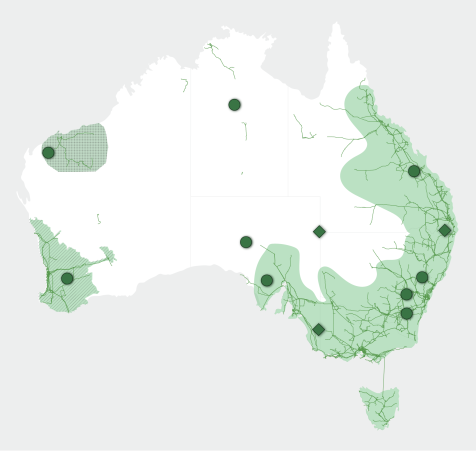
2026 Infrastructure Priority List
The Infrastructure Priority List (IPL) is Infrastructure Australia’s independent, evidence-based advice to the Australian Government on the highest-priority proposals that should be considered for investment over the next 10 years. Each proposal on the IPL aligns with one of five investment priorities, identified in Infrastructure Australia’s 2025 Annual Budget Statement, that represent areas where Australian Government investment would deliver national benefit.




Overview
The Infrastructure Australia Act 2008 requires Infrastructure Australia to produce targeted Infrastructure Priority Lists advising the Australian Government on nationally significant transport, water, energy, communications and social infrastructure. The IPL represents Infrastructure Australia’s top-down view, based on its assessment of the infrastructure gaps and opportunities across the nation, of the proposals that can best strengthen the nation’s productivity, liveability and sustainability now and for the future.
Australia is growing and diversifying, with increasing population and economic activity placing demands on our infrastructure as a critical enabler of social and economic outcomes. We have ambitious goals to lift national productivity, transition to a clean energy future, and substantially boost housing supply. Aligning proposals on the IPL with the five investment priorities ensures there are clear objectives and benefits for the nation from the Australian Government investing in them.
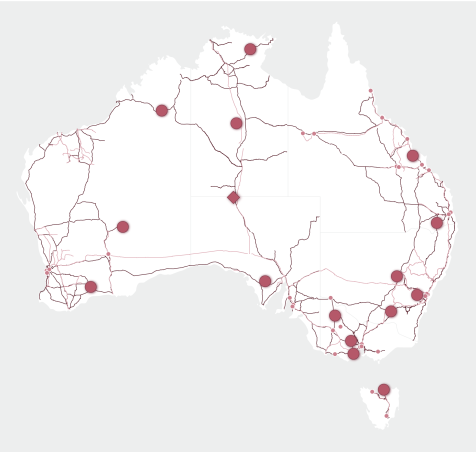
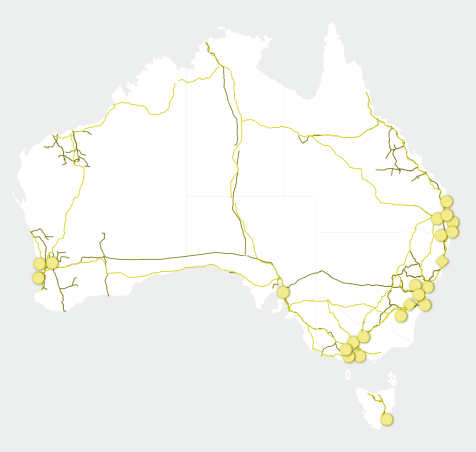
High Productivity Freight Networks
Enhancing the capacity, interoperability and resilience of nationally significant freight corridors and networks for higher productivity rail and road freight.
Australia’s freight networks underpin domestic supply chains, moving goods efficiently across vast distances and supporting economic growth and resilience. These networks face rising pressures from increasing freight volumes, shifting supply chains and the need for greater interoperability, compounded by ageing infrastructure and the integration of new technologies to improve safety and efficiency. Targeted investment over the next decade should prioritise system‑level coordination to boost capacity, resilience and connectivity across freight corridors and intermodal terminals, while accelerating decarbonisation and encouraging a shift from road to rail to enhance the overall efficiency and sustainability of Australia’s supply chains
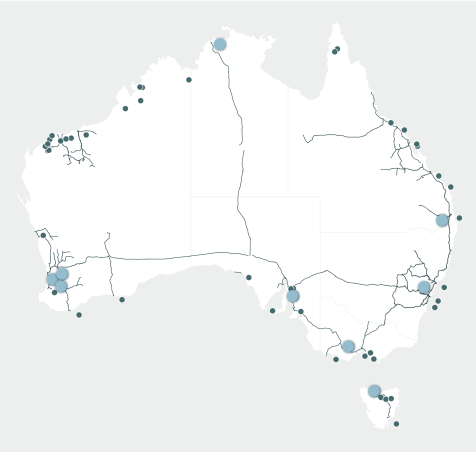
Ports Capacity and Connectivity
Increasing national ports capacity and strengthening import-export supply chains with last mile freight and intermodal connections for ports and port precincts.
Australia’s ports underpin national productivity and export competitiveness, connecting producers, freight networks and global markets.
Australia’s maritime ports and airports face mounting pressures from rapid trade growth and changing global shipping trends. These challenges are compounded by the need to modernise infrastructure, improve supply chain efficiency and support the energy transition. Targeted investment over the next 10 years will remove capacity constraints and maintain Australia’s maritime and aviation industry competitiveness and resilience.
High-Capacity Transport for Growing Cities
Building safe, efficient and city-shaping transport for our fast-growing urban populations, and unlocking priority growth areas and precincts for housing and development.
Australia’s transport networks connect people, places and opportunities across our cities and regions, supporting access to jobs, housing and essential services.
Commuter and freight traffic is expected to grow substantially over coming decades, placing increasing pressure on Australia’s transport networks. Supporting this growth will require new and expanded high capacity public transport, alongside targeted road upgrades that enable access to new housing and freight corridors. Investments in rail, light rail, rapid bus and zero-emissions bus fleets will be needed to improve productivity, support liveability and meet national housing and net zero emissions commitments.
Secure, Sustainable Water for Growth
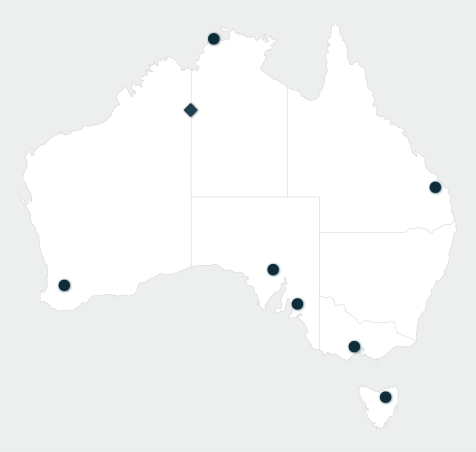
Providing secure, climate-resilient water and wastewater capacity in cities and regions to support housing growth and increasing demands for water-intensive industries.
Australia’s growing population, expanding industries, shifting climate and ageing water assets are increasing pressure on urban, regional and remote water systems, requiring sustained investment in secure, reliable and climate resilient water infrastructure.
Targeted investment over the next 10 years needs to focus on strengthening supply reliability, modernising critical water and wastewater infrastructure and improving water security for regional and remote communities.
Delivering Net Zero and a Clean Energy Economy
Delivering large-scale renewable generation, storage and transmission, including enabling infrastructure, and unlocking national economic opportunities from the net zero transition.
Australia’s transition to net zero will require a rapid scale-up of renewable energy generation, transmission and storage, supported by enabling infrastructure and the decarbonisation of construction and transport.
By 2050 renewable energy is projected to provide over 95% of electricity nationally, demanding major expansion of wind, solar, transmission, and storage. Over the next decade, governments should invest in networks, generation, storage, and enabling infrastructure, while decarbonising supply chains for materials like steel and concrete and supporting transport electrification. Strong public private collaboration and sustained investment will be essential to deliver clean, affordable energy and position Australia as a net zero leader.