
High Productivity Freight Networks
Header description
Australia’s freight networks are the backbone of domestic supply chains, enabling the efficient movement of goods across vast distances and supporting the nation’s economic growth and resilience.
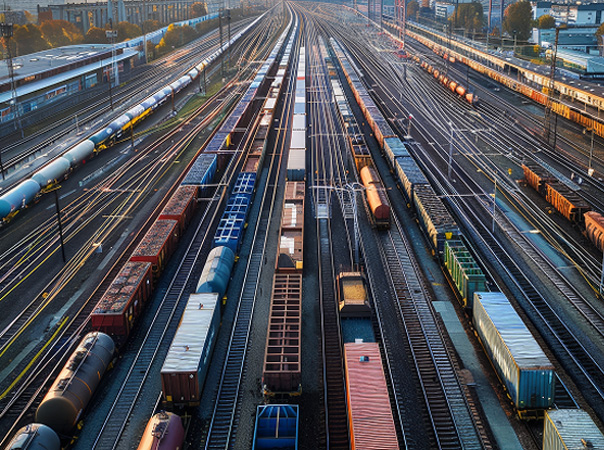
Australia’s domestic freight task (bulk and non-bulk) has grown substantially over the past 40 years and is projected to increase by up to 26% between 2020 and 2050 in a median growth scenario. This equates to approximately 964 billion tonne-kilometres of freight movement, highlighting the need for scalable, interoperable and resilient freight infrastructure.12
Rail and road are the dominant modes for transporting domestic freight, together accounting for nearly 90% of Australia’s domestic bulk and non-bulk freight task in 2024-25.13 Road freight is forecast to grow by 77% by 2050, while rail is expected to grow by just 5.7% over the same period.12 This disparity is particularly significant given transport was the third-largest source of Australia’s greenhouse gas (GHG) emissions in 2024 – 83% of which came from road transport and 23% directly from heavy vehicles.12