
Ports Capacity and Connectivity
Header description
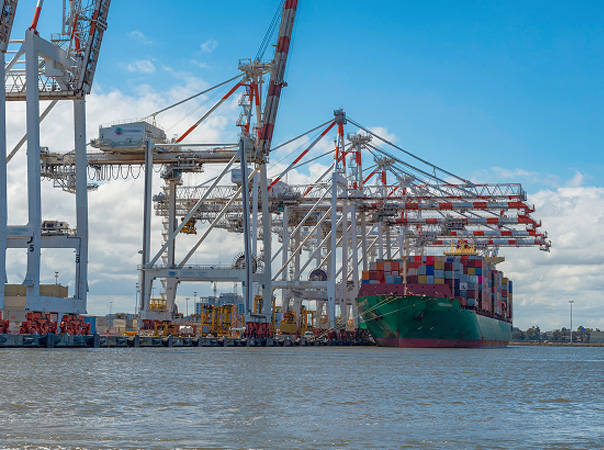
Australia’s ports underpin national productivity and export competitiveness, connecting producers, freight networks and global markets.
Summary: Infrastructure response and investment priorities
Australia’s maritime ports and airports are critical to the nation’s economic prosperity, however the sector faces mounting pressures from rapid trade growth and changing global shipping trends. These challenges are compounded by the need to modernise infrastructure, improve supply chain efficiency and support the energy transition. Targeted investment over the next 10 years will remove capacity constraints and maintain Australia’s maritime and aviation industry competitiveness and resilience.
Table 12 identifies the highest priority proposals for Ports Capacity and Connectivity to provide targeted solutions to address identified infrastructure constraints.
| 10-year national priorities | Location | Investment timing |
|---|---|---|
| Enhancing ports to enable growth and adapt to future trends | ||
| Expanding port capacity | ||
| Westport (Kwinana port development) | WA | 2-4 year pipeline |
| Increasing port connectivity | ||
| Melbourne Airport Rail | VIC | 2-4 year pipeline |
| Port of Brisbane freight rail improvements | QLD | 5-10 year pipeline |
| Western Sydney Airport fuel pipeline | NSW | 2-4 year pipeline |
| Westport enabling infrastructure (Anketell Road upgrades) | WA | Investment-ready for Delivery |
| Transforming strategically significant ports and maritime precincts | ||
| Common user infrastructure at the Middle Arm Precinct | NT | Investment-ready for Planning |
| Lefevre Peninsula growth infrastructure – Osborne Precinct | SA | Investment-ready for Planning |
| Port of Burnie capacity | TAS | 2-4 year pipeline |
| Western Trade Coast enabling infrastructure – Henderson Precinct | WA | Investment-ready for Planning |