


 EVALUATION COMPLETE



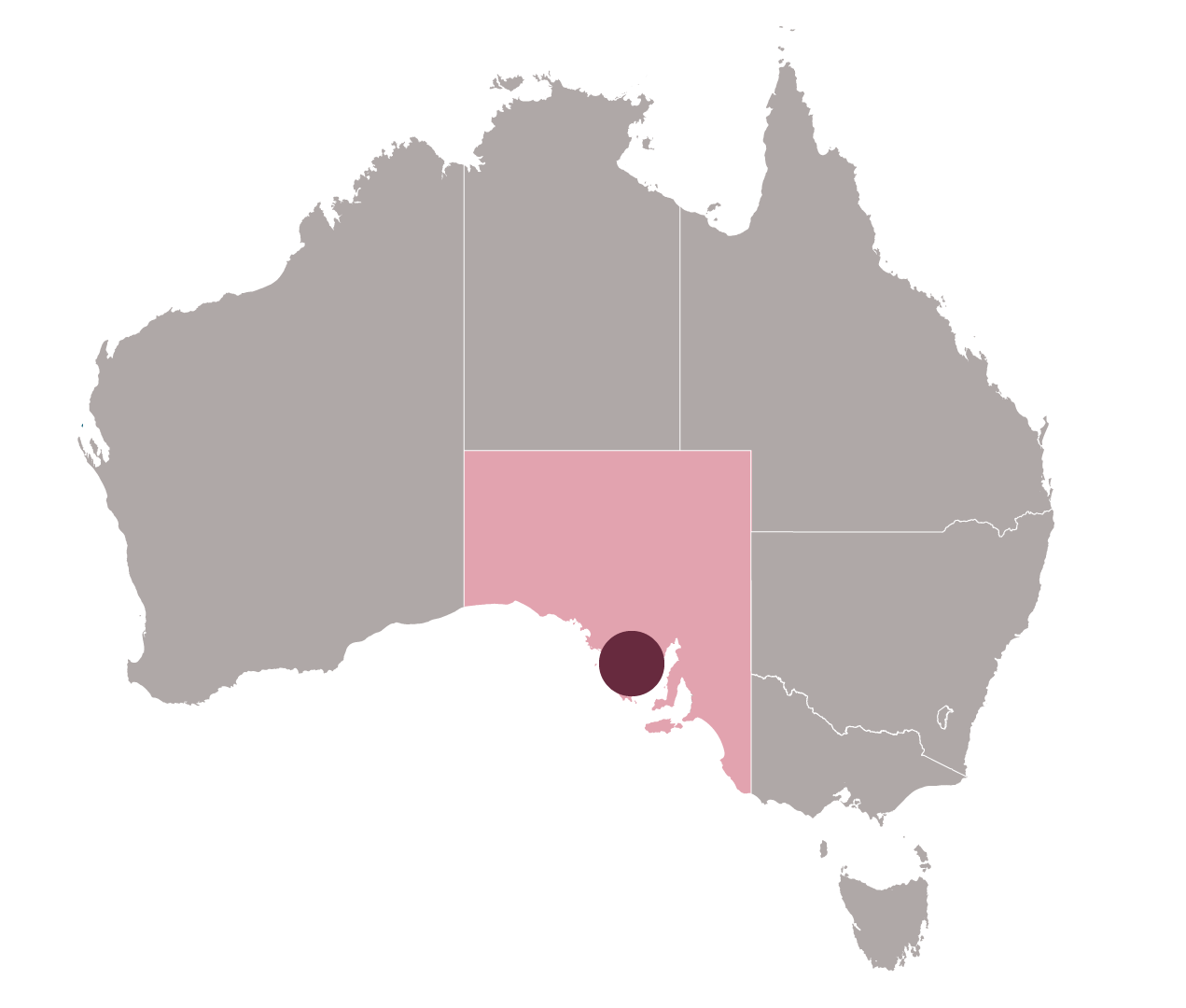
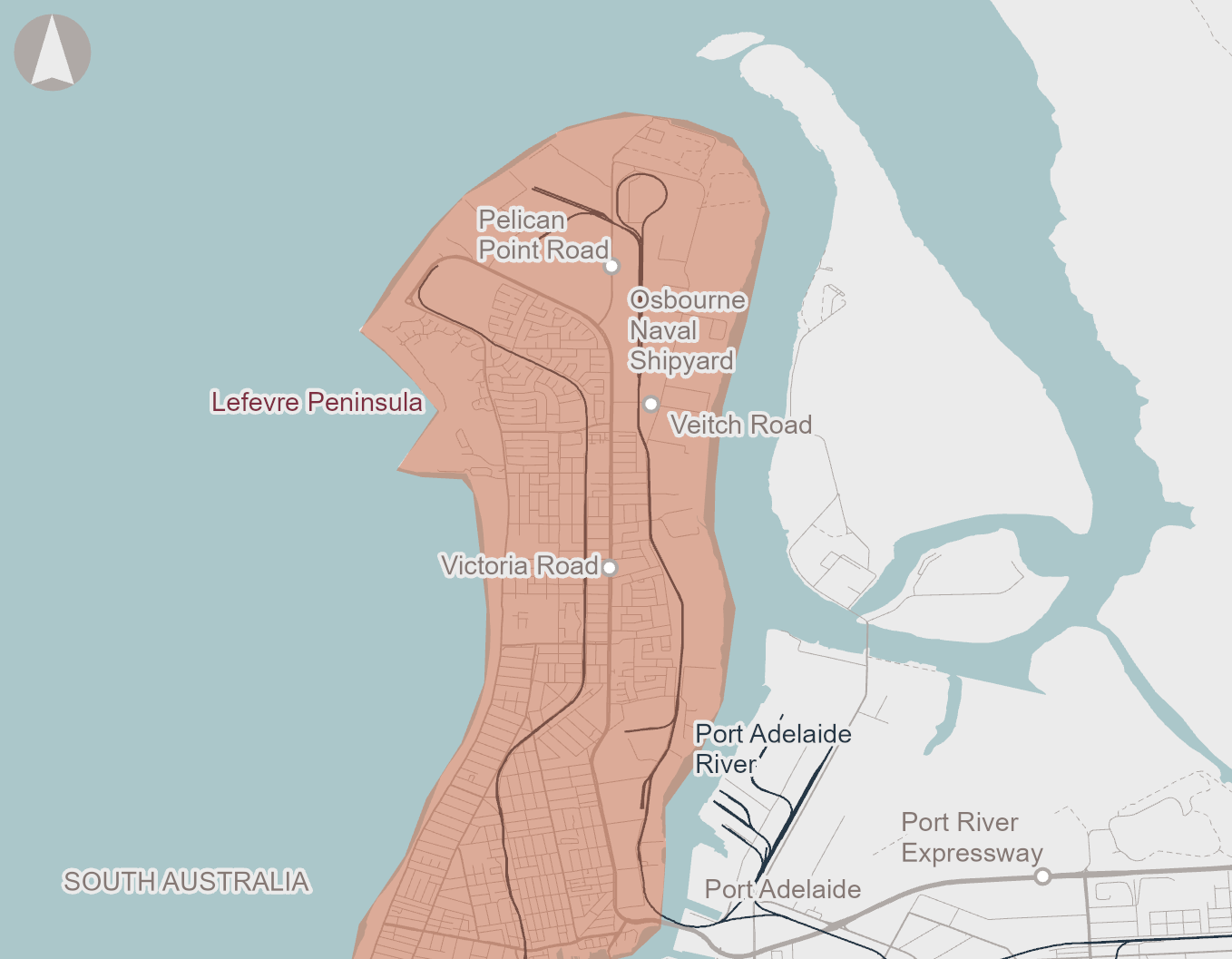
This proposal responds to growing transport, utility and land-use pressures on the Lefevre Peninsula, where existing infrastructure is constrained by increasing industrial activity and rising workforce demand linked to AUKUS. Addressing these emerging enabling infrastructure gaps aligns with national defence and industry priorities set out in Australia’s AUKUS Submarine Industry Strategy and the Defence Strategic Review, which emphasise sovereign capability and advanced manufacturing. The proposal also aligns with the Infrastructure Policy Statement and the National Freight and Supply Chain Strategy by targeting transport and utility infrastructure constraints that would impact freight efficiency and supply chain resilience. At the state level, the proposal supports South Australia’s State Infrastructure Strategy by focusing on coordinated infrastructure delivery, workforce expansion, and sustainable urban growth.
PROPOSAL DESCRIPTION
The proposal seeks to address infrastructure capacity and access constraints by identifying targeted upgrades to transport, utilities, and social infrastructure on the Lefevre Peninsula, while also managing proximity of this development to residential communities and sensitive ecosystems. Infrastructure upgrades would support the delivery and operation of the Osborne Precinct, enabling the region to meet the demands of the AUKUS partnership and associated workforce growth.
INVESTMENT RECOMMENDATION
The Australian Government should consider prioritising the proposal for planning investment, to progress definition of infrastructure requirements, sequencing and staging and to develop a business case, which identifies the responsibilities for delivery.
OPPORTUNITIES AND OUTCOMES
This proposal has the potential to:
- Strengthen sovereign defence capability – enabling infrastructure would support submarine sustainment, shipbuilding activity and industrial capacity for the Osborne Precinct required under the AUKUS partnership.
- Enhance transport connectivity and freight efficiency – infrastructure upgrades would ease congestion pressures and support supply chain resilience within the Lefevre Peninsula.
- Support industrial and population growth – upgraded utility infrastructure would help to meet the demands of advanced manufacturing and support projected industrial and population growth.
NEXT STEPS
Infrastructure Australia recommends the proponent adopts a place-based approach to inform proposal development that considers the interrelated infrastructure needs of the region to identify how and when enabling infrastructure should be delivered. Proponent to develop potential investment options (Stage 2 of Infrastructure Australia’s Assessment Framework), which should include and be informed by:
- solutions that balance priority infrastructure requirements supporting the AUKUS partnership and long-term opportunities for South Australia’s trade, energy and logistics networks
- alignment with the Lefevre Peninsula Master Plan
- robust demand forecasting and options analysis for each infrastructure component
- early and consistent engagement with stakeholders, including local communities, government agencies and industry partners.

