


 EVALUATION COMPLETE



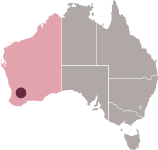
The Australian Government’s target of 82% renewable electricity by 2030 is a key milestone toward achieving net zero by 2050. To achieve this target, the South West Interconnected System (SWIS) will require around 4,000 km of new transmission infrastructure by 2042 to connect renewable energy resources to consumers and industry, ensuring efficient and reliable electricity supply in the SWIS.
The proposal aligns with the objectives of the National Energy Transformation Partnership between the Australian, state and territory governments, supporting a coordinated and timely approach to transmission investment. It also aligns with the investment objectives of the Rewiring the Nation Fund to expand transmission capacity and deliver affordable, reliable renewable energy.
PROPOSAL DESCRIPTION
The proposal involves high-capacity transmission infrastructure in the SWIS to connect areas of high renewable energy potential with consumers and industries across the south west region Western Australia. All state-owned coal fired power stations in the SWIS are scheduled to retire by 2030, requiring rapid replacement with renewable generation, firming capacity and energy storage. To meet forecast demand on the SWIS by 2042 under the 'Future Ready’ scenario in the SWIS Demand Assessment, electricity generation – primarily from renewable sources – will need to scale to nearly ten times current capacity. Expanded transmission infrastructure will be important to connect this new generation and ensure secure and reliable energy supply. It would support the transformation of the SWIS from a predominantly fossil fuel-based system to a high-renewables grid, consistent with Western Australia’s decarbonisation objectives.
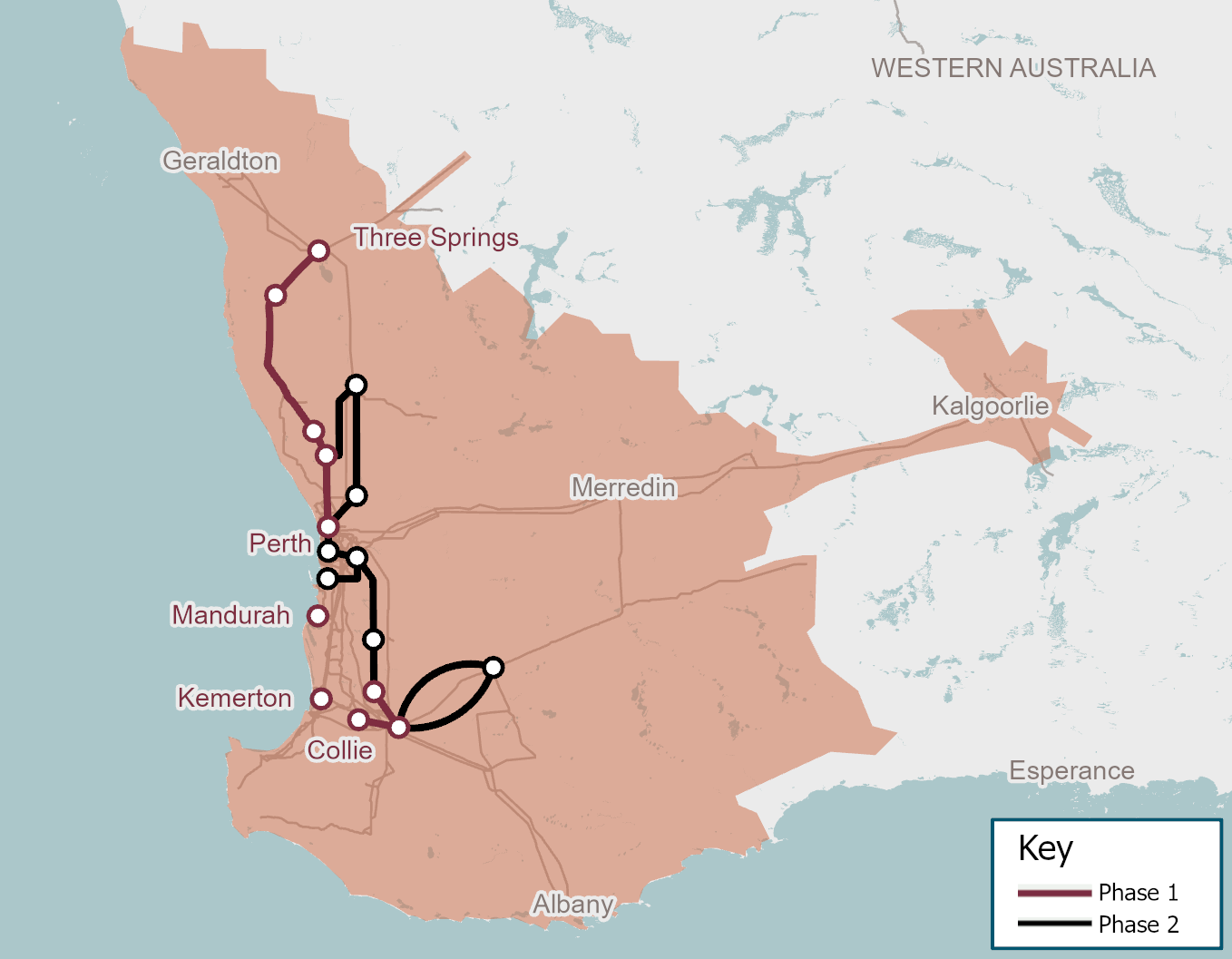
The Western Australian Government’s South West Interconnected System Transmission Plan outlines the transmission investments required to facilitate the renewable transition in the SWIS. This includes the Clean Energy Link Program, a series of transmission projects to connect key renewable resource areas to the SWIS, with major initiatives focused on the south western regions of Western Australia. The Clean Energy Link Program comprises three phases:
- Phase One: 2025-2030 – connecting new renewable generation in the south east of the SWIS to support coal retirement. It identifies four network augmentation projects: East Stage 1, Kwinana Strengthening, Coolangatta Industrial Estate, and Kemerton Strategic Industrial Area.
- Phase Two: 2030-2035 – expanding transmission infrastructure to supply increased renewable energy to homes, businesses, and new industries, such as green steel and batteries production. It identifies six augmentation projects: Chittering, Moora, East Stage 2, Perth Circuit, Collie and Metro.
- Phase Three: 2035-2050 – focusing on long-term expansion to support economic diversification, with detailed planning informed by ongoing system modelling.
INVESTMENT RECOMMENDATION
The Australian Government should note Phase One proposals as potential future investment opportunities within the 2-4 year pipeline. Subject to further development and assessment of individual proposals, the Australian Government may consider targeted financial support – including through the Rewiring the Nation Fund – to support proposals aligned with the priorities identified in the SWIS Transmission Plan.
The Australian Government has identified up to $3 billion for Western Australian transmission projects under the Rewiring the Nation Fund, which is administered by the Clean Energy Finance Corporation.
OPPORTUNITIES AND OUTCOMES
These proposals have the potential to:
- Support Australia’s renewable energy transition – as the SWIS shifts from fossil fuel-based generation to high levels of renewable energy, expanded transmission infrastructure is essential to integrate renewable generation and transport electricity to load centres efficiently.
- Support national emissions reduction – by enabling higher levels of renewable generation and firming capacity in the SWIS, expanded transmission infrastructure would support achievement of Australia’s 2030, 2035 and 2050 net zero targets.
- Improve liveability – network investments aligned with the South West Interconnected System Transmission Plan would support a least-cost transition of the SWIS to renewable energy, supporting more affordable and reliable electricity for households and businesses.
- Support national productivity – additional transmission infrastructure would connect geographically diverse renewables resources to consumers and industry at lowest system cost. With around 70% of electricity supplied by the SWIS in 2042 projected to be consumed by large industrial users, improved network efficiency would reduce intermediate energy costs and support competitiveness.
- Increase the resilience of the SWIS – new transmission infrastructure would support energy security, reliability and system stability during periods of peak demand and supply variability.
NEXT STEPS
Proponent to progress planning activities for priority transmission projects (in line with the South West Interconnected System Transmission Plan and relevant Western Australian frameworks), with ongoing coordination with the Australian Government where appropriate.