


 EVALUATION COMPLETE



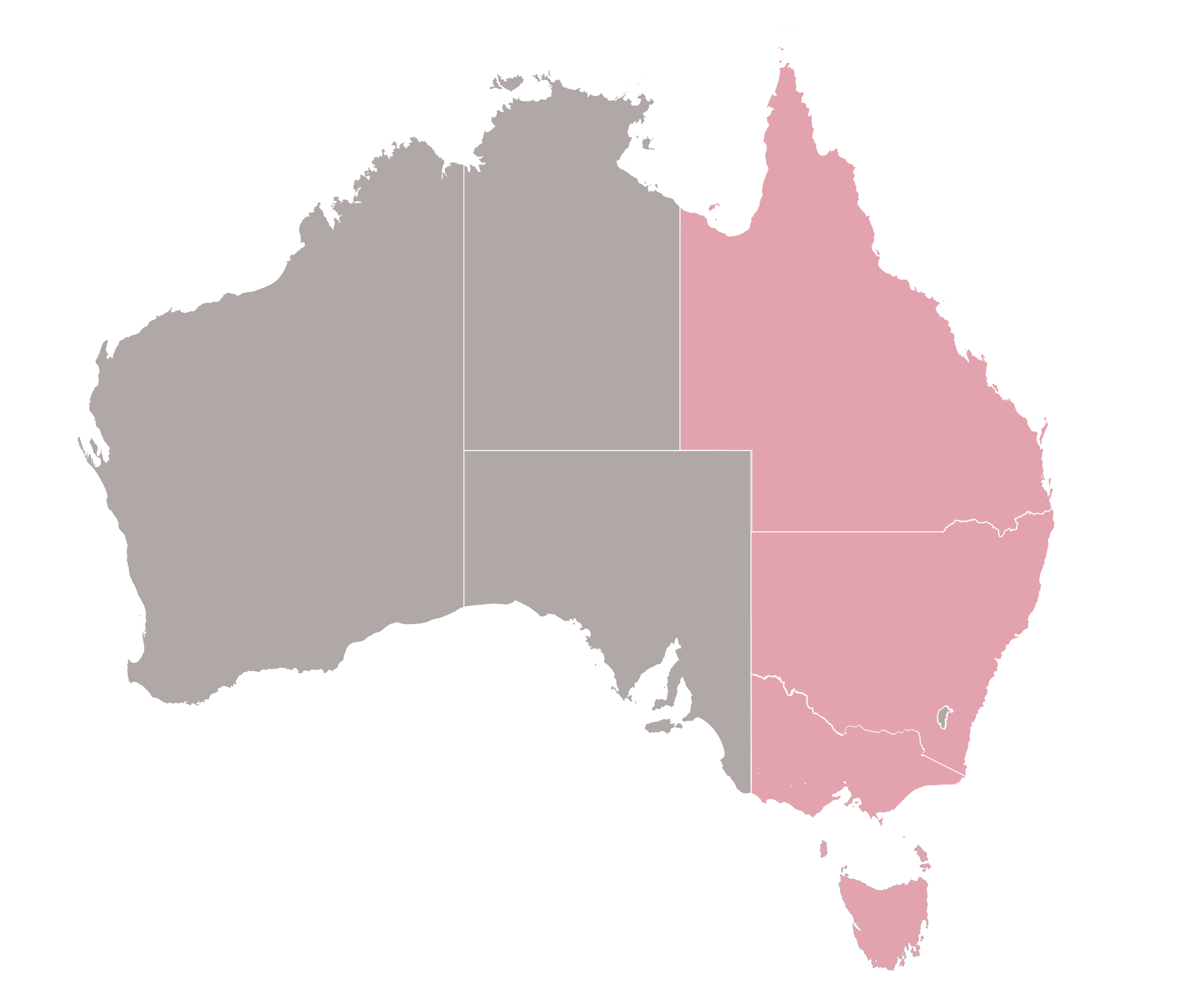
The Australian Government’s target of 82% renewable electricity by 2030 is a key milestone toward achieving net zero by 2050. To achieve this target, the National Electricity Market (NEM) will require approximately 3,000 km of new transmission infrastructure by 2030, and approximately 6,000 km by 2050, to connect Renewable Energy Zones (REZ) – clusters of high-quality renewable energy resources – to consumers and industry, ensuring efficient and reliable electricity supply in the NEM.
The proposal aligns with the objectives of the National Energy Transformation Partnership between the Australian, state and territory governments, supporting a coordinated and timely approach to transmission investment. It also aligns with the investment objectives of the Rewiring the Nation Fund to expand transmission capacity and deliver affordable, reliable renewable energy.
PROPOSAL DESCRIPTION
The proposal involves new transmission infrastructure in the NEM consistent with the Australian Energy Market Operator's (AEMO) optimal development path for the renewable energy transition. It responds to rising electricity demand and the retirement of ageing coal-fired power stations, two-thirds of which are expected to retire by 2035. Meeting this demand will require a substantial expansion in utility-scale solar and wind generation capacity – projected to increase 422% on current levels by 2050 – supported by an expanded transmission network.
The AEMO sets out the optimal development path for network investments in the NEM in its biennial Integrated System Plan (ISP). The optimal development path identifies the essential, least-cost investments in renewable generation, storage, and transmission needed to support the transition to net zero emissions by 2050. The Draft 2026 ISP identifies 'actionable' transmission projects that are on the optimal development path.
Infrastructure Australia has identified transmission projects currently in design and approvals phases that have not yet reached final investment decision or financial close. These projects, which are expected to reach full capacity between 2028 and the mid 2030s, would strengthen interconnection between REZs and jurisdictions, enhancing reliability and system stability across the NEM. Other potential ‘actionable’ transmission projects for the NEM require ongoing analysis, and these will be confirmed in the final 2026 ISP.
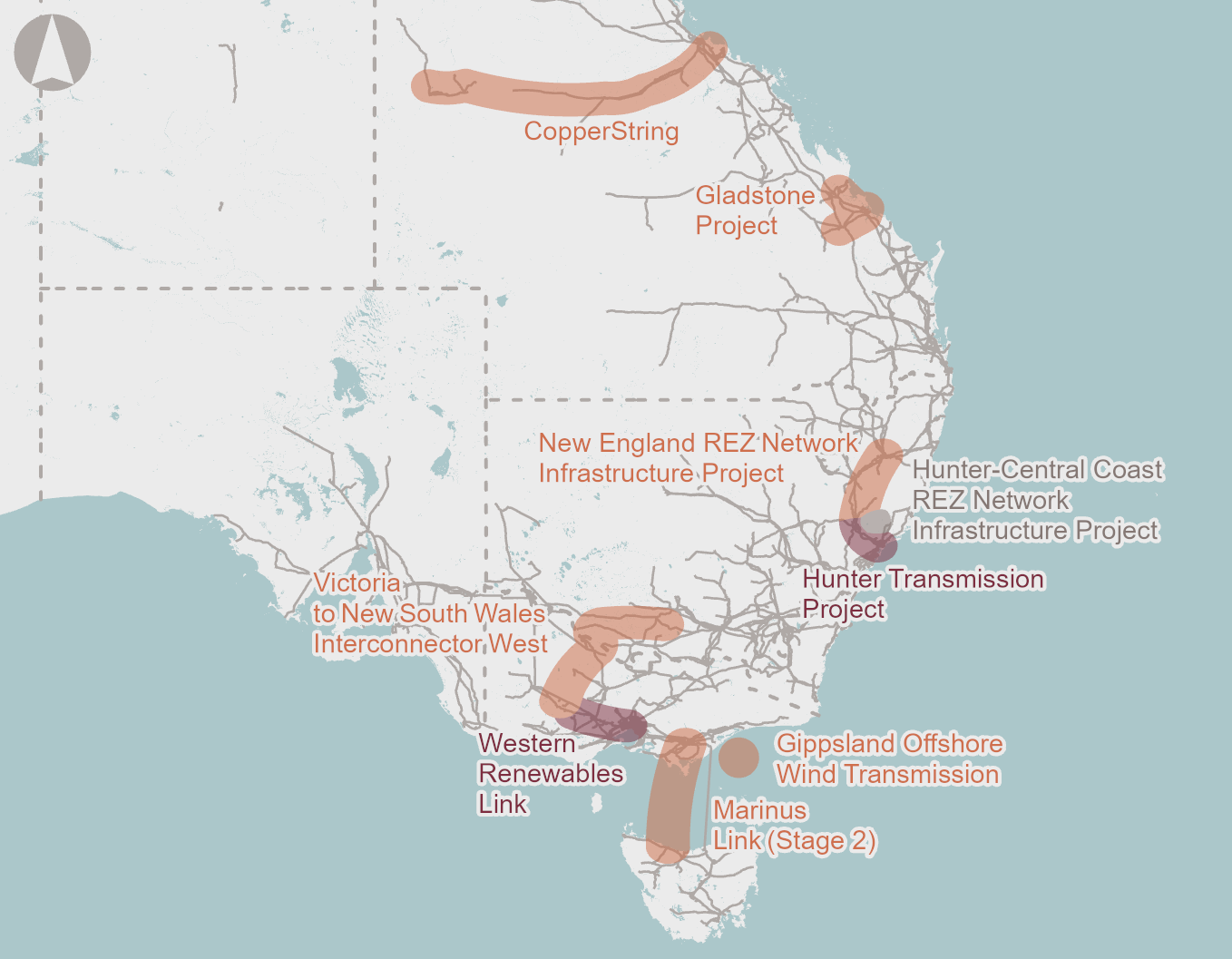
Collectively, the following projects, that are subject to planning and approvals, would deliver more than 2,900 km of new transmission infrastructure to the NEM:
- CopperString (Queensland): a proposed 840 km transmission line to connect the North West Minerals Province to the NEM near Townsville. The Eastern Link from Hughenden renewable energy hub will be completed by 2032.
- Hunter-Central Coast REZ Network Infrastructure Project (New South Wales): proposed distribution network upgrades to supply generation from the Hunter and Central Coast to Sydney, Newcastle and Wollongong load centres.
- Western Renewables Link (Victoria): a proposed 190 km overhead double circuit transmission line to connect western Victoria to the NEM.
- Gladstone Project (Queensland): a proposal to upgrade Central Queensland transmission networks as the region prepares for the eventual retirement of Gladstone Power Station and to support decarbonisation of major industries.
- Hunter Transmission Project (New South Wales): a proposed high-voltage transmission line to reinforce supply to Sydney, Newcastle and Wollongong load centres running from Olney to Bayswater.
- Victoria to New South Wales Interconnector West: (Victoria/New South Wales): a proposed double-circuit transmission line to connect the REZs in New South Wales and Victoria, allowing for the export of up to 1.89 gigawatts (GW) of electricity from Victoria and 1.67 GW from New South Wales.
- New England REZ Network Infrastructure Project (New South Wales): a proposed dual high voltage transmission line that would carry electricity from the New England region, connecting to the existing grid at Bayswater Power Station near Muswellbrook.
- Marinus Link (Stage 2) (Tasmania): proposed second stage of Marinus Link would add a second 750 megawatt (MW) link between north west Tasmania and the Latrobe Valley in Victoria.
- Gippsland Offshore Wind Transmission (Victoria): proposed high voltage double-circuit transmission lines to integrate offshore wind into the existing Latrobe Valley infrastructure. Lines are proposed to run from Loy Yang to Giffard and from Woodside to Hazelwood.
INVESTMENT RECOMMENDATION
The Australian Government should note these projects as potential future investment opportunities within the 2-4 year pipeline. Subject to further assessment and final confirmation through AEMO’s 2026 ISP, the Australian Government may consider targeted financial support, including through the Rewiring the Nation Fund, to enable timely delivery of jurisdiction-led projects consistent with the optimal development path.
OPPORTUNITIES AND OUTCOMES
These projects have the potential to:
- Support Australia’s renewable energy transition – expanded transmission infrastructure would enable REZs and large-scale generation to connect to the grid in line with national decarbonisation pathways.
- Support national emissions reduction – by enabling higher levels of renewable generation and storage, additional transmission infrastructure would support achievement of Australia’s 2030, 2035 and 2050 emissions targets.
- Improve liveability – network investments aligned with AEMO’s optimal development path would support a least-cost transition of the NEM, helping to maintain affordable and reliable electricity for households and communities.
- Support national productivity – additional transmission infrastructure would connect geographically diverse renewables resources to consumers and industry at lowest system cost. Around 80% of electricity supplied by the NEM is consumed by industry and business.
- Increase the resilience of the NEM – additional transmission infrastructure would strengthen system reliability, improve resource sharing between jurisdictions and enhance energy security during peak demand and supply disruptions.
NEXT STEPS
Proponents to continue planning and approvals activities for each of the actionable projects (in line with the ISP framework and relevant jurisdictional frameworks), with ongoing coordination with the Australian Government where appropriate.