


 EVALUATION COMPLETE



INVESTMENT PRIORITY
Delivering Net Zero and a Clean Energy Economy
INVESTMENT TIMING
2-4 year pipeline
LOCATION
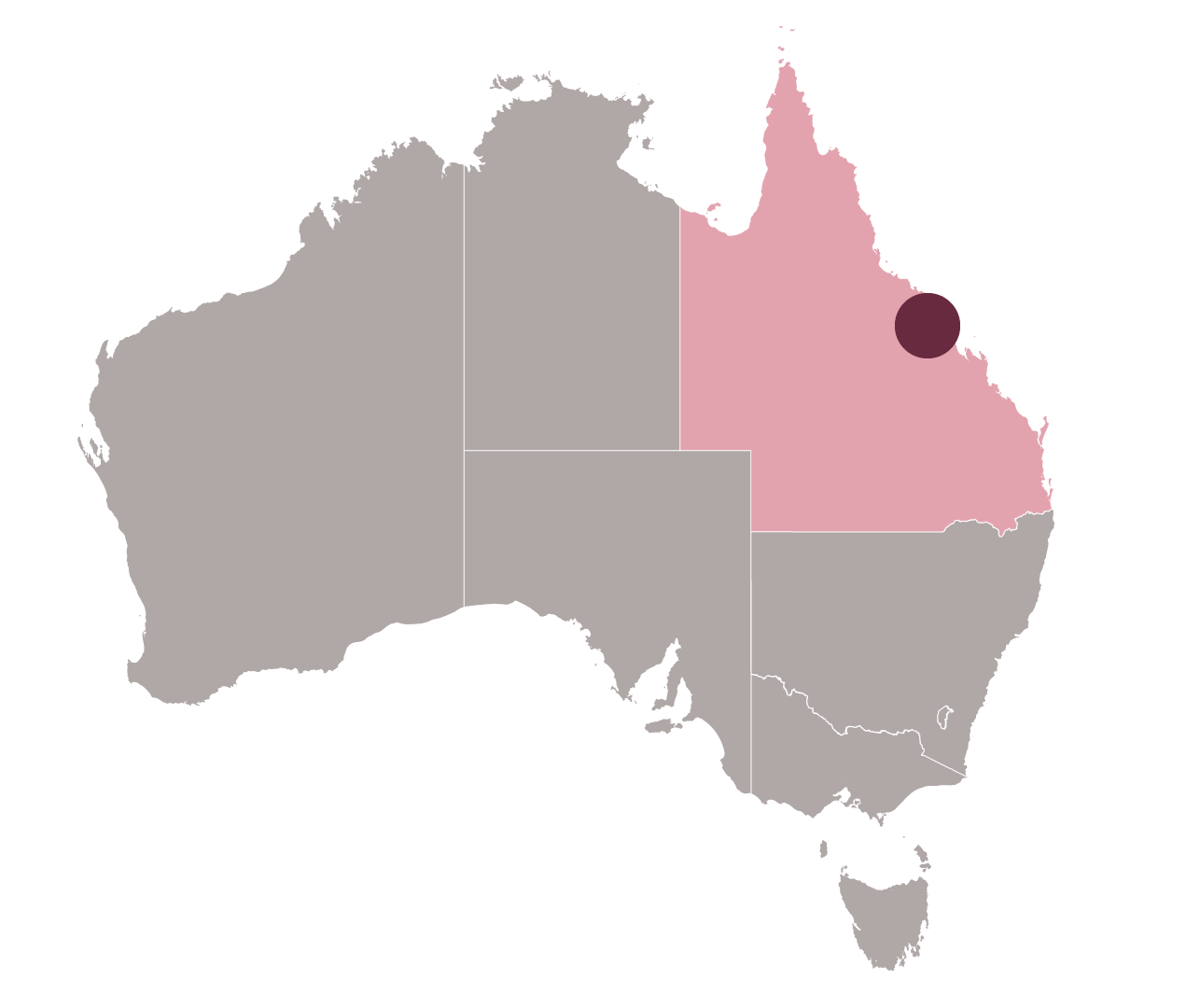
Gladstone to Central Queensland, QLD
SECTOR
Transport
PROPONENT
Queensland Government
IA EVALUATION HISTORY
Planning Investment (Problem Identification)
- 04/08/2026
ALIGNMENT TO NATIONAL PRIORITIES
The proposal aligns with the Australian Government's ambition of achieving 82% renewable energy share in electricity generation by 2030. The proposal contributes to the goals of the National Freight and Supply Chain Strategy and the Australian Government's Infrastructure Policy Statement, including to improve freight efficiency and supply chain resilience.
The Central Queensland Regional Energy Hub is identified by the Australian Energy Market Operator (AEMO) in its 2026 Integrated System Plan and as a priority in Queensland Government’s Energy Roadmap 2025. Regional Energy Hubs are areas to progress critical transmission infrastructure including renewable energy generation and storage, transmission and gas networks.
PROPOSAL DESCRIPTION
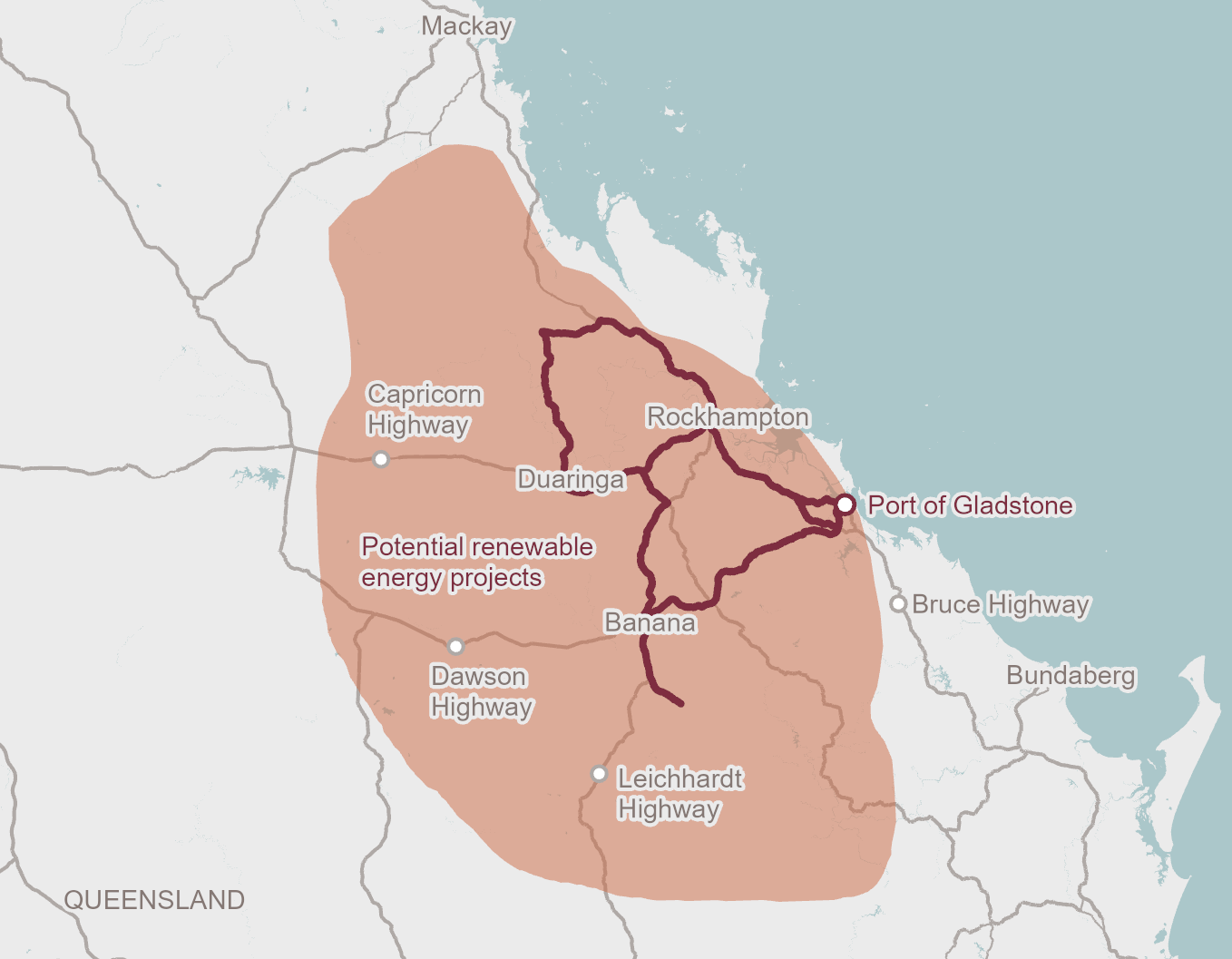
Central Queensland is an identified Regional Energy Hub, and enabling infrastructure is needed to support its development. This proposal would address port capacity, port access and road network constraints for transporting critical components to Central Queensland.
The Port of Gladstone is a key entry point with access constraints that limit efficient movement of large scale components, requiring detours through local roads with geometry and safety limitations. Key freight corridors from the port also contain capacity, height and structural constraints that limit their ability to enable critical infrastructure development. Upgrades are needed to bridge structures on Port Access Road to increase road overpass height and width clearances and strengthen a rail overpass bridge to enable efficient OSOM movements and reduce impacts of local diversion routes on the community.
Road routes to Central Queensland cannot accommodate OSOM vehicles required to transport large renewable energy components. Priority road network upgrades include: strengthening or replacement of bridge structures on the Bruce Highway, Dawson Highway, Capricorn Highway and Gladstone-Mount Larcom Road; addressing height constraints from overpass bridges on the Dawson Highway; widening and reconfiguration of intersections on the Capricorn Highway and Leichhardt Highway; investigating the potential need to seal and upgrade Apis Creek Road; and ensure adequate pull-over bays are provided on the corridor to mitigate congestion and delay costs on other road users.
INVESTMENT RECOMMENDATION
The Australian Government should note this proposal as a potential future investment opportunity within the 2-4 year pipeline.
OPPORTUNITIES AND OUTCOMES
This proposal has the potential to:
- Support energy system resilience – by enabling timely delivery of generation, transmission and firming infrastructure.
- Support Australia’s renewable energy transition – by supporting the development of renewable energy projects.
- Increase productivity and sustainability outcomes – improved and efficient use of port and freight infrastructure networks would reduce barriers for energy development in Central Queensland.
- Increase road freight efficiency – addressing geometric and asset performance constraints along transport routes would support improved freight productivity and reliability.
- Improve Australia’s regional transport network – the proposal would support the safe, efficient, timely and coordinated delivery of generation, transmission and firming infrastructure, while minimising disruption to other transport network users and regional communities, leaving a legacy of an improved transport network and road safety outcomes.
NEXT STEPS
Proponent to develop potential investment options (Stage 2 of Infrastructure Australia’s Assessment Framework), including:
- consideration of opportunities to efficiently manage the import of renewable components at ports, including the potential need for port capacity and access improvements, taking account of demand for both renewables and over-dimension break bulk cargo required for other sectors of the economy
- road network assessments that consider detailed loading assessment of bridge structures, widening and reconfiguration of intersections, road alignments and level crossings, and regrading roads or raising bridge structures to provide sufficient height clearances
- a programmatic approach to help ensure upgrades are coordinated along the preferred route.

