


 EVALUATION COMPLETE



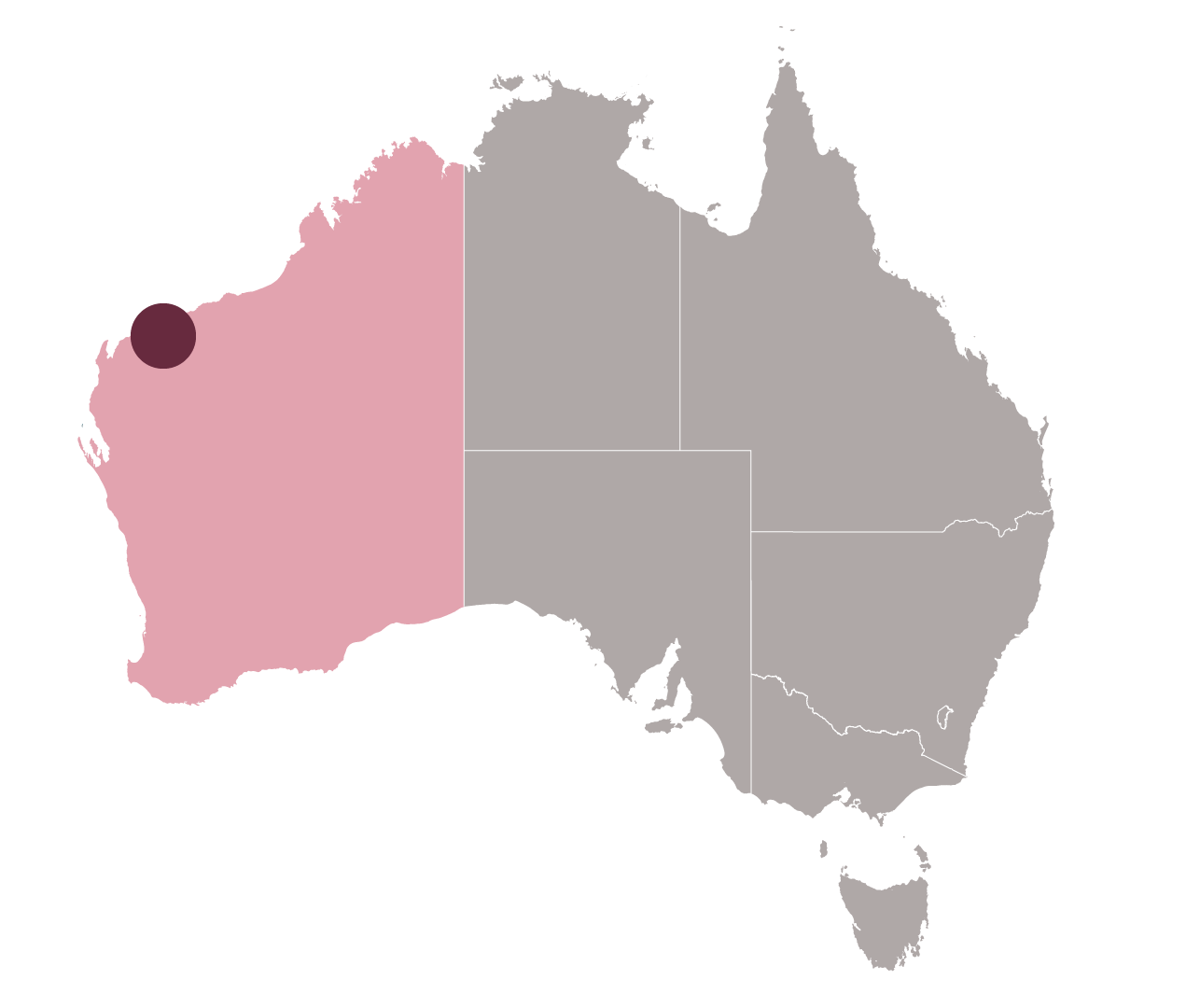
The Australian Government’s target of 82% renewable electricity by 2030 is a key milestone toward achieving net zero emissions by 2050. To achieve this target, the North West Interconnected System (NWIS) will require approximately 3,000 km of new transmission infrastructure by 2050 to connect renewable energy resources to consumers and industry, ensuring efficient and reliable electricity supply in the NWIS.
The proposal aligns with the objectives of the National Energy Transformation Partnership between the Australian, state and territory governments, supporting a coordinated and timely approach to transmission investment. It also aligns with the investment objectives of the Rewiring the Nation Fund to expand transmission capacity and deliver affordable, reliable renewable energy.
PROPOSAL DESCRIPTION
This proposal involves development of high-capacity common-use transmission infrastructure in the NWIS to connect areas of high renewable energy resource potential with regional communities and major export industries in the Pilbara region. Decarbonisation of the Pilbara is central to Western Australia’s emissions trajectory, with industries in the region contributing more than 40% of the state’s emissions and around 20% of gross state product.
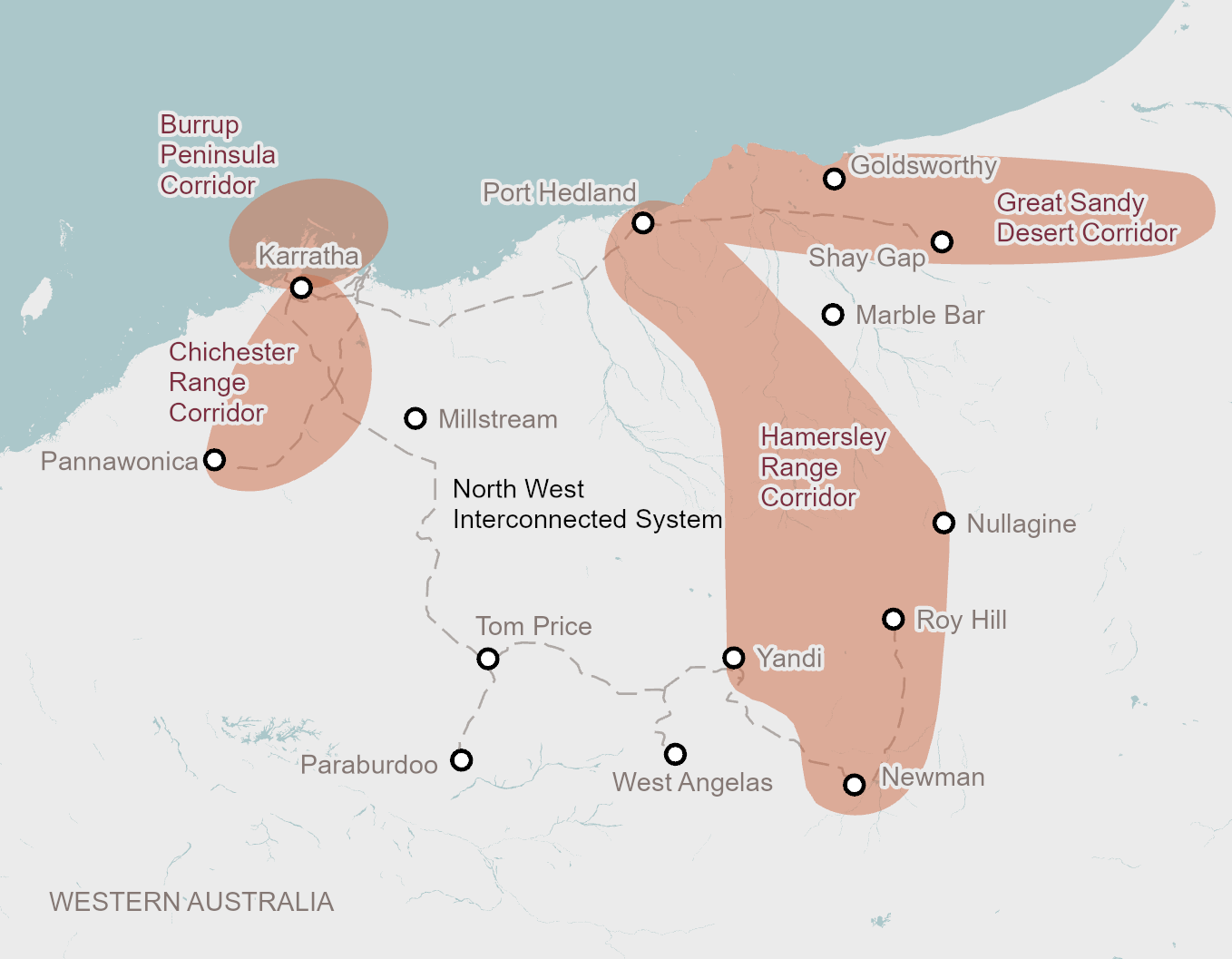
The NWIS comprises interconnected electricity networks owned by both public and private operators. Transmission and distribution assets connect the major towns of Port Hedland and Karratha through Horizon Power’s network and extend inland through Rio Tinto’s and Alinta’s privately owned networks. The multi-ownership structure of the NWIS presents a barrier to electrification for industry and renewable integration across the network. Development of common-use transmission infrastructure would support improved network efficiency and a least-cost pathway for electrification for industrial users.
The Western Australian Government’s Pilbara Energy Transition Plan identifies four priority corridors for the development of new common-use transmission infrastructure in the Pilbara:
- The Burrup (Murujuga) Corridor: connecting the Maitland Strategic Industrial Area (SIA), with Karratha and the Burrup SIA.
- The Chichester Range Corridor: connecting the Maitland SIA with the high-quality wind zone around 50 to 100 kilometres further south, close to the Chichester Range.
- The Hamersley Range Corridor: connecting the Boodarie SIA and Port Hedland with the eastern edge of the Hamersley Range, next to the iron ore mining industry.
- The Great Sandy Desert Corridor: connecting the Boodarie SIA and Port Hedland with proposed renewable generation projects further east near the Great Sandy Desert.
INVESTMENT RECOMMENDATION
The Australian Government should note these proposals as potential future investment opportunities within the 2-4 year pipeline. Subject to further development and assessment of individual proposals, the Australian Government may consider targeted financial support – including through the Rewiring the Nation Fund – to support proposals aligned with the priorities identified in the Pilbara Energy Transition Plan.
The Australian Government has identified up to $3 billion for Western Australian transmission projects under the Rewiring the Nation Fund, which is administered by the Clean Energy Finance Corporation.
OPPORTUNITIES AND OUTCOMES
These proposals have the potential to:
- Support Australia’s renewable energy transition – efficient common-use transmission infrastructure would support a shift from fossil fuel-based generation to renewable energy for industrial users in the NWIS, where renewable energy currently accounts for around 2% of total generation capacity.
- Support national emissions reduction – the Pilbara accounts for more than 40% of Western Australia’s emissions, primarily from major industrial producers. Electrification of industrial activity, underpinned by low-cost energy enabled by common-use transmission infrastructure, would support emissions reduction and achievement of Australia’s 2030 and 2050 net zero targets.
- Improve liveability – network investments aligned with the Pilbara Energy Transition Plan would support a least-cost transition of the NWIS to renewable energy, supporting more affordable and reliable electricity for households and industrial users.
- Support national productivity – additional transmission infrastructure would connect geographically diverse renewables resources to consumers and industry at lowest system cost, supporting lower system and energy costs for businesses and industry, and the scaling of low-carbon hydrogen production and critical mineral processing in the Pilbara.
- Increase the resilience of the NWIS – additional common-use transmission infrastructure would support energy security, reliability and system stability across the interconnected network.
- Support regional economic growth – as the NWIS contributes around 20% to Western Australia’s gross state product, investment would support jobs and commercial opportunities in the Pilbara region.
NEXT STEPS
Proponent to progress planning activities for each of the four priority corridors (in line with the Pilbara Energy Transition Plan and relevant Western Australian frameworks), with ongoing coordination with the Australian Government where appropriate.