


 EVALUATION COMPLETE



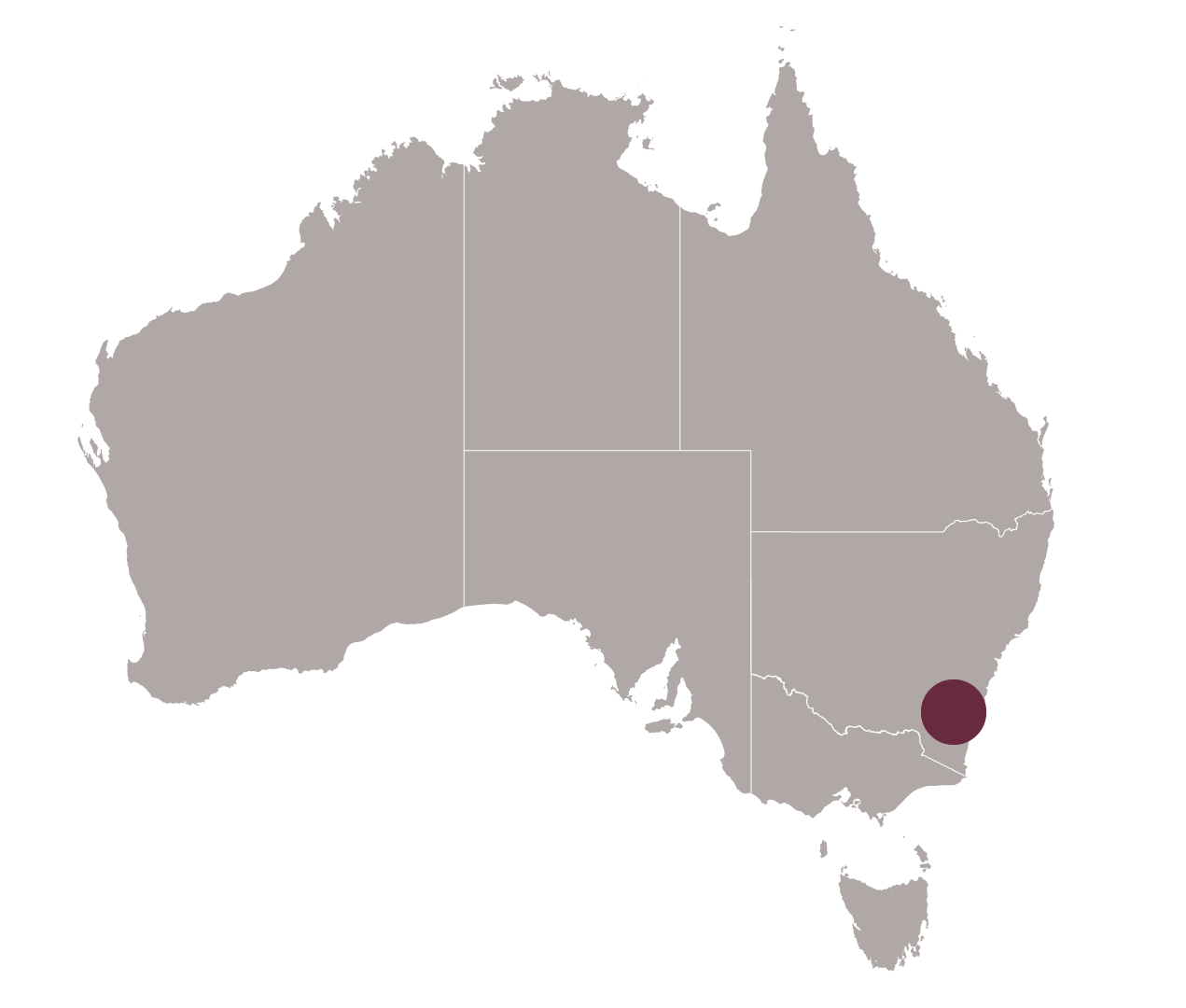
Canberra’s population growth, dispersed land use and limited high capacity public transport connections have resulted in over 75% of residents commuting by car. Without expansion of high capacity public transport along key corridors, increasing congestion will constrain productivity, limit access to jobs and services, and increase greenhouse gas emissions.
The proposal aligns with the Australian Government’s Infrastructure Policy Statement, National Urban Policy and Net Zero Plan by identifying options to expand public transport capacity, improve connectivity between major centres, support higher-density development, and reduce transport emissions in a growing capital city.
PROPOSAL DESCRIPTION
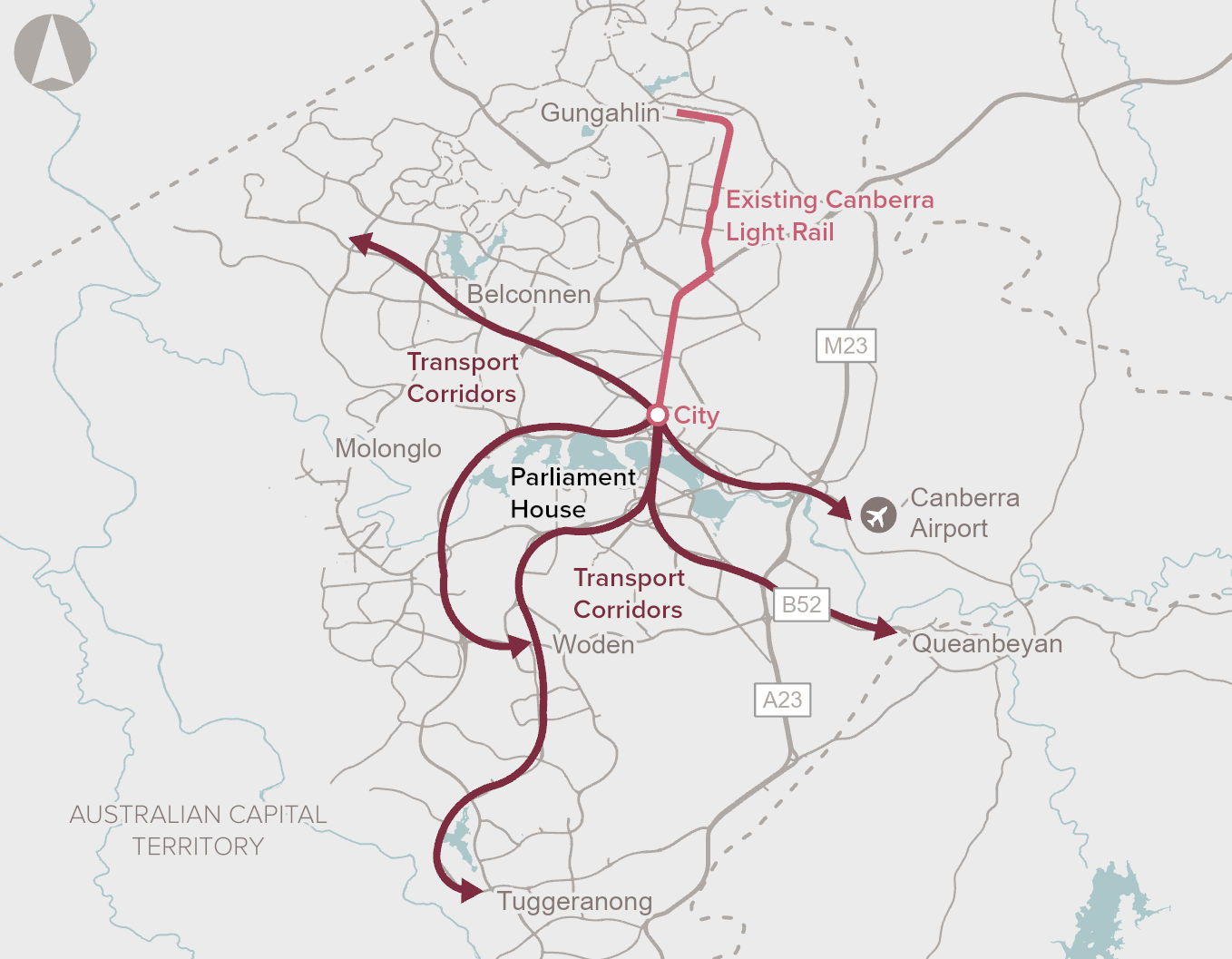
The Canberra public transport improvements proposal will consider options to expand the public transport network in Canberra, providing greater connectivity and reducing emissions. The proposal will build on previous and current expansions to the public transport system such as the Canberra Light Rail Stage 1 and 2A projects.
The proposal seeks to improve access to public transport and connections to heavy rail and the Canberra Airport. New corridors would provide capacity to meet forecast population growth in identified growth areas, while also supporting increased urban in-fill and new housing development.
INVESTMENT RECOMMENDATION
The Australian Government should note this proposal as a potential future investment opportunity within the 2-4 year pipeline.
OPPORTUNITIES AND OUTCOMES
This proposal has the potential to:
- Improve network resilience and travel reliability – expanding high capacity public transport options would reduce reliance on the road network and improve performance during peak periods.
- Improve public transport use – increased public transport capacity would ease congestion pressures and support sustainable urban development, particularly around transport hubs.
- Support decarbonisation objectives – shifting trips from private vehicles to public transport would support reduced greenhouse gas emissions in the transport sector.
- Enable higher-density housing and urban renewal – improved transport capacity along major corridors would support more efficient land-use patterns and reduce car-dependent development.
- Improve access to jobs, education and services – improved public transport connections would link key activity centres including Belconnon, Queanbeyan, Molonglo, Tuggeranong and Canberra Airport, improving access to jobs, education and services.
NEXT STEPS
Proponent to develop potential investment options (Stage 2 of Infrastructure Australia’s Assessment Framework) demonstrating:
- investment options that integrate multiple transport modes, deliver value for money, and expand public and active transport networks
- how lessons from past projects have been incorporated to achieve measurable housing and land use targets.

