


 EVALUATION COMPLETE


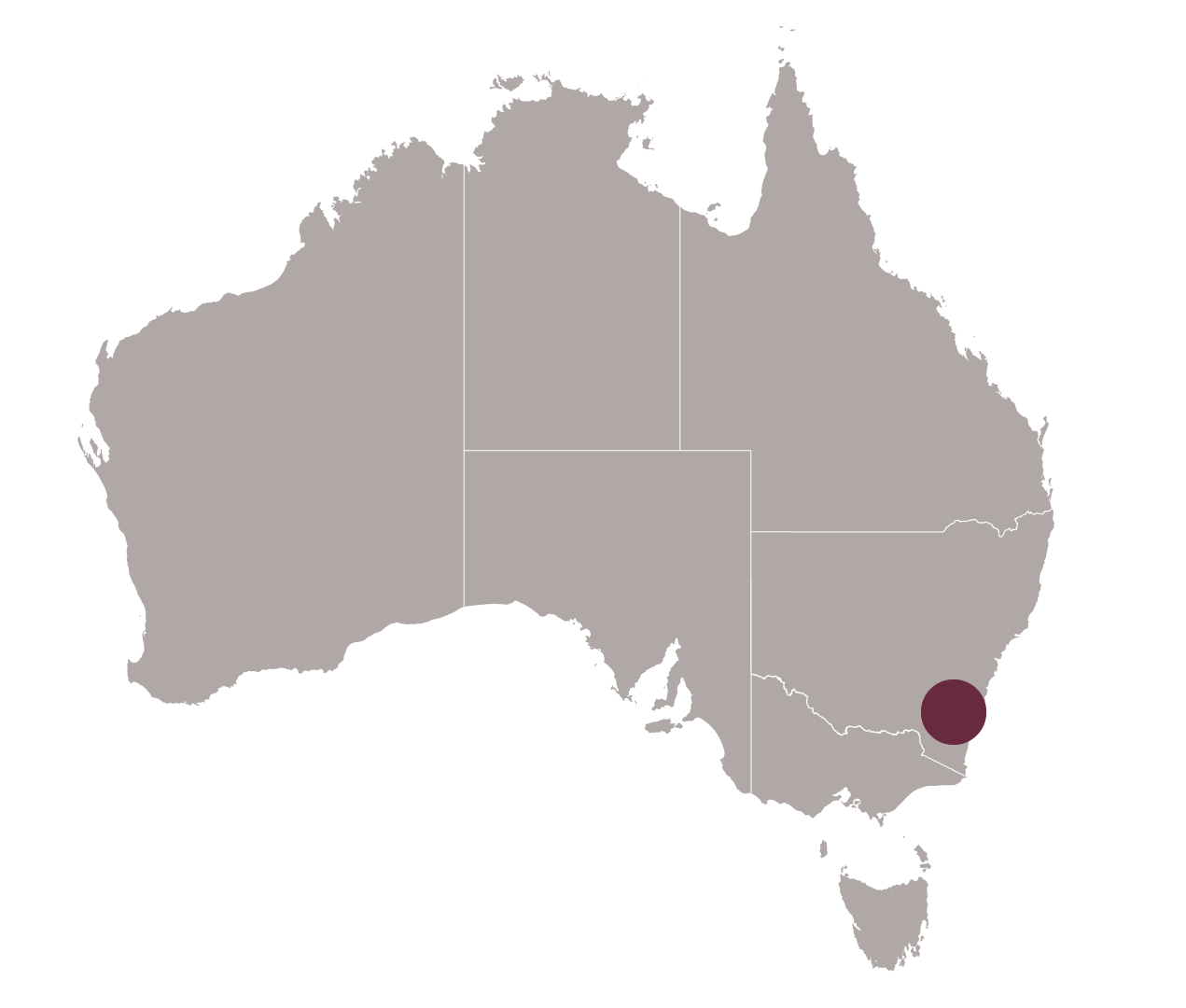
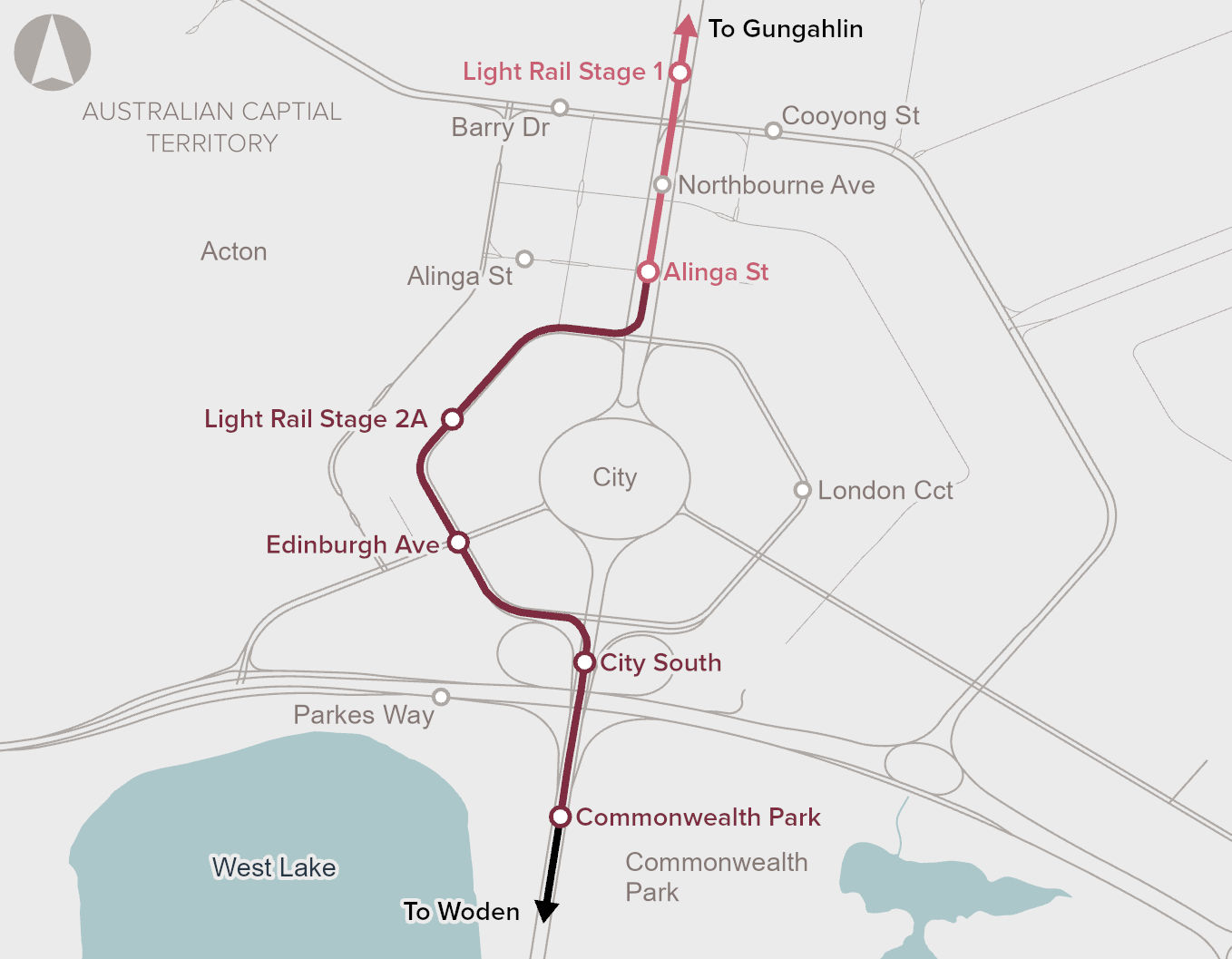
Canberra’s growing inner‑city precincts face increasing congestion, car dependency and constrained public transport capacity, limiting sustainable urban growth and housing development. Without extending the light rail network beyond the existing Alinga Street terminus, planned urban renewal in City Hill, City West and Acton Waterfront risks being less accessible and more car‑dependent.
Strategic Fit
The proposal aligns with Australian and ACT Government priorities by supporting liveability and sustainability, improving public transport connectivity, and enabling urban renewal and higher‑density development in key central Canberra precincts.
Societal Impact
Stage 2A is expected to build on the demonstrated quality‑of‑life benefits of Light Rail Stage 1—which has reduced car dependency and congestion and carried over 16.5 million passenger trips since 2019—by improving travel reliability and supporting further mixed‑use development along the corridor.
Deliverability
The ACT Government has demonstrated capability through delivery of earlier light rail stages, but cost escalation, staging decisions, limited options analysis and residual delivery risks reduce confidence in value for money outcomes.
Infrastructure Australia supports Canberra Light Rail Stage 2A, recognising its role in improving public transport integration, connectivity, and sustainable urban mobility.
To inform future planning on the network, we recommend the ACT Government:
- review delivery decisions made for Stage 2A—such as sole source arrangements, contract packaging, and the timing of early contractor involvement—and consider contract augmentation controls, independent estimators and competitive tendering, to support value for money outcomes for future stages
- develop a benefits realisation plan and implement the full Post Completion Review requirements included in the Infrastructure Australia Assessment Framework (Stage 4) and ACT Capital Framework requirements, including an independent assessment, to support continuous improvement.

