


 EVALUATION COMPLETE



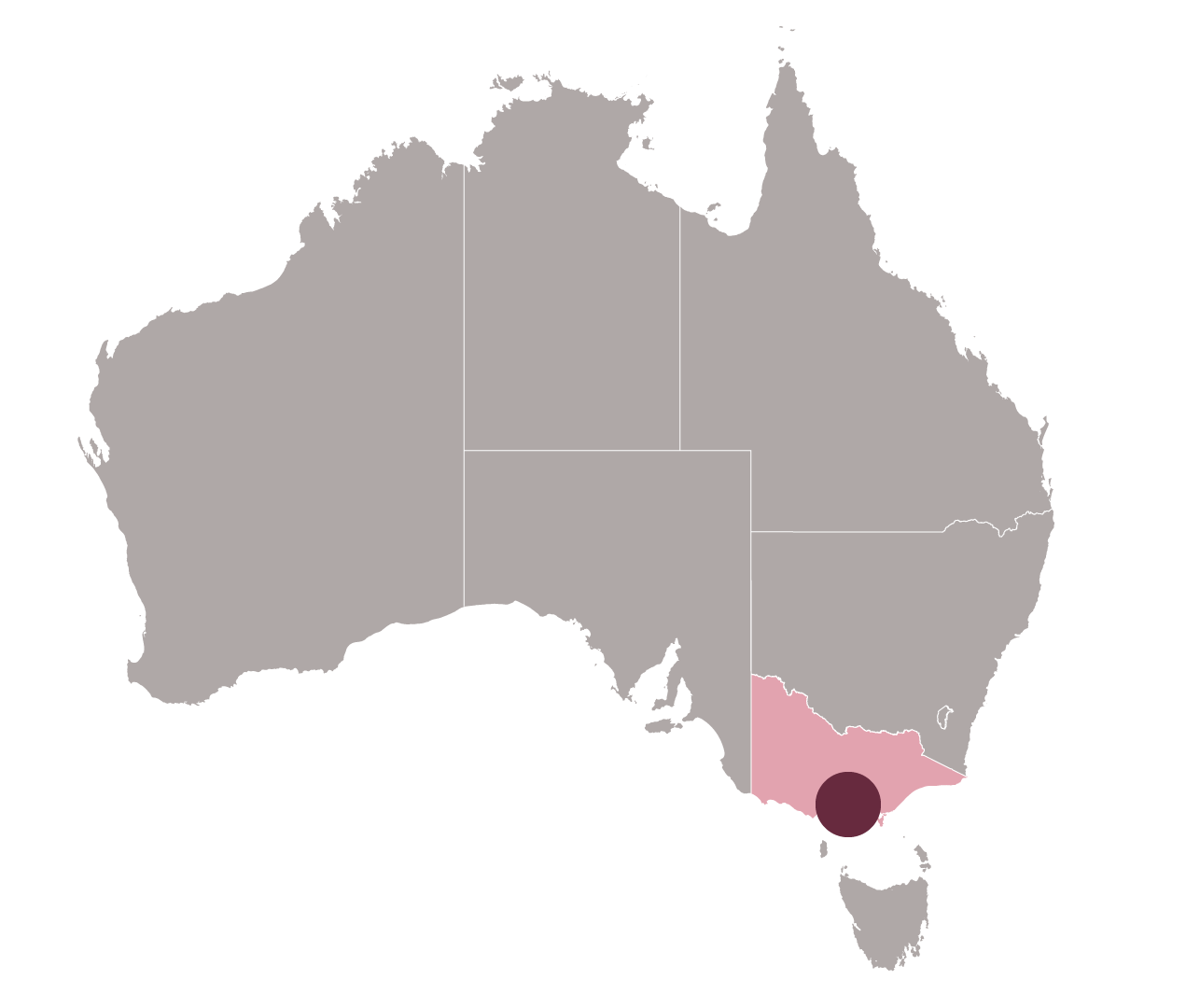
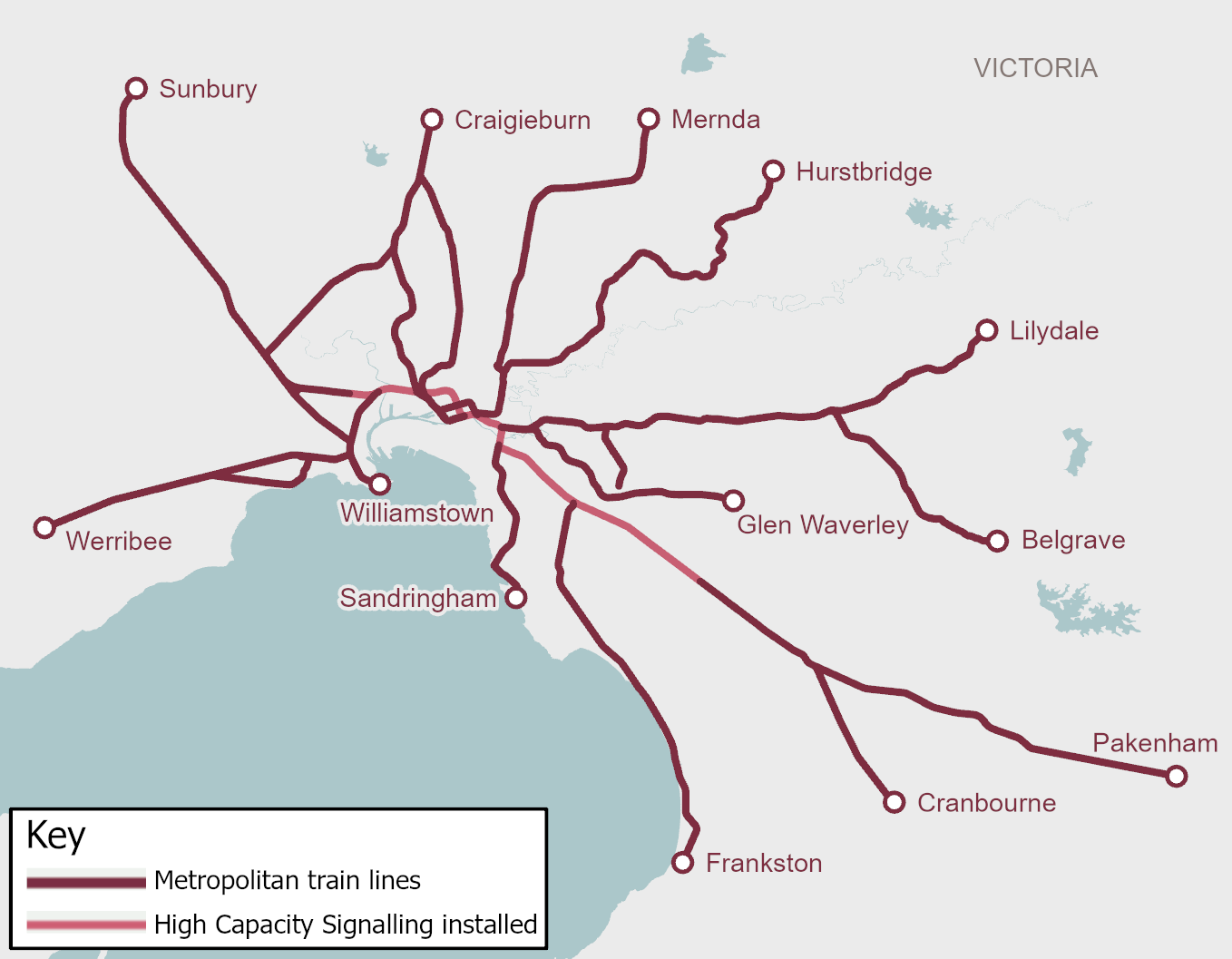
Melbourne’s existing metropolitan rail signalling and train control systems are constraining network capacity and reliability, limiting the ability of the rail network to respond to growing passenger demand and to maximise the performance of existing assets. Addressing these constraints through the transition to modern digital signalling and train control would optimise the use of Melbourne’s rail network and support future growth.
The proposal aligns with the Infrastructure Policy Statement, Transport and Infrastructure Net Zero Roadmap and Action Plan and the National Urban Policy. These policies and plans recognise that improving the performance of public transport networks is important for maintaining access to employment and education, while also supporting national emissions reduction goals. This proposal would also help achieve recommendations outlined in Victoria’s Infrastructure Strategy 2025-2055 by enabling an increase in capacity across the railway network to meet future demand.
The National Network for Interoperability (NNI) identifies Australia’s key interstate freight and passenger rail corridors to support harmonisation of operations across jurisdictions. Infrastructure and Transport Ministers have agreed that the European Train Control System (ETCS) is the future technology pathway for the NNI, and that any future digital signalling and train control system introduced on the NNI must comply with mandatory ETCS standards. This requirement applies to all digital signalling upgrades delivered directly on NNI corridors, including upgrades to urban passenger networks where they interface with, or provide access to, the NNI, to ensure interoperability across jurisdictions and support efficient freight and passenger movements.
PROPOSAL DESCRIPTION
The proposal would upgrade existing signalling and train control technology on the metropolitan rail network with modern, internationally tested intelligent systems. This includes replacing traditional trackside signalling equipment with ETCS technology where required, improving the operational efficiency, safety and resilience of the network. These technology systems allow track, train and signalling systems to communicate continuously and would help improve safety and reliability, enabling future capacity and journey time improvements for train passengers.
A Communication Based Train Control (CBTC) system has already been installed in the Melbourne Metro Tunnel and between West Footscray Station (Sunbury Line) and Westall Station (Cranbourne/Pakenham Line). Planning for wider HCS upgrades should consider how this system would integrate with ETCS on NNI corridors within Melbourne.
INVESTMENT RECOMMENDATION
The Australian Government should note this proposal as a potential future investment opportunity within the 2-4 pipeline.
OPPORTUNITIES AND OUTCOMES
This proposal has the potential to:
- Unlock additional capacity on Melbourne’s rail network – upgrading digital signalling and control systems would enable more intensive use of existing infrastructure, supporting higher service frequencies.
- Improve network resilience – enhanced digital signalling would support more responsive train operations across a complex metropolitan network, reducing the impact of disruptions and recovery time.
- Support liveability, employment and housing growth – more reliable and frequent services would improve access to central Melbourne and major employment and education precincts, supporting housing development in areas well served by rail.
- Contribute to emissions reduction objectives – improved service reliability and capacity would encourage greater use of public transport, supporting a mode shift away from private vehicles and lower transport-related emissions.
NEXT STEPS
Proponent to progress planning activities (in line with Infrastructure Australia’s Assessment Framework) for digital train control and signalling upgrades across the Melbourne rail network, demonstrating how upgrades would be staged and delivered to optimise the rail network, while ensuring compliance with mandatory ETCS standards for interfaces with the NNI.

