


 EVALUATION COMPLETE



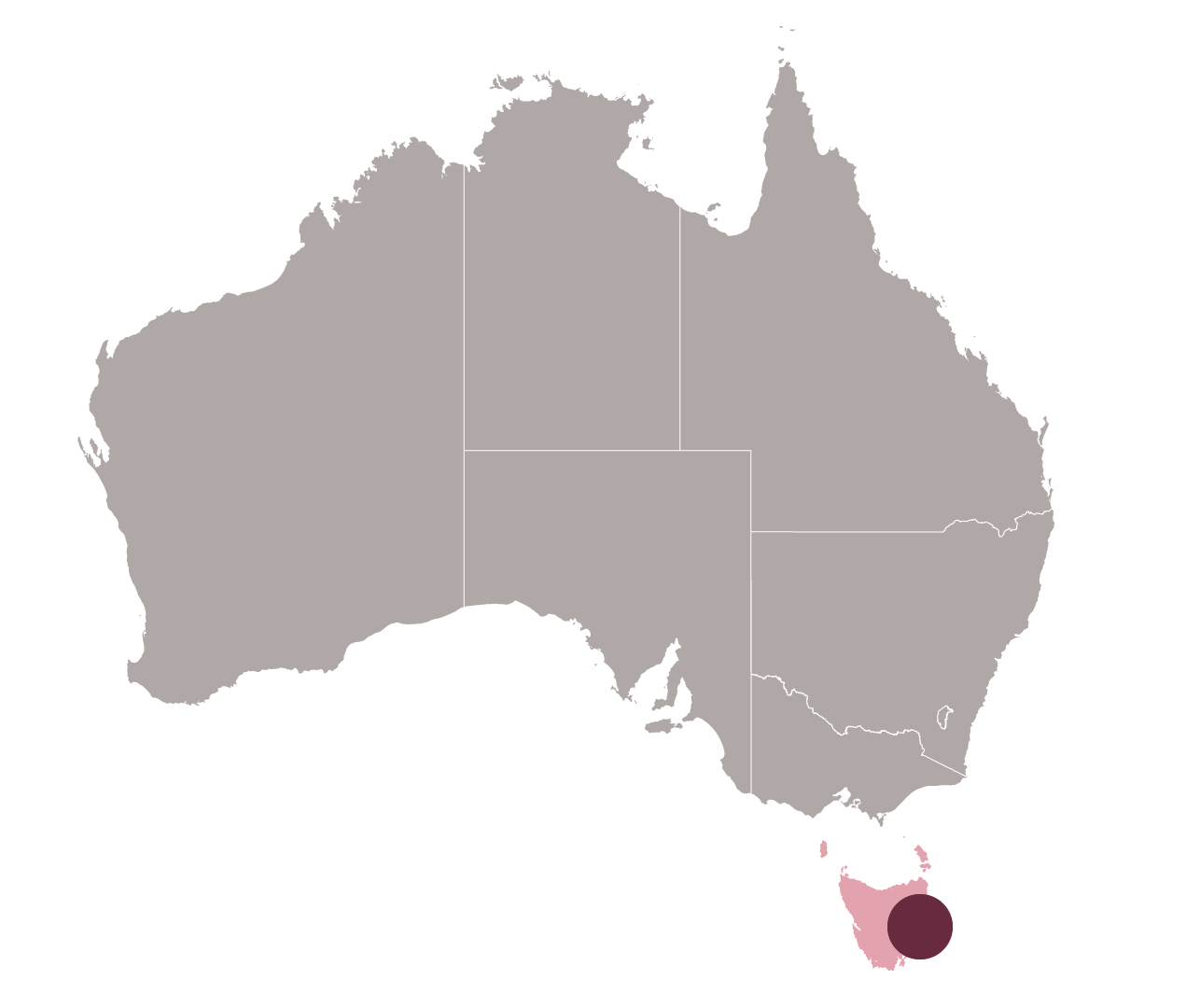
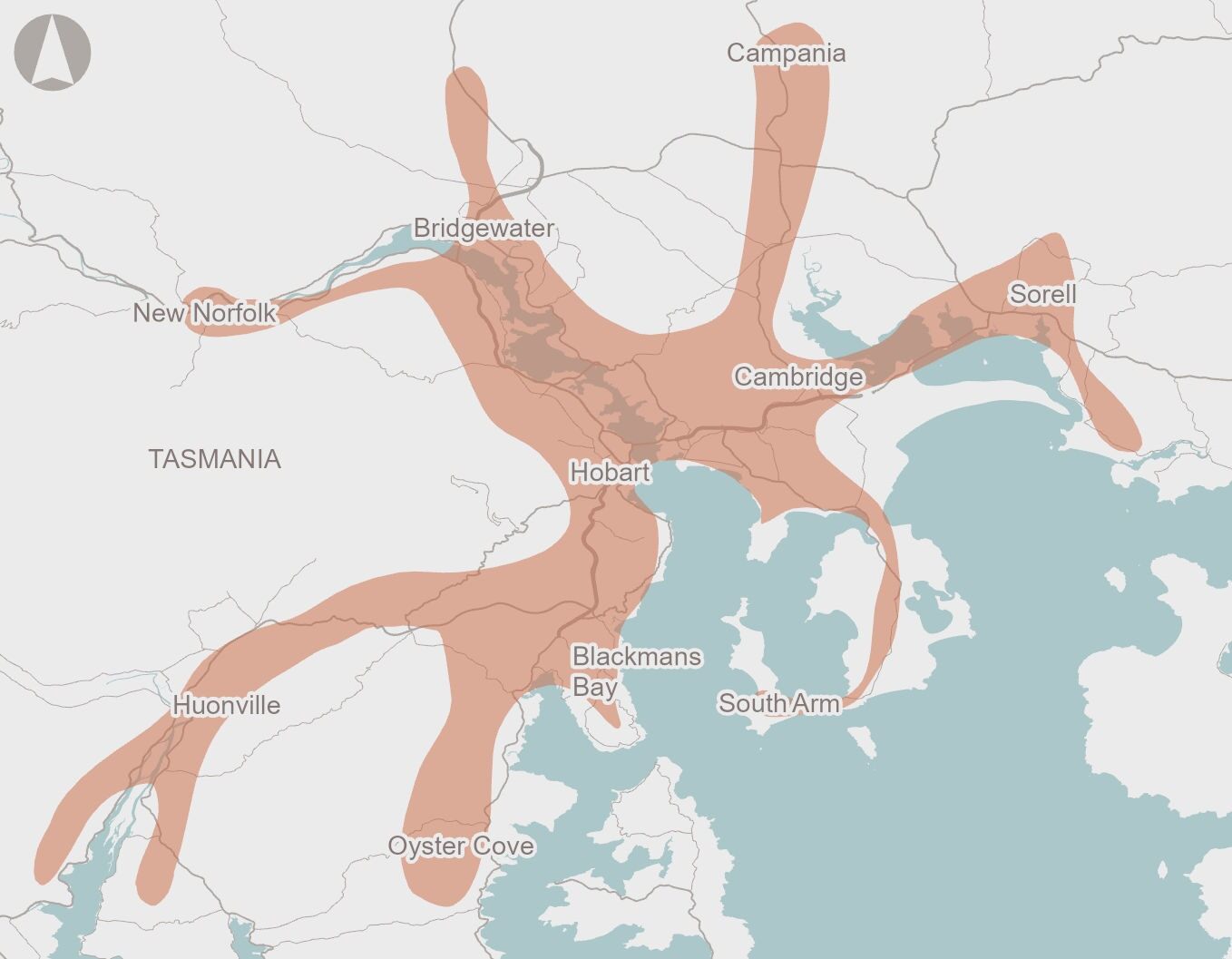
The Greater Hobart area is experiencing network capacity and congestion issues resulting from limited access to public and active transport, which creates a reliance on private vehicles. Additionally, the lack of a freight detour around the Hobart CBD further contributes to congestion and impacts productivity. These problems are expected to worsen with continued population growth.
The proposal aligns with the Australian Government’s Infrastructure Policy Statement, which prioritises productive and resilient transport systems, and supports the National Freight and Supply Chain Strategy through improved freight efficiency and reliability.
PROPOSAL DESCRIPTION
This proposal seeks to address network issues in the Greater Hobart region over the next decade, including by expanding public transport coverage across multiples modes, road network upgrades, and optimisation of freight routes.
INVESTMENT RECOMMENDATION
The Australian Government should note this proposal as a potential future investment opportunity within the 2-4 year pipeline.
The Australian Government has committed $40.5 million to planning for upgrades to Hobart's road, public and active transport networks.
OPPORTUNITIES AND OUTCOMES
This proposal has the potential to:
- Improve efficiency and maximise use of the existing transport network – increased frequency, coverage and reliability of public transport and provision of active transport infrastructure would support a shift away from private vehicles.
- Improve liveability and access – a more efficient and reliable transport network would support improved travel times and driver and commuter amenity. Enhanced services would also improve access to jobs, education and services.
- Support population, economic and housing growth – stronger transport links would help accommodate current and future growth by improving access to residential and employment areas across Hobart and support housing development in well-located areas.
- Improve environmental outcomes – improved access to public and active transport options would encourage mode shift and reduce emissions from private vehicles, supporting Australia’s emissions reduction targets.
- Support economic productivity and freight efficiency – targeted network improvements, including freight movement optimisation, would ease congestion pressures on freight through and within Hobart, improving reliability and supporting economic activity.
NEXT STEPS
Proponent to progress planning activities (in line with Infrastructure Australia’s Assessment Framework), including:
- developing a program of work that identifies the optimum combination of projects required to address the transport challenges across Greater Hobart
- comprehensive options assessment to determine the most effective and value for money package of interventions across public transport, active transport, freight efficiency and network optimisation
- a staging plan that sequences delivery to maximise benefits, ensure affordability, and manage network disruption
- identification of individual project components suitable for detailed business case development, informed by the program logic and investment prioritisation.