


 EVALUATION COMPLETE



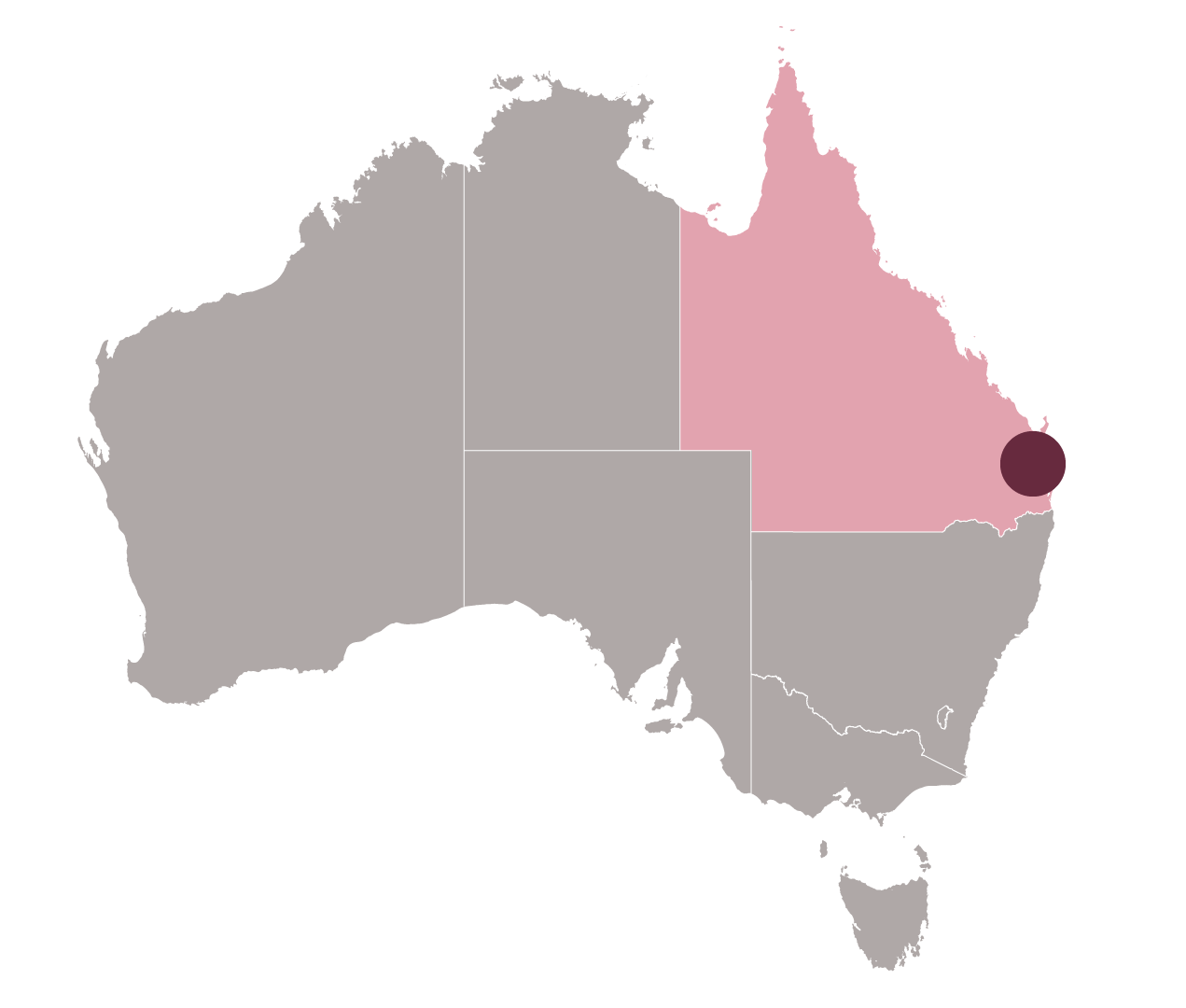
Population growth in Brisbane is placing pressure on the capacity and performance of the existing transport system. The Brisbane Metro expansions proposal responds to this challenge by seeking to expand high capacity and frequency mass transit in a high growth metropolitan area. Brisbane is expected to reach a population of over 4.5 million by 2065 – upgrades are needed to expand high capacity public transport and support a shift away from private vehicle use. Capacity constraints are expected to be intensified in the lead up to the Brisbane 2032 Olympic and Paralympic Games, which will generate an increase in travel demand.
The proposal aligns with priorities identified in the National Urban Policy and the Infrastructure Policy Statement, particularly the need to address urban congestion, constrained public transport capacity and network reliability issues. It also directly aligns with the 2032 Delivery Plan, which prioritises integrated, high capacity transport networks to support population growth and mobility in the lead up to the Brisbane 2032 Olympic and Paralympic Games.
PROPOSAL DESCRIPTION
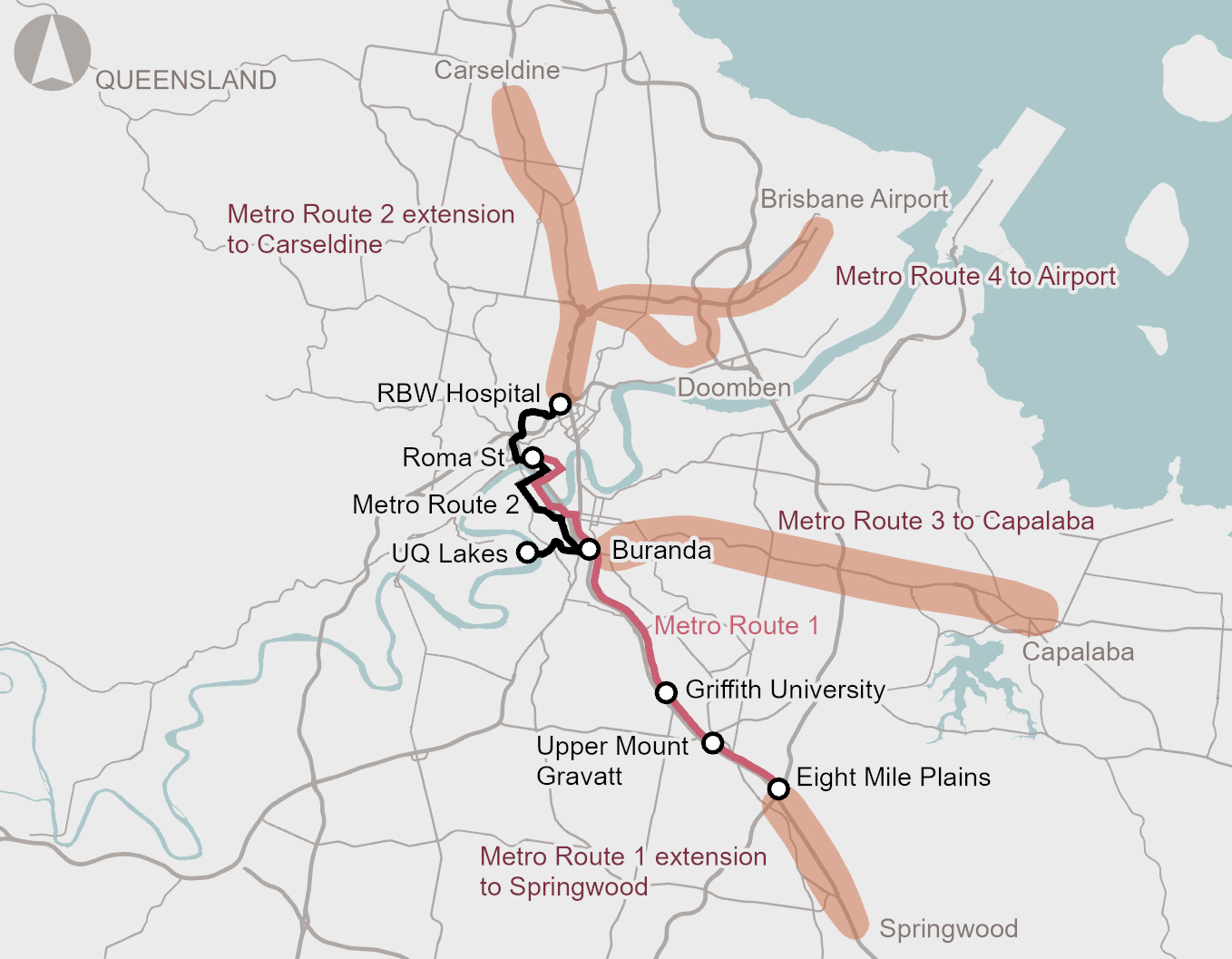
The proposal would extend the high‑frequency, high‑capacity Metro network beyond the initial corridors, improving access to key destinations such as Brisbane Airport and emerging growth areas across Brisbane. The proposal aims to increase network capacity, reduce congestion and support population and housing growth.
Proposal planning will be led by the Brisbane City Council in partnership with the Queensland and Australian governments.
INVESTMENT RECOMMENDATION
The Australian Government should note this proposal as a potential future investment opportunity within the 2-4 year pipeline.
The development of a Final Business Case is supported by a $50 million commitment from the Australian Government.
OPPORTUNITIES AND OUTCOMES
This proposal has the potential to:
- Relieve network congestion – targeted upgrades and expanded high‑capacity services would improve travel reliability and ease congestion pressures.
- Support housing and urban growth – improved access to fast, frequent mass transit would enable well‑located housing development and better connect residents to education, health and employment precincts across Brisbane.
- Boost productivity and economic activity – more reliable public transport would support reduced travel times, enhance labour market access and strengthen connectivity across Brisbane.
- Improve network integration and resilience – expansions would enhance interchange opportunities with rail and bus services, supporting a more coordinated South East Queensland transport system and ensuring future‑ready capacity as Brisbane prepares for sustained growth and major events.
- Enhance liveability and sustainability – by enabling mode shift away from private vehicles, the expanded network would support lower emissions and improved amenity of Brisbane.
NEXT STEPS
Proponent to develop a Final Business Case (Stage 3 of Infrastructure Australia’s Assessment Framework) for the proposal.

