


 EVALUATION COMPLETE



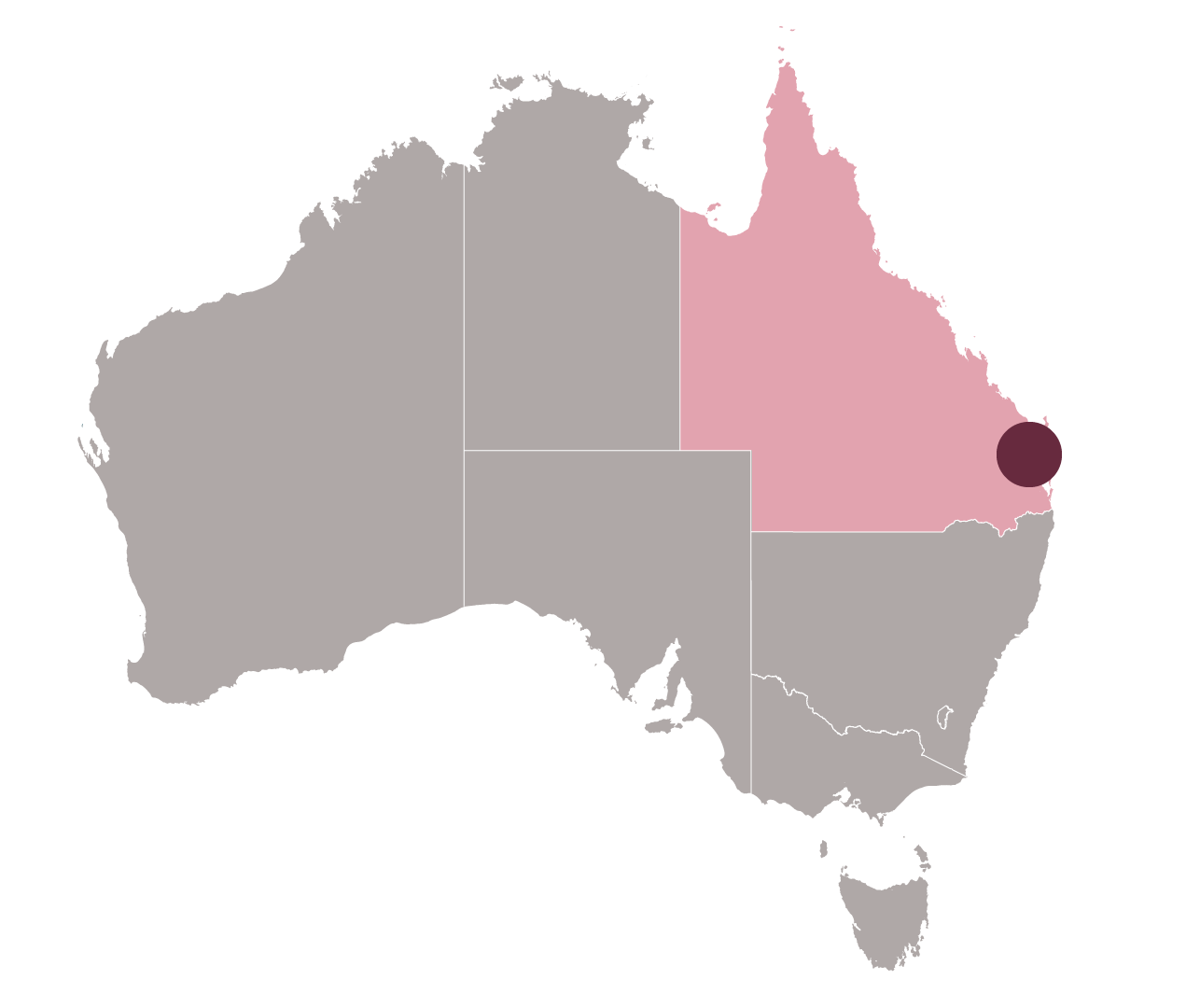
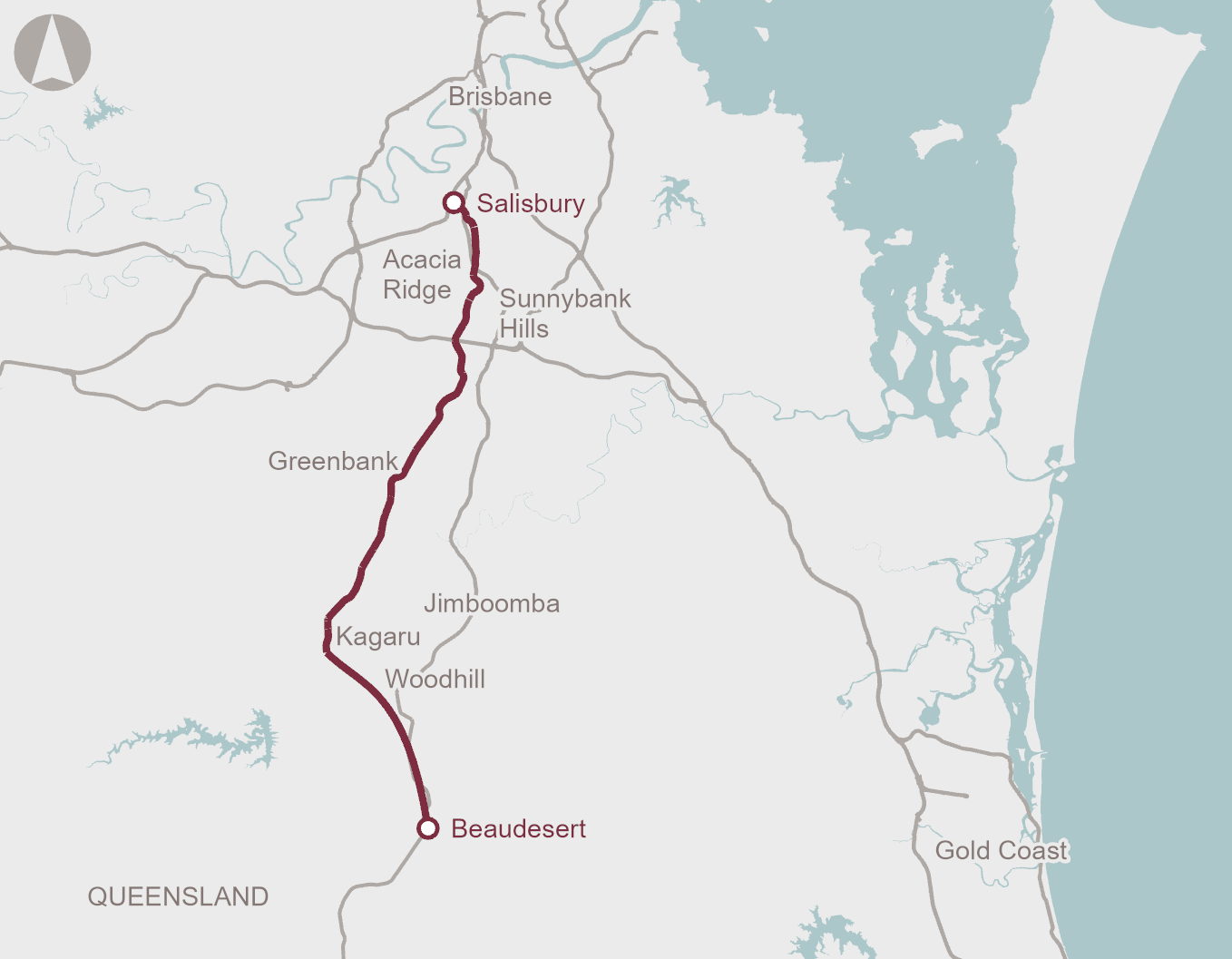
Population growth in South East Queensland is rapidly increasing, particularly in urban areas between Salisbury and Beaudesert, where there are limited public transport connections to support this growth. The Australian and Queensland governments have investigated the long-term passenger and freight transport needs in the Salisbury to Beaudesert corridor as part of the Inland Rail Bilateral Agreement.
Rail services through the Salisbury to Beaudesert corridor would strengthen public transport connectivity with Brisbane and interstate rail services, as well as improve freight connectivity with intermodal terminals. The proposal aligns with the Australian Government’s Infrastructure Policy Statement, particularly its focus on improving productivity and resilience through more efficient movement of people and freight. The proposal also aligns with the objectives of the National Urban Policy, which seeks to support liveable, equitable and sustainable cities.
PROPOSAL DESCRIPTION
The proposal would provide passenger rail services between Salisbury and Beaudesert to the south of Brisbane. The corridor aligns with the existing interstate rail line between Salisbury and Kagaru. The proposal would also provide additional space for duplication of the existing interstate freight line.
INVESTMENT RECOMMENDATION
The Australian Government should note this proposal as a potential future investment opportunity within the 2-4 year pipeline.
The Australian Government has committed $10 million to development of a business case for the proposal.
OPPORTUNITIES AND OUTCOMES
This proposal has the potential to:
- Improve network capacity and resilience – corridor preservation would ensure public transport can be delivered at scale to support reduced reliance on the road network and improved transport performance in peak periods, as well as accommodate high population growth forecast for South East Queensland.
- Support housing development – a high capacity rail corridor would support housing development in emerging growth areas and help avoid future constraints associated with car-dependent urban expansion.
- Improve liveability and access – a high quality and reliable rail connection would support access to jobs, education and services, enhance passenger convenience and amenity, and support the region’s ongoing development.
- Support sustainability outcomes – increased rail capacity and use would reduce pressure on the road network, easing congestion pressures and lowering transport emissions.
NEXT STEPS
Proponent to progress development of a Final Business Case (Stage 3 of Infrastructure Australia’s Assessment Framework), that:
- includes technical studies to confirm land requirements and transport network interface needs
- considers an approach to digital signalling to ensure compliance with European Train Control System (ETCS) standards where the proposal interfaces with, or provides access to, the National Network for Interoperability
- confirms a preferred corridor for protection, and timing for the proposal’s delivery
- undertakes community consultation on the identified corridor.