


 EVALUATION COMPLETE



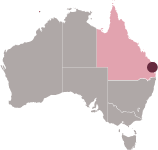
The Sunshine Coast is experiencing sustained population growth and has one of the lowest public transport mode shares in Australia, with only around 1% of trips taken by public transport. This growth and high car dependency is contributing to worsening congestion, declining network efficiency and reduced travel reliability across key regional and intercity corridors.
This proposal responds to these pressures by improving public transport connectivity between major population and employment centres within the Sunshine Coast and south to Brisbane, providing attractive alternatives to private vehicle travel through new mass-transit connections between Brisbane, the Sunshine Coast and the Sunshine Coast Airport. The proposal aligns with the Australian Government’s Infrastructure Policy Statement, which prioritises investment in transport infrastructure that increases the role of mass transit in the commuter task and supports intercity connectivity. Improved intercity connectivity would support continued population growth on the Sunshine Coast and successful delivery of the Brisbane 2032 Olympic and Paralympic Games – as outlined in the 2032 Delivery Plan.
PROPOSAL DESCRIPTION
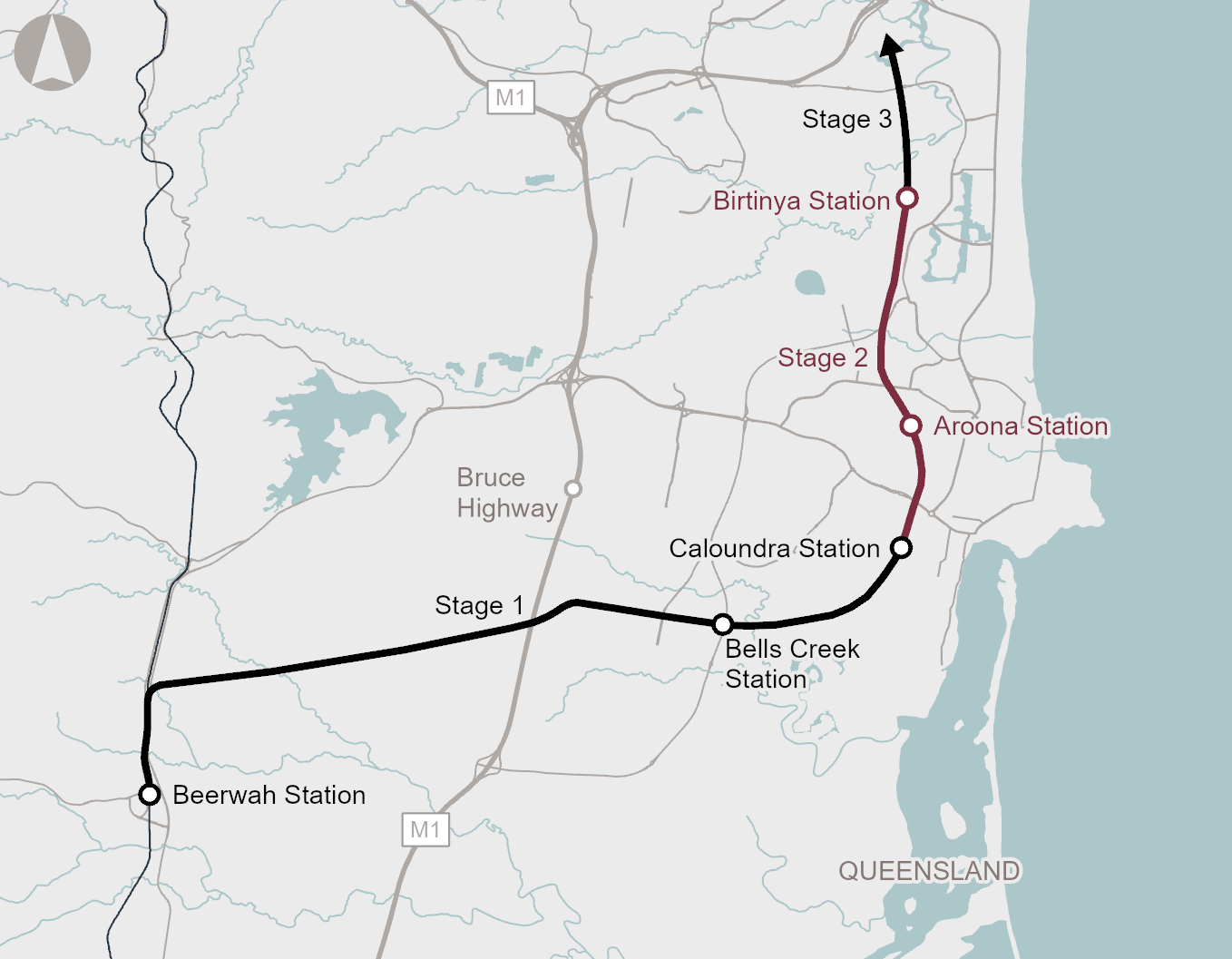
The Wave (Sunshine Coast mass transit) proposal includes delivery of a new passenger rail line between Beerwah and Birtinya, and a proposed interconnecting bus rapid transit service to the Sunshine Coast Airport.
The proposal has been segmented into the following stages:
- Stage 1 – 19km dual-track rail line from Beerwah to Caloundra (including 1 upgraded and 2 new stations)
- Stage 2 – a 7km dual-track rail from Caloundra to Birtinya (including 2 new stations)
- Stage 3 – a future high-frequency bus rapid transit service from Birtinya to the Sunshine Coast Airport, via Mountain Creek and Maroochydore CBD. This will include interfaces with the related Mooloolah River Interchange upgrade proposal, which involves upgrades to the intersection of Sunshine Motorway, Brisbane Road and Nicklin Way.
The Wave Stages 1 and 2 were previously referred to as Direct Sunshine Coast Rail Line. The Wave Stages 1 and 2 incorporate European Train Control System (ETCS) technology as a digital signalling solution that increases safety and efficiency of rail operations and will support interoperability where metropolitan networks interface with, or provide access to, the National Network for Interoperability.
Business cases for Stage 1 and Stage 2 have been completed by the Queensland Government.
INVESTMENT RECOMMENDATION
The Australian Government should consider prioritising Stage 1 and Stage 2 of the proposal for delivery investment.
The Australian Government has committed $2.75 billion to deliver Stage 1.
OPPORTUNITIES AND OUTCOMES
This proposal has the potential to:
- Improve network resilience and travel reliability – new public transport connections on the Sunshine Coast will support reduced reliance on the road network and improve travel performance during peak periods.
- Improve liveability – high-capacity transport connections will provide an alternative transport mode across the Sunshine Coast and connection with Brisbane. Increased public transport use will also ease congestion pressures and support increased safety on the road network.
- Improve productivity – improved intercity connectivity with Brisbane, as well as other cities through improved access to the Sunshine Coast Airport, will support greater integration of economies and markets.
- Support housing development – new public transport services will accommodate high population growth that is forecast across the Sunshine Coast.
- Support sustainability outcomes – increased public transport use will support reduced emissions from private vehicles.
NEXT STEPS
Site investigations, development of the reference design and procurement are now underway for The Wave Stages 1 and 2.
Proponent to develop potential investment options (Stage 2 of Infrastructure Australia’s Assessment Framework), and complete business case development (Stage 3 of the Framework) for Stage 3 of The Wave proposal.