


 EVALUATION COMPLETE



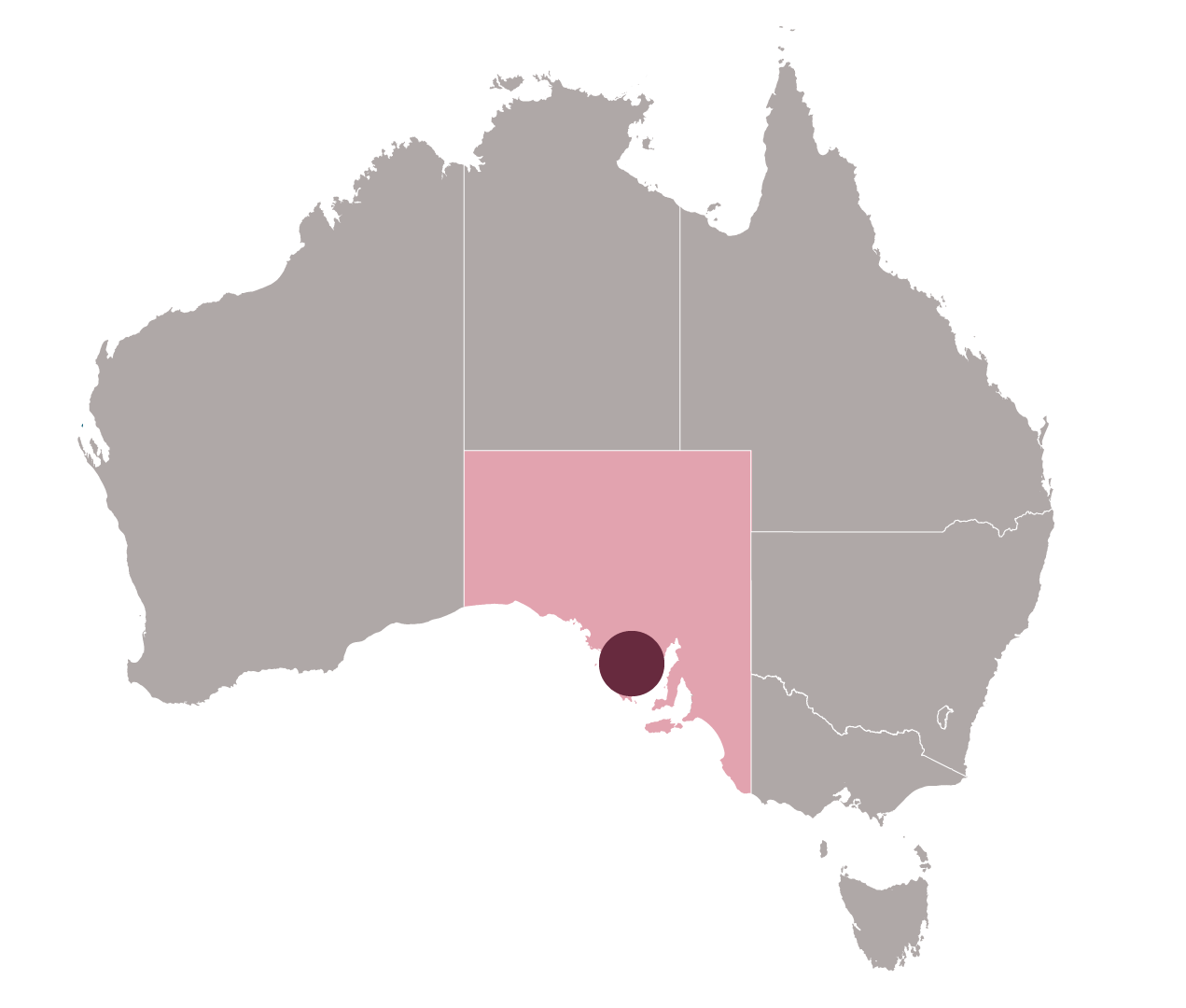
Greater Adelaide is projected to add 670,000 residents and 254,000 jobs by 2051, with annual congestion costs forecast to rise from $2.9 billion in 2026 to $7.5 billion in 2051. Expanding capacity within the city rail hub, extending rapid transit reach to key growth areas, and electrifying remaining diesel rail lines directly support national priorities around urban congestion relief, equitable access to jobs and services, and transport decarbonisation through mode shift.
The proposal aligns with the objectives of the Australian Government’s Infrastructure Policy Statement, the South Australian Transport Strategy 2025 and the Greater Adelaide Regional Plan, ensuring that infrastructure investment keeps pace with population growth and reduces car dependency in line with net‑zero objectives.
PROPOSAL DESCRIPTION
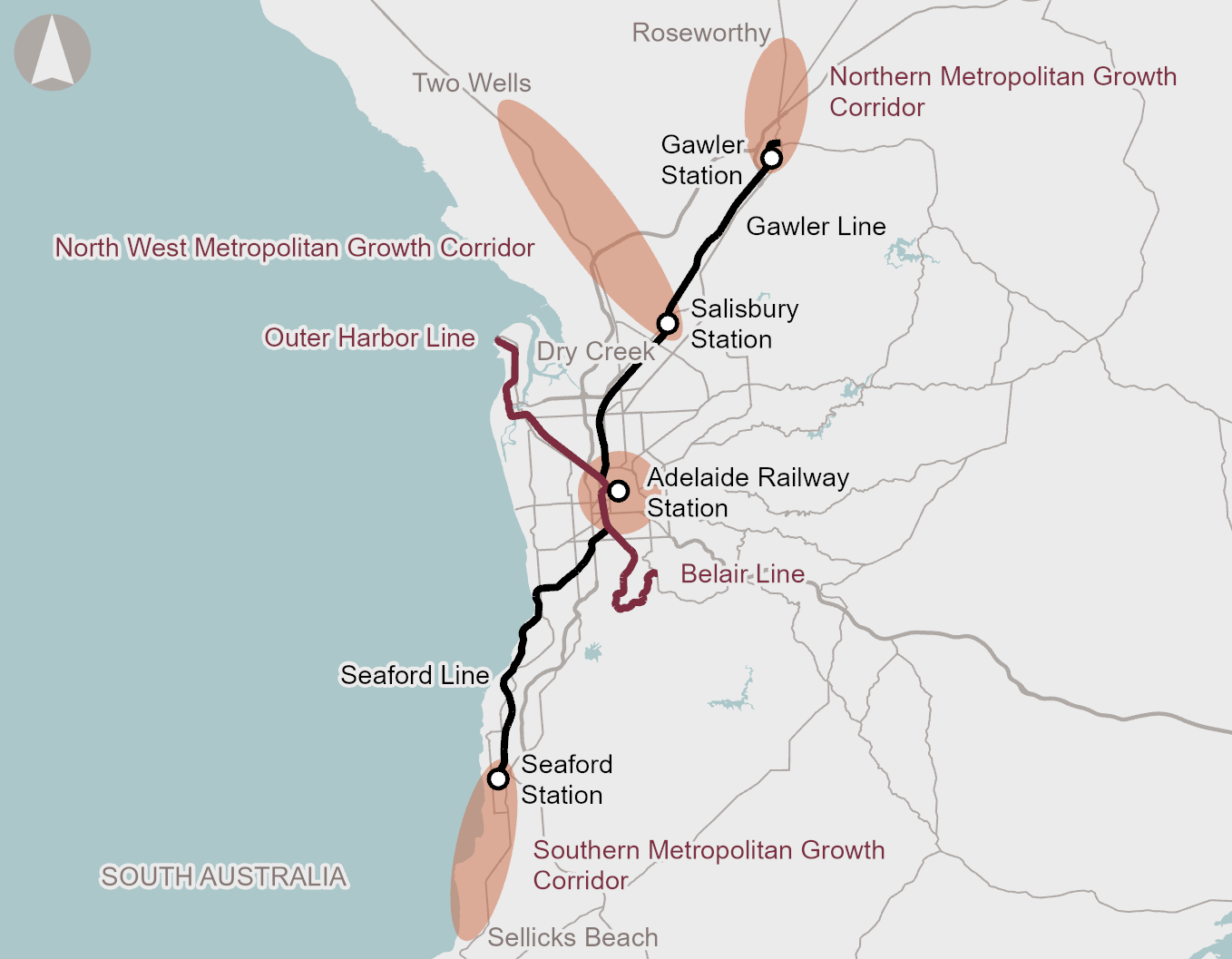
The Adelaide public transport improvements proposal seeks to expand and electrify major passenger rail lines, including extensions to key growth areas in the north, northwest and south, and electrification of the Outer Harbor and Belair rail lines. The proposal also seeks to expand the capacity of Adelaide’s public transport network by addressing constraints within the Adelaide CBD, including upgrades to Adelaide Railway Station, which is the hub of the Adelaide passenger rail network by acting as the terminus for all four major passenger rail lines (Seaford, Belair, Gawler and Outer Harbor).
INVESTMENT RECOMMENDATION
The Australian Government should note this proposal as an opportunity for future investment in the 2-4 year pipeline.
The Australian Government has committed $5 million to support planning for rail network extensions for both Adelaide and regional areas. The Australian Government has committed a further $1 million to planning activities for decarbonisation of Adelaide’s rail fleet, which should include consideration of all electrification options, including overhead line electrification and battery-electric rollingstock.
OPPORTUNITIES AND OUTCOMES
This proposal has the potential to:
- Improve liveability – providing additional public transport connections and capacity would support improved travel times and increased accessibility between key growth areas and the Adelaide CBD.
- Reduce transport emissions – electrification of the Outer Harbor and Belair lines would remove remaining diesel operations on the metropolitan network, lowering operational emissions, improving air quality and enhancing performance.
- Support housing development – extensions of public transport corridors would provide the transport infrastructure required to support housing development within growth areas and contribute to national housing targets.
- Improve network capacity and reliability – upgrades to Adelaide Railway Station and the CBD rail connections would relieve existing bottlenecks, allow higher service frequencies, and improve reliability across all major lines.
- Strengthen long‑term network resilience – planning for capacity growth, electrification, and corridor expansion supports the transport network in adapting to future population growth and travel demand.
NEXT STEPS
Proponent to develop potential investment options (Stage 2 of Infrastructure Australia’s Assessment Framework) that:
- links problems, outcomes, and benefit streams through an investment logic map that is updated as planning evolves
- incorporates non-build/low-capital interventions as complementary to support mode shift and network performance
- considers an approach to digital signalling to ensure compliance with European Train Control System (ETCS) standards where the proposal aligns with, interfaces with, or provides access to, the National Network for Interoperability.
- stress-tests options against alternative growth and climate scenarios
- considers interdependencies and sequencing of projects to align with housing growth.

