


 EVALUATION COMPLETE



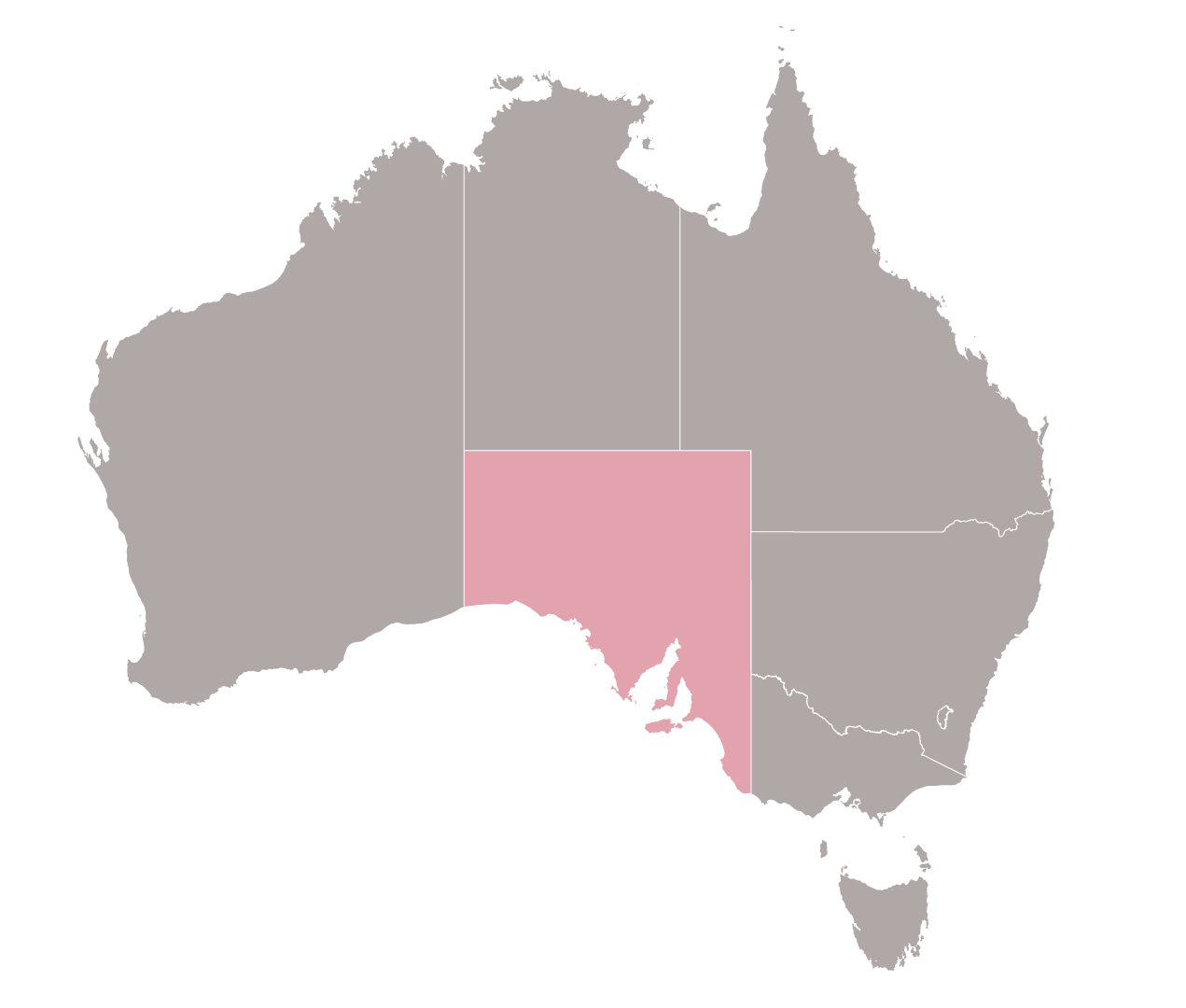
This proposal directly addresses key national challenges such as rising freight demand, supply chain resilience, and the need to reduce transport emissions, by enabling Performance Based Standards (PBS) Level 4A vehicle access across South Australia’s most important freight corridors.
The proposal aligns with the Infrastructure Policy Statement, particularly its focus on improving national productivity and strengthening supply chain resilience. It also aligns with the National Freight and Supply Chain Strategy's priority action area relating to reducing freight sector emissions.
PROPOSAL DESCRIPTION
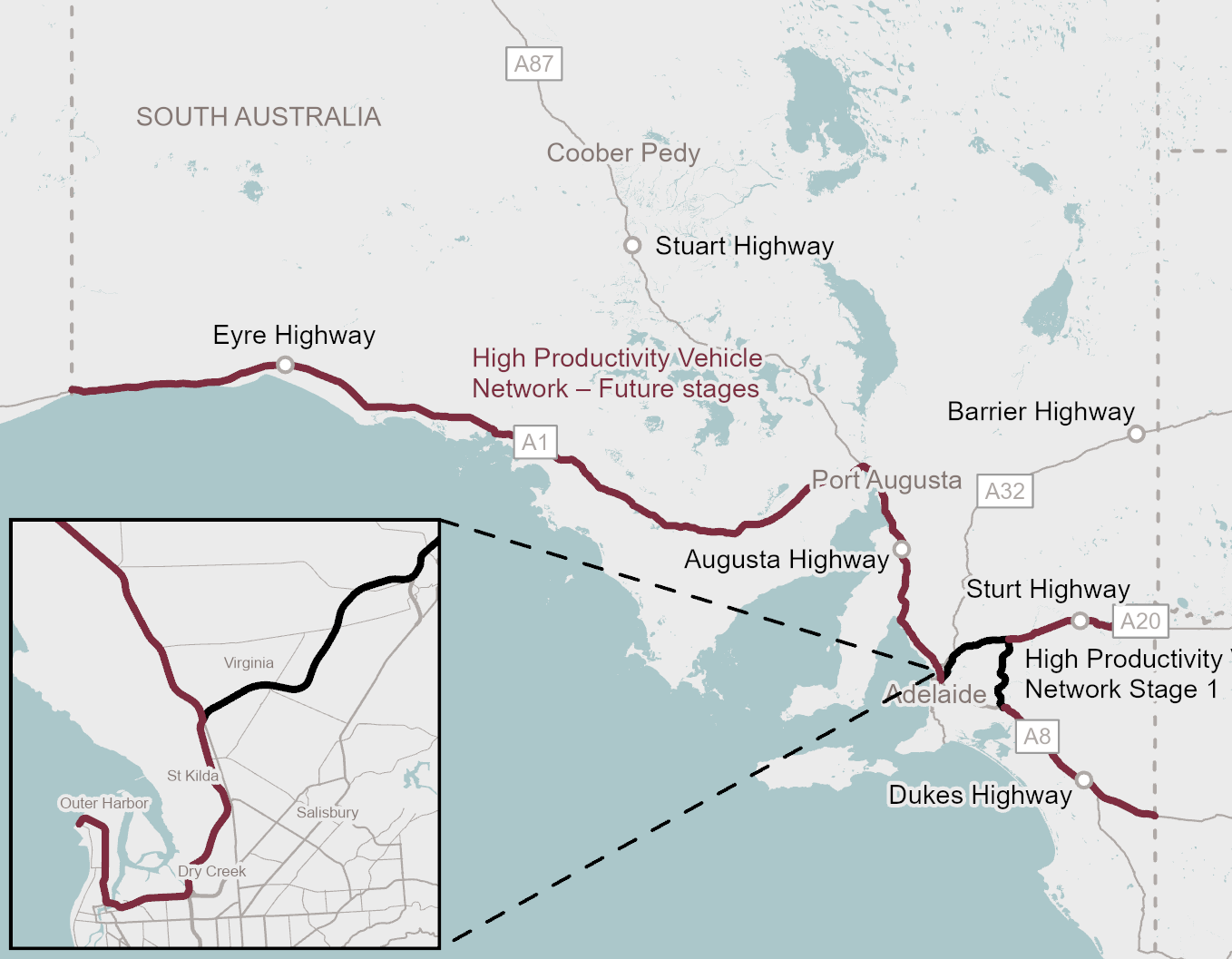
This program proposal seeks to upgrade the High Productivity Freight Network (HPVN) across South Australia to enable continuous access for PBS Level 4A high productivity vehicles (HPVs). This will improve freight efficiency, safety, and resilience, while reducing community impacts and supporting economic growth through better connections between industry, ports, and interstate markets.
Stage 1 of the program is delivering the Truro Bypass, Swanport Bridge Upgrade, and Greater Adelaide Freight Bypass. Future stages will focus on the Augusta Highway and progressive upgrades across the HPVN spanning key east–west and north–south corridors from the Victorian to Western Australian borders, including the Eyre, Sturt, Augusta, and Dukes Highways, as well as strategic connections around Greater Adelaide and to Outer Harbor.
The proposal is related to Enabling infrastructure for Renewable Energy Zones – Ports of Adelaide/Geelong to South-West REZ, which identifies the potential to upgrade key freight routes, including the Sturt Highway, to support movement of over size and over mass (OSOM) components for wind turbines to Renewable Energy Zones in New South Wales and Victoria.
INVESTMENT RECOMMENDATION
The Australian Government should note this proposal as a potential future investment opportunity in the 2-4 year pipeline, to progress planning and business case development for the High Productivity Vehicle Network upgrades. There is an existing $525 million Australian Government funding commitment for Stage 1 of the HPVN upgrades.
OPPORTUNITIES AND OUTCOMES
This proposal has the potential to:
- Increase road freight efficiency – improving access for HPVs on South Australia’s road network would significantly improve road freight productivity and reliability, and support lower road freight costs.
- Improve supply chain reliability and resilience – upgrades to key freight routes in South Australia would support reduced delays and more reliable freight movements.
- Reduce transport emissions – enabling HPVs across South Australia’s key freight corridors would improve freight efficiency by reducing heavy vehicle kilometres for a given freight task, supporting a reduction in carbon emissions and fuel consumption.
- Improve road safety and resilience – redirecting heavy vehicles from Adelaide and regional townships onto bypasses would ease congestion pressures and improve the safety and liveability of local communities.
NEXT STEPS
Proponent to develop Final Business Cases (Stage 3 of Infrastructure Australia’s Assessment Framework) for components of the HPVN program for evaluation and investment consideration in the future. Planning should include:
- considering the need, and infrastructure requirements, for cross border OSOM vehicle movements to enable development of Renewable Energy Zones
- developing a comprehensive delivery strategy, including packaging, contracting, and sequencing of works
- engagement with industry, local government, and community stakeholders to ensure the program delivers positive outcomes and maintains social licence
- monitoring and reporting on benefits realisation, risk management, and integration with related infrastructure initiatives.