


 EVALUATION COMPLETE



ALIGNMENT TO NATIONAL PRIORITIES
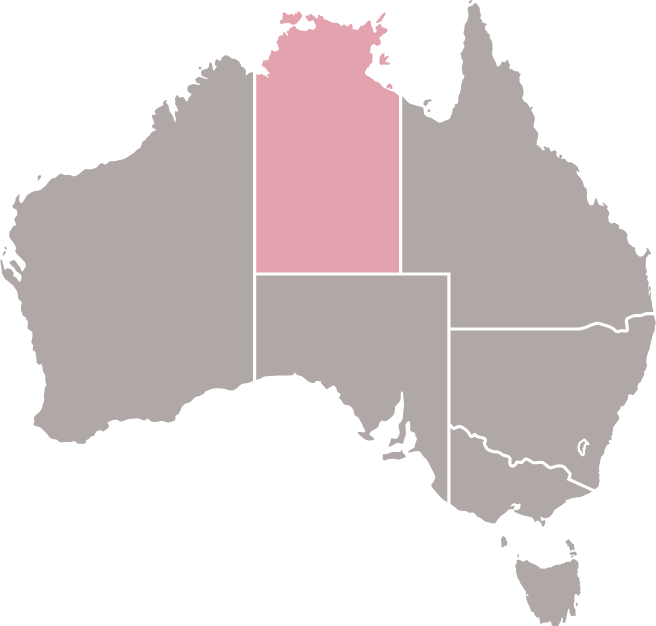
The 2023 Road and Rail Supply Chain Resilience Review identified Australia’s most vulnerable road freight corridors, six out of eight of which are in the Northern Territory. These corridors experience frequent disruption from flooding, storms and heat, creating safety risks and unreliable access for remote communities and industries including mining, agriculture, energy and gas.
Upgrading the Northern Territory’s road network aligns strongly with national priorities identified in the National Freight and Supply Chain Strategy and the National Road Safety Strategy 2021–2030. It also aligns with the Australian Government’s Infrastructure Policy Statement, supporting improved productivity, resilience and liveability outcomes. Improved resilience and connectivity across these corridors will reduce vulnerability to extreme weather, support regional and remote communities and First Nations communities to access essential services, and ensure reliable freight movements that underpin national productivity and supply chain resilience.
PROPOSAL DESCRIPTION
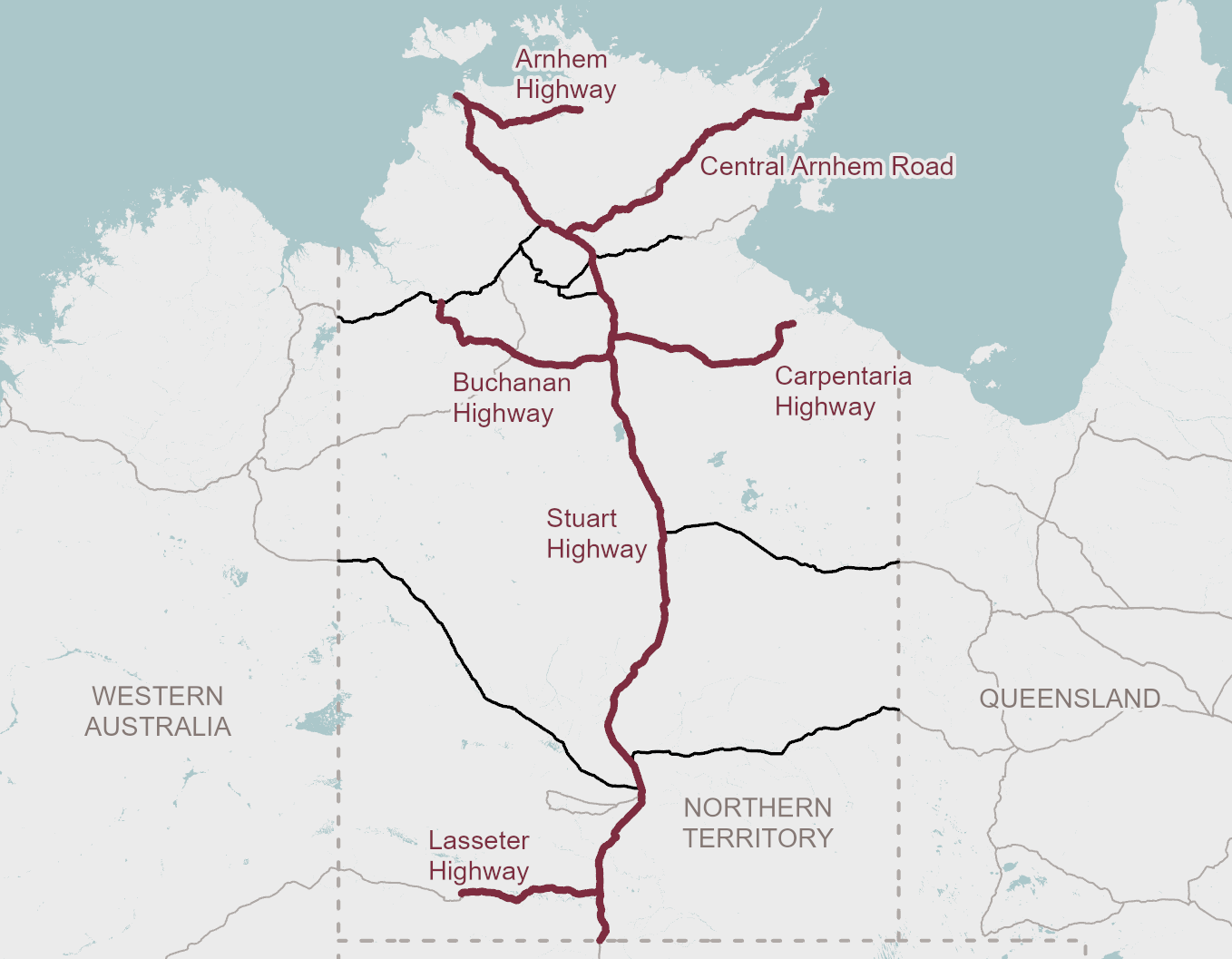
Targeted upgrades to vulnerable Northern Territory key freight routes, including the Arnhem Highway, Buchanan Highway, Lasseter Highway, Central Arnhem Road, Carpentaria Highway and the Stuart Highway, will improve safety, flood immunity, connectivity and freight efficiency across remote and regional areas.
INVESTMENT RECOMMENDATION
The Australian Government should note this proposal as a potential future investment opportunity within the 2-4 year pipeline. While various Northern Territory road corridors are receiving progressive upgrades through regional and industry road funding programs, gaps remain on some highly vulnerable routes requiring further investment consideration in the future.
OPPORTUNITIES AND OUTCOMES
This proposal has the potential to:
- Improve safety on high‑risk corridors – targeted upgrades would address safety risks and frequent network closures, enabling safer travel for residents, freight operators and visitors.
- Strengthen resilience to extreme weather – improved flood immunity, drainage, pavement standards and all‑weather access would reduce the frequency and duration of road closures, ensuring essential goods and services can reliably reach communities.
- Enhance freight productivity – more reliable access on key supply‑chain routes would support mining, agriculture, energy and gas industries, supporting lowering transport costs and improving the competitiveness of northern Australian exports.
- Support community wellbeing – better connectivity would support improved access to health, education, social services and employment, particularly in remote, often First Nations, communities where road access is critical for economic participation and social cohesion.
NEXT STEPS
Proponent to develop potential investment options (Stage 2 of Infrastructure Australia’s Assessment Framework), which should include examining all identified Northern Territory corridors collectively to prioritise and progress upgrades for the most vulnerable corridors first.

