


 EVALUATION COMPLETE


This proposal seeks to improve the capacity and connectivity of the Northern Territory’s freight network to bolster economic growth and support access to global markets. The proposal supports objectives of the National Freight and Supply Chain Strategy by enabling a shift from road to rail, reducing emissions and improving safety and productivity of freight networks. The proposal aligns with the Infrastructure Policy Statement by strengthening a nationally significant freight corridor and improving supply chain resilience. It also supports the Northern Australia Action Plan and the National Agreement on Closing the Gap by enabling economic diversification, First Nations employment, and sustainable growth in Northern Australia. The proposal further aligns with the National Network for Interoperability (NNI) by enhancing the integration and performance of a nationally significant freight corridor – the Darwin-Tarcoola rail line.
PROPOSAL DESCRIPTION
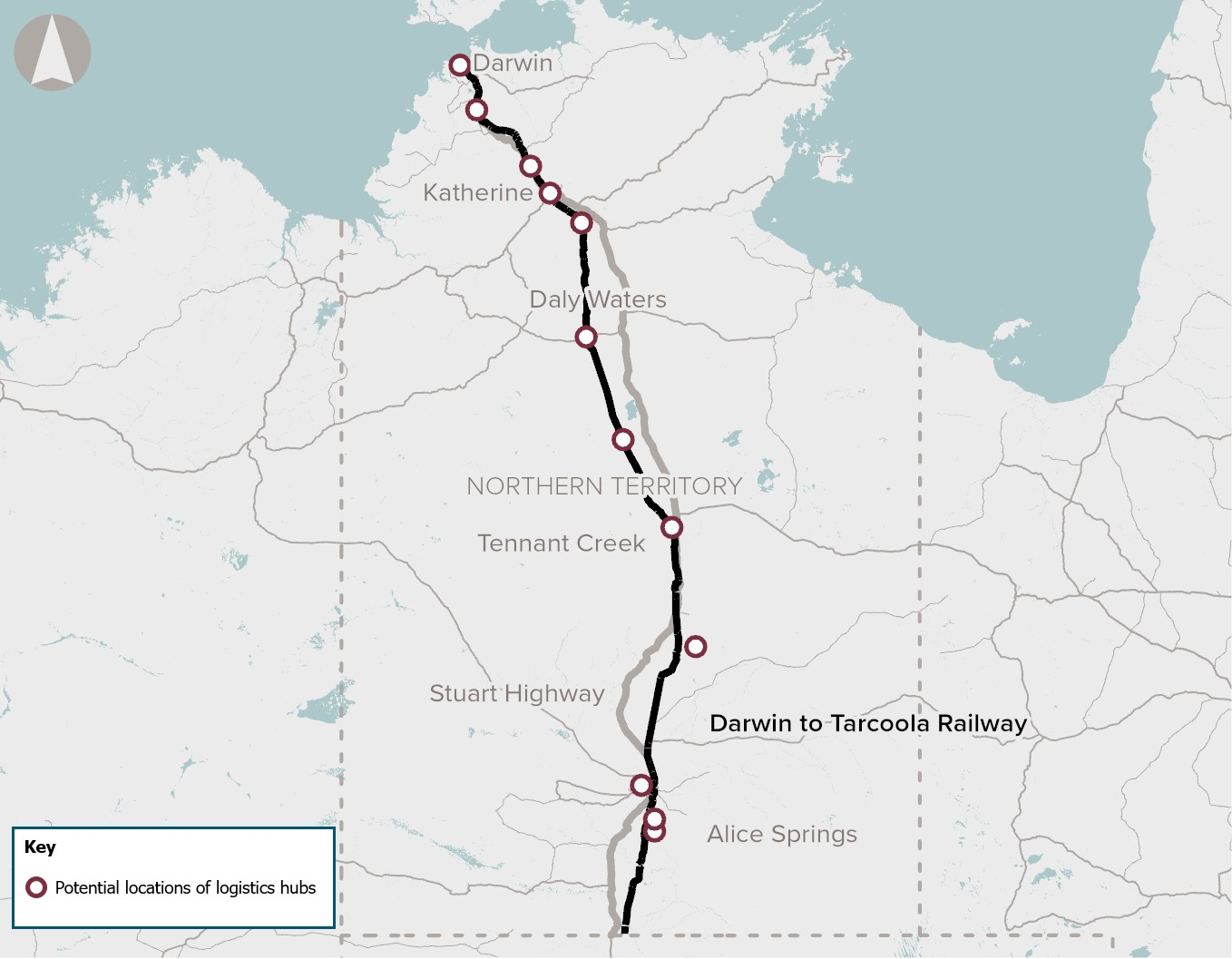
The Northern Territory freight rail and logistics capacity improvements proposal seeks to deliver targeted upgrades to the Northern Territory’s freight rail and logistics network, including a network of regional logistics hubs along the Darwin-Tarcoola rail line, to increase capacity, improve connectivity, and support efficient movement of goods across the Northern Territory and to national and international markets. By improving rail efficiency and intermodal capacity along this corridor, the proposal would support industry development within the mining, agricultural, energy and gas sectors.
INVESTMENT RECOMMENDATION
The Australian Government should consider investing in further planning for this proposal, including completion of a Final Business Case, for prioritised freight rail and logistics hubs improvements on the Darwin-Tarcoola rail line. The Australian Government has committed $440 million in planned equity to develop regional logistics hubs along the Darwin-Tarcoola rail line, which is part of the NNI.
OPPORTUNITIES AND OUTCOMES
This proposal has the potential to:
- Enhance productivity and economic growth – addressing current and future capacity constraints would support the development of mining, agriculture, energy and gas projects.
- Support Australia’s renewable energy transition – freight rail and logistics infrastructure would promote the development and export of renewable energy and low emissions commodities that will benefit the global decarbonising economy.
- Improve supply chain resilience – upgrades would reduce reliance on long road haulage, lower transport costs, and improve the reliability and safety of freight movements.
- Improve regional development and liveability – regional logistics hubs and community distribution centres would improve access to goods and services in regional and remote areas of the Northern Territory.
- Support regional economic growth – jobs and commercial opportunities would benefit regional and remote areas, which tend to have a higher proportion of First Nations people.
NEXT STEPS
Proponent to develop a Final Business Case (Stage 3 of Infrastructure Australia’s Assessment Framework) for prioritised freight rail and logistics capacity improvements that demonstrates:
- how the value and timing of freight rail and logistics capacity improvements will enable export of renewable energy and low emissions commodities
- consideration of the approach to digital signalling to ensure compliance with European Train Control System (ETCS) standards where the proposal aligns with, interfaces with, or provides access to, the NNI
- market engagement on scope and open-access arrangements for prioritised projects
- the sequencing of projects in response to forecast demand
- how risks will be managed.