


 EVALUATION COMPLETE



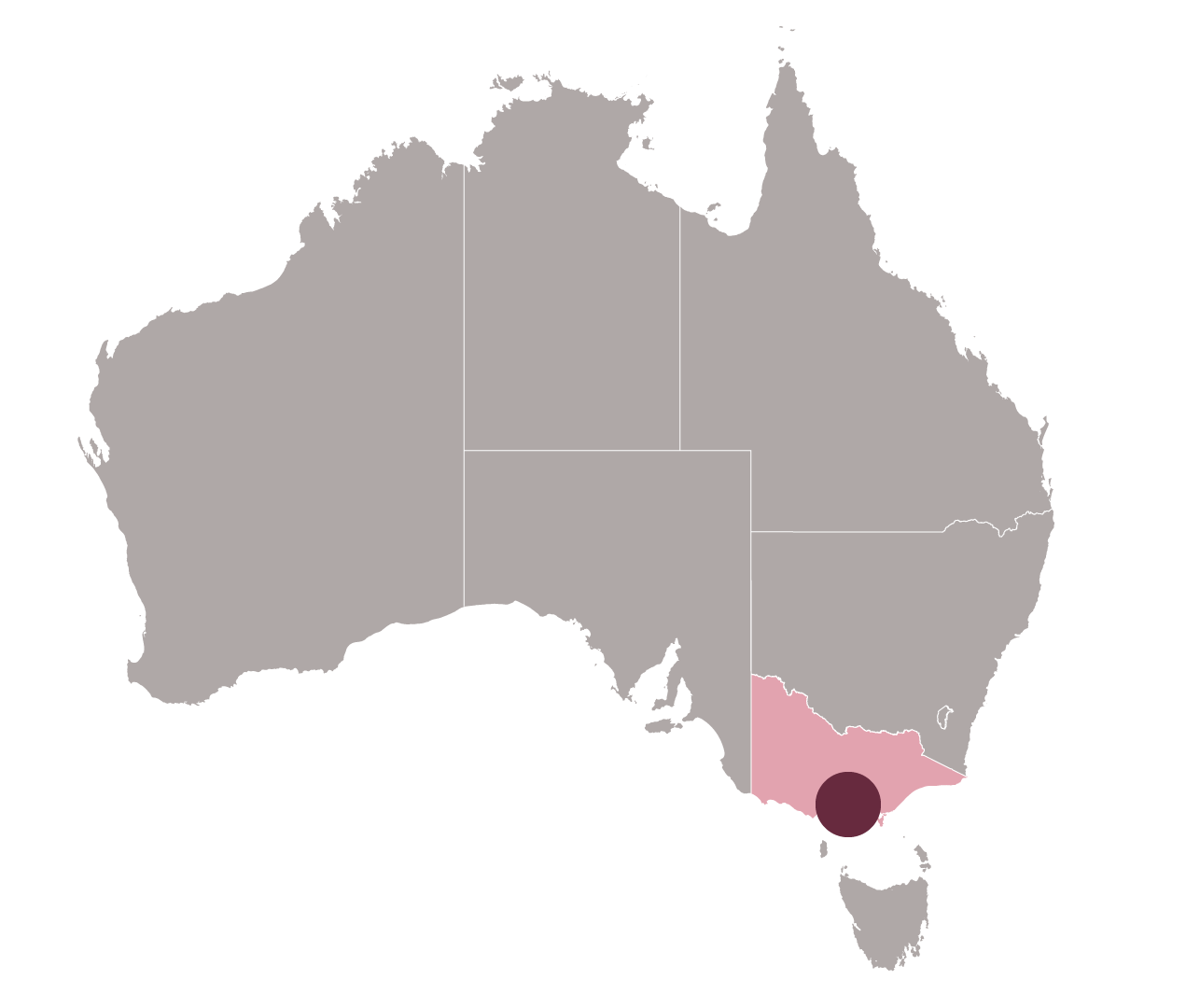
Melbourne’s middle and outer suburbs face growing transport connectivity challenges, with dispersed population and employment centres and limited orbital links contributing to long travel times and growing congestion.
The Melbourne Suburban Rail Loop – Future stages proposal supports the Australian Government’s Infrastructure Policy Statement by seeking to improve the productivity, transport network resilience and public transport connectivity in Melbourne. The proposal aligns with the Transport and Infrastructure Net Zero Roadmap and Action Plan by expanding high capacity public transport and enabling a shift away from private vehicle use, supporting Australia’s net zero objectives.
PROPOSAL DESCRIPTION
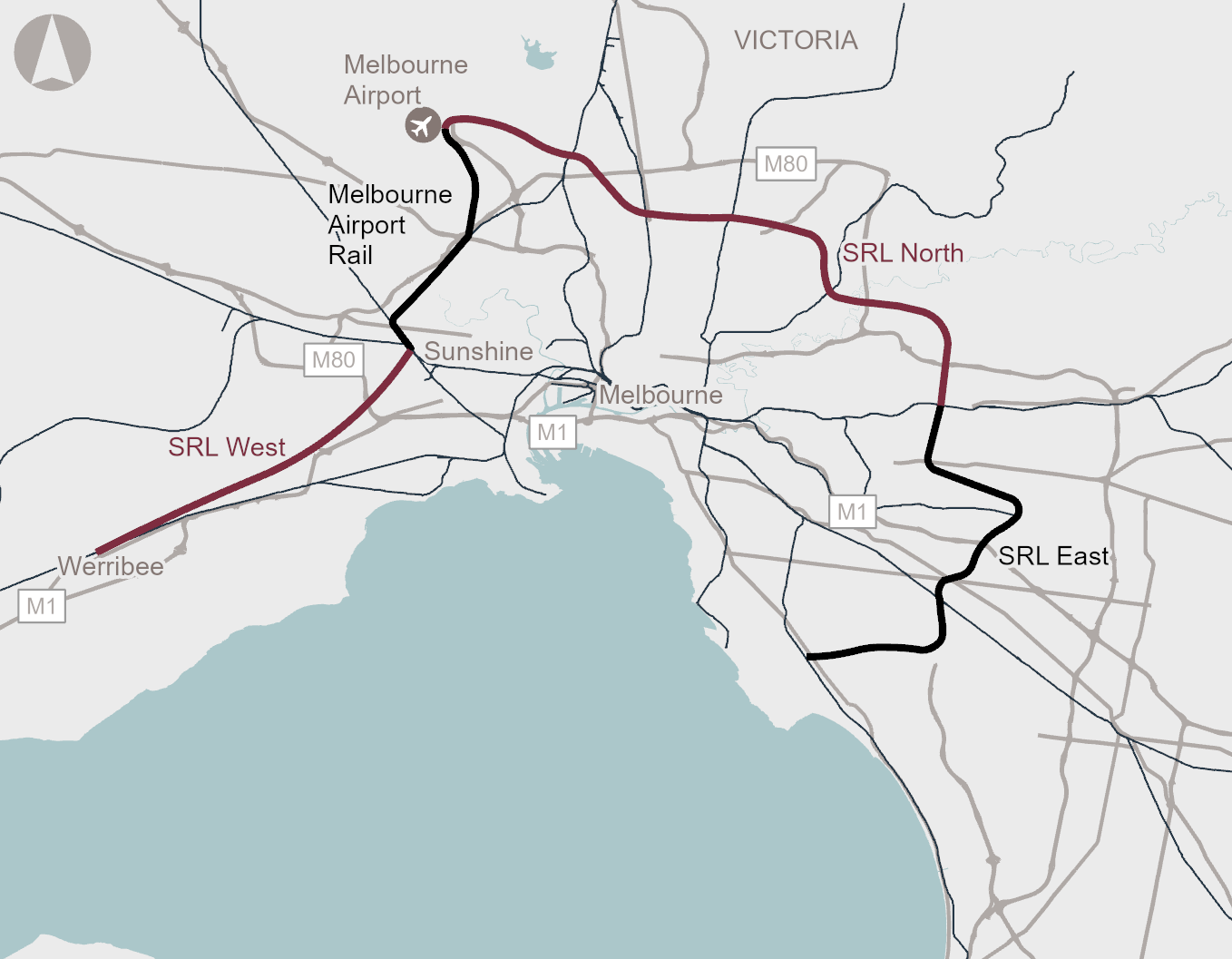
Suburban Rail Loop (SRL) is a mass transit system designed to serve Melbourne’s middle and outer suburbs, supporting sustainable growth on the urban fringe and the future liveability, productivity and connectivity of Melbourne. The first stage, SRL East, is currently under delivery.
This proposal is for future stages of the SRL mass transit system, including SRL North and SRL West. The SRL Airport connection is being progressed through Melbourne Airport Rail, which will deliver a heavy rail link between Melbourne Airport and the CBD, via the Metro Tunnel.
INVESTMENT RECOMMENDATION
The Australian Government should note this proposal as a potential future investment opportunity within the 5-10 year pipeline.
OPPORTUNITIES AND OUTCOMES
This proposal has the potential to:
- Strengthen network connectivity and resilience – extension of the rail network beyond SRL East would improve suburb-to-suburb connectivity across Melbourne’s middle and outer suburbs, improve network capacity and support the long-term transformation of Melbourne’s public transport network.
- Support productivity and accessibility outcomes – expanded access to public transport would support reduced travel times for commuters, improve access between employment and residential areas, and relieve pressure on the road network as Melbourne continues to grow.
- Support liveability, employment and housing outcomes – enhanced public transport connectivity to key precincts in Melbourne’s middle and outer suburbs would support access to jobs, education and services, while supporting housing development in locations well served by mass transit along the corridor. High-density housing would help to reduce urban sprawl in outer Melbourne.
- Support sustainability outcomes – by enabling a greater share of trips to be undertaken by public transport, the proposal would help to reduce reliance on private vehicles, contributing to reduced transport emissions over time.
NEXT STEPS
Proponent to develop potential investment options (Stage 2 of Infrastructure Australia’s Assessment Framework) for future stages of SRL, including consideration of an approach to digital signalling to ensure compliance with European Train Control System (ETCS) standards where the proposal interfaces with, or provides access to, the National Network for Interoperability.