


 EVALUATION COMPLETE



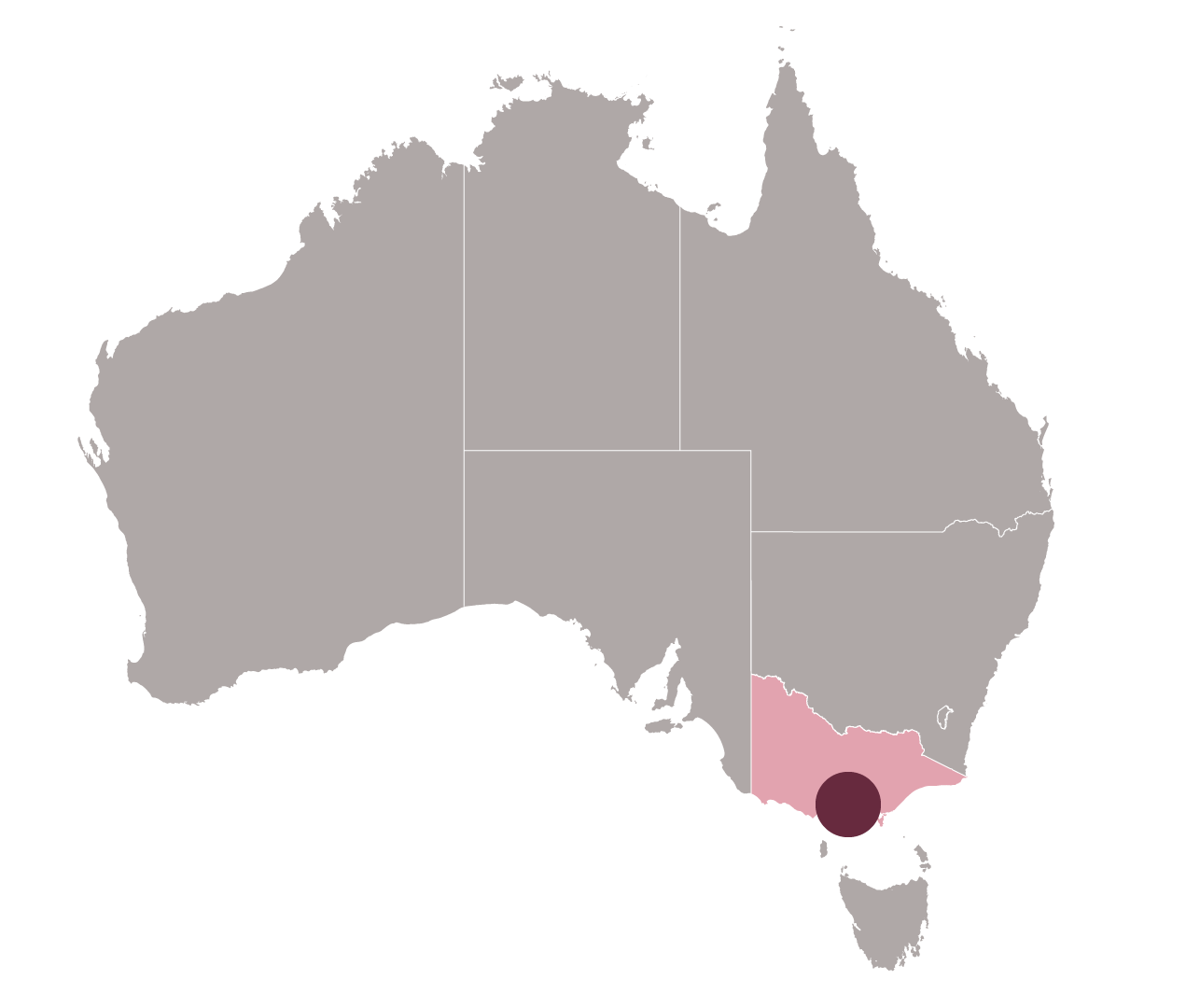
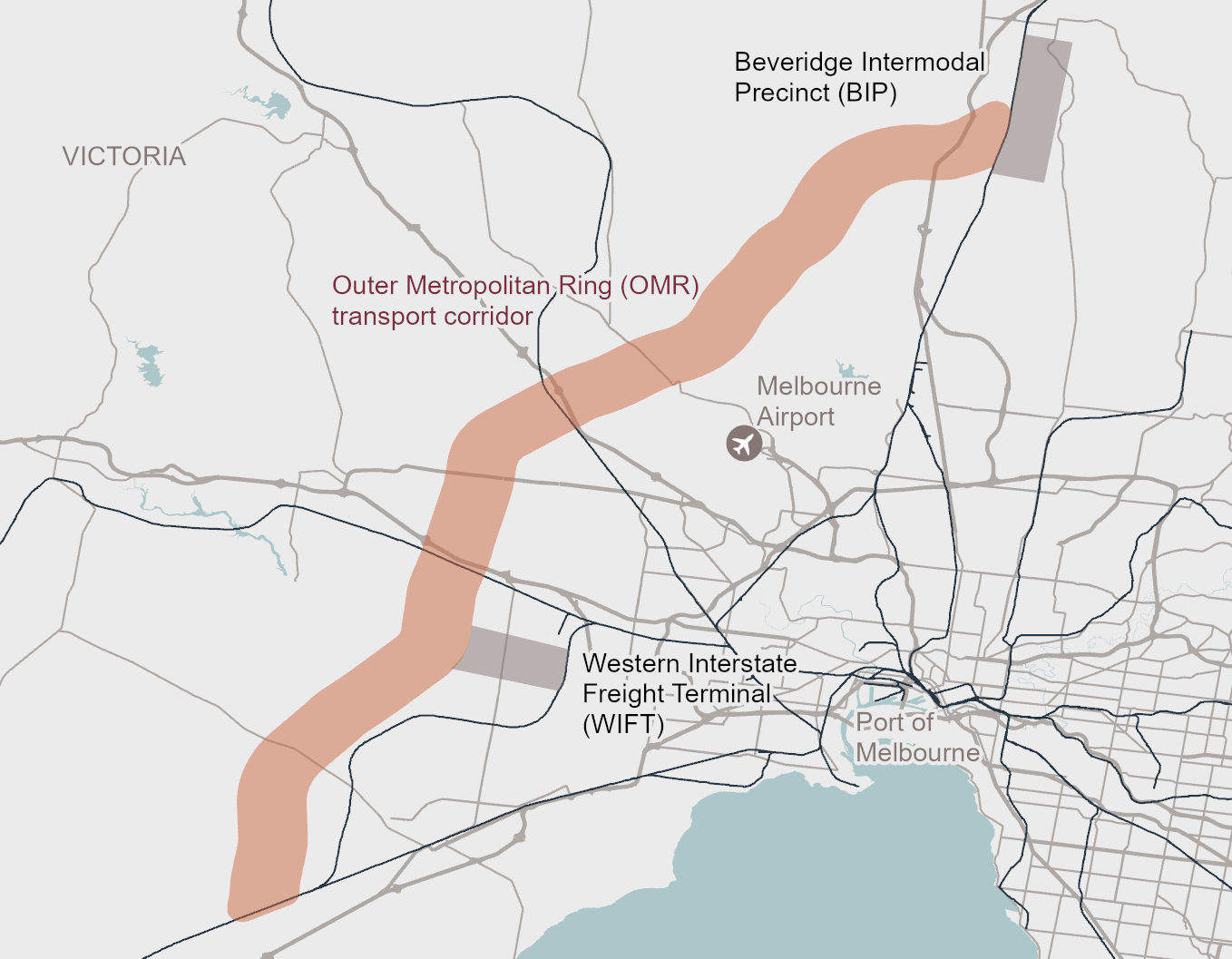
The Melbourne Outer Metropolitan Ring / E6 transport corridor proposal supports long-term projected population and freight growth in Melbourne. As Melbourne’s population and freight task continue to grow, corridor protection of the Outer Metropolitan Ring will provide for future road and rail transport links and integration with national supply chains – supporting productivity and connectivity for Melbourne’s north and west. The proposal aligns with the National Freight and Supply Chain Strategy by safeguarding key freight routes and intermodal connectivity. It also supports the Infrastructure Policy Statement by protecting a key transport corridor that will be important for future connectivity and transport network performance.
PROPOSAL DESCRIPTION
The proposal involves the staged acquisition of land for the Outer Metropolitan Ring and E6 corridor in Melbourne and subsequent development of a multi-modal corridor for future road and rail infrastructure. The Australian Government has committed $10 million to develop a business case for this transport corridor.
INVESTMENT RECOMMENDATION
The Australian Government should note this proposal as a potential future investment opportunity in the 5-10 year pipeline.
OPPORTUNITIES AND OUTCOMES
The proposal has the potential to:
- Support national and regional freight productivity – the transport corridor would allow for future connections between key international transport hubs, including Melbourne Airport, Avalon Airport, the Port of Geelong, and major intermodal terminals such as the future interstate freight terminals at Beveridge (under construction) and Truganina (proposed).
- Improve supply chain resilience – the Outer Metropolitan Ring transport corridor safeguards a future high capacity freight route that would improve network capacity and ease congestion pressures and disruptions on existing corridors, supporting more reliable freight movements as demand grows into the future.
- Deliver cost-effective major transport infrastructure – by seeking to avoid high costs and complexity associated with retrofitting or tunnelling through developed areas.
- Facilitate population growth – improved freight and passenger connectivity in Melbourne’s outer north and west would support new housing, employment, and economic development.
NEXT STEPS
Proponent to progress planning activities (in line with Infrastructure Australia’s Assessment Framework) that includes:
- further planning and design development to refine corridor alignment and integration with existing and planned freight, road, and rail networks
- staged land acquisition approach to mitigate land price escalation and secure the corridor
- population and freight growth analysis to inform the timing of infrastructure delivery.