


 EVALUATION COMPLETE


Road freight transport accounts for 7% of Australia’s greenhouse gas emissions. Changes to heavy vehicle technology such as the use of High Productivity Freight Vehicles (HPFVs) and Low and Zero Emission Heavy Vehicles (LZEHVs) can contribute to meeting national emission targets for the transport sector.
Improving Victoria’s freight productivity and reducing emissions aligns with the Australian Government’s Infrastructure Policy Statement and several Victorian Government policies and plans, including the Victorian Infrastructure Plan (2021), Victorian Infrastructure Strategy (2025-2055) and the Moving more with Less 2021: High Productivity Freight Vehicle Plan.
The proposal aims to contribute to energy transition objectives by supporting more efficient freight movements and the uptake of LZEHVs. This will drive progress on state and national action plans, including the National Freight and Supply Chain Strategy, achieving key objectives of increased productivity and decarbonisation of the freight supply chain.
PROPOSAL DESCRIPTION
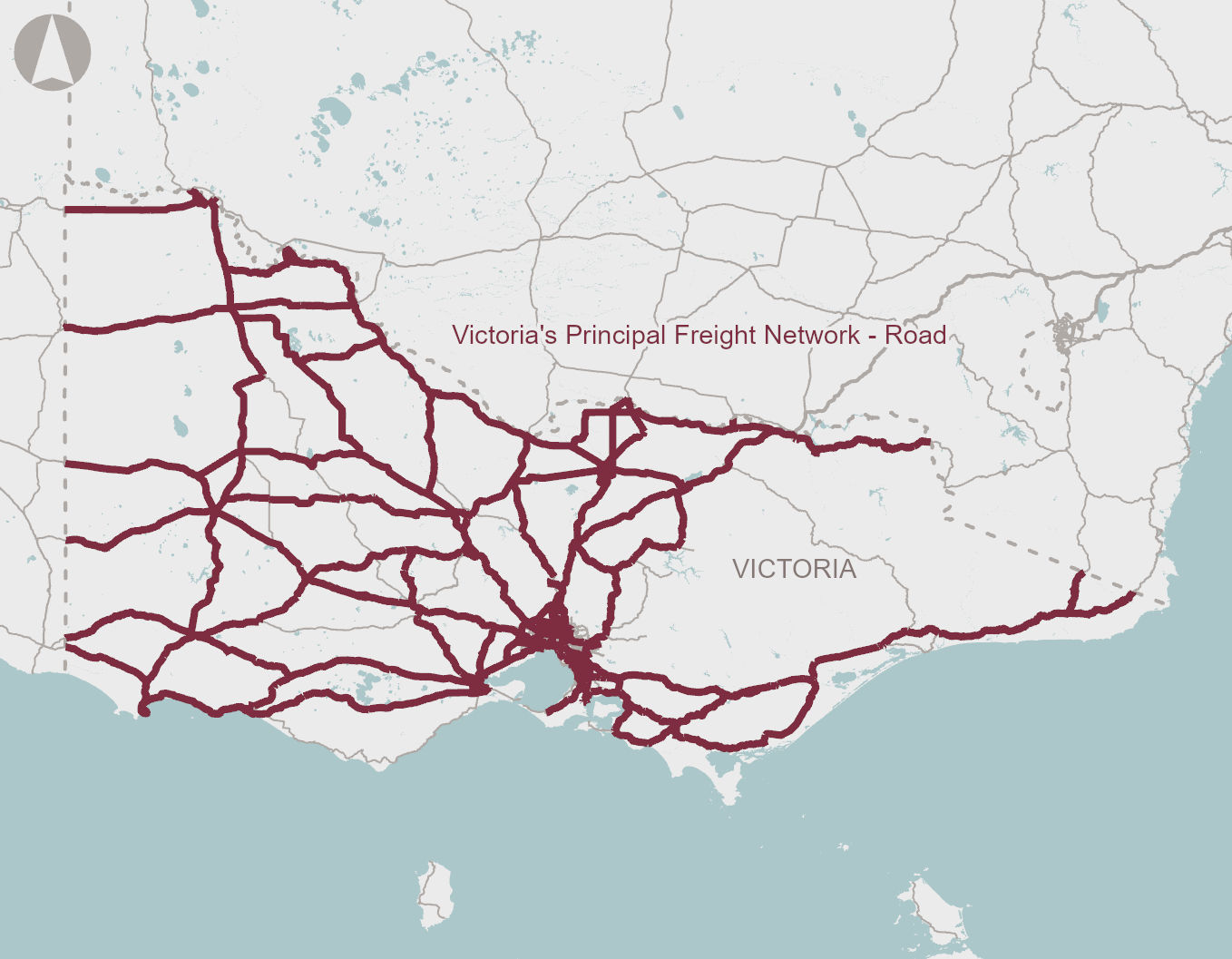
The proposal supports improved efficiency and reliability of key freight routes and emissions reduction in Victoria by addressing HPFV and LZEHV mass constraints across the road network. While the Victorian Government’s progressive bridge upgrade program has enabled broader network access for HPFVs, mass restrictions remain a problem on some parts of the network with 19 structures prioritised for upgrade. Additionally, between a quarter (1,600) to a third (2,200) of Victoria’s arterial road bridges and culverts cannot accommodate the higher masses associated with LZEHVs.
As current battery technologies do not provide the necessary range and charging speed to make electric trucks viable for long-distance travel, there is an opportunity for the proposal to support the uptake of LZEHVs by increasing the availability of fast chargers on key routes.
INVESTMENT RECOMMENDATION
The Australian Government should note this proposal as a potential future investment opportunity in the 2-4 year pipeline. Australian Government investment should prioritise components of the proposal that relate to the National Land Transport Network and Key Freight Routes, where Australian Government investment would deliver the greatest benefits to national productivity, decarbonisation and supply chain resilience.
OPPORTUNITIES AND OUTCOMES
This proposal has the potential to:
- Improve national and regional freight productivity – removing mass-constraint bottlenecks and enabling access for HPFVs and LZEHVs would reduce the cost of moving goods across Victoria’s freight network.
- Support Australia’s renewable energy transition – supporting the uptake of LZEHVs through provision of charging infrastructure would enable a transition towards a decarbonised and more resilient freight network.
- Enhance environmental and sustainability outcomes – upgrades would support reduced heavy vehicle emissions, improved air quality and decarbonisation targets, while also meeting a growing freight task to service a growing population.
- Strengthen supply-chain reliability and resilience – upgrades would reduce constraints, improve reliability and provide confidence to industry for long-term fleet transition planning.
- Improve road safety – upgrades to enable the use of HPFVs and LZEHVs with modern safety features would reduce crash risks and improve safety for all road users.
- Support regional development – improved freight access and performance through HPFVs and LZEHVs would provide opportunities for regional Victoria by enabling more efficient connections to ports, terminals and industry hubs.
NEXT STEPS
Proponent to develop potential investment options (Stage 2 of Infrastructure Australia’s Assessment Framework), including considering whether the proposal would benefit from being split into two programs that investigates the problems and opportunities for HPFVs and LZEHVs separately.