


 EVALUATION COMPLETE



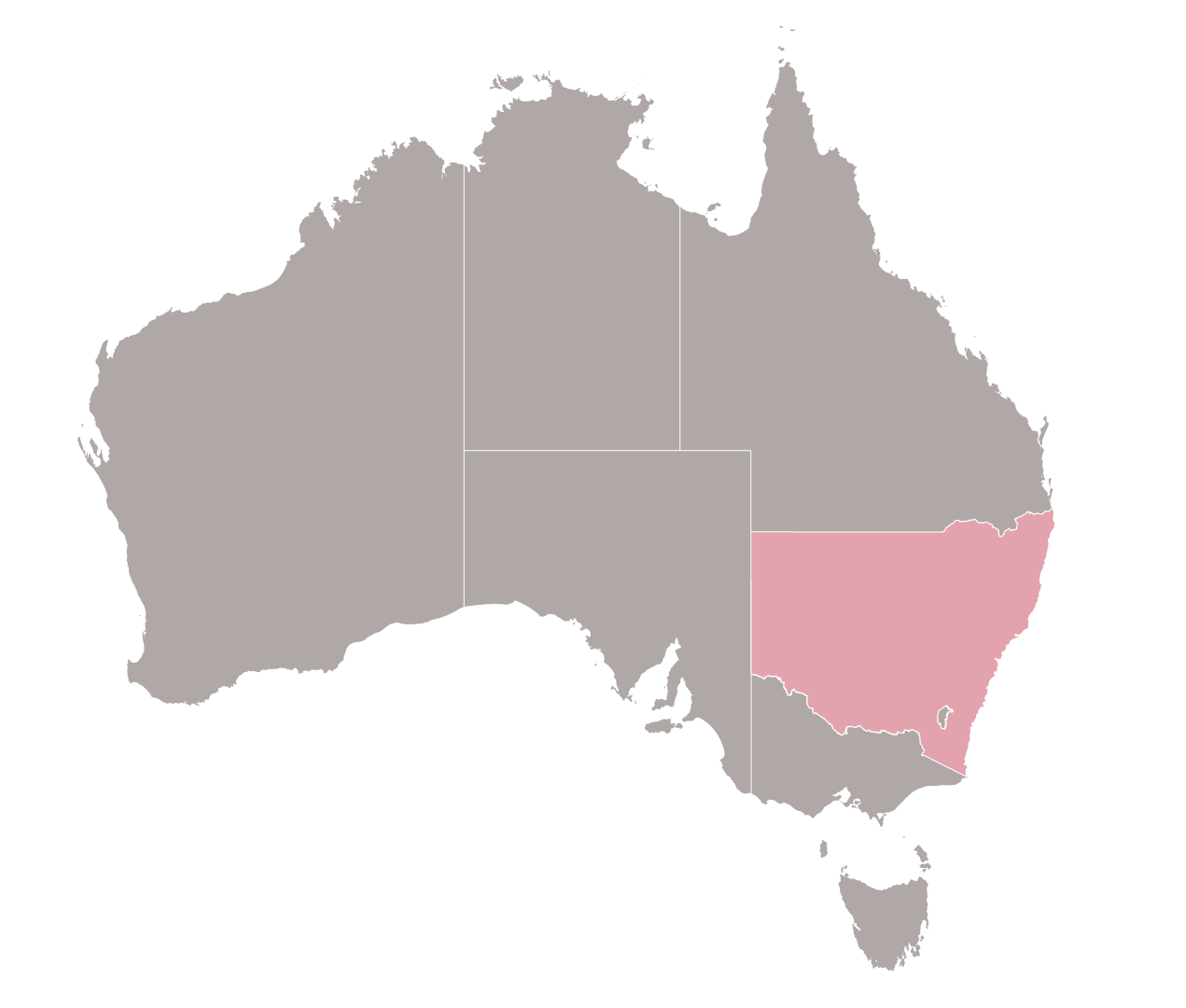
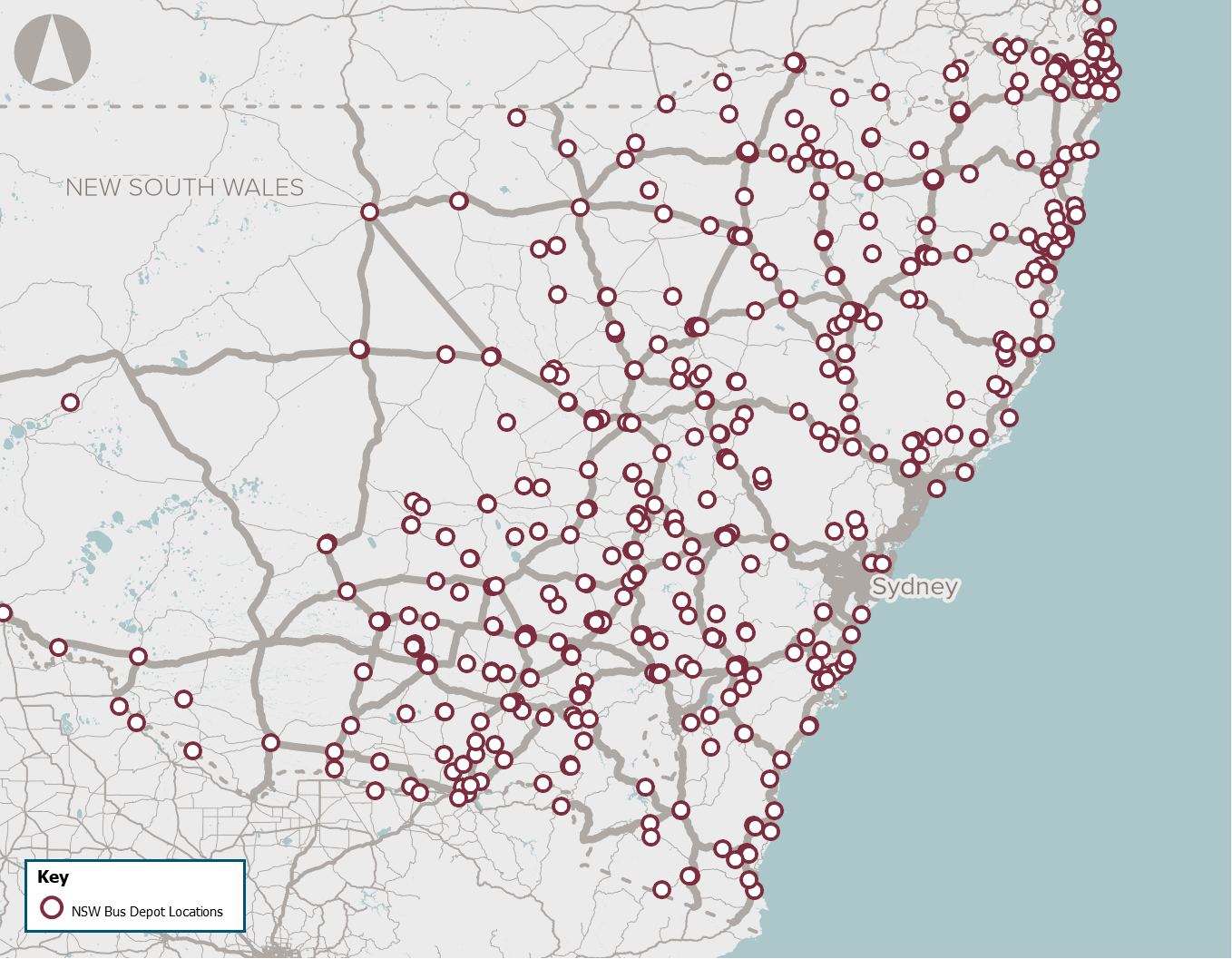
Electrification of buses is a key near-term action to reduce transport emissions, forming part of the Australian Government’s Transport and Infrastructure Net Zero Road Map and Action Plan. The proposal aligns with priorities identified in the Infrastructure Policy Statement, including reducing transport emissions. The New South Wales Government has a Zero Emissions Bus Transition Plan which aims to transition metro buses by 2035, outer metropolitan buses by 2040, and regional buses by 2047.
PROPOSAL DESCRIPTION
The proposal would enable New South Wales to transition its sizeable public bus fleet to Zero Emissions Buses (ZEBs), supporting the reduction of greenhouse gas emissions. The proposal is focussed on the enabling infrastructure needed to support the rollout and operation of ZEBs (not the ZEBs themselves), such as depot upgrades, charging infrastructure and power grid upgrades.
Transport for New South Wales’s public bus fleet consists of approximately 8,300 diesel-powered vehicles. Buses account for 78% of Transport for New South Wales’s total emissions, and approximately 3% of New South Wales’s total CO2 emissions.
Stage 1 of the ZEB program is underway and is focused on converting the bus fleet in Greater Sydney, with a target of over 1,200 new electric buses operating by the end of 2028. As part of Stage 1, 11 existing bus depots are being converted to support the new ZEB fleet, and a new bus depot is proposed to be built in Macquarie Park.
Future stages would extend the rollout to outer metropolitan and regional areas, to convert bus fleets by 2040 and 2047, respectively.
INVESTMENT RECOMMENDATION
The Australian Government should consider prioritising the proposal for planning investment, supporting the enabling infrastructure needed to deploy ZEBs across New South Wales.
OPPORTUNITIES AND OUTCOMES
This proposal has the potential to:
- Support national emissions targets – through the replacement of the state’s 8,000-plus diesel and natural gas public transport buses to zero emissions technology.
- Improve liveability – zero emissions electric-powered buses would result in quieter streets and cleaner air with no bus exhaust fumes.
- Improve amenity – ZEBs reduce air and noise pollution and provide a smoother ride and improved comfort for passengers.
NEXT STEPS
Proponent to develop a Final Business Case (Stage 3 of Infrastructure Australia’s Assessment Framework) for future stages that demonstrates:
- the full program and staging of tranches across the state in response to forecast deployment of zero emissions buses.