


 EVALUATION COMPLETE


Problem
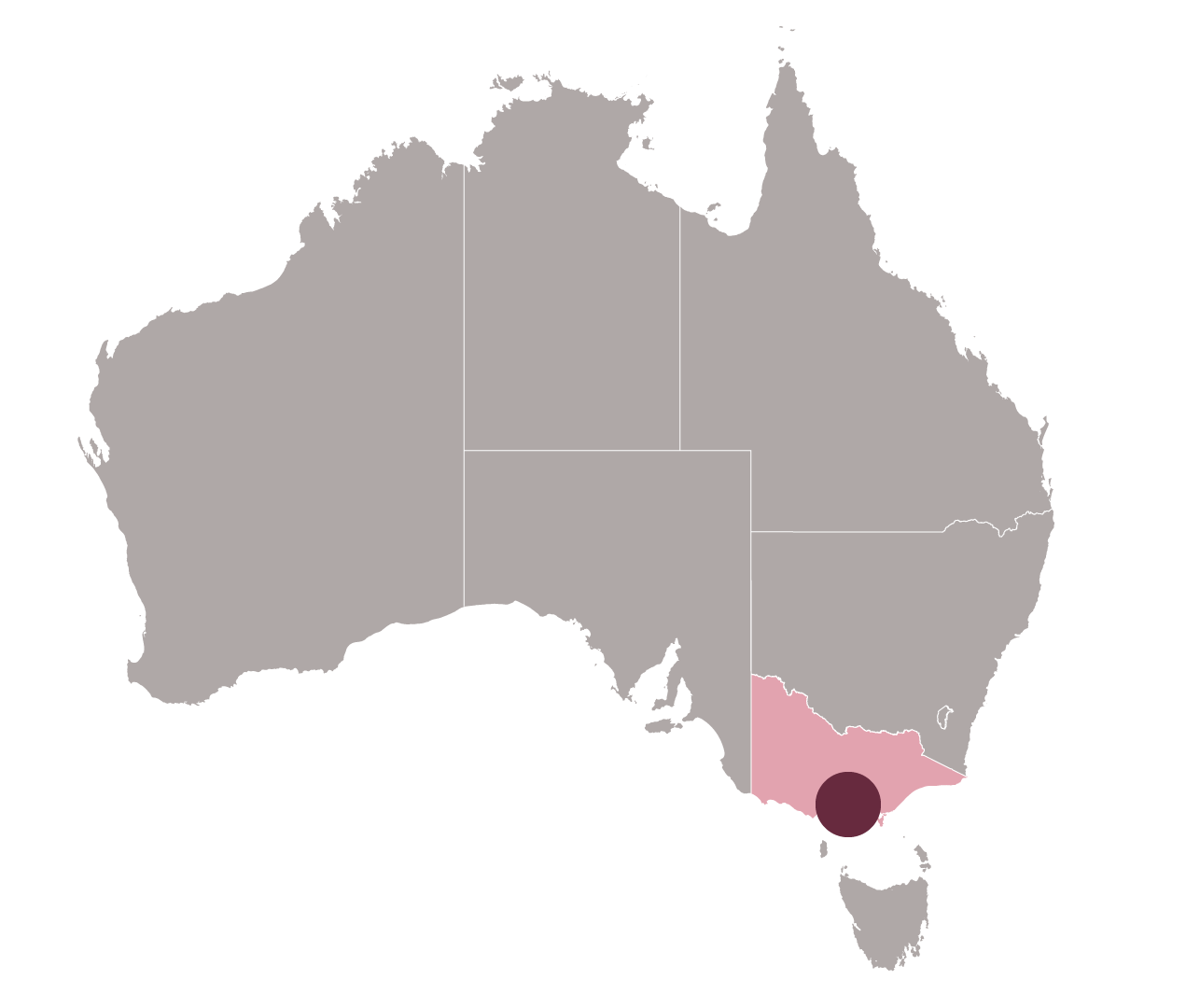
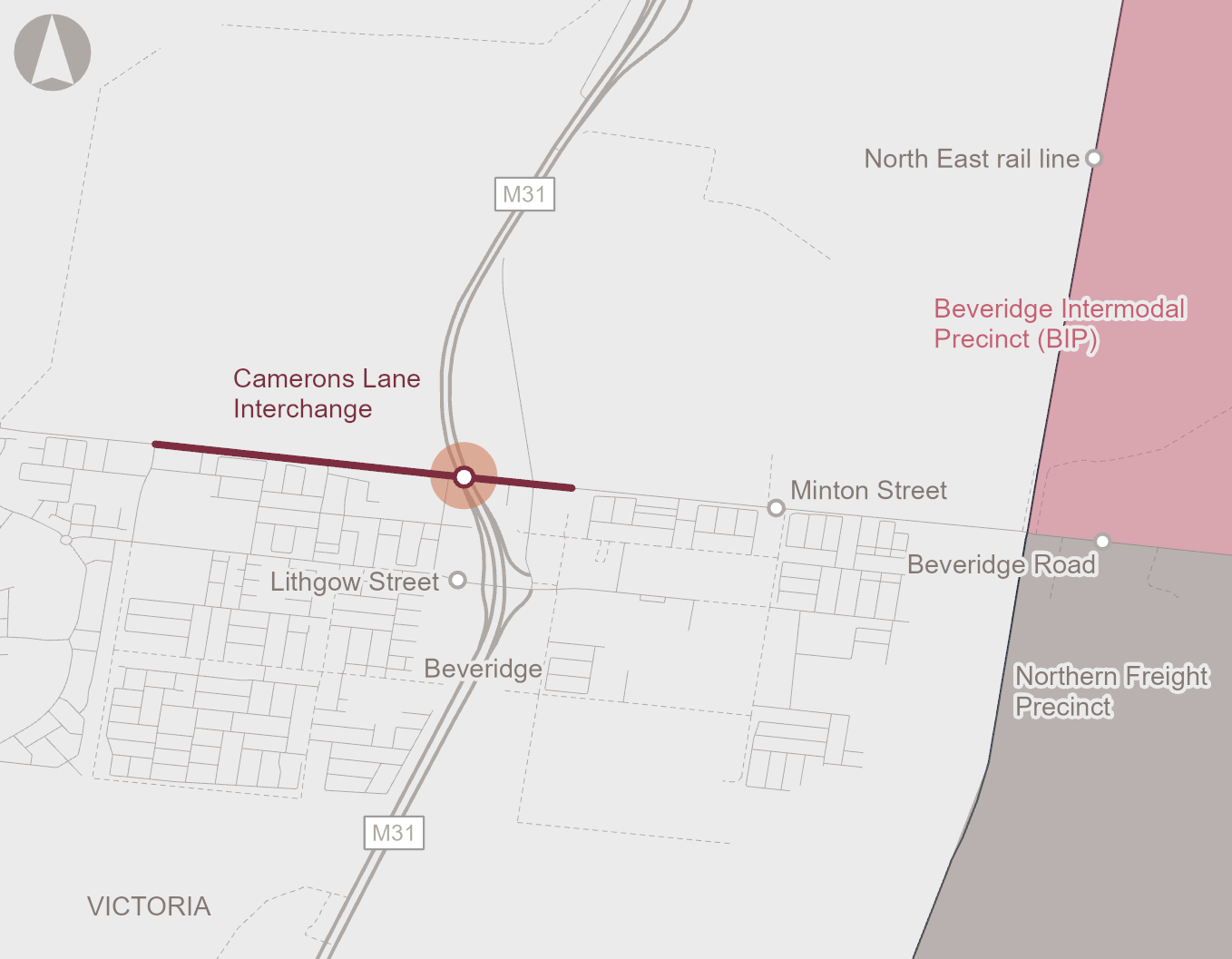
Rapid population growth in Melbourne’s northern growth corridor is increasing demand for road and freight access. The existing Hume Freeway and Lithgow Street interchange is not adequate to support growth, creating safety risks, poor access and operational inefficiencies. These constraints limit access to developing residential areas and reduce the efficiency of freight movements, particularly to the planned Beveridge Intermodal Precinct. Without intervention, increasing traffic volumes are expected to worsen congestion and reduce network performance.
Strategic Fit
The project supports the objectives of the Australian Government’s Infrastructure Policy Statement by contributing to more productive infrastructure outcomes and improving connectivity to housing. It also aligns with the National Freight and Supply Chain Strategy by improving the efficiency and competitiveness of rail freight.
CLI enables benefits for the Melbourne Intermodal Terminal Capacity proposal, which is listed on the 2026 Infrastructure Priority List for investment in the next 5-10 years.
Societal Impact
The proposal is expected to improve travel times, reduce congestion and enhance road safety, supporting access to housing and employment areas in a rapidly growing region. Productivity benefits are driven by reduced travel times and vehicle operating costs, particularly for freight movements. The project is expected to result in a net increase in emissions however some mitigation opportunities are not fully developed.
Deliverability
The project appears deliverable to time, cost and scope, subject to achieving planning approvals and confirmation that cost contingencies adequately reflect outstanding risks. There are risks relating to supply chain readiness, materials availability and coordination with utilities. Risk management is focused on delivery but is less comprehensive across preconstruction and procurement stages. Delivery outcomes and expected benefits depend on coordination with the unfunded Minton Street Upgrade and other network investments.
Next Steps
To derisk Australian Government investment and strengthen procurement and delivery outcomes, we recommend:
- completing a readiness for market review report and a cost estimate that includes updated pre-construction, procurement, and whole-of-life sustainability and resilience contingencies
- rerunning operational modelling to incorporate the latest land use assumptions to confirm the proposed configuration can support the expected increase in demand over the longer term
- coordinating planning and approvals to deliver Minton Street Upgrade proposal in parallel with Camerons Lane Interchange to achieve delivery efficiencies and fully realise access and freight efficiency benefits.

