


 EVALUATION COMPLETE



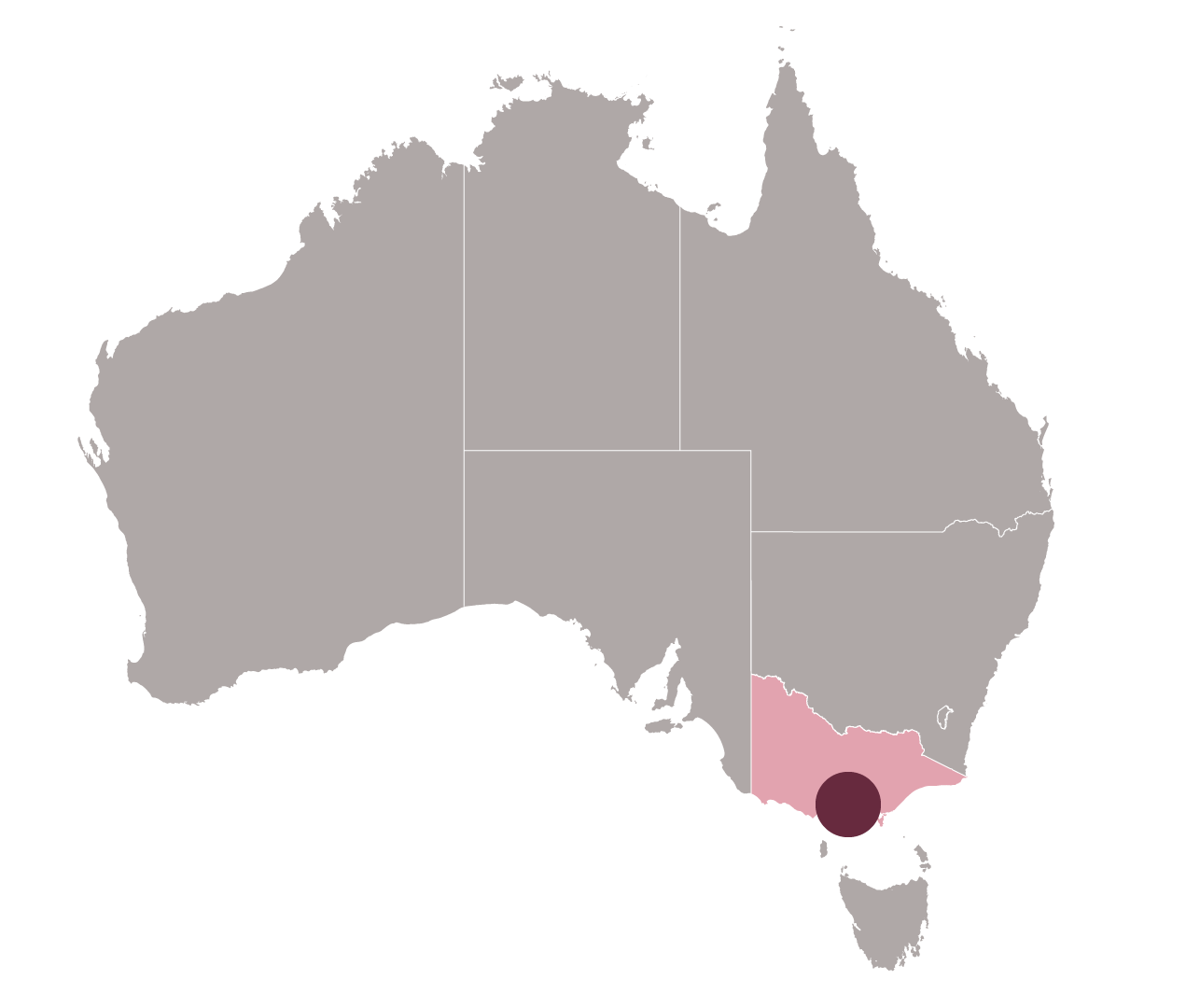
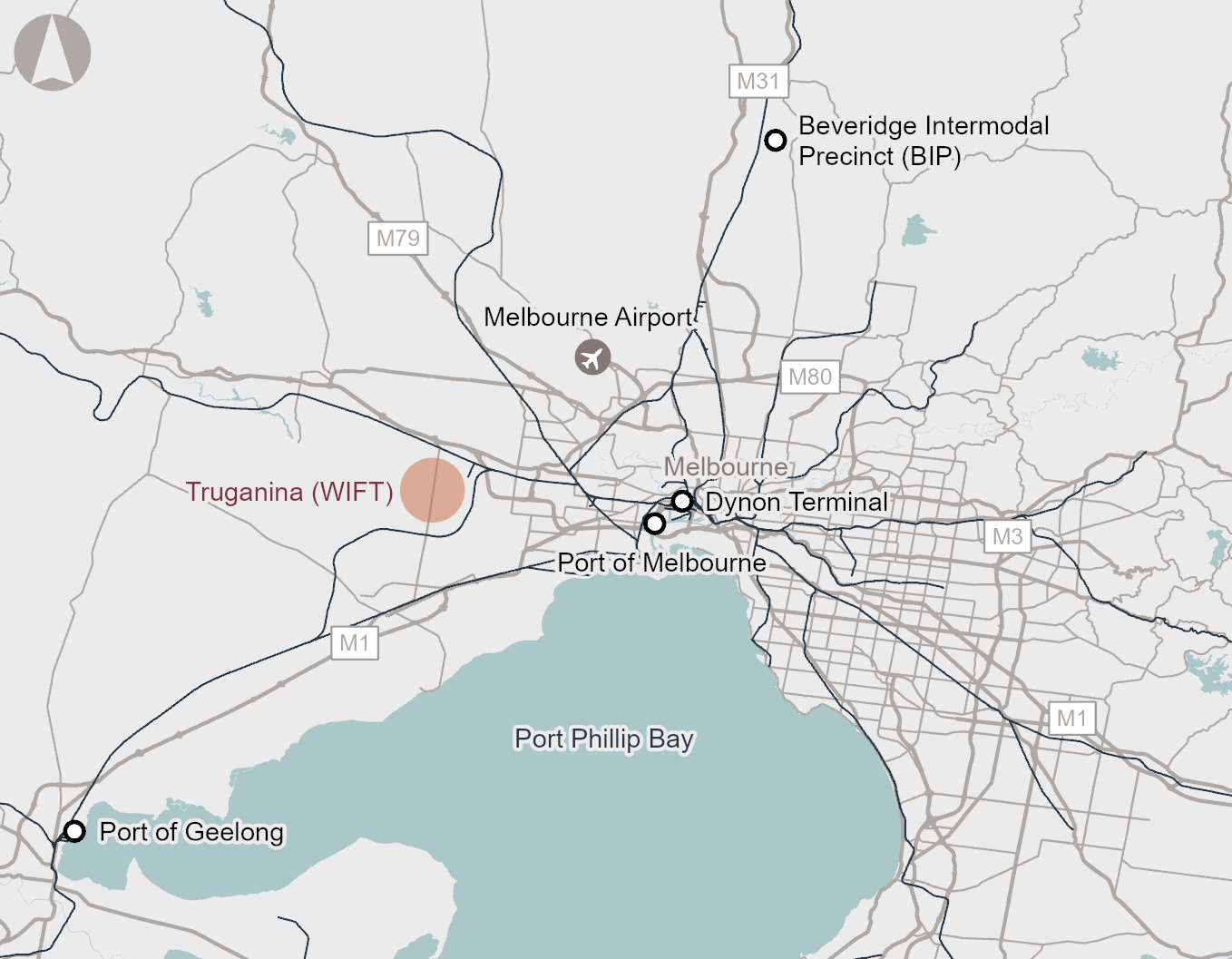
The proposed Western Interstate Freight Terminal (WIFT) at Truganina is positioned to complement the Beveridge Intermodal Precinct (BIP) and the Outer Metropolitan Ring Rail proposal, to support future metropolitan freight growth and efficient movement of goods. The proposal aligns with the Infrastructure Policy Statement and the National Freight and Supply Chain Strategy, which calls for integrated intermodal precincts to optimise modal transitions and strengthen supply chain resilience.
PROPOSAL DESCRIPTION
The WIFT is a planned intermodal terminal in Melbourne’s west, designed to provide additional capacity for freight and enable seamless integration with the proposed Outer Metropolitan Ring Rail South and other key freight routes. The WIFT proposal would deliver increased freight capacity, improved supply chain resilience, and enhanced connectivity between interstate rail and road networks.
INVESTMENT RECOMMENDATION
The Australian Government should note this proposal as a potential future investment opportunity within the 5-10 year pipeline. Immediate focus should be on delivery of the Beveridge Intermodal Precinct with planning for WIFT to proceed as demand grows.
The proposal’s delivery should be coordinated with the Outer Metropolitan Ring Rail South to maximise network benefits and ensure timely response to future freight demand.
OPPORTUNITIES AND OUTCOMES
This proposal has the potential to:
- Enhance freight productivity – by providing additional intermodal capacity, WIFT would enable Melbourne’s growing freight volumes to be managed effectively into the future.
- Improve safety and environmental outcomes – the development of WIFT would allow more freight to be moved by rail, easing road congestion pressures and lowering greenhouse gas emissions.
- Enable modal shift – additional intermodal terminal capacity would allow a higher proportion of freight to move by rail rather than road.
- Strengthen supply chain resilience – the terminal would support contingency and flexibility in freight operations, ensuring Melbourne can accommodate future freight and population growth and respond to disruptions.
- Support economic growth – additional intermodal terminal capacity and freight connectivity would support local businesses, attract investment, and facilitate the development of new industries.
NEXT STEPS
Proponent to progress planning activities (in line with Infrastructure Australia’s Assessment Framework) including:
- design development for WIFT, ensuring alignment with the Outer Metropolitan Ring Rail South and broader freight network upgrades
- advance stakeholder engagement, including coordination with Australian Government agencies, National Intermodal Corporation, and industry partners
- consider options for land preservation or acquisition to avoid more costly acquisitions in future
- monitor market conditions and intermodal terminal capacity to ensure delivery of WIFT is planned for the optimal time to meet Melbourne’s future freight demand.